
Wedding Etiquette Kenya: Do's and Don'ts for Guests
The complete guide to wedding guest etiquette in Kenya — covering arrival time, dress code, gifts, phone usage, buffet behaviour, plus-ones, children, and when to leave.
Wedding Etiquette Kenya: Do’s and Don’ts for Guests
You have received the invitation, confirmed your attendance, and picked out your outfit. But do you know how early to actually arrive? Whether to bring cash or a gift? How long you are expected to stay? Wedding etiquette in Kenya has its own unwritten rules — and breaking them can be more embarrassing than you think.
Kenyan weddings are vibrant, communal celebrations that bring families and communities together. But beneath the joy and the music, there is a framework of expectations that guests are supposed to follow. Some of these rules are spoken. Many are not. The result is that well-meaning guests sometimes commit social missteps that range from mildly awkward to genuinely offensive.
This guide covers everything you need to know about being a good wedding guest in Kenya — whether you are attending a formal church ceremony, a garden reception, a traditional ruracio, or a casual come-we-stay celebration.
Arrival Time: The “African Time” Question
Let us address the elephant in the room. Yes, “African time” is a real cultural phenomenon. And yes, many Kenyan events start late. But here is what experienced wedding guests know: the ceremony almost always starts closer to the stated time, even if the reception runs late.
For the Church Ceremony
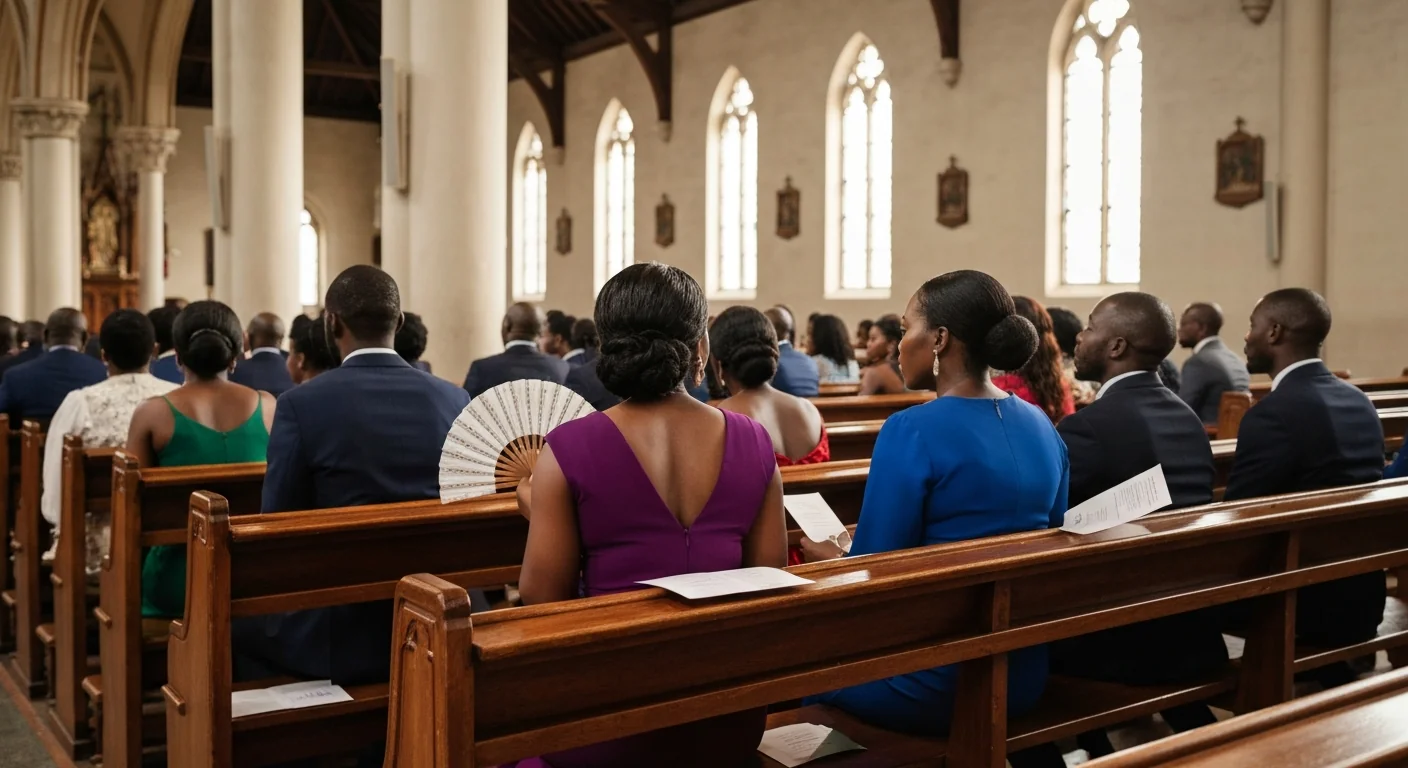
Arrive 15-30 minutes before the stated time. Church ceremonies in Kenya tend to start within 15-30 minutes of the printed time, especially if the pastor or priest has another service after yours. Arriving late to a church ceremony means walking in while the bridal procession is happening, which draws attention away from the bride and is considered highly disrespectful.
If the invitation says 10:00 AM, be seated by 9:45 AM. You will have time to greet people, find a good seat, and settle in comfortably.
For the Reception
Receptions are more forgiving on timing. If the reception starts at 2:00 PM, arriving between 2:00 PM and 2:30 PM is perfectly acceptable. Arriving after 3:00 PM, however, means you may miss the grand entrance, the first dances, and the speeches — which the couple spent months planning.
For Traditional Ceremonies
Traditional ceremonies like ruracio or ayie often have a more relaxed timeline. These events can stretch over several hours, and guests arrive at different times. However, if you are part of the negotiating party or a key family member, you are expected to be there from the start.
The bottom line: Err on the side of being early. Nobody has ever offended a couple by arriving on time.
The RSVP: Why It Matters More Than You Think
When a couple sends you an invitation and asks you to RSVP, they are not being demanding — they are trying to plan. Catering in Kenya costs anywhere from KES 1,500 to KES 5,000 per plate. Every unconfirmed guest is money the couple cannot budget accurately.
Do:
- Respond by the stated deadline. If the invitation says “RSVP by 1st March,” respond by 1st March. Not on the day of the wedding.
- Be honest. If you cannot attend, say so. A polite decline is far better than a no-show.
- Indicate the number of people attending. If the invitation is for you and a plus-one, confirm whether you are coming alone or with someone.
- Update if your plans change. If you RSVPed yes but can no longer make it, let the couple know as soon as possible.
Don’t:
- Ignore the RSVP entirely. This is the single most common etiquette failure at Kenyan weddings. Couples report that up to 40% of guests never respond to RSVPs.
- RSVP for people who were not invited. If the invitation is addressed to you, it is for you. Do not add your cousins, neighbours, or colleagues without asking.
- Say “maybe” and leave it at that. Give a clear yes or no. The couple needs concrete numbers for their caterer.
Plus-Ones and Uninvited Guests
This is one of the most sensitive topics in Kenyan wedding culture. The communal nature of Kenyan society means that weddings are often seen as open celebrations — but couples have budgets, and every extra guest costs real money.
The Rules:
If the invitation names you specifically (“Dear John Mwangi”), only you are invited. Do not assume you can bring your partner, your friend, or your children unless the invitation explicitly includes them.
If the invitation says “John Mwangi and Guest,” you may bring one person. This is your chance to bring a partner, a friend, or a date. Not two friends.
If the invitation says “The Mwangi Family,” your immediate family is invited. This typically means you, your spouse, and your children — not your extended family.
Never bring uninvited guests. This is perhaps the most important etiquette rule in this entire guide. Showing up with three extra people puts enormous pressure on the couple’s catering, seating, and budget. If you want to bring someone who was not included on the invitation, call the couple or their wedding planner and ask first.
What About Children?
Check the invitation carefully. If it says “adults only” or specifies names without mentioning children, the couple has made a deliberate choice not to include children. Respect this decision. Finding childcare may be inconvenient, but the couple’s wedding day is not the time to test boundaries.
If the invitation does include children, ensure they are supervised throughout the event. A child running through the ceremony or screaming during speeches is a distraction that affects everyone’s experience.
Gifts and Cash Contributions
Kenyan wedding culture around gifts is unique and worth understanding properly.
Cash Is King
In Kenya, cash gifts are the norm and are actively preferred by most couples. Unlike in some Western cultures where gift registries dominate, Kenyan couples openly appreciate cash contributions that help offset wedding costs or start their new life together.
How Much to Give
There is no fixed amount, but here are general guidelines:
| Relationship to Couple | Suggested Range (KES) |
|---|---|
| Close family member | 5,000 - 50,000+ |
| Close friend | 3,000 - 20,000 |
| Colleague/acquaintance | 1,000 - 5,000 |
| Plus-one (you and a guest) | Add 50-100% to your individual gift |
The most important principle is this: give what you can genuinely afford. Nobody should go into debt over a wedding gift. A heartfelt card with KES 1,000 from a student is just as valued as KES 20,000 from a senior colleague. The couple invited you because they want your presence, not your money.
How to Give
M-Pesa. Increasingly common and perfectly acceptable. Many couples include an M-Pesa number or pay bill number on their invitation or wedding website. Sending your gift via M-Pesa before or during the wedding is practical and appreciated.
Cash in an envelope. The traditional method. Place your cash in a clean envelope, write your name on it, and drop it in the gift box at the reception. Always write your name so the couple can thank you later.
Gift registry. Some couples set up gift registries on platforms like Harusi Hub. If a couple has a registry, it means they have specifically chosen items they want. Buying from the registry ensures you give something they actually need.
Physical gifts. If you prefer to give a physical gift, household items are generally welcome — kitchen appliances, bedding, or home decor. Avoid overly personal items unless you know the couple’s taste very well.
Don’t:
- Give a gift that draws attention to yourself. This is not the time for a dramatic, oversized gift presentation during the reception.
- Forget to label your envelope. Unlabelled cash envelopes mean the couple cannot send you a thank-you message.
- Give less because you brought extra people. If you brought uninvited guests (which you should not do), at minimum increase your gift to cover their plates.
Dress Code
Understanding what to wear to a Kenyan wedding is important enough that we have a separate detailed guide on the topic. But here are the essential etiquette rules:
Universal Don’ts:
Do not wear white, ivory, or cream. This applies everywhere in the world, but it bears repeating. White is the bride’s colour. Wearing white to someone else’s wedding is one of the most widely recognised social faux pas.
Do not wear anything more attention-grabbing than the bride. This means avoiding excessively elaborate outfits, extremely revealing clothing, or overly dramatic accessories. You are a guest, not the main event.
Do not ignore the dress code. If the invitation specifies a dress code (formal, semi-formal, Ankara, all-white, etc.), follow it. Showing up in jeans to a black-tie reception or in a suit to a “kitenge only” event shows a lack of effort and respect.
General Guidelines:
Church ceremonies require modest, conservative clothing. Cover your shoulders, avoid very short skirts or dresses, and dress appropriately for a place of worship.
Garden and outdoor weddings allow for more relaxed styles, but still require polished, put-together outfits.
Traditional ceremonies often call for African attire — kitenge, Ankara, or culturally specific clothing. When in doubt, ask the couple or a family member.
Phone Etiquette During the Ceremony
This has become one of the biggest etiquette issues at modern Kenyan weddings.
During the Ceremony:
Put your phone on silent. Not vibrate — silent. A ringing phone during the exchange of vows is disruptive and disrespectful.
Do not take photos during the ceremony unless explicitly invited to. Most couples hire professional photographers and videographers who are positioned to capture every moment perfectly. When guests hold up phones in the aisle, they obstruct professional shots, block other guests’ views, and create a sea of screens that ruins the visual atmosphere.
If the couple requests an “unplugged ceremony,” honour it. Some couples specifically ask guests not to take photos during the ceremony. This is their wedding, their choice. Put the phone away.
During the Reception:
Receptions are more relaxed about phone use. Taking photos, recording the first dance, and sharing moments on social media is generally fine. But use common sense:
- Do not take calls during speeches or toasts
- Do not livestream without the couple’s permission
- Do not post unflattering photos of other guests
- Do not spend the entire reception on your phone — be present
Buffet and Dining Etiquette
The buffet is where wedding etiquette in Kenya is most frequently violated. Here are the rules that everyone knows but many ignore.
Wait to Be Called
Most Kenyan wedding receptions serve buffet-style meals, and tables are called up in order — usually starting with the bridal party, then family tables, then other guests. Wait for your table to be called. Rushing to the buffet before your table is announced is one of the most visible breaches of wedding etiquette.
At the Buffet:
Take reasonable portions. The food has been planned for a specific number of guests. Piling your plate with enough food for three people means someone at a later table might not have enough.
Do not go back for seconds until everyone has been served. This is basic courtesy. If there is food remaining after all tables have been called, going back for more is fine.
Do not pack food to take home. This should not need to be said, but experience suggests it does. Do not bring containers to a wedding to pack leftovers. The couple paid for you to eat at the wedding, not to cater your meals for the next three days.
Be patient. Serving 200-500 guests takes time. The catering team is working hard. If there is a delay, remain seated and wait gracefully. Complaining loudly about food timing is poor form.
Special Dietary Needs
If you have dietary restrictions (allergies, halal, vegetarian, etc.), communicate this when you RSVP, not at the buffet line. Most caterers can accommodate special diets with advance notice.
Speeches and Toasts
If you have been asked to give a speech or toast, here are the etiquette guidelines:
Do:
- Keep it short. Three to five minutes is ideal. Anything longer tests everyone’s patience.
- Keep it appropriate. No embarrassing stories about the couple’s past relationships, no inside jokes that only three people understand, and absolutely no inappropriate humour.
- Focus on the couple. Your speech is about them, not about you.
- Practice beforehand. Winging it often leads to rambling, which leads to awkwardness.
Don’t:
- Mention ex-partners. Ever.
- Get drunk before your speech. A little liquid courage is fine. Slurring through your toast is not.
- Give an impromptu speech. If you were not asked to speak, do not grab the microphone. The couple has a programme, and unexpected speeches throw off the timeline.
When to Leave
Knowing when to leave a Kenyan wedding is an underrated social skill.
Do not leave before the cake cutting. In most Kenyan weddings, the cake cutting marks the midpoint of the reception. Leaving before this is considered rude unless you have a genuine emergency.
The couple’s departure signals that leaving is acceptable. Once the bride and groom have left (or have been “escorted” out during the sendoff), guests are free to leave at their own pace.
Stay for the whole ceremony if you attend the church. Leaving a church ceremony midway is conspicuous and disrespectful. If you can only attend part of the day, attend the reception rather than the ceremony.
If you must leave early, tell the couple or a close family member. A quiet, “We have to head out — congratulations again, it was a beautiful wedding” is perfectly acceptable. Slipping out without telling anyone can be interpreted as disapproval.
Behaviour at the Wedding
Do:
- Greet the couple and their parents. Make the effort to personally congratulate the bride and groom, and greet both sets of parents. This is a sign of respect that Kenyan families deeply appreciate.
- Mingle and socialise. Weddings are social events. Sitting in a corner with only people you already know defeats the purpose. Make an effort to meet people from the other family.
- Dance. When the DJ plays music and the dance floor opens, participate. You do not have to be a great dancer — just be willing. Kenyan wedding dance floors are about joy, not skill.
- Be happy for the couple. This sounds obvious, but the energy you bring matters. Smile, celebrate, and be genuinely present.
Don’t:
- Get excessively drunk. Drink responsibly. Getting visibly intoxicated at someone else’s wedding is disrespectful to the couple and embarrassing to yourself.
- Start arguments or drama. Whatever personal conflicts exist between guests should be set aside for the day. A wedding is not the place to settle scores.
- Flirt aggressively with other guests. A wedding is romantic, and connections happen naturally. But aggressive flirting, unwanted advances, or inappropriate behaviour towards other guests is never acceptable.
- Compare this wedding to others. “The food was better at so-and-so’s wedding” is the kind of comment that always gets back to the couple. Keep comparisons to yourself.
- Post negative comments on social media. If the decor was not to your taste or the food took too long, keep it off social media. Your opinion of their wedding does not need to be public.
Traditional Ceremony Etiquette
Traditional Kenyan ceremonies (ruracio, ayie, koito, etc.) have their own set of etiquette rules that differ from church or civil weddings.
General Rules:
Understand the structure before you go. Traditional ceremonies often involve negotiations between families. If you are not part of the negotiating team, your role is to observe, support, and celebrate. Ask a family member to explain what is happening if you are unfamiliar with the traditions.
Dress appropriately. Most traditional ceremonies expect African attire. Check with the family about specific expectations.
Bring a contribution. At traditional ceremonies, guests are often expected to contribute to the bride price or celebration costs. Ask a family member what is appropriate.
Respect the process. Traditional ceremonies can be long and may involve customs you do not fully understand. Show respect by paying attention, staying patient, and not making dismissive comments about traditions that are meaningful to the families involved.
A Note on Wedding Committees
In Kenya, many couples form wedding committees — groups of friends and family who help plan and fund the wedding through regular contributions. If you are part of a wedding committee, your etiquette responsibilities are higher:
- Attend meetings and contribute consistently. Joining a committee and then disappearing is worse than not joining at all.
- Follow through on assigned tasks. If you volunteered to handle decorations, handle decorations. Unreliable committee members cause real stress for the couple.
- Be discreet about budget details. What happens in committee meetings stays in committee meetings. Do not share the couple’s budget details, family contributions, or internal discussions with other guests.
Summary: The Golden Rules
If you remember nothing else from this guide, remember these five principles:
- RSVP on time and show up if you said you would.
- Do not bring uninvited guests.
- Give what you can afford, cheerfully.
- Put your phone away during the ceremony.
- Be present, be joyful, and celebrate the couple.
Being a great wedding guest is not complicated. It comes down to respect — for the couple, for their families, for the other guests, and for the enormous amount of time, money, and emotion that goes into planning a wedding.
Planning Your Own Wedding? Make Guest Management Easy
Harusi Hub helps you manage your guest list, track RSVPs, and communicate wedding details clearly — so your guests know exactly what to expect.
Start Planning on Harusi Hub