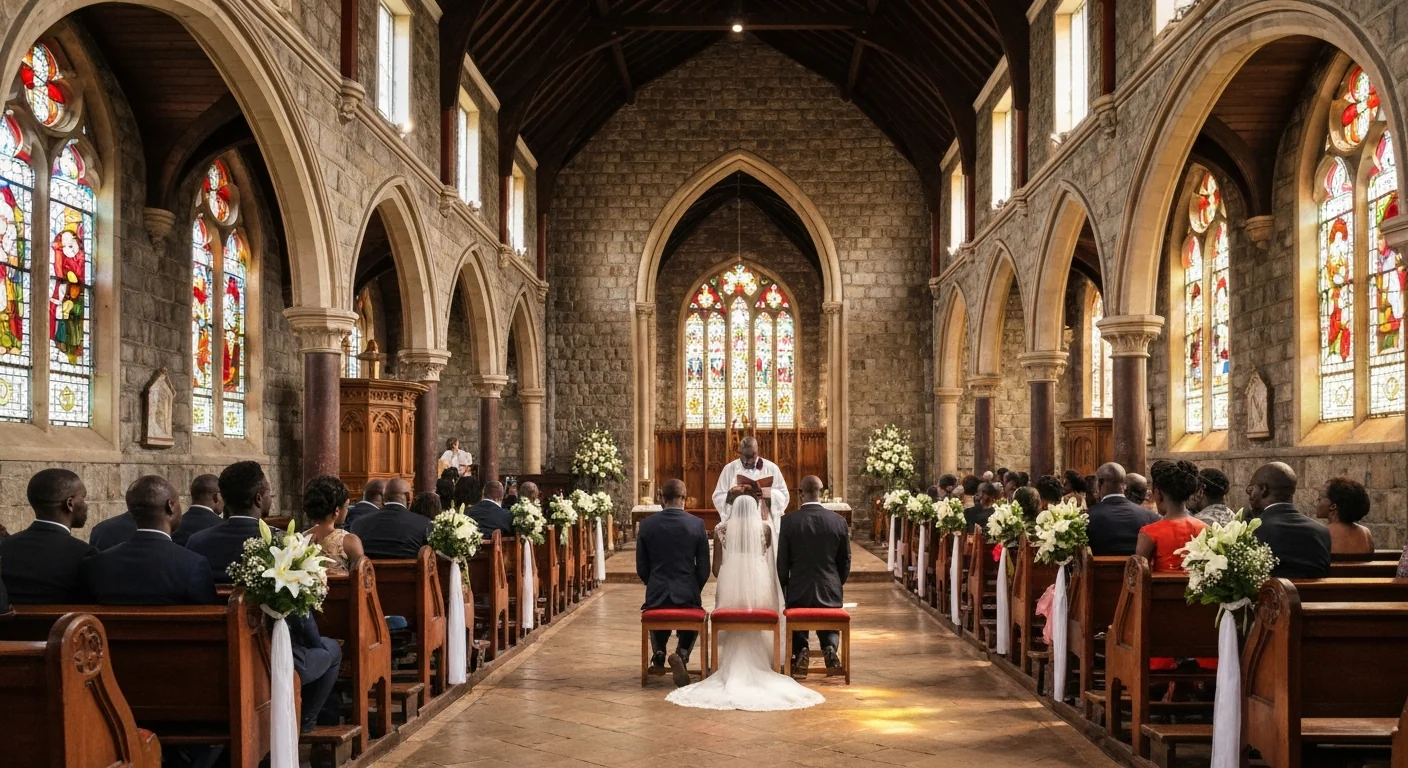
Best Month to Get Married in Kenya (Weather + Pricing Guide)
A month-by-month breakdown of weather, venue pricing, and guest availability across Kenya — so you can pick your wedding date based on data, not guesswork.
Best Month to Get Married in Kenya: Weather, Pricing, and Venue Guide
You need to pick a wedding date. But Kenya has two rainy seasons, a festive peak, regional weather that varies dramatically, and a harambee culture that makes guest cash flow part of the calculation. No wonder couples spend weeks going around in circles.
Short answer? July or August for the best weather. January–February for the best value. October for guest turnout.
But the real answer depends on your venue type, your budget, and whether you’re planning an outdoor garden wedding in Nairobi or a beach ceremony in Mombasa. This article breaks it down month by month, region by region.
Kenya’s Wedding Calendar at a Glance
Before we go deep, here is the full picture in one table. Use this as your starting point.
| Month | Weather | Pricing | Guest Turnout | Overall |
|---|---|---|---|---|
| January | Excellent (dry, hot) | Low — post-holiday | Low (harambee recovery) | Good for budget couples |
| February | Excellent (driest month) | Low | Low | Best weather-value balance |
| March | Declining (long rains starting) | Low–Medium | Medium | Risky for outdoor |
| April | Poor (long rains peak) | Lowest of the year | Medium | Indoor venues only |
| May | Poor (rains continuing) | Lowest of the year | Medium | Indoor venues only |
| June | Good (rains easing) | Medium | High (Madaraka Day) | Great value window |
| July | Excellent (driest Nairobi month) | Medium–High | High | Best for outdoor weddings |
| August | Excellent (dry and clear) | High — peak season | High | Best weather, highest cost |
| September | Very good | Medium–High | High | Great balance of both |
| October | Moderate (short rains starting) | High | Very high (public holidays) | Kenya’s most popular month |
| November | Caution (short rains peak) | Medium | Medium | Higher risk, lower reward |
| December | Good (rains easing mid-month) | Highest of the year | Very high (festive, diaspora) | Premium pricing, festive energy |
Use this table to eliminate months that do not fit your constraints — then read the relevant sections below.
The Best Months for Outdoor Weddings (June–September)
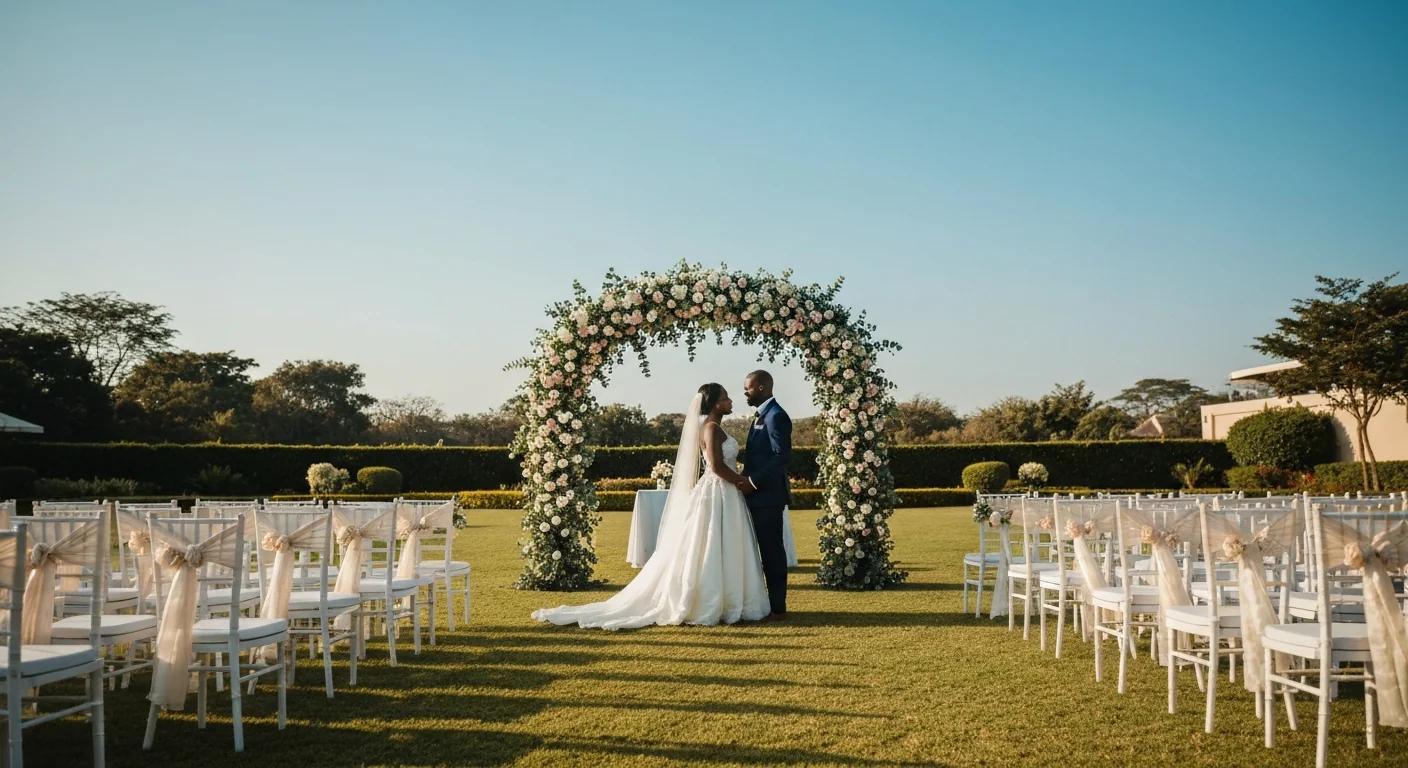
If you are planning a garden wedding, a tented event at a private estate, or any ceremony where the sky is part of the décor, your window is June through September.
July — The Data Pick
July is Nairobi’s driest month statistically. Average rainfall: 17mm across roughly five rainy days. Compare that to April’s 100mm across 16 days and the difference is stark. Clear mornings, cool afternoons, and almost zero risk of a mid-ceremony downpour.
The catch: July is widely known to be ideal, so venues are in high demand. Expect to pay medium-to-high rates and to compete with other couples for the same Saturdays. Book at least eight to ten months ahead for any established garden venue.
August — The Peak
August is dry, warm, and gorgeous. It is also the single busiest wedding month in Kenya by bookings. Photography conditions are excellent — soft golden light, no harsh midday haze. But availability is the challenge. Popular venues in Karen, Tigoni, and Naivasha are often fully booked twelve months in advance for August Saturdays. Photographers and videographers of note are gone by March for August dates.
If August is your goal, start planning immediately and lock in your venue before anything else. Use the Harusi Hub planning checklist to generate a timeline based on your wedding date — it will flag when to book venues, vendors, and other time-sensitive items so you don’t miss critical deadlines.
June — The Underrated Month
June is the sleeper pick in this guide. The long rains typically ease off in the second half of June, pricing is still negotiable (the peak has not fully arrived), and Madaraka Day on June 1st creates a long weekend that many guests can take advantage of without using annual leave. If you have flexibility and want good weather without peak August prices, June — especially late June — deserves serious consideration.
September — The Well-Kept Secret
September holds up as one of the best months that does not get enough credit. The dry season continues, temperatures warm back up from the July cool, and venue availability is slightly better than July and August because fewer couples instinctively target it. Guest turnout is strong, harambee recovery from August is good, and you get excellent photography light without fighting for every available slot.
For couples who missed July and August bookings, September is the first place to look.
Cross-link: How to Plan a Garden Wedding in Kenya
The Best Months for Beach Weddings (July–September and January–February)
Coastal Kenya operates on a different weather calendar to Nairobi. The Indian Ocean monsoon system — rather than the inland rain patterns — drives conditions in Mombasa, Diani, Watamu, and Malindi.
| Month | Mombasa Avg Rainfall | Sea Conditions | Temperature | Wedding Suitability |
|---|---|---|---|---|
| January | 25mm | Calm | 30–33°C | Excellent — hot and dry |
| February | 18mm | Very calm | 30–33°C | Excellent — driest coast month |
| March | 57mm | Moderate | 29–32°C | Caution — rains building |
| April | 196mm | Rough | 27–30°C | Poor — long rains peak |
| May | 260mm | Rough | 26–29°C | Poor — wettest coast month |
| June | 98mm | Windy (SE trades) | 25–28°C | Moderate — improving |
| July | 66mm | Windy but dry | 24–27°C | Good — coolest, driest July |
| August | 64mm | Windy | 25–28°C | Good — dry, steady breeze |
| September | 64mm | Calming | 26–29°C | Very good |
| October | 97mm | Moderate | 27–30°C | Moderate — rains returning |
| November | 97mm | Moderate | 27–30°C | Caution |
| December | 57mm | Calm | 28–31°C | Good — rains easing |
Best months for a beach wedding: July, August, September, January, and February.
July is the coolest and driest month on the coast — the southeast trade winds are consistent but the skies stay clear. The wind is worth factoring into décor (anything lightweight needs to be anchored), but for a couple who wants reliably dry weather, July on the coast is as safe as it gets.
January and February are excellent for different reasons: hot, dry, and calm. Sea conditions are ideal and the festive energy from December has not fully dissipated. The trade-off is that coastal tourism is at its post-Christmas peak, which can push accommodation costs up significantly for guests travelling from Nairobi.
Avoid April and May without question. These are the wettest months on the Kenyan coast, and a beach ceremony in May is genuinely high-risk — not just “might get a light shower” risk, but “ceremony may be unviable” risk.
Cross-links: How to Plan a Beach Wedding in Kenya | Best Wedding Venues in Mombasa
The Best Months for Budget Weddings (January–February and March–May)
If your primary constraint is budget, two different windows offer meaningful savings — each with its own trade-offs.
January–February: Good Weather, Post-Christmas Pricing
This is the best combination of good weather and lower pricing in the Kenyan wedding calendar. Venues drop prices after the December rush. Caterers and photographers who scrambled for bookings in November and December now have open dates. You can realistically negotiate 15–25% off the prices you would pay in July or October.
The catch is harambee. January and February are the hardest months to raise money from guests. Families are still recovering from Christmas spending, school fees are due in January, and the appetite for financial contributions at weddings is at its annual low. If your ceremony budget depends heavily on harambee proceeds, a January wedding requires either a very small guest list or a realistic plan B.
March–May: The Biggest Discounts
April and May carry the largest venue discounts in Kenya — as much as 20–30% below peak rates. Some venues offer further reductions for weekday weddings. This is genuinely the cheapest time of year to hire a venue, a catering team, a photographer, and a marquee.
The significant caveat: the long rains. April is the wettest month in Nairobi (average 100mm) and May is not far behind. Outdoor ceremonies without proper shelter are genuinely at risk. This does not mean you cannot have a beautiful wedding in April — it means you need to plan for rain as a certainty rather than a contingency. A well-configured marquee on a garden property, or an indoor hotel ballroom, removes the weather risk entirely.
Hotel venues with ballrooms actually come into their own in March–May. You lose nothing by being indoors, you gain significant cost savings, and the venues are under-booked so you get better service and more negotiating power.
Year-Round Budget Strategies
| Strategy | Typical Saving |
|---|---|
| Weekday wedding (Monday–Thursday) | 20–30% off venue rate |
| Off-peak months (Jan–May) | 15–30% off vs. peak |
| Upcountry venues (Nakuru, Eldoret, Kisumu) | 20–30% cheaper than Nairobi year-round |
| Friday vs. Saturday | 10–20% saving at many venues |
| Morning ceremony (before noon) | Venue sometimes discounts afternoon slot separately |
Combining an off-peak month with a weekday date can result in total venue savings of 35–50% versus a peak Saturday in August. For couples with flexible employers and guests who can manage a Thursday ceremony, this is one of the most powerful levers in the entire wedding budget. Track these savings against your overall spend with the Harusi Hub budget tracker — it has over 20 expense categories and sends over-budget alerts so you know immediately when a line item needs attention.
Cross-link: Wedding Budget Guide — Kenya
October — Kenya’s Most Popular Wedding Month (and Why)
October looks like a strange choice on paper. The short rains are starting. Afternoons can bring showers. And yet October consistently has the highest density of wedding bookings in Kenya.
The reason is simple: guest availability.
October has two public holidays — Mazingira Day on October 10th and Mashujaa Day on October 20th. These create two separate long weekends within the same month. For couples whose guest list includes working professionals, upcountry family members, and diaspora who are planning a visit but cannot take extended leave, long weekends are enormously valuable. More guests can attend without sacrificing annual leave days.
There is also a harambee cash flow argument. By October, the September salary cycle is complete, the chaos of August festivities has settled, and families are not yet in December spending mode. Harambee contributions in October tend to be strong.
The weather caveat is real. If you are planning an outdoor ceremony in October, build in a weather contingency as part of your contract — not as a vague idea. Confirm with your venue in writing what happens if rain forces the ceremony indoors. Many popular venues have both outdoor and indoor spaces specifically because of October demand.
Short rains in October tend to fall in the afternoon and evening rather than the morning. If you have flexibility, a 10am or 11am ceremony start reduces the weather risk compared to a 3pm ceremony.
Cross-link: How to Plan a Wedding in Kenya — The Ultimate Guide
December — The Festive Peak
December is the most expensive month in the Kenyan wedding calendar and also one of the most popular. Understanding why helps you decide whether it is right for you.
Diaspora families return to Kenya in December for the first time in months or years. School holidays mean children can travel. The festive atmosphere creates an energy that is genuinely hard to replicate in other months. Jamhuri Day on December 12th creates an early-month long weekend that many couples use for their ceremony.
The pricing reality is unambiguous:
| Venue Type | Approximate December Price (KES) |
|---|---|
| 5-star hotel ballroom | 150,000 – 300,000 |
| Established garden venue (Nairobi) | 80,000 – 180,000 |
| Mid-range hotel venue | 60,000 – 120,000 |
| Budget community hall | 15,000 – 40,000 |
These are not marked-up prices — they reflect genuine demand. The same venue that charges KES 60,000 in April may charge KES 130,000 in December, and they will be fully booked regardless.
Key December planning rules:
- Book your venue at least twelve months ahead for any Saturday in December. The best venues are gone by January of the same year. Browse available venues and vendors on the Harusi Hub marketplace to compare options by location and price range.
- Photographers, videographers, and live bands are fully booked well before mid-year for December dates. Lock in your key suppliers before they disappear.
- Avoid the Christmas week itself (December 24–26). Competing Christmas events, inflated accommodation prices, and supplier availability issues make this the hardest window of the year to execute well.
- The Jamhuri Day weekend (around December 12th) is often the sweet spot — festive energy, slightly less competition than the weekends closer to Christmas.
Regional Weather Quick Reference
Kenya’s geography means weather varies significantly between regions. Use these mini-tables to calibrate expectations based on your venue location.
Nairobi (1,661m elevation)
| Best Months | Jul, Aug, Sep, Jan, Feb |
|---|---|
| Avoid | Apr, May, Nov |
| Rainy seasons | Mar–May (long), Oct–Nov (short) |
| Average temperature | 18–26°C year-round |
| Jul rainfall | ~17mm (driest) |
| Apr rainfall | ~100mm (wettest) |
Mombasa / Coast (sea level)
| Best Months | Jul, Aug, Sep, Jan, Feb |
|---|---|
| Avoid | Apr, May |
| Rainy seasons | Apr–Jun (long), Oct–Nov (short) |
| Average temperature | 24–33°C year-round |
| Feb rainfall | ~18mm (driest) |
| May rainfall | ~260mm (wettest) |
Rift Valley (Naivasha, Nakuru — 1,800–1,900m)
| Best Months | Jul, Aug, Sep, Jan, Feb |
|---|---|
| Avoid | Apr, May, Nov |
| Note | Cooler evenings year-round — guests may need a layer |
| Jul rainfall | ~20mm |
| Apr rainfall | ~120mm |
Mt Kenya Region (Nyeri, Nanyuki — 1,700–2,000m)
| Best Months | Jul, Aug, Jan, Feb |
|---|---|
| Avoid | Apr, May, Oct–Nov |
| Note | Can be cold at night even in dry season. Temperature drops to 8–12°C after dark |
| Highland rain | More intense than Nairobi when it falls |
Safari note: If your wedding involves guests staying near Maasai Mara or any game reserve in August, accommodation prices inflate by 50–100% due to the wildebeest migration. This is not a reason to avoid August, but it is a budget line to factor in for destination guests.
Cultural Calendar — Dates to Plan Around
The calendar of public holidays, religious observances, and cultural rhythms is as important as the weather in Kenyan wedding planning.
Public Holidays Worth Leveraging
| Holiday | Date | Benefit |
|---|---|---|
| Madaraka Day | June 1 | Long weekend — strong guest availability |
| Mashujaa Day | October 20 | October long weekend — guest availability |
| Jamhuri Day | December 12 | December ceremony with festive feel |
| New Year’s Day | January 1 | Post-holiday — avoid Dec 31/Jan 1 itself |
| Easter Weekend | Variable (March–April) | Long weekend but rains season — use for small weddings |
Islamic Calendar
Eid al-Fitr and Eid al-Adha shift by approximately eleven days each year relative to the Gregorian calendar. If your guest list includes Muslim family members or you are planning a ceremony near a Muslim holiday, confirm dates against the Islamic calendar for your specific year. Scheduling a wedding on Eid itself reduces attendance from Muslim guests significantly.
Christian Calendar
Some churches in Kenya will not conduct weddings during Lent (typically February–April) or Advent (late November to December 24). If your ceremony requires a church blessing or a religious officiant, confirm your venue date against the church calendar before you book.
Harambee Timing
Harambee fundraising — the informal collective contribution culture that is embedded in Kenyan wedding planning — follows its own seasonal logic:
| Period | Harambee Climate | Reason |
|---|---|---|
| January | Weak | Post-Christmas financial recovery, school fees |
| February | Weak–Moderate | Slowly improving |
| June | Strong | Post-budget financial confidence, pre-school-holiday |
| October | Strong | Post-September salary, pre-December spending |
| December | Variable | Festive generosity vs. Christmas spending pressure |
If your event depends on a meaningful harambee, June and October are your best windows. January is your worst. Factor this into your date decision — not just the weather.
How to Use This Guide
The right month for your wedding is the intersection of four factors:
- Venue type — outdoor venues live and die by the dry season window (June–September)
- Budget — January–February and March–May offer the clearest savings
- Guest list — October and December deliver the strongest attendance
- Harambee dependency — June and October for best fundraising conditions
If those four factors point to the same month, you have your answer. If they conflict — for example, you want outdoor in July but need January pricing — use this guide to find the closest compromise, or consider whether structural changes (a smaller guest list, a tent for a rainy month, a weekday date) can close the gap.
Read the full planning guide for next steps: Plan Your Wedding in Kenya — The Ultimate Guide
Also useful: Destination Wedding in Kenya | Best Wedding Venues in Naivasha
Ready to lock in your date?
Create your free wedding website, set your date, and start planning — all in one place.
Start Planning Your Wedding