Pre-Wedding Shoot Locations in Nairobi (Top 15 Spots)
The best pre-wedding and engagement photo shoot locations in and around Nairobi — from Karura Forest to KICC rooftop. Includes permit requirements, costs, best time of day, and photographer tips.
Pre-Wedding Shoot Locations in Nairobi (Top 15 Spots)
That moment when you see your engagement photos for the first time and think, “We look incredible” — it starts with choosing the right location. The backdrop matters more than most couples realize, and Nairobi has some genuinely stunning options hiding in plain sight.
A pre-wedding shoot (also called an engagement shoot) is one of the most enjoyable parts of wedding planning. It is your chance to get comfortable in front of a camera before the big day, test your photographer’s style, and create images you will use on your wedding website, invitations, and save-the-dates.
Nairobi and its surroundings offer an extraordinary range of locations — lush forests, urban rooftops, safari parks, colonial-era estates, and modern architecture. This guide covers the 15 best spots with everything you need to know: permits, costs, the best time of day to shoot, and practical tips.
What Makes a Great Pre-Wedding Shoot Location?
Before choosing a spot, consider:
- Lighting. Natural light makes or breaks photos. Most outdoor locations look best during “golden hour” — the first hour after sunrise or the last hour before sunset.
- Background variety. The best locations offer multiple backdrops within walking distance — a forest, a clearing, a bridge, and a water feature, for example.
- Crowd levels. You do not want strangers walking through your shots. Early mornings and weekdays are your friends.
- Permits. Some locations require photography permits. Always check and pay in advance.
- Accessibility. Can you get to the location in your outfits without ruining them? Is there parking? Is there a place to change?
The 15 Best Pre-Wedding Shoot Locations in Nairobi
1. Karura Forest
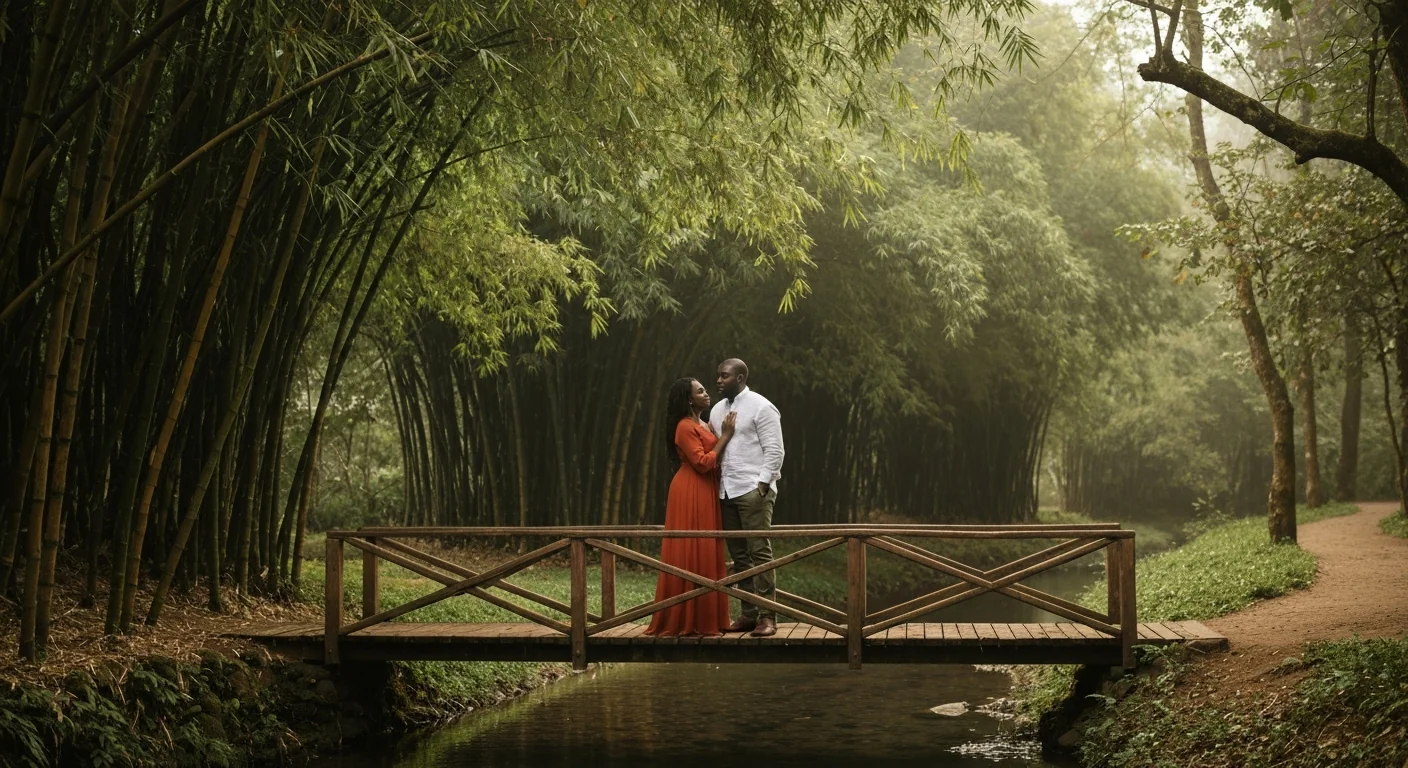
Karura Forest is the most popular pre-wedding shoot location in Nairobi, and with good reason. Over 1,000 hectares of indigenous forest right inside the city, with waterfalls, bamboo groves, river crossings, and dappled light that photographers dream about.
What you get: Waterfall backdrops, bamboo tunnels, forest paths, river scenes, caves, and open meadows.
Best time to shoot: Early morning (7:00–9:00 AM) for soft light and minimal crowds. Weekdays are significantly quieter.
Permit: Photography permits are required. Apply through Kenya Forest Service or at the gate. Expect to pay approximately KSh 2,000–5,000 for a photography permit.
Entry fee: KSh 100 for Kenyan citizens (per person).
Tips: Wear shoes you can walk in — some of the best spots require a 15–20 minute walk from the parking areas. The waterfall area is the most requested backdrop, so arrive early to avoid overlapping with other couples.
2. Nairobi Arboretum
The Arboretum is more manicured than Karura — think wide green lawns, towering trees, and well-maintained paths. It is perfect for couples who want a polished, garden-party aesthetic.
What you get: Wide lawns, tree-lined avenues, flowering gardens, and shaded canopy spots.
Best time to shoot: Late afternoon (4:00–6:00 PM) for golden light filtering through the trees.
Permit: Photography permit approximately KSh 2,000–3,000.
Entry fee: KSh 65 for Kenyan adults.
Tips: The Arboretum is smaller than Karura, so it fills up faster on weekends. Book a weekday morning if possible. The large fig tree near the center makes an excellent focal point.
3. KICC Rooftop (Kenyatta International Convention Centre)
For an urban, skyline-focused shoot, the KICC rooftop gives you panoramic views of Nairobi from 28 floors up. It is dramatic, modern, and completely different from the nature-focused options.
What you get: 360-degree views of the Nairobi skyline, dramatic architectural lines, and a unique perspective.
Best time to shoot: Late afternoon for warm light on the cityscape, or just after sunrise for empty skies and soft colors.
Permit: Photography access approximately KSh 2,000–5,000. Contact KICC management in advance.
Entry fee: Standard rooftop visit is KSh 500 per person; photography rates are higher.
Tips: It can be windy at the top — plan outfits and hairstyles accordingly. The circular helipad level offers the most unobstructed views.
4. Nairobi National Park
Where else in the world can you take engagement photos with giraffes and zebras wandering in the background and a city skyline behind them? Nairobi National Park is uniquely Kenyan and creates images that no other city on earth can replicate.
What you get: Wildlife and savannah backdrop, the iconic Nairobi skyline behind open plains, acacia trees, and dramatic skies.
Best time to shoot: Early morning (6:30–8:30 AM) when animals are most active and the light is soft.
Permit: KWS photography permit required — approximately KSh 5,000–10,000 for commercial/professional photography. Park entry is KSh 430 per Kenyan citizen.
Tips: You must stay in or near your vehicle in most areas (this is a national park with lions). Work with a photographer experienced in shooting within wildlife parks. The section near the main gate with the skyline in the background is the most photographed spot.
5. Karen Blixen Museum
The Karen Blixen Museum (of “Out of Africa” fame) has colonial-era architecture, manicured gardens, lush green lawns, and the Ngong Hills in the distance. It offers a timeless, elegant aesthetic.
What you get: Colonial farmhouse, verandah with pillars, green gardens, sweeping lawns, and Ngong Hills backdrop.
Best time to shoot: Morning (8:00–10:00 AM) or late afternoon (4:00–5:30 PM).
Permit: Photography permit approximately KSh 3,000–5,000 through National Museums of Kenya.
Entry fee: KSh 200 for Kenyan citizens.
Tips: The gardens and the farmhouse exterior are the main draws. The interior may require additional permission. Outfits with earth tones and classic styling suit this location particularly well.
6. Tatu City
Tatu City is a modern mixed-use development on the outskirts of Nairobi with wide boulevards, modern architecture, and landscaped open spaces. It gives a clean, contemporary look that works well for couples who want something urban but not chaotic.
What you get: Modern architecture, wide roads with minimal traffic, landscaped green spaces, and contemporary aesthetics.
Best time to shoot: Golden hour (6:00–6:45 AM or 5:30–6:15 PM) for long shadows on clean lines.
Permit: Contact Tatu City management for photography access — typically KSh 2,000–5,000.
Tips: The development is still growing, so some areas may be under construction. Confirm specific accessible areas with management before your shoot date. The clean lines work exceptionally well for minimalist, fashion-forward styling.
7. Paradise Lost (Kiambu)
Paradise Lost is a nature park in Kiambu with caves, a waterfall, a lake, and lush tropical vegetation. It has a wilder, more adventurous feel than the curated city parks.
What you get: Waterfalls, caves, a boating lake, tropical foliage, and rock formations.
Best time to shoot: Mid-morning (9:00–11:00 AM) when sunlight reaches the waterfall area.
Permit: Photography fee approximately KSh 2,000–3,000. Entry fee KSh 350 per person.
Tips: The waterfall area can be slippery — wear sensible shoes for the walk in and change into heels at the shoot location. The cave entrance creates dramatic, moody shots.
8. Giraffe Centre (AFEW)
If you want photos with actual giraffes, the Giraffe Centre in Langata is the place. The endangered Rothschild’s giraffes can be fed by hand, and they are remarkably photogenic.
What you get: Close-up photos with giraffes, the elevated feeding platform, green surroundings, and a fun, joyful atmosphere.
Best time to shoot: First thing when it opens (9:00 AM) before tour groups arrive.
Permit: Photography fees apply — contact the center directly. Expect approximately KSh 5,000–10,000 for professional photography.
Entry fee: KSh 400 for Kenyan adults.
Tips: The giraffes are the star, but the surrounding grounds also offer good backdrops. Wear colors that contrast with the giraffes’ golden-brown coloring — navy, burgundy, or white work well.
9. Two Rivers Mall Rooftop and Grounds
Two Rivers offers modern architecture, wide open spaces, and an interesting mix of water features, bridges, and geometric structures. The rooftop parking area also provides clean city views.
What you get: Modern glass and steel architecture, water features, landscaped walkways, and the Ferris wheel as a backdrop.
Best time to shoot: Early morning (before the mall opens at 9:00 AM) for empty pathways and clean backgrounds.
Permit: Contact mall management — photography is sometimes restricted without prior arrangement. Fees vary.
Tips: Weekday early mornings are essential to avoid shoppers walking through your shots. The area around the outdoor water features and the Ferris wheel creates distinctive images.
10. Uhuru Gardens
Uhuru Gardens is a national monument with wide lawns, a lake, memorials, and mature trees. It is one of the most spacious open locations in Nairobi and offers a patriotic, significant backdrop.
What you get: Wide green lawns, the monument area, lake views, and mature tree canopy.
Best time to shoot: Late afternoon for warm light across the lawns.
Permit: Photography permit required — contact National Museums of Kenya. Approximately KSh 2,000–5,000.
Tips: The park is large, so there is plenty of space to spread out without competing with other groups. The monument itself creates strong architectural lines for framing.
11. Oloolua Nature Trail (Karen)
Oloolua is a hidden gem — a forested trail in Karen with a waterfall, river crossings, and dense canopy. It is less well-known than Karura, which means fewer crowds.
What you get: Forest canopy, river crossings, small waterfalls, wooden bridges, and mossy rocks.
Best time to shoot: Mid-morning for light that filters through the canopy.
Permit: Photography fees approximately KSh 1,500–3,000. Entry KSh 200 per person.
Tips: The trail involves some uneven terrain. Bring a change of shoes and be prepared for some walking. The wooden bridge crossings create beautiful framing opportunities.
12. Ngong Hills
Ngong Hills offers sweeping views of the Rift Valley on one side and Nairobi on the other. The ridgeline walk is dramatic and cinematic — wide skies, rolling green hills, and a sense of epic scale.
What you get: Ridgeline views, Rift Valley panorama, wide-open skies, and wind-blown, editorial-style shots.
Best time to shoot: Early morning (6:30–8:00 AM) before clouds build. The sunrise over the Rift Valley is spectacular.
Permit: KWS manages the hills — entry fee approximately KSh 300 per Kenyan citizen. Photography permit may be required for professional shoots.
Tips: It is windy on the ridge. Plan hairstyles and outfits that work with wind rather than against it. Flowing dresses and natural styling photograph beautifully here. Bring a jacket — mornings are cold at altitude.
13. The Waterfront (Karen)
The Waterfront Karen is a newer development with restaurants, shops, and beautifully landscaped grounds around a central water feature. It offers a polished, contemporary Nairobi aesthetic.
What you get: Modern architecture, water features, green landscaping, and restaurant terraces.
Best time to shoot: Golden hour for warm light on the stone and glass structures.
Permit: Contact management — photography may require advance arrangement and a fee of approximately KSh 2,000–5,000.
Tips: The mix of greenery and architecture allows you to get both natural and urban looks in one location.
14. David Sheldrick Wildlife Trust (Sheldrick Elephant Orphanage)
The Sheldrick Trust in Nairobi National Park allows visits during the public feeding hour. While professional photography during feeding time is restricted, the surrounding grounds and the emotional connection to the elephants create meaningful images.
What you get: Baby elephant backdrop, natural bush setting, and an emotionally meaningful location.
Best time to shoot: Feeding time is 11:00 AM daily. Arrive early for the best viewing position.
Permit: Photography during feeding is limited — contact the trust about professional shoot arrangements. Adoption of an elephant (from KSh 5,000) may provide additional access.
Entry fee: Free for the public viewing hour; foster parents get additional access.
Tips: This location works best as one stop in a multi-location shoot. The surrounding area of Nairobi National Park can be combined for a full morning of shooting.
15. Nairobi Railway Museum
The Railway Museum near Uhuru Highway has vintage steam trains, old carriages, and industrial-era architecture. It creates a unique, vintage-themed shoot that stands out from the typical nature backgrounds.
What you get: Vintage train carriages, railway tracks, industrial metal structures, and a nostalgic, colonial-era atmosphere.
Best time to shoot: Mid-morning to early afternoon — the museum grounds are not dependent on golden-hour lighting because the structures provide their own character.
Permit: Photography fee approximately KSh 1,000–3,000. Entry fee KSh 200 for Kenyan citizens.
Tips: The vintage aesthetic calls for styling that matches — classic outfits, clean lines, and a timeless look. The contrast between formal wear and industrial settings creates striking images.
Pre-Wedding Shoot Cost Summary
| Location | Entry Fee (KES) | Photo Permit (KES) | Best For |
|---|---|---|---|
| Karura Forest | 100 | 2,000–5,000 | Forest / waterfalls |
| Nairobi Arboretum | 65 | 2,000–3,000 | Manicured gardens |
| KICC Rooftop | 500 | 2,000–5,000 | City skyline |
| Nairobi National Park | 430 | 5,000–10,000 | Wildlife + skyline |
| Karen Blixen Museum | 200 | 3,000–5,000 | Colonial elegance |
| Tatu City | — | 2,000–5,000 | Modern / urban |
| Paradise Lost | 350 | 2,000–3,000 | Waterfalls / caves |
| Giraffe Centre | 400 | 5,000–10,000 | Giraffes |
| Ngong Hills | 300 | Varies | Dramatic landscapes |
| Railway Museum | 200 | 1,000–3,000 | Vintage / industrial |
Tips for a Great Pre-Wedding Shoot
Hire the Right Photographer
Your pre-wedding shoot should ideally be done by the same photographer who will shoot your wedding. This builds rapport and lets you see their editing style before the big day. Most Nairobi wedding photographers charge KSh 15,000–50,000 for a 2–3 hour engagement session with edited digital images.
For a list of top wedding photographers in Nairobi, see our guide on top wedding photographers in Nairobi.
Coordinate Your Outfits
Plan 2–3 outfit changes to match different backdrops. A common approach:
- Outfit 1: Casual and relaxed (for forest or nature shots)
- Outfit 2: Semi-formal or traditional (for garden or architectural settings)
- Outfit 3: Formal or statement piece (for the hero shots)
Coordinate colors between the two of you — you do not need to match exactly, but your outfits should complement each other.
Choose the Right Time of Day
- Golden hour (6:00–7:00 AM and 5:00–6:30 PM): Warm, flattering light. Best for outdoor locations.
- Overcast days: Soft, even lighting with no harsh shadows. Secretly one of the best conditions for photography.
- Midday sun: Generally the worst — harsh shadows under eyes and noses. Avoid unless shooting in deep shade.
Bring Essentials
Pack a small bag with:
- Extra shoes (walk in comfortable shoes, change for photos)
- Touch-up makeup, deodorant, tissue
- Water and a snack
- Sunglasses for between shots
- Safety pins and double-sided tape for wardrobe adjustments
- A phone charger (you will want to take behind-the-scenes photos)
Relax and Be Yourselves
The best engagement photos capture genuine connection — laughing, whispering, walking hand in hand. Stiff poses look stiff in photos. Trust your photographer to direct you, and focus on each other rather than the camera.
Consider a Multi-Location Shoot
If time allows, combine 2–3 locations in one session. For example:
- Morning: Karura Forest (7:00–8:30 AM)
- Mid-morning: Karen Blixen Museum (9:00–10:00 AM)
- Sunset: Ngong Hills or KICC rooftop (5:00–6:30 PM)
This gives you variety in your final gallery and uses different lighting conditions throughout the day.
Make Your Photos Work for You
Your pre-wedding photos are not just wall art — they tell your story. Use them on your wedding website, your save-the-date cards, your wedding invitation, and your guest book display. The better the location and the more natural the shots, the more you will use and love them.
Share Your Love Story With a Wedding Website
Upload your pre-wedding photos, share your story, and send digital invitations — all from your free Harusi Hub wedding website.
Start Planning on Harusi Hub