Wedding Decor Trends in Kenya 2026
The biggest wedding decor trends in Kenya for 2026 — organic greenery, African-inspired textures, bold colour palettes, outdoor setups, lighting trends, sustainable decor, budget tips, and top Nairobi decorators with price ranges in KES.
Wedding Decor Trends in Kenya 2026
The days of identical white draping and plastic chair covers at every Kenyan wedding are over. In 2026, couples are choosing decor that tells their story — rooted in African aesthetics, shaped by personal taste, and designed to create an atmosphere guests can feel the moment they walk in.
Wedding decor in Kenya has undergone a dramatic transformation. A decade ago, most receptions looked the same: white tablecloths, white chair covers, white everything, with a coloured sash to “personalise” the space. Today, Nairobi’s best decorators are producing work that draws from African design traditions, global contemporary aesthetics, and the natural beauty of Kenya’s landscapes.
This guide covers the decor trends defining Kenyan weddings in 2026, practical advice on budgeting and execution, the DIY versus professional decorator debate, and where to find the right team to bring your vision to life.
Trend 1: Natural & Organic Greenery
The single biggest shift in Kenyan wedding decor over the past three years has been the move toward lush, natural greenery as the primary decorative element — replacing the heavy artificial flower arrangements that dominated for years.
What It Looks Like
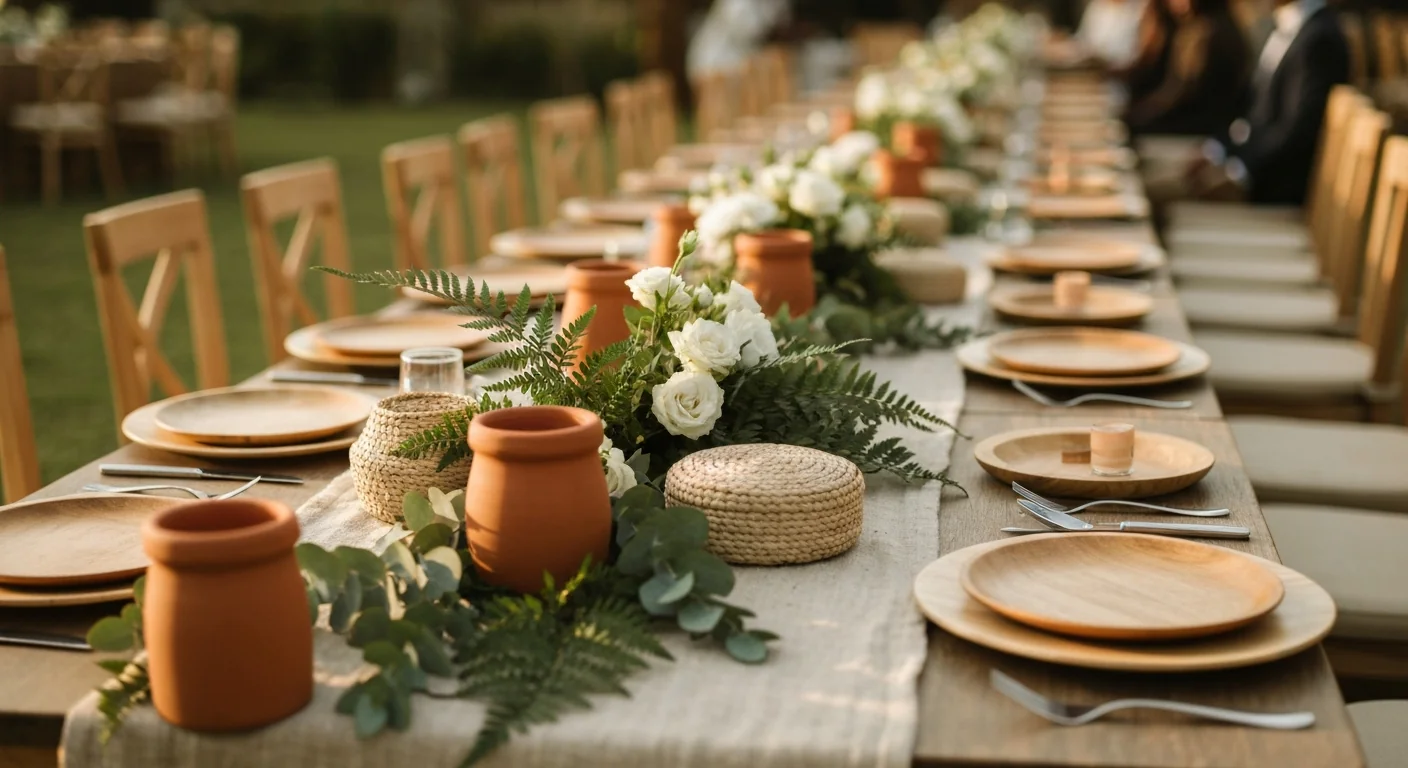
Think cascading eucalyptus runners down the centre of long tables. Fern-filled centrepieces in terracotta pots. Monstera leaves framing the entrance arch. Olive branches draped across the sweetheart table. Hanging greenery installations suspended from tent frames. The colour palette is dominated by varying shades of green with white or cream as an accent.
Why It Works in Kenya
Kenya has an abundance of beautiful foliage available year-round. Eucalyptus, ferns, olive branches, and tropical leaves are locally sourced and significantly more affordable than imported flowers. This means the greenery trend is not just aesthetically current — it is also genuinely more cost-effective.
Popular Greenery Elements
- Eucalyptus table runners — Fresh eucalyptus branches arranged down the centre of long tables. Cost: KES 500 to KES 1,500 per metre of runner.
- Fern walls — A backdrop of mounted ferns behind the sweetheart table or behind the cake. Cost: KES 10,000 to KES 30,000 for a full wall installation.
- Greenery arches — A ceremony arch made from woven eucalyptus, olive branches, and trailing greenery. Cost: KES 15,000 to KES 50,000 depending on size and density.
- Hanging installations — Eucalyptus and fern garlands suspended from tent poles or ceiling beams. Creates a canopy effect. Cost: KES 20,000 to KES 60,000 for a tent installation.
- Potted plants as centrepieces — Succulents, ferns, or herbs in ceramic or terracotta pots placed at each table. Guests can take them home as favours. Cost: KES 300 to KES 800 per table.
Budget Impact
A greenery-focused decor scheme can cost 20 to 40 percent less than a traditional flower-heavy scheme because local foliage is cheaper than imported roses or hydrangeas. A full greenery setup for 200 guests typically costs KES 60,000 to KES 150,000 — compared to KES 100,000 to KES 250,000 for an equivalent flower-based setup.
Trend 2: African-Inspired Textures & Materials
Kenyan couples are increasingly incorporating materials and textures rooted in African craft traditions into their wedding decor. This trend reflects a broader cultural confidence — the idea that a wedding can be beautiful, modern, and unmistakably African all at once.
Key Materials
- Sisal and woven baskets — Kiondos (Kenyan woven baskets) used as centrepieces, card holders, or decorative elements. They come in beautiful natural colours and geometric patterns. Cost: KES 200 to KES 1,000 per basket depending on size.
- Ankara and kitenge fabrics — Vibrant African wax prints used as table runners, napkin wraps, or draped across the ceremony arch. A striking visual statement. Cost: KES 200 to KES 500 per metre of fabric.
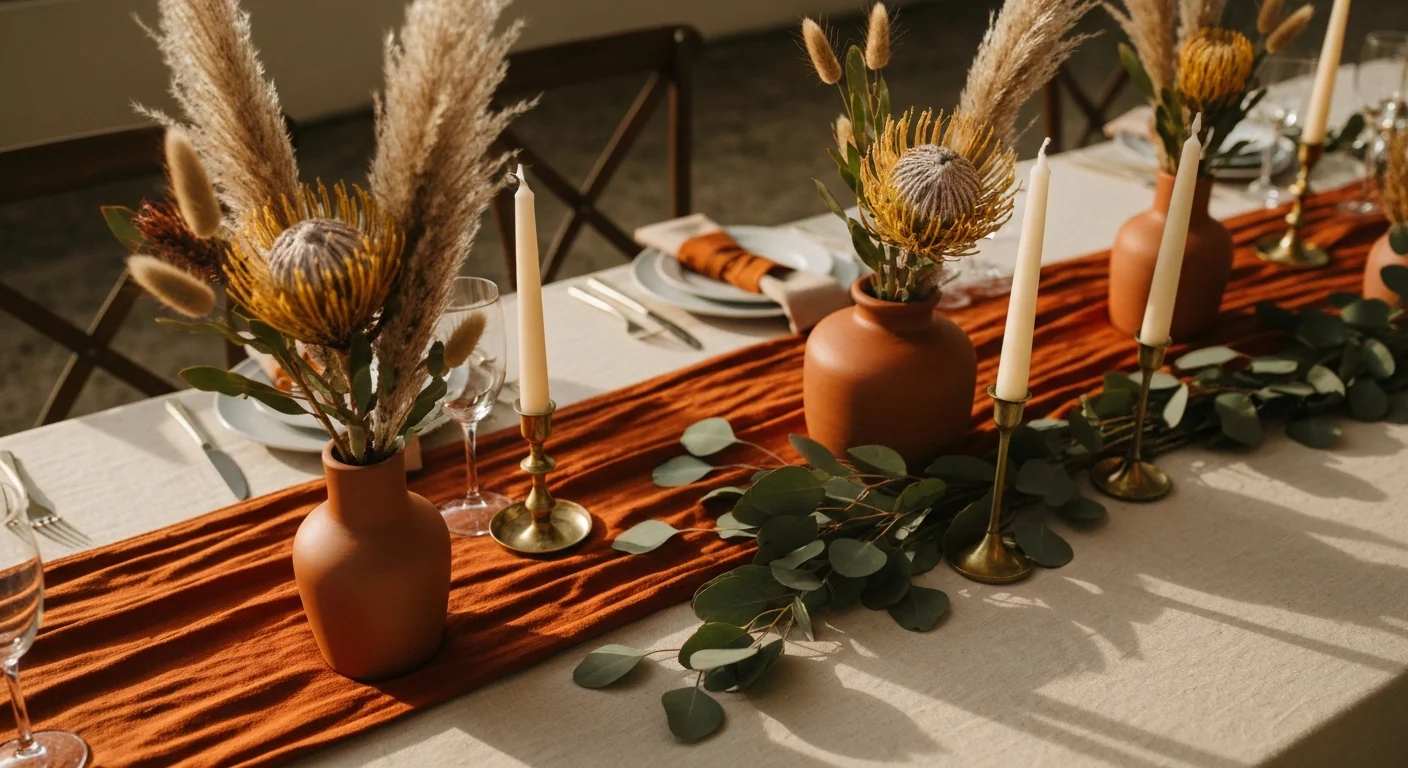
- Clay and terracotta pottery — Handmade clay pots as centrepiece vessels or candle holders. The earthy tones anchor the colour palette. Cost: KES 300 to KES 1,500 per piece.
- Beaded elements — Maasai-inspired beadwork used on napkin rings, table numbers, or as accent pieces on the sweetheart table. Cost: KES 100 to KES 500 per piece.
- Woven grass mats — Used as table placemats or aisle runners. Creates a tactile, grounded aesthetic. Cost: KES 200 to KES 600 per mat.
How to Execute Without It Feeling Like a Cultural Exhibition
The key is integration, not isolation. African-inspired textures should be woven naturally into the overall design rather than placed as standalone “African elements.” A table with a kitenge runner, terracotta candle holders, eucalyptus garlands, and modern glass votives feels cohesive and sophisticated. A table with a random kiondo next to a plastic vase feels disconnected.
Work with a decorator who understands how to blend these elements. The best results come from decorators who have a genuine understanding of African design principles rather than those who are adding African items as an afterthought.
Trend 3: Bold & Saturated Colour Palettes
White weddings are not disappearing, but 2026 is seeing a confident move toward colour — rich, saturated, unapologetic colour.
Trending Palettes
- Terracotta + Sage Green + Cream — Warm, earthy, and organic. The most popular palette in Nairobi right now. Works beautifully at garden and bush venues.
- Burgundy + Gold + Ivory — Rich and regal. A classic palette that feels luxurious without being over the top. Pairs well with formal indoor venues.
- Dusty Rose + Mauve + Sage — Soft, romantic, and feminine. Popular for daytime weddings and garden settings.
- Burnt Orange + Rust + Cream — Bold and warm. Evokes the Kenyan landscape — the earth, the sunset, the savanna. Works at both indoor and outdoor venues.
- Emerald Green + Gold + White — Opulent and striking. The deep green creates drama, the gold adds glamour, and the white keeps it fresh.
- Royal Blue + Copper + Ivory — A more unexpected combination that is gaining traction. The contrast between the cool blue and warm copper creates visual interest.
Applying Colour
The most effective approach is to choose two or three colours and apply them consistently across all decor elements: linens, flowers, centrepieces, ceremony backdrop, lighting, cake design, and stationery. Consistency is what makes a colour palette feel intentional rather than random.
Common mistakes to avoid:
- Too many colours — stick to a maximum of three plus a neutral
- Mismatched shades — sage green and lime green are not the same colour, and mixing them creates visual confusion
- Colour only in the flowers — if your colour palette does not extend to the linens, lighting, and other elements, it will not read as a cohesive theme
Trend 4: Outdoor & Open-Air Setups
The preference for outdoor weddings continues to grow in Kenya, driven by the country’s beautiful climate, the rise of stunning garden and bush venues, and the influence of destination wedding aesthetics.
Popular Outdoor Setup Styles
Garden Ceremonies
A ceremony space set under mature trees, with a natural arch framed by greenery and flowers. Guests sit on chiavari chairs or wooden benches arranged in rows. The aisle is lined with lanterns, petals, or low greenery. The trees themselves become part of the decor.
Popular venues: Naivasha (Loldia House, Chui Lodge), Kiambu County (Tafaria Castle, Zen Garden), Nairobi (Karura Forest, various private gardens).
Bush & Savanna Setups
A long table under the open sky or a clear-span tent, with the landscape as the backdrop. Decor is minimal — lanterns, candles, foliage — because the setting does the work. This is the aesthetic that international destination couples associate with Kenya, and local couples are now embracing it too.
Popular venues: Nanyuki (Mount Kenya Safari Club, Ol Pejeta), Amboseli-area lodges, Maasai Mara conservancies.
Lakeside & Waterfront
Ceremony and reception set along the shoreline. The water creates a natural backdrop that needs minimal decoration. Draping, lanterns, and a simple arch are usually sufficient.
Popular venues: Naivasha (lakefront properties), Diani Beach, Kilifi Creek venues.
Outdoor Decor Considerations
- Wind: Outdoor venues need weighted centrepieces and secure draping. Tall, top-heavy arrangements get knocked over by wind. Plan for it.
- Rain: Always have a backup plan. Clear-span tents or covered terraces serve as rain contingencies. Your decor plan should work under both open sky and tent.
- Lighting: Outdoor venues get dark after 6:30pm. Your lighting plan is not optional — it is essential. Festoon lights, lanterns, and uplighting are not decorative luxuries at an outdoor wedding, they are functional necessities.
- Ground surface: Grass, gravel, and dirt are not as stable as indoor floors. Consider aisle boards, pathways for guests in heels, and stable bases for display tables and the cake.
Trend 5: Lighting as a Design Element
Lighting has moved from a functional afterthought to one of the most impactful decor elements at Kenyan weddings in 2026. The right lighting transforms a space more dramatically than any other single element.
Festoon & String Lights
Warm bulb string lights criss-crossed above the reception area, creating a canopy of light. This is the single most popular lighting choice at Kenyan outdoor weddings. The warm glow creates an intimate, magical atmosphere as the sun sets.
Cost: KES 10,000 to KES 30,000 for a full festoon light installation depending on the area covered and the number of bulbs.
Fairy Light Canopies
Dense clusters of tiny fairy lights draped across the ceiling or tent interior. Creates a starry sky effect. Particularly beautiful in tents where the fabric ceiling reflects the light.
Cost: KES 15,000 to KES 40,000 for a full tent canopy installation.
LED Uplighting
Coloured LED lights placed at the base of walls, tent poles, or columns to wash the space in your wedding colours. Uplighting changes the entire mood of a room — a plain white tent washed in warm amber feels like a completely different space than the same tent with no lighting.
Cost: KES 5,000 to KES 20,000 for a full uplighting setup (8 to 16 lights).
Candles & Lanterns
Pillar candles in hurricane glasses, floating candles in glass bowls, lanterns lining the aisle or scattered across tables. Candlelight adds warmth and romance that electric light cannot replicate. For venues that do not allow open flames, LED candles have improved dramatically and now flicker convincingly.
Cost: KES 200 to KES 800 per lantern; KES 5,000 to KES 15,000 for a full table candle setup for 20 tables.
Neon Signs
Custom neon signs with the couple’s names, wedding date, or a meaningful phrase. These serve as both decor and a photo backdrop. The most popular options in Kenya are “Better Together,” the couple’s last name, or a phrase in Swahili.
Cost: KES 8,000 to KES 25,000 for a custom neon sign.
Trend 6: Sustainable & Eco-Friendly Decor
Sustainability is moving from a niche concern to a mainstream consideration for Kenyan couples. The wedding industry generates significant waste — single-use decorations, artificial flowers, plastic elements — and more couples are actively seeking alternatives.
Sustainable Decor Practices
- Potted plants as centrepieces — Guests take them home as living favours. Nothing goes to waste.
- Locally sourced flowers and foliage — Reduces transport emissions and supports Kenyan growers. Most Nairobi florists source from Naivasha flower farms.
- Reusable draping and linens — Rented rather than bought. Most Kenyan decorators already operate on a rental model.
- Biodegradable confetti — Dried flower petals or rice instead of plastic confetti. Beautiful, natural, and environmentally responsible.
- Candles over plastic LED elements — Beeswax or soy candles are biodegradable. Battery-powered LED elements end up in landfills.
- Donation of flowers after the wedding — Arrange for your flowers to be collected after the reception and donated to a local hospital, church, or community centre. Several Nairobi florists can facilitate this.
The Business Case for Sustainability
Sustainable decor is often more affordable. Local greenery costs less than imported flowers. Potted plants cost less than elaborate floral arrangements. Simplicity and restraint — core principles of sustainable design — naturally reduce the budget.
DIY vs. Hiring a Professional Decorator
When DIY Works
DIY decor is feasible for:
- Small weddings (under 80 guests)
- Simple colour palettes with minimal elements
- Couples with creative skills, available time, and willing helpers
- Venues that are already beautiful and need minimal transformation (garden venues, scenic outdoor spaces)
DIY-friendly elements include: table runners, candles, mason jar centrepieces, printed signage, potted plant centrepieces, and simple balloon arrangements.
When to Hire a Professional
Hire a professional decorator when:
- Your guest count exceeds 100
- You want draping, ceiling treatment, or lighting installations
- Your venue is a blank canvas that needs full transformation (plain halls, tents)
- You want floral installations, arches, or backdrop structures
- You do not have the time, energy, or team to execute decor on the wedding morning
What Professional Decorators Charge
| Service Level | Price Range (KES) | What You Get |
|---|---|---|
| Basic Package | KES 30,000 – 60,000 | Chair covers, tablecloths, simple centrepieces, minimal setup |
| Standard Package | KES 60,000 – 150,000 | Full table decor, stage/sweetheart setup, entrance arch, aisle decor, basic lighting |
| Premium Package | KES 150,000 – 300,000 | Ceiling draping, LED lighting, custom florals, lounge areas, full venue transformation |
| Luxury / Bespoke | KES 300,000+ | Everything above plus custom design concept, premium materials, elaborate installations |
For a detailed cost breakdown, read our wedding decor cost guide for Kenya.
Popular Nairobi Decor Companies
These companies have proven track records and consistently deliver quality work:
- Elisa Events — One of Nairobi’s most established wedding decorators. Known for elegant, polished setups with strong floral work. Mid-range to premium pricing.
- Ecoworld Events — Versatile decorator offering packages across all budget tiers. Particularly strong on draping and tent transformations.
- Luxe and Allure Events — Premium decorator specialising in luxury setups. Known for elaborate ceiling treatments, custom installations, and high-end florals.
- Mahali Events — Growing reputation for modern, clean aesthetics with African-inspired elements. Good for couples who want a contemporary look.
- Posh Palace Events — Popular for vibrant, colourful setups. Strong on bold colour palettes and energetic designs.
Browse and compare verified decorators on the Harusi Hub Marketplace — read reviews from real couples, view portfolios, and send inquiries directly.
Budget Tips for Wedding Decor
Prioritise Impact Areas
Not every part of the venue needs equal attention. Focus your budget on the areas that will be most photographed and most visible to guests:
- The ceremony backdrop/arch — Every guest faces this during the ceremony. It appears in most photos.
- The sweetheart/head table — The couple is the focal point of the reception.
- The entrance — The first impression sets the tone.
- Centrepieces — Guests look at their table decor for hours.
Areas where you can spend less: the back of the tent, the buffet area (it only needs to be functional), and walkways between tables.
Use the Venue to Your Advantage
A beautiful venue needs less decoration. A garden with mature trees, a lakefront property, or a venue with natural stone walls already has character. Spend your decor budget enhancing what exists rather than covering it up.
Rent, Do Not Buy
Almost everything in your decor should be rented: chairs, linens, draping, lanterns, vases, and even some floral elements. Buying decor items means you are stuck with them after the wedding. Renting is more cost-effective and more sustainable.
Negotiate Package Deals
Most decorators offer better rates when you bundle services. A package that includes draping, centrepieces, lighting, and the ceremony arch will cost less than booking each element separately. Always ask for the package price before accepting line-item quotes.
Repurpose Ceremony Decor at the Reception
Your ceremony arch can be repositioned as the backdrop behind the sweetheart table. Aisle flowers can be moved to the buffet or cake table. Plan for this in advance with your decorator — it requires logistical coordination between the ceremony and reception but saves significant money by using the same elements twice.
Time Your Wedding Strategically
Peak wedding season in Kenya (October to March) means higher demand and higher prices from decorators. Off-peak weddings (April to September) often come with discounted rates and more flexibility on availability.
Putting It All Together
The best wedding decor in 2026 is intentional, personal, and cohesive. It does not have to be expensive — some of the most beautiful weddings are the simplest. What matters is that every element works together to create an atmosphere that feels like you.
Start with your venue. Then choose a colour palette. Then decide on the mood — organic and natural, bold and vibrant, minimal and modern, or warm and traditional. Build every decor decision from those foundations, and you will end up with a space that feels right.
Related Reading
- How Much Does Wedding Decor Cost in Kenya?
- Best Garden Wedding Venues in Kenya
- How to Plan a Garden Wedding in Kenya
- Wedding Cake Trends in Kenya 2026
- How Much Does a Wedding Cost in Kenya? (2026)
- How to Save Money on Your Kenyan Wedding
- Top Wedding Florists in Kenya
Bring your decor vision to life — start planning today
Track your decor budget, compare decorator quotes, and manage every detail of your wedding — all free on Harusi Hub.
Start Planning Free