Wedding Dress Shops in Nairobi: Where to Buy or Rent (2026)
A complete guide to bridal shops in Nairobi — where to buy or rent a wedding dress, price ranges in KES, what to expect at fittings, and tips for finding the perfect gown.
Wedding Dress Shops in Nairobi: Where to Buy or Rent (2026)
Finding the perfect wedding dress in Nairobi is about knowing where to look, what to budget, and when to start. Whether you want a custom-designed gown or a stunning rental, this city has options for every bride and every budget.
Shopping for a wedding dress should be one of the most exciting parts of planning your wedding. But without knowing where to go, what to expect, or how much to budget, it can quickly become overwhelming. Nairobi has a thriving bridal fashion scene — from high-end designer studios to affordable rental shops, from imported European gowns to locally handcrafted African-inspired designs.
This guide covers everything you need to know about finding your wedding dress in Nairobi in 2026: where to shop, how much to budget, what the buying versus renting decision really comes down to, and how to make the most of your bridal shopping experience.
Buying vs Renting: Which Is Right for You?
Before you start visiting shops, the first decision to make is whether you want to buy or rent your dress. Both options are popular in Kenya, and neither is better than the other — it depends entirely on your priorities and budget.
Reasons to Buy
- Sentimental value — the dress is yours to keep, pass down, or preserve
- Perfect fit — a bought dress can be altered to fit you exactly
- Custom design — you can work with a designer to create something unique
- No return deadlines — you don’t need to worry about returning it the day after your wedding
- Resale value — you can sell it after the wedding to recoup some costs
Reasons to Rent
- Significantly lower cost — rental prices are typically 30-50% of the purchase price
- Access to high-end designs — you can wear a dress that would be out of budget to buy
- No storage worries — the shop handles cleaning and storage
- Environmentally conscious — the dress gets worn by multiple brides instead of sitting in a closet
- Less commitment — if you’re not attached to keeping the dress, renting is practical
Price Comparison at a Glance
| Option | Typical Price Range (KES) |
|---|---|
| Rental (basic) | 15,000 – 40,000 |
| Rental (mid-range) | 40,000 – 80,000 |
| Rental (premium/designer) | 80,000 – 200,000 |
| Buy (off-the-rack, local) | 30,000 – 80,000 |
| Buy (mid-range imported) | 80,000 – 200,000 |
| Buy (custom designer) | 150,000 – 500,000+ |
| Buy (high-end international) | 300,000 – 1,000,000+ |
Where to Shop: Nairobi’s Best Bridal Areas
Westlands and Parklands
Westlands has become the go-to area for mid-range to high-end bridal shopping. You’ll find established bridal boutiques with curated collections, private fitting rooms, and personalised service.
What to expect: Appointment-based shopping, imported and locally designed gowns, higher price points but better quality and service. Many shops here carry European and American brands alongside Kenyan designer pieces.
Price range: KES 80,000 – 500,000+ for purchases; KES 40,000 – 150,000 for rentals.
Nairobi CBD
The CBD remains the most budget-friendly option for wedding dresses. Shops along Moi Avenue, Tom Mboya Street, and in arcades like Imenti House and Kencom carry a wide range of imported gowns at accessible prices.
What to expect: Walk-in shopping, less private fitting areas, a wide variety of styles at competitive prices. Quality varies significantly — you need to inspect dresses carefully for stitching, fabric quality, and embellishment security.
Price range: KES 15,000 – 80,000 for purchases; KES 10,000 – 40,000 for rentals.
Karen and Langata
The Karen area caters to brides looking for exclusive, high-end, or custom-designed gowns. Several well-known Kenyan designers have studios here, and the shopping experience tends to be more intimate and personalised.
What to expect: By-appointment studios, custom design consultations, high-quality fabrics, longer lead times. This is where you come if you want a one-of-a-kind dress made specifically for you.
Price range: KES 200,000 – 800,000+ for custom designs.
Kilimani and Lavington
These neighbourhoods have seen a growing number of bridal boutiques and designer studios, particularly Instagram-based businesses that operate from home studios or shared creative spaces.
What to expect: A mix of established boutiques and emerging designers. Many offer a hybrid of off-the-rack and custom options. Social media is a good way to discover these shops.
Price range: KES 50,000 – 300,000 for purchases.
Eastlands and Umoja
For budget-conscious brides, Eastlands — particularly areas around Umoja, Buruburu, and Pipeline — offers affordable bridal options. Many shops here specialise in rentals, making beautiful dresses accessible to brides on tighter budgets.
What to expect: Walk-in shopping, primarily rental-focused, smaller collections but surprisingly good finds. Some tailors in this area also do custom wedding dresses at very competitive prices.
Price range: KES 8,000 – 30,000 for rentals; KES 20,000 – 60,000 for purchases.
Types of Bridal Shops in Nairobi
Bridal Boutiques
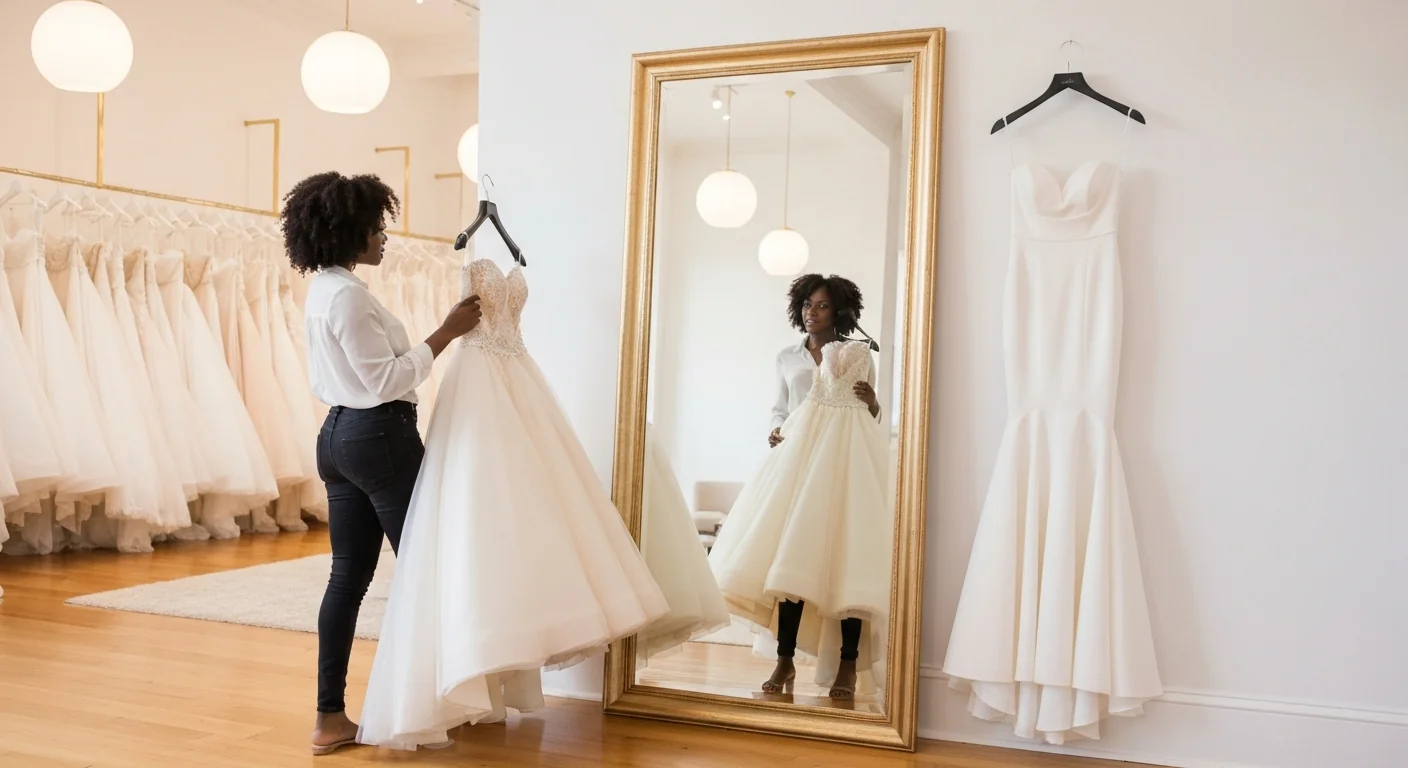
These are dedicated wedding dress stores with curated collections. They typically carry a range of styles, offer fitting rooms, and have staff who can help you narrow down your options. The experience is focused entirely on bridal wear.
Best for: Brides who want a traditional bridal shopping experience with guidance and a good selection to try on.
Designer Studios
Kenyan bridal designers like Wambui Mukenyi, Makena by Catherine, and several others operate studios where they create custom gowns from scratch. You’ll go through a consultation, fabric selection, design sketches, and multiple fittings.
Best for: Brides who want a unique, custom-designed dress and have the budget and timeline to support the process (typically 3-6 months).
Rental Shops
These shops maintain a collection of dresses available for short-term hire — usually for 2-5 days around your wedding. They handle dry cleaning between rentals, and some include minor alterations in the rental fee.
Best for: Budget-conscious brides or those who don’t want the responsibility of storing a dress after the wedding.
Online and Instagram-Based Sellers
A growing number of bridal businesses in Nairobi operate primarily through Instagram, Facebook, or WhatsApp. They ship imported dresses or offer local designs, sometimes at lower prices than brick-and-mortar shops due to lower overhead.
Best for: Brides comfortable shopping online who are good at taking accurate measurements. Always verify the seller’s reputation before paying a deposit.
Second-Hand and Pre-Loved
Some brides sell their wedding dresses after the big day through platforms like Facebook Marketplace, Jiji, and dedicated bridal resale groups. These dresses are often in excellent condition — worn once, professionally cleaned, and available at a fraction of the original price.
Best for: Budget-conscious brides who don’t mind wearing a pre-owned dress. You can find high-end designer dresses at significantly reduced prices this way.
What to Bring to Your Bridal Appointment
Going prepared makes the experience smoother and more productive. Here’s your bridal shopping checklist:
- The right underwear — strapless bra, nude seamless underwear, and shapewear if you plan to wear it on the day
- Shoes at the right height — bring heels at approximately the height you’ll wear on the wedding day, so the hemline sits correctly
- Reference photos — screenshots of dresses you like, saved to your phone for easy showing
- Your budget — be upfront with the shop about your budget so they can show you appropriate options
- One or two trusted people — your mother, maid of honour, or a close friend. Too many opinions create confusion
- An open mind — be willing to try styles you hadn’t considered. Many brides end up choosing something completely different from what they originally pictured
Timeline: When to Start Shopping
Getting the timing right is crucial, especially if you’re ordering a custom dress or importing one.
| Timeline | Action |
|---|---|
| 9-12 months before | Start browsing styles online, create a mood board, book appointments |
| 6-9 months before | Visit shops, try on dresses, make your selection |
| 5-6 months before | Place your order (custom or imported dresses) |
| 3-4 months before | First fitting and any necessary alterations |
| 1-2 months before | Final fitting — the dress should be perfect |
| 1-2 weeks before | Pick up the dress, do a final try-on at home with all accessories |
| Wedding day | Put it on and shine |
If you’re renting, the timeline is shorter. Most rental shops require booking 1-3 months in advance, with a fitting 2-4 weeks before the wedding.
Tips for a Successful Bridal Shopping Experience
Set a Realistic Budget First
Before you fall in love with a KES 400,000 gown, know what you can actually spend. Factor in not just the dress itself, but also alterations (KES 5,000 – 30,000), accessories (veil, shoes, jewellery), undergarments, and cleaning after the wedding.
Don’t Rush the Decision
Visit at least three different shops before making a final decision. What looks perfect in one shop might be outshone by something you find in another. Give yourself time to compare options, sleep on it, and come back for a second look if needed.
Ask the Right Questions
When you find a dress you love, ask: What’s included in the price? Are alterations extra? What’s the return/exchange policy? If renting, what happens if the dress is damaged? What’s the latest cancellation date? Is a deposit required, and is it refundable?
Check the Fabric and Construction
Run your hands over the fabric. Check the stitching — particularly at seams, the zipper, and around embellishments. Tug gently on beads and lace appliqués to make sure they’re secure. A well-made dress will have clean, even stitching, securely attached embellishments, and fabric that doesn’t feel flimsy or cheap.
Get Everything in Writing
Whether buying or renting, get a receipt or contract that specifies: the dress description, the total price, the deposit amount, the balance due date, the pickup/delivery date, and the condition expectations for rentals.
Take Photos During Fittings
Take photos of every dress you try on, from the front, back, and sides. When you’ve tried on ten dresses across three shops, they all start to blur together. Photos help you compare and make a clear-headed final decision.
Alterations: What You Need to Know
Even if a dress fits well off the rack, most wedding dresses need some alterations. Common adjustments include hemming, taking in or letting out at the waist or bust, adjusting straps, and adding or removing embellishments.
Alteration costs in Nairobi:
- Basic hemming: KES 3,000 – 8,000
- Taking in at the waist/bust: KES 5,000 – 15,000
- Adding sleeves or straps: KES 5,000 – 20,000
- Bustle (for the train): KES 3,000 – 10,000
- Complex structural changes: KES 15,000 – 30,000+
Find a tailor or seamstress who specialises in bridal wear — wedding dress alterations are different from everyday clothing adjustments. Many bridal shops offer in-house alteration services, which can be convenient.
After the Wedding: What to Do With Your Dress
If you bought your dress, you have several options after the wedding:
- Professional preservation — have it cleaned and sealed in an acid-free box for long-term storage (KES 5,000 – 15,000)
- Sell it — list it on Facebook groups, Jiji, or bridal resale platforms
- Donate it — some organisations accept wedding dresses
- Repurpose it — some brides shorten their dress for anniversaries or have elements incorporated into christening gowns
- Trash the dress — a growing trend where brides do a fun photoshoot in their dress in unconventional settings (beach, mud, paint)
Plan Your Entire Wedding in One Place
Now that you know where to find your perfect dress, make sure you’re tracking all your other wedding details just as carefully. Guest lists, RSVPs, event schedules, vendor contacts — there’s a lot to manage.
Your dream dress deserves a dream wedding plan
Create a free wedding website on Harusi Hub to manage your guest list, collect RSVPs, and keep every detail organised in one place.
Start Planning on Harusi Hub