What to Wear to a Kenyan Wedding as a Guest
A practical guide to wedding guest outfits in Kenya — covering dress codes for church, garden, traditional, and beach weddings, plus colours to avoid, weather tips, and where to shop.
What to Wear to a Kenyan Wedding as a Guest
The invitation says “semi-formal.” Your friend says “just wear something nice.” Your mother says “dress like you respect the family.” And you are standing in front of your wardrobe with no idea what any of that actually means. Choosing the right outfit for a Kenyan wedding is part fashion, part cultural awareness, and part practical planning — and this guide covers all three.
What you wear to a wedding in Kenya depends on the type of wedding, the venue, the time of day, and the specific dress code on the invitation. A church ceremony in Nairobi calls for something very different from a beach wedding in Diani or a traditional ruracio in Kiambu. Getting it right shows respect for the couple and their families. Getting it wrong can make you feel uncomfortable all day — or worse, draw the wrong kind of attention.
Here is a comprehensive guide to help you dress appropriately and confidently for any type of Kenyan wedding.
The Universal Rules (Regardless of Wedding Type)
Before we get into specific wedding types, there are rules that apply everywhere.
Never Wear White
This is the most universal wedding guest rule in the world, and it absolutely applies in Kenya. White, ivory, cream, champagne, and any shade that could be mistaken for white are reserved for the bride. Even if you think your off-white dress looks nothing like a wedding gown, it will look white in photographs, and people will talk.
The only exception is if the couple has specifically requested an “all-white” dress code, which some modern Kenyan couples do for pre-wedding events or certain themed celebrations. If the invitation does not say “all-white,” do not wear white.
Avoid Red (Sometimes)
In some Kenyan communities and particularly among families with Indian heritage, red has specific cultural significance. If you are attending a Hindu or interfaith wedding, check with someone close to the couple before wearing red. At most Kenyan church and garden weddings, red is perfectly fine and often looks stunning.
Do Not Outshine the Bride
This is about more than just colour. Avoid outfits that are excessively glamorous, heavily embellished, or dramatically attention-seeking. An outfit covered in sequins, a dress with a four-foot train, or a hat so large it blocks the view of three guests behind you are all inappropriate for a wedding guest.
You want to look polished and elegant — not like you are competing for attention.
Dress for Comfort
Kenyan weddings are long events. A church ceremony can last two hours. The reception can go for another five or six hours. You will be sitting, standing, walking across uneven ground (especially at garden venues), eating, dancing, and possibly sweating in the Nairobi sun.
Choose clothes you can move in, shoes you can walk in, and fabrics that breathe. There is nothing elegant about hobbling around in shoes that are destroying your feet or constantly adjusting a dress that does not fit properly.
Church Wedding Outfits
Church weddings in Kenya are the most formal wedding setting, and the dress code reflects that.
For Women:
Aim for modest elegance. Churches in Kenya generally expect covered shoulders, skirts or dresses below the knee, and minimal exposure of cleavage. This is especially important at Catholic, Anglican, and Presbyterian churches, where ushers may actually turn away guests who are dressed too revealingly.
Good options include:
- A tailored midi or maxi dress in a solid colour or subtle print
- A well-fitted skirt suit or trouser suit
- An Ankara or kitenge dress with appropriate coverage
- A blouse and skirt combination with a blazer or shawl
Fabrics that work well: Cotton blends, chiffon, crepe, silk, and linen. Avoid heavy fabrics if the church is not air-conditioned, which most Kenyan churches are not.
Shoes: Closed-toe heels, block heels, or elegant flats. Stilettos look great but are impractical for churches with tiled or carpeted floors, uneven parking lots, and long standing periods.
Accessories: Keep them refined. A statement necklace or earrings, a clutch bag, and a fascinator or headpiece if you want to add flair. Avoid jangling bracelets that make noise during the quiet moments of the ceremony.
For Men:
A suit is the safest choice. A well-fitted two-piece suit in navy, charcoal, black, or grey is appropriate for any church wedding in Kenya. Pair it with a dress shirt, a tie (matching the couple’s colour scheme is a nice touch but not required), and polished leather shoes.
If you do not own a suit: Dark trousers, a dress shirt, and a blazer is the next best option. Avoid combining this with casual shoes — a pair of clean Oxfords or loafers makes all the difference.
Avoid: Jeans, sneakers, untucked shirts, and overly casual looks. Even if “nobody really cares,” dressing up shows respect for the occasion.
Garden and Outdoor Wedding Outfits
Garden weddings are the most popular wedding format in Kenya right now, and the dress code is typically semi-formal to smart casual.
For Women:
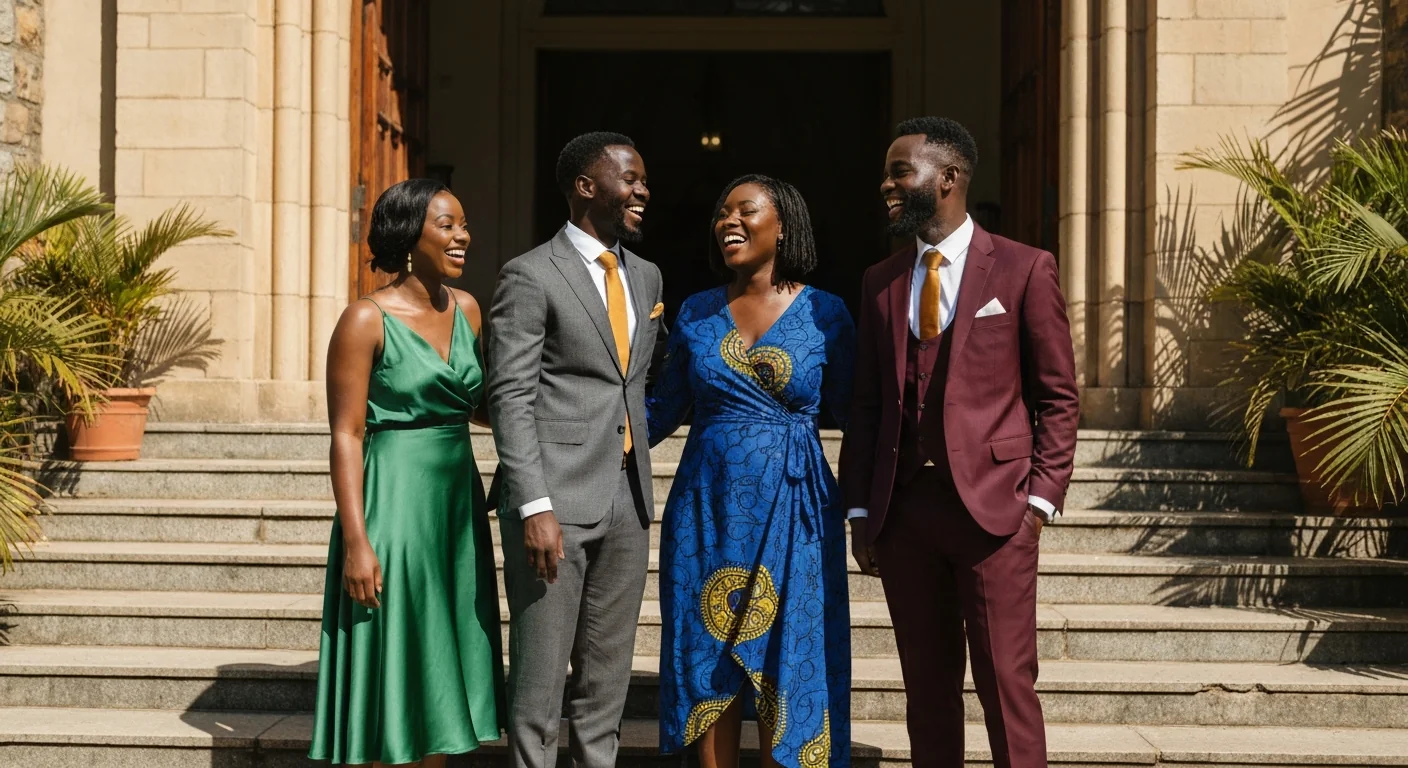
Garden weddings allow for more colour, more print, and more personality than church ceremonies. This is where bold Ankara prints, flowing maxi dresses, and statement accessories really shine.
Good options include:
- A colourful Ankara or kitenge maxi dress
- A floral midi dress with comfortable sandals
- A jumpsuit in a rich colour (make sure it is dressy, not casual)
- A skirt and blouse combination in vibrant prints
- A kaftan or boubou for a dramatic, comfortable look
Practical considerations:
- Shoes: Garden venues often have grass, gravel, or uneven ground. Stiletto heels will sink into the lawn and leave you stuck. Choose wedge heels, block heels, or elegant flat sandals. Some guests bring two pairs — heels for photos and flats for the rest of the day.
- Sun protection: Many garden ceremonies are outdoors with limited shade. A wide-brimmed hat, sunglasses, and sunscreen are practical necessities, not just accessories. A hat also adds a touch of sophistication to your outfit.
- Layers: Garden venues can get chilly as the evening progresses, especially in Naivasha, Nanyuki, or highland areas. Bring a light shawl, pashmina, or blazer. A beautiful wrap in a complementary colour can be an outfit upgrade rather than a compromise.
For Men:
Garden weddings give you more room to experiment with colour and texture while still looking sharp.
Good options include:
- A tailored chino or linen trouser with a dress shirt (no tie needed)
- A blazer with well-fitted trousers in a lighter colour (tan, light grey, olive)
- A short-sleeve button-down shirt in a quality fabric (not a casual polo)
- Loafers or clean leather shoes (not sneakers)
Avoid: Full dark suits look overdressed at most garden weddings. If you are unsure, a blazer and chinos strike the right balance.
Traditional Ceremony Outfits (Ruracio, Ayie, Koito)
Traditional Kenyan ceremonies have their own dress expectations, and these vary by community.
General Guidelines:
African attire is usually expected. Traditional ceremonies are celebrations of culture, and dressing in African fabrics — kitenge, Ankara, kanga, or community-specific attire — is the respectful choice.
Check for a colour theme. Many families specify a colour palette for the traditional ceremony. The bride’s side might wear one colour and the groom’s side another. Ask before you buy fabric.
For women:
- Kitenge or Ankara dresses or skirt-and-top sets are the standard
- A well-tailored African print outfit looks more put-together than a hastily wrapped piece of fabric
- Headwraps and bold accessories complement the look
- Comfortable shoes — traditional ceremonies often involve a lot of standing and moving around the homestead
For men:
- A matching kitenge or Ankara shirt with dark trousers
- A full African suit (shirt and trousers in matching fabric)
- A dashiki with well-fitted trousers
- Avoid Western suits unless specifically told the dress code is formal
Community-Specific Notes:
Kikuyu ruracio: Earth tones, greens, and cultural prints are common. The bridal party often has a specific colour.
Luo ayie: Bold colours and patterned shirts are popular. The groom’s family often coordinates colours.
Kalenjin koito: Traditional elements like beadwork may be incorporated. Check with the family.
Coastal/Swahili ceremonies: Kanzus for men and bui-buis or elegant dresses for women, depending on the formality.
When in doubt, reach out to a family member on the hosting side and ask what is expected. Nobody will judge you for asking — they will appreciate the effort.
Beach Wedding Outfits
Beach weddings in Diani, Malindi, Watamu, or Lamu call for a relaxed but still polished look.
For Women:
Light, flowy fabrics are your best friend. The coast is hot and humid, and heavy fabrics will be uncomfortable within minutes.
Good options include:
- A flowy maxi dress in a light fabric (chiffon, cotton, linen)
- A colourful wrap dress
- A dressy jumpsuit in a tropical print
- An elegant kaftan
Practical tips:
- Skip the heels entirely. Beach ceremonies happen on sand. Wear dressy sandals, embellished flats, or go barefoot if the couple has indicated a barefoot ceremony.
- Secure your hair. The coast is windy. Styles that stay put — braids, updos, or a headwrap — will look better in photos than loose hair that blows across your face all day.
- Waterproof makeup. Humidity and sweat will test your makeup. Use waterproof and long-lasting formulas, or keep it minimal.
- Bring a cover-up. If the ceremony is on the beach but the reception is in an air-conditioned hotel, temperatures can shift dramatically.
For Men:
Beach weddings are the one setting where you can skip the suit entirely without looking underdressed.
Good options include:
- Linen trousers with a short-sleeve button-down shirt
- A light cotton suit in beige, tan, or light blue (no dark colours)
- Chinos with a linen shirt (rolled sleeves acceptable)
- Loafers without socks, or clean leather sandals
Avoid: Ties, dark suits, heavy fabrics, and anything that makes you look like you are heading to a boardroom meeting instead of a beach wedding.
Decoding Common Dress Code Terms
Kenyan wedding invitations sometimes include dress code instructions, but the terms can be interpreted differently. Here is what they typically mean in the Kenyan context:
“Formal” or “Black Tie”
- Women: Floor-length or elegant cocktail dresses, dressy separates, or sophisticated African attire
- Men: Dark suit with tie, or a tuxedo for truly formal events
”Semi-Formal”
- Women: Midi or maxi dresses, dressy jumpsuits, tailored separates, or chic African print outfits
- Men: Suit (tie optional) or blazer with dress trousers
”Smart Casual”
- Women: A nice dress, skirt and blouse, or polished trousers with an elegant top
- Men: Chinos or dress trousers with a collared shirt; blazer optional
”Ankara/Kitenge” or “African Theme”
- Wear your best African print outfit. This is your chance to go all out with colour, pattern, and bold accessories
- Matching couple outfits (for those attending with a partner) are a popular and fun choice
”Cocktail”
- Women: Knee-length to midi dresses, jumpsuits, or dressy separates
- Men: Suit or blazer and trousers, with or without a tie
No Dress Code Specified
When the invitation does not mention a dress code, default to semi-formal. It is always better to be slightly overdressed than underdressed. You can remove a blazer if you are overdressed; you cannot conjure one if you are underdressed.
Where to Shop for Wedding Guest Outfits in Kenya
For African Print and Kitenge Outfits:
- Eastleigh, Nairobi — the best prices on African fabrics. Buy fabric and have it tailored.
- Maasai Market (rotating locations in Nairobi) — ready-made Ankara pieces and accessories
- Local tailors — having an outfit custom-made from fabric you choose gives you a unique look and a perfect fit. Budget KES 2,000 to KES 8,000 for tailoring, plus KES 1,500 to KES 5,000 for fabric.
- Online stores — many Kenyan designers sell through Instagram and Facebook. Order at least three weeks before the wedding to allow for fittings and alterations.
For Western Formal Wear:
- Nairobi CBD — shops along Moi Avenue, Kenyatta Avenue, and in malls like The Junction and Westgate
- Secondhand shops (mitumba) — excellent quality formal wear at a fraction of the price. Budget KES 500 to KES 3,000 for a quality secondhand outfit
- Mr Price, Woolworths, and H&M at Kenyan malls for affordable semi-formal options
- Suit hire — several shops in Nairobi offer suit rental from KES 3,000 to KES 8,000 for the day
For Men’s Suits:
- Gikomba Market — affordable suits and tailoring
- CBD tailors — custom suits from KES 8,000 to KES 25,000
- Ready-made options at Woolworths, Mr Price, or Suit Warehouse
Common Mistakes to Avoid
Wearing a new outfit without testing it first. Wear your complete outfit — shoes, accessories, and all — at home before the wedding day. Walk around, sit down, raise your arms. Make sure nothing rides up, falls down, gaps, or pinches.
Forgetting the weather. Check the weather forecast for the wedding venue. A gorgeous silk outfit will be ruined by unexpected rain at a garden wedding. Bring an umbrella or light rain jacket if there is any chance of rain.
Over-accessorising. Choose either a statement necklace or statement earrings, not both. Choose either a bold hat or bold shoes, not both. Restraint often looks more elegant than excess.
Wearing a mini dress or shorts to a church ceremony. Regardless of how fashionable the look is, churches in Kenya have modesty standards, and some will not allow you in if your outfit does not meet them.
Matching the bridal party colours. If you know the bridal party is wearing dusty pink, avoid dusty pink. You do not want to look like a bridesmaid who got lost. Ask the couple about their colour scheme if you are unsure.
Wearing brand-new shoes. New shoes that have not been broken in will cause blisters by hour two of a six-hour wedding. Wear new shoes around the house for a few days before the event, or bring a comfortable backup pair.
A Quick-Reference Outfit Checklist
Before you leave the house, make sure you have:
- Complete outfit that fits well and is appropriate for the venue and dress code
- Comfortable shoes that you can wear for 5+ hours
- A light layer (shawl, blazer, or wrap) for the evening
- Sunglasses and sunscreen (for outdoor weddings)
- An umbrella (for rainy season weddings)
- A small bag or clutch for your phone, cash gift, and essentials
- Your cash gift in a labelled envelope
- Any plus-one coordination on outfits (if attending with a partner)
Final Thoughts
The best wedding guest outfit is one that makes you feel confident, comfortable, and appropriate for the occasion. You do not need to spend a fortune — a well-fitted, clean outfit in a suitable style will always look better than an expensive outfit that does not fit or suit the occasion.
When in doubt, remember these three principles: dress modestly for religious ceremonies, embrace African prints for traditional ceremonies, and prioritise comfort for outdoor events. Follow these guidelines, and you will be well-dressed at any Kenyan wedding.
Planning Your Wedding? Share Dress Code Details with Guests
Your Harusi Hub wedding website lets you share dress code, venue directions, and event details — so every guest arrives prepared and appropriately dressed.
Start Planning on Harusi Hub