Kenyan Wedding Food Menu Ideas (Traditional + Modern)
Complete guide to planning your Kenyan wedding menu — traditional dishes, modern fusion options, buffet vs plated service, catering costs in KES, drinks, dietary considerations, and practical tips from real couples.
Kenyan Wedding Food Menu Ideas (Traditional + Modern)
Your guests will forget the colour of the tablecloths and the style of the centrepieces within a week. They will not forget the food. Whether the pilau was perfectly spiced, whether the nyama choma was tender, whether the chapati was warm — that is what people remember and talk about for years.
Food is consistently one of the top three budget items at a Kenyan wedding, and for good reason. It is the thing guests experience most directly and judge most honestly. A beautiful venue with mediocre food leaves a lukewarm impression. A simple setup with incredible food leaves guests raving.
This guide covers everything you need to plan your wedding menu: traditional Kenyan dishes that guests expect, modern and fusion options that elevate the experience, how to handle dietary requirements, the buffet versus plated debate, realistic catering costs in KES, drink and bar strategies, and practical tips that help you avoid the most common catering mistakes.
Traditional Kenyan Wedding Dishes
These are the dishes that form the backbone of most Kenyan wedding menus. Your guests expect them, your caterer knows how to prepare them at scale, and they deliver consistently at large events.
Pilau
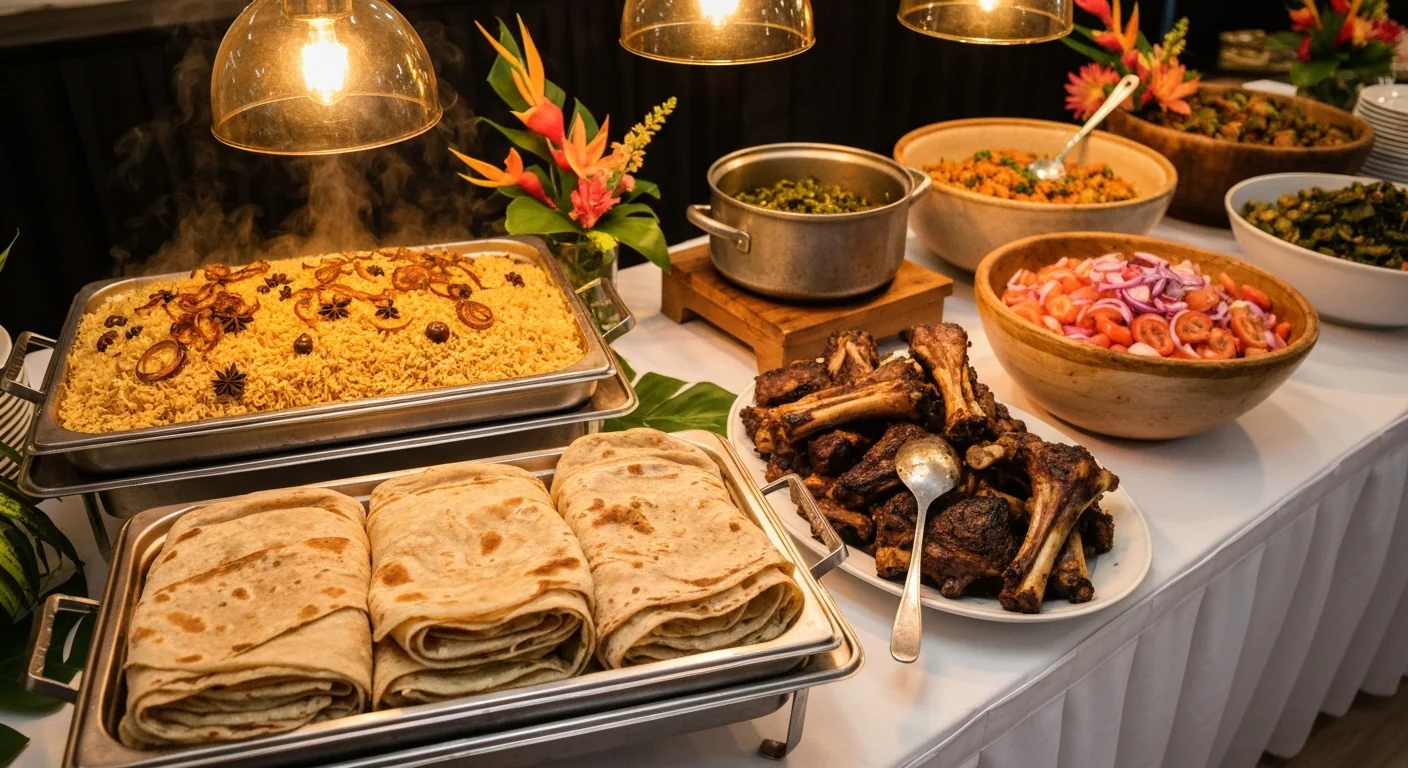
The centrepiece of nearly every Kenyan wedding buffet. Pilau is spiced rice cooked with meat (usually beef or goat), onions, garlic, and a blend of whole spices — cumin, cardamom, cinnamon, cloves, and black pepper. A well-made pilau distinguishes a great wedding meal from an average one. When interviewing caterers, ask specifically about their pilau. Taste it. This one dish can make or break your food reputation.
Serving note: Pilau is traditionally served as the main starch. Some couples offer both pilau and plain rice to give guests options, but this increases cost without adding much value. If your pilau is good, it is enough.
Nyama Choma
Roasted meat — typically goat or beef — is a Kenyan celebration essential. Nyama choma at weddings is usually prepared on large grills and served in sliced portions. The best caterers slow-roast over charcoal for tenderness and smoky flavour.
Cost consideration: Nyama choma is one of the most expensive menu items because of meat prices. Expect to pay KES 500 to KES 800 per kilogram of raw goat meat, with each guest consuming approximately 200 to 300 grams of cooked meat. Some couples offer nyama choma as a station rather than a buffet item — guests walk up to the grill and get fresh slices cut to order. This controls portions, reduces waste, and creates an interactive experience.
Chapati
Soft, layered, and buttery, chapati is one of the most beloved accompaniments at any Kenyan celebration. It pairs with everything — stews, vegetables, nyama choma, and even on its own. Wedding chapatis should be made fresh on-site or prepared the same day and kept warm. Stale, cold chapati is a common complaint at weddings — make sure your caterer commits to freshness.
Ugali
The national staple. Ugali is a dense maize flour preparation served alongside stews and vegetables. Not every wedding includes ugali — it depends on your guest demographics. If your guests are primarily from Central, Western, or Nyanza provinces, ugali is expected. For more urban, cosmopolitan crowds, it is optional but always appreciated.
Sukuma Wiki
Collard greens sauteed with onions and tomatoes. Simple, familiar, and a standard accompaniment to ugali and stews. At weddings, sukuma wiki is usually part of the vegetable side options. It is inexpensive and easy to prepare at scale, making it a staple of the buffet line.
Mukimo
A Kikuyu staple made from mashed potatoes, peas, corn, and greens. Mukimo adds variety to the starch options and is particularly expected at weddings in the Central Kenya region. It is hearty, filling, and pairs well with stewed or roasted meats.
Kenyan Beef Stew
A tomato-based beef stew that is a universal comfort food in Kenya. It is hearty, familiar, and works well on a buffet line. Most caterers prepare it with carrots, potatoes, and a rich gravy. It is a reliable main course option that appeals to virtually every guest.
Mandazi
Deep-fried dough — somewhere between a doughnut and a bread roll — that is often served as a tea-time snack or dessert option. At weddings, mandazi can appear during the cocktail hour or as part of a dessert spread. They are inexpensive to make and universally loved.
Kachumbari
A fresh tomato and onion salad with chilli and coriander. Kachumbari is the standard side that accompanies nyama choma. It is simple, refreshing, and cuts through the richness of the grilled meat. No nyama choma station is complete without a generous bowl of kachumbari.
Modern & Fusion Menu Options
Many Kenyan couples now blend traditional dishes with modern and international options. This approach lets you honour cultural expectations while adding creativity and variety to the menu.
Starters & Canapes
Serve light bites during the cocktail hour before guests sit down for the main meal:
- Samosas — The classic Kenyan starter. Beef, chicken, or vegetable fillings. Serve with tamarind or chilli sauce.
- Spring rolls — A light, crispy option that adds variety alongside samosas.
- Bruschetta — Toasted bread with tomato, basil, and olive oil. A simple Mediterranean touch.
- Mini kebabs — Grilled chicken or beef on skewers with a dipping sauce. Easy to eat standing up.
- Stuffed mushrooms — A vegetarian canape option that feels elevated.
- Chicken satay skewers — Grilled with a peanut dipping sauce. Crowd-pleasing and easy to prepare at scale.
Budget guide: Canapes typically cost KES 200 to KES 500 per guest, depending on variety and quantity. Most caterers recommend three to five pieces per guest for a 60 to 90 minute cocktail hour.
Modern Mains
These can replace or complement traditional dishes:
- Herb-crusted lamb rack — A premium main that works for smaller, upscale weddings. Expect KES 800 to KES 1,200 per serving.
- Grilled chicken with rosemary and lemon — A lighter, more refined alternative to standard chicken stew. Pairs well with a grain salad or roasted vegetables.
- Pasta station — A live station where guests choose their pasta, sauce, and toppings. Interactive and fun, though it requires additional kitchen staff.
- Biryani — A coastal Kenyan favourite. Fragrant, spiced rice layered with chicken or goat. It serves a similar role to pilau but with more complexity and aroma.
- Grilled fish — Tilapia or Nile perch, grilled or baked with herbs. A lighter protein option that works well for daytime or garden weddings.
Salads & Sides
Round out the buffet with fresh, colourful options:
- Coleslaw — The standard wedding salad in Kenya. Creamy and refreshing.
- Mixed green salad — Lettuce, cucumber, tomato, and a vinaigrette. Simple but important for guests who want lighter options.
- Roasted vegetable medley — Butternut, zucchini, bell peppers, and sweet potatoes roasted with herbs. Adds colour and nutrition.
- Garlic bread — A simple carb option that pairs with pasta or soups.
- Fruit salad — A fresh, light option that works as both a side and a dessert. Use seasonal Kenyan fruits: mango, pineapple, watermelon, passion fruit.
Dietary Considerations
Kenya is diverse in religion, culture, and dietary practice. A thoughtful host accounts for this.
Halal Requirements
If your guest list includes Muslim guests — which is common in Kenya, particularly for coastal, Somali, and some Kikuyu families — ensure your caterer can provide halal meat. This means the animal was slaughtered according to Islamic principles. Many established Nairobi caterers source halal meat by default, but always confirm explicitly. If halal is not available from your primary caterer, consider a separate halal station or a dedicated halal caterer for those guests.
Vegetarian & Vegan Options
Even in Kenya’s meat-centric food culture, vegetarian options are increasingly expected. At minimum, ensure your buffet has:
- At least two substantial vegetable dishes (not just sukuma wiki)
- A bean or lentil stew (lentil dhal, bean stew, or chickpea curry)
- A vegetarian starch option (vegetable biryani or plain rice)
- Fresh salads and fruit
For strictly vegan guests, check that your caterer does not use butter in chapati, cream in salad dressings, or animal stock in rice preparations. Communicate specific dietary needs to your caterer at least two weeks before the wedding.
Allergies
Nut allergies, gluten intolerance, and lactose sensitivity are becoming more common in Kenya’s urban population. If you know specific guests have serious allergies, inform your caterer directly. For large weddings where individual tracking is difficult, label the buffet clearly with allergen information.
Buffet vs. Plated Service
This is one of the biggest decisions in your catering plan. Each approach has distinct advantages.
Buffet Service
The default at most Kenyan weddings. Guests line up and serve themselves from a spread of dishes.
Advantages:
- More variety — guests choose what they want
- Easier to manage for large guest counts (200+)
- Lower staffing cost — fewer waiters needed
- Guests control their own portions
Disadvantages:
- Long queues if not managed well (two buffet lines minimum for 200+ guests)
- Food can cool down over time
- Harder to control portions and waste
- Less formal atmosphere
Cost: KES 800 to KES 2,500 per guest, depending on menu complexity and caterer tier.
Plated Service
Each guest is served a pre-set plate at their seat by waiting staff.
Advantages:
- Elegant and formal
- Portion control — less food waste
- No queues — everyone eats at the same time
- Cleaner, more structured flow to the programme
Disadvantages:
- Higher staffing cost — one waiter per eight to ten guests
- Less variety — guests get a set menu (usually two to three courses)
- Requires a working kitchen near the venue
- Dietary modifications must be pre-arranged
Cost: KES 1,500 to KES 4,000 per guest for a two-to-three course plated meal with professional service.
The Hybrid Approach
Many Kenyan couples now use a hybrid: plated starters served to tables during the formal programme, followed by a buffet for the main course. This gives you the elegance of plated service during speeches and toasts, then the variety and energy of a buffet when the formal programme ends. It is often the best of both worlds.
Catering Costs in Kenya (2026 Pricing)
Here is what you can realistically expect to pay per guest:
| Service Level | Per Guest Cost (KES) | What It Includes |
|---|---|---|
| Budget | KES 800 – 1,200 | Basic buffet: pilau, stew, vegetables, drinks |
| Standard | KES 1,200 – 2,000 | Full buffet: pilau, nyama choma, 3-4 sides, salad, dessert |
| Premium | KES 2,000 – 3,500 | Extensive buffet or plated: multiple proteins, canapes, dessert table |
| Luxury | KES 3,500 – 5,000+ | Plated multi-course, live stations, premium beverages |
For a wedding of 200 guests:
- Budget: KES 160,000 – 240,000
- Standard: KES 240,000 – 400,000
- Premium: KES 400,000 – 700,000
- Luxury: KES 700,000+
These prices typically include crockery, cutlery, serving equipment, and basic setup. They usually do not include drinks, cake, or venue rental. Always ask your caterer for an itemised quote so you know exactly what is covered.
Drinks & Bar Options
Drinks are a separate budget line that many couples underestimate. Here are the main approaches:
Cash Bar
Guests buy their own drinks. This is the most budget-friendly option but can feel unwelcoming, particularly at Kenyan weddings where hospitality is a core cultural value. If you choose this route, at minimum provide soft drinks and water free of charge.
Open Bar
All drinks — alcoholic and non-alcoholic — are provided free to guests for the duration of the reception. This is generous but expensive. An open bar for 200 guests for five to six hours can cost KES 100,000 to KES 300,000 depending on the beverages offered.
Limited Open Bar
The most common approach at Kenyan weddings. You provide:
- Soft drinks: Sodas, juice, water — unlimited
- Beer: A selection of two to three brands (Tusker, White Cap, Guinness)
- Wine: One red, one white — served at tables
- Spirits: Limited to specific brands and quantities
This approach costs KES 50,000 to KES 150,000 for 200 guests, depending on the quality and quantity of alcohol.
Signature Cocktail
A growing trend at Kenyan weddings: instead of a full bar, offer one or two signature cocktails alongside soft drinks and beer. This reduces cost, simplifies logistics, and adds a personal touch. Popular options include:
- Dawa — Kenya’s signature cocktail: vodka, honey, lime, crushed ice
- Passion fruit mojito — Rum, passion fruit, mint, lime, soda
- Amarula cream cocktail — Amarula liqueur with cream over ice
- Kenyan chai cocktail — Masala tea-infused whiskey with honey and milk
A signature cocktail station for 200 guests costs approximately KES 30,000 to KES 60,000.
Non-Alcoholic Drink Ideas
Always provide excellent non-alcoholic options — many of your guests will not drink alcohol:
- Fresh juice — Mango, passion fruit, pineapple, or mixed tropical
- Tangawizi (ginger beer) — A Kenyan favourite
- Masala chai — Serve during the evening for warmth and comfort
- Mocktails — Non-alcoholic versions of your signature cocktails
- Infused water — Cucumber-mint, lemon-ginger, or watermelon-basil
Cake & Dessert Alternatives
The traditional wedding cake is still a centrepiece at most Kenyan weddings, but many couples now supplement or replace it with alternative dessert options:
- Dessert table — An array of small desserts: cupcakes, macarons, brownies, fruit tarts, mandazi, and doughnuts. Costs KES 15,000 to KES 50,000 depending on variety and quantity.
- Cupcake tower — Individual cupcakes arranged in a tiered display with a small cutting cake on top. More affordable than a large tiered cake and eliminates the need for cake cutting and plating.
- Doughnut wall — A display board with doughnuts on pegs. Visual, fun, and budget-friendly at KES 5,000 to KES 15,000 for 100 to 200 doughnuts.
- Fruit display — A carved watermelon or pineapple centrepiece with fresh seasonal fruit. Fresh, light, and affordable.
- Ice cream station — A rented soft-serve machine or an ice cream cart. Particularly effective at daytime or outdoor weddings. Rental costs KES 15,000 to KES 30,000.
For a full breakdown of wedding cake costs and how to choose the right baker, read our wedding cake cost guide for Kenya.
Practical Tips for Wedding Catering
Book Your Caterer Early
Good caterers in Nairobi get booked months in advance, especially for peak wedding season (October to March). Start talking to caterers six to eight months before your wedding and confirm your booking at least three months out.
Always Do a Tasting
Never book a caterer without tasting their food first. Most established caterers offer a tasting session — some free, some for a fee of KES 2,000 to KES 5,000 that is credited to your booking. Taste the specific dishes you plan to serve, not just a sample menu.
Plan for 10% Extra
Always cater for ten percent more than your confirmed guest count. Unexpected guests, larger appetites, and the need for staff meals mean you want a buffer. Running out of food is the one catering mistake that guests never forgive.
Manage the Queue
For buffets serving more than 150 guests, insist on at least two identical buffet lines on opposite sides of the venue. Have your MC release tables in groups rather than announcing “the buffet is open” to everyone at once. This prevents the dreaded 45-minute queue.
Coordinate Timing with Your MC and DJ
The food service should be planned into your wedding day schedule with precise timing. When does the cocktail hour start? When do guests sit? When does the buffet open? When does it close? Your caterer, MC, and DJ all need to be aligned on this timeline. Use a wedding day schedule tool to keep everyone synchronised.
Keep Hot Food Hot
In Kenya’s climate, food temperature management matters. Insist on chafing dishes with sterno fuel for all hot buffet items. For outdoor weddings, ask about insulated covers and food tents. Cold salads should be kept on ice. Food that has been sitting at room temperature for more than two hours should be refreshed or removed.
Sample Wedding Menus
Budget Menu (KES 800 – 1,200 per guest)
- Pilau (beef)
- Kenyan beef stew
- Sukuma wiki
- Coleslaw
- Chapati
- Fruit salad
- Sodas, juice, water
Standard Menu (KES 1,200 – 2,000 per guest)
- Samosas (cocktail hour)
- Pilau (goat)
- Nyama choma with kachumbari
- Grilled chicken
- Mukimo or mashed potatoes
- Sukuma wiki
- Mixed green salad
- Coleslaw
- Chapati
- Fruit salad and mandazi
- Sodas, juice, water, beer, wine
Premium Menu (KES 2,000 – 3,500 per guest)
- Canapes: samosas, spring rolls, chicken satay skewers
- Soup: butternut or tomato basil
- Pilau (goat) with biryani option
- Nyama choma station with kachumbari
- Herb-crusted lamb or grilled fish
- Roasted vegetable medley
- Mixed green salad with vinaigrette
- Coleslaw
- Chapati and garlic bread
- Dessert table: cupcakes, fruit tarts, mandazi, fresh fruit
- Full bar: signature cocktails, beer, wine, spirits, soft drinks
Related Reading
- How Much Do Wedding Caterers Cost in Kenya?
- How Much Does a Wedding Cost in Kenya? (2026)
- Wedding Budget Guide Kenya
- How to Save Money on Your Kenyan Wedding
- Top Wedding Caterers in Nairobi
- Wedding Cake Trends in Kenya 2026
Plan your wedding menu and catering budget in one place
Compare caterer quotes, track food and drink costs, and manage your full wedding budget — all free on Harusi Hub.
Start Planning Free