How to Plan a Kenyan Wedding Harambee (Fundraiser Guide)
Complete guide to organizing a wedding harambee in Kenya — from committee formation and M-Pesa logistics to agenda planning, transparency, and modern digital alternatives. Includes template agenda and sample invitation.

How to Plan a Kenyan Wedding Harambee (Fundraiser Guide)
In Kenya, no one is expected to fund a wedding alone. The harambee is not about asking for money — it is about a community pulling together to celebrate one of its own. It has been this way for generations, and there is nothing awkward about it when it is done well.
The word harambee means “let us all pull together” in Kiswahili. It was popularized as Kenya’s national motto after independence, but the spirit behind it — communal support, shared effort, collective celebration — predates the republic by centuries. Every community in Kenya has some form of this tradition, whether it is called a harambee, a chama contribution, a kitchen party, or simply “the family coming together.”
A wedding harambee is a structured event where family, friends, colleagues, and community members come together to contribute financially toward a couple’s wedding. When organized well, it raises significant funds, strengthens relationships, and creates a meaningful pre-wedding celebration. When organized poorly, it damages relationships, creates resentment, and falls short of its goals.
This guide shows you how to do it well.
The History and Cultural Context of Harambee
Harambee is not begging. Understanding this is essential before you plan one.
Long before formal fundraising events, Kenyan communities practiced mutual aid as a way of life. The Kikuyu ngwatio (communal work parties), the Luo saga (community gatherings for contributions), the Kamba mwethya (self-help groups), and similar traditions across every ethnic group reflect a deep cultural belief: major life events are community events, and the community shares the burden and the joy.
When Jomo Kenyatta adopted “Harambee” as the national motto in 1963, he was formalizing something Kenyans already understood instinctively — that pulling together is how things get done.
A wedding harambee is a continuation of this tradition. Your community is not giving you charity. They are participating in your milestone the same way you have participated (or will participate) in theirs. It is reciprocal, respected, and deeply Kenyan.
When to Hold a Wedding Harambee
Timing matters. Hold your harambee too early and people forget. Hold it too late and you cannot use the funds for vendor deposits.
Recommended timeline:
- 4–8 weeks before the wedding is the ideal window
- 6 weeks before is the sweet spot — close enough that the wedding feels real, far enough that you can still allocate funds to vendors
- Never the same weekend as another major harambee in your social circle — check with your network first
Day and time:
- Saturday afternoon (2:00–5:00 PM) is the most common and best-attended slot
- Sunday after church works for church-going communities
- Weekday evenings work for office colleagues (casual, shorter format)
- Avoid month-end weekends — people are tapped out from rent, school fees, and bills
Forming the Harambee Committee
The committee is the engine of your harambee. Get this right and everything else follows.
Who Should Be on the Committee?
- 2–3 close family members from both sides (parents, siblings, or trusted relatives)
- 2–3 close friends of the couple
- 1 person with event coordination experience (does not need to be professional, just organized)
- 1 person who handles money responsibly (the treasurer)
- 1 person who is good at mobilizing people (the outreach lead)
Ideal committee size: 5–8 people. Any larger and decision-making becomes slow. Any smaller and the workload is too heavy.
Committee Roles
| Role | Responsibility |
|---|---|
| Chairperson | Leads meetings, makes final decisions, oversees the process |
| Treasurer | Manages contributions, tracks all money in and out, provides receipts |
| Secretary | Keeps records of meetings, sends communications, tracks RSVPs |
| Outreach Lead | Sends invitations, follows up, manages the WhatsApp group |
| Logistics Lead | Handles venue booking, catering for the harambee event, setup |
| MC/Host | Runs the harambee event itself — introduces speakers, manages the flow |
First Committee Meeting Agenda
Hold your first committee meeting 6–8 weeks before the wedding. Cover:
- Total wedding budget and the funding gap (how much you need to raise)
- Harambee date, time, and venue
- Guest list — who will be invited and by whom
- Contribution collection method — M-Pesa, cash, bank transfer, or a combination
- Harambee event budget — food, venue, printing (keep this minimal; the harambee should raise money, not spend it)
- Communication plan — who sends what, when, and how
- Accountability — how funds will be tracked and reported
Inviting People to the Harambee
Who to Invite
- Inner circle: Parents, siblings, close relatives, best friends, bridal party
- Extended circle: Cousins, aunts, uncles, family friends, church or mosque community
- Professional circle: Colleagues, workmates, business associates
- Community: Chama members, neighbors, alumni networks
How to Invite
The invitation should be warm, respectful, and transparent. It should clearly state:
- What the event is (wedding harambee for [names])
- When and where
- The contribution goal (optional but recommended for transparency)
- How to contribute if they cannot attend in person
- M-Pesa number or Paybill details
Sample Harambee Invitation
Here is a template you can adapt:
WEDDING HARAMBEE INVITATION
Dear Family and Friends,
With joy and gratitude, we invite you to a wedding harambee in support of [Bride’s Name] and [Groom’s Name] as they prepare for their wedding on [Wedding Date].
Date: Saturday, [Date] Time: 2:00 PM – 5:00 PM Venue: [Venue Name and Location]
As our community, your presence and support mean the world to us. We are working toward a target of KSh [Amount] to cover remaining wedding expenses.
To contribute:
- M-Pesa Paybill: [Number], Account: [Name/Reference]
- M-Pesa Till: [Number]
- Send to: [Phone Number] ([Treasurer’s Name])
- Bank: [Bank Name], Account: [Number], Name: [Account Name]
If you are unable to attend in person, your contribution via M-Pesa or bank transfer is equally appreciated.
For any questions, please contact [Committee Contact Name] on [Phone Number].
With love and appreciation, The Wedding Committee
Communication Etiquette
- Send the invitation once, clearly. Do not spam people with daily reminders.
- A single polite follow-up 3–5 days before the event is acceptable.
- Never guilt-trip. People who cannot contribute have their reasons. Respect them silently.
- Use a WhatsApp group sparingly. Create one for coordination, but do not turn it into a pressure chamber.
- Acknowledge those who decline gracefully. “Thank you for letting us know. We appreciate you!” goes further than silence.
Setting Up M-Pesa Collection
M-Pesa is the backbone of most modern Kenyan harambees. Here is how to set it up properly.
Option 1: Personal M-Pesa Number
The simplest approach — contributions are sent directly to the treasurer’s M-Pesa number.
Pros: No setup required, immediate, everyone knows how to send money via M-Pesa. Cons: Transaction limits apply (KSh 150,000 daily), difficult to separate personal and harambee transactions, requires trust.
Best for: Small harambees with under 50 contributors.
Option 2: M-Pesa Paybill Number
A Paybill number is a business payment option that provides a dedicated account for receiving contributions.
Pros: Organized transaction history, account references help track who sent what, higher transaction limits. Cons: Requires Safaricom business registration (takes time to set up), may have associated fees.
Best for: Larger harambees with 50+ contributors where tracking is important.
Option 3: M-Pesa Till Number
Similar to Paybill but designed for merchant payments. Some wedding committees register a till number specifically for the harambee.
Pros: Easy tracking, professional appearance. Cons: Registration process takes time.
Option 4: Dedicated Bank Account
For very large harambees (target above KSh 500,000), a temporary dedicated bank account provides the most transparency and security.
Pros: Full transaction records, joint signatory control, statements for accountability. Cons: Bank account opening takes time, some people find bank transfers less convenient than M-Pesa.
Tracking Contributions
Regardless of which method you use, maintain a real-time contribution tracker:
- Spreadsheet (Google Sheets): Create a shared spreadsheet accessible to the couple and committee with columns for contributor name, amount, date, and method.
- M-Pesa statements: Download M-Pesa statements regularly to reconcile against your tracker.
- Receipt acknowledgment: Send a thank-you SMS or WhatsApp message to each contributor confirming receipt.
Planning the Harambee Event
The harambee event itself should be warm, organized, and efficient. It is not a wedding reception — it is a community gathering with a purpose.
Venue
Choose a venue that is:
- Free or very cheap — a family home, a church hall, a community center, or a restaurant with a function room
- Accessible — easy to reach for most guests, with parking
- Comfortable — shade or indoor space, seating for everyone
Do not spend a lot on the harambee venue. Every shilling spent on the event is a shilling not going to the wedding.
Food and Drinks
Keep it simple and affordable:
- Tea and snacks: Mandazi, samosas, biscuits, and tea/coffee (KSh 200–400 per person)
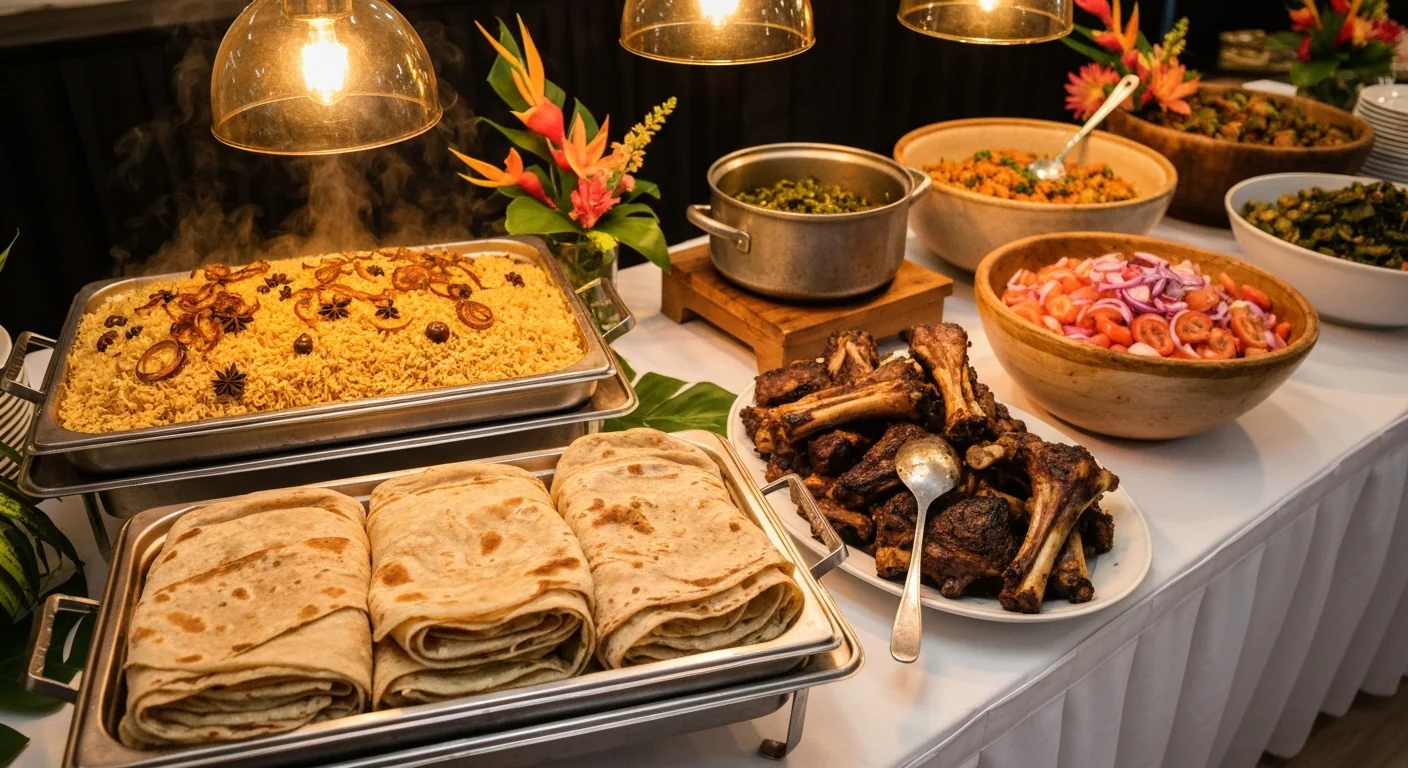
- Light lunch: Pilau or biryani, salad, and soda (KSh 500–800 per person)
- Potluck style: Ask committee members and close family to each bring a dish (cost: minimal)
Budget: Aim to spend no more than KSh 10,000–30,000 on the entire harambee event, depending on guest count.
Template Harambee Agenda
Here is a sample agenda for a 2.5–3 hour harambee:
| Time | Activity | Duration |
|---|---|---|
| 2:00 PM | Arrival, registration, and tea/snacks | 30 min |
| 2:30 PM | Opening prayer | 5 min |
| 2:35 PM | Welcome by the MC/Chairperson | 5 min |
| 2:40 PM | Introduction of the couple and their story | 10 min |
| 2:50 PM | Wedding budget overview and target (by Treasurer) | 10 min |
| 3:00 PM | Testimonials / words of encouragement from family and friends | 15 min |
| 3:15 PM | Contribution collection (envelopes, M-Pesa, announcements) | 30 min |
| 3:45 PM | Acknowledgment of contributions and progress update | 10 min |
| 3:55 PM | Couple’s thank-you speech | 5 min |
| 4:00 PM | Lunch/refreshments and socializing | 45 min |
| 4:45 PM | Closing prayer and departure | 10 min |
How the Contribution Collection Works
There are several approaches:
- Envelopes: Guests put cash in labeled envelopes and drop them in a collection box. The treasurer counts and records after the event.
- M-Pesa on the spot: The MC shares the M-Pesa number and guests send contributions during the event.
- Pledge cards: Guests who cannot contribute immediately write a pledge with an amount and a date they will send it. The committee follows up.
- Open announcements: In some communities, contributions are announced publicly. This can motivate larger contributions but may embarrass those who give less. Use this approach only if it is culturally appropriate for your community.
Recommendation: Offer both envelope/cash and M-Pesa options. Never force public announcements unless your community expects and welcomes them.
Transparency and Accountability
This is the single most important factor in a successful harambee. Financial transparency builds trust, and trust drives generosity.
Before the Harambee
- Share the total wedding budget with the committee
- Be clear about what the funds will cover (venue, catering, decor, etc.)
- Set a realistic target — do not inflate it
During the Harambee
- Announce the M-Pesa number and account details clearly
- Have the treasurer keep a real-time running total
- Announce milestones: “We have reached 50% of our target!”
After the Harambee
- Within 48 hours: Send a thank-you message to all contributors with the total amount raised
- Within 1 week: Provide a summary to the committee showing total raised, total expenses for the harambee event, and net amount going to the wedding
- After the wedding: A final message thanking everyone and confirming how the funds were used builds goodwill and ensures support for future community events
What NOT to Do
- Do not inflate the budget to raise more than you need
- Do not use harambee funds for non-wedding expenses
- Do not avoid giving a final accounting — silence breeds suspicion
- Do not forget those who contributed when you are in a position to support their milestones
Modern and Digital Alternatives
Not everyone can attend a physical harambee. And some couples prefer a less traditional approach. Here are modern alternatives that achieve the same goal.
Virtual Harambee
Host the harambee over Zoom or Google Meet for friends and family who are far away (especially diaspora). Share the M-Pesa details in the chat, and run a shorter version of the agenda above.
Tips: Keep it under 90 minutes. Have a stable internet connection. Record testimonials and blessings for the couple to rewatch later.
WhatsApp-Based Fundraiser
Create a dedicated WhatsApp group, share the budget breakdown and M-Pesa details, and provide regular updates on contributions received. No physical event required.
Tips: Post one clear message with all details. Send daily (not hourly) updates on progress. Share a “thermometer” graphic showing how close you are to the target.
Wedding Registry with Contribution Option
Platforms like Harusi Hub allow you to create a wedding registry that includes a general contribution option. Guests can contribute directly through the platform, and the couple receives the funds digitally.
This approach is particularly effective for:
- Guests who prefer structured, digital giving
- Diaspora friends and family who cannot send M-Pesa easily
- Couples who want to combine physical gifts and financial contributions in one platform
Crowdfunding Page
For tech-savvy couples, a simple crowdfunding page (through platforms available in Kenya) can serve as a permanent contribution link that you share with anyone, anytime.
Harambee Budget Example
Here is what a well-planned harambee event itself might cost:
| Item | Estimated Cost (KES) |
|---|---|
| Venue (church hall or community center) | 0–5,000 |
| Tea, snacks (50 guests x KSh 300) | 15,000 |
| Printing (invitation cards, pledge cards) | 2,000 |
| M-Pesa float/transaction costs | 1,000 |
| Miscellaneous (napkins, cups, decor) | 2,000 |
| Total | 20,000–25,000 |
If your harambee raises KSh 200,000 and the event costs KSh 25,000, your net contribution is KSh 175,000. Keep the event costs as low as possible to maximize the net.
How Much Can You Realistically Raise?
This depends on your community, the number of contributors, and how well you communicate:
| Scenario | Contributors | Avg. Contribution (KES) | Total Raised (KES) |
|---|---|---|---|
| Small, close-knit | 30 | 3,000 | 90,000 |
| Medium, mixed network | 60 | 3,500 | 210,000 |
| Large, well-mobilized | 100 | 4,000 | 400,000 |
| Very large, strong community | 150+ | 5,000 | 750,000+ |
These are realistic estimates based on typical Kenyan wedding harambees. Your results will vary based on relationships, timing, communication, and the financial season.
Harambee Etiquette Summary
- Be transparent about your budget and what the funds are for
- Ask once, clearly. Do not spam or pressure
- Respect those who decline. Not everyone can contribute at every season
- Keep the event simple. The harambee is a fundraiser, not a pre-wedding party
- Acknowledge every contribution — a personal thank-you message goes a long way
- Follow up after the wedding with a summary and gratitude
- Remember who gave. When their turn comes, show up for them
Your Community Is Your Greatest Asset
A wedding harambee is not just about raising money. It is about your community affirming that your marriage matters to them, that your milestone is their celebration too. When you plan it with integrity, communicate with respect, and follow up with gratitude, you strengthen the bonds that make Kenyan community life so powerful.
Start by knowing exactly how much you need. Build your budget, track your vendors, and identify the gap — then invite your community to help fill it.
Know Your Budget Before Your Harambee
Build your wedding budget, track vendor costs, and know exactly how much you need to raise — all free on Harusi Hub.
Start Planning on Harusi Hub