Rwandan Wedding Traditions: Gusaba (Traditional Introduction)
A deep dive into the Rwandan gusaba ceremony — the traditional introduction where the groom's family formally asks for the bride's hand. Covers history, planning, gifts, dress code, ceremony flow, speeches, costs in RWF, and modern adaptations.
Rwandan Wedding Traditions: Gusaba (Traditional Introduction)
In Rwanda, a marriage does not begin at the altar or the registry office. It begins with the gusaba — the traditional introduction ceremony where the groom’s family formally asks the bride’s family for her hand. Without gusaba, there is no wedding. It is the cultural foundation upon which everything else is built, and it remains one of the most beautiful and emotionally charged ceremonies in East African tradition.
The word “gusaba” comes from the Kinyarwanda verb meaning “to ask” or “to request.” At its core, that is exactly what happens: the groom’s family arrives at the bride’s family home and, through a carefully choreographed sequence of speeches, gifts, and rituals, formally requests permission to marry their daughter. But to call it a simple request would vastly understate what gusaba actually involves. It is part negotiation, part performance, part family reunion, and entirely unforgettable.
This guide covers everything you need to know — whether you are planning your own gusaba, attending one as a guest, or marrying into a Rwandan family and trying to understand what you are walking into.
The History and Cultural Significance of Gusaba
Gusaba predates colonial-era Rwanda and has roots in the pastoral and agricultural traditions of the Rwandan people. In traditional Rwandan society, marriage was not simply the union of two individuals — it was an alliance between two families, two lineages, and often two communities. The gusaba ceremony formalized this alliance publicly.
Historically, the process of arranging a marriage began long before the gusaba day itself. Families would investigate each other’s backgrounds, lineage, reputation, and social standing. The concept of “ubukwe” (marriage) in Rwandan culture encompasses an entire system of obligations, respect, and mutual support between the two families that extends far beyond the couple.
The gusaba has survived colonialism, political upheaval, and the tragedies of the 1990s. Its resilience speaks to how deeply embedded it is in Rwandan identity. Today, even the most modern, urban, internationally educated Rwandan couples almost universally hold a gusaba before their church or civil wedding. Skipping it is culturally unthinkable for most families.
What Gusaba Represents
- Respect for the bride’s family: The groom does not simply take a daughter — he asks, formally and humbly, in front of witnesses
- Family union: The ceremony binds two extended families together, creating obligations of mutual support
- Cultural continuity: Gusaba connects modern couples to centuries of Rwandan tradition
- Public commitment: The ceremony is witnessed by both families and the community, making the commitment visible and accountable
Key Roles in the Gusaba Ceremony
The gusaba is not a free-form event. It has clearly defined roles, and each person’s part is essential to the ceremony’s flow.
The Groom’s Side
Umukwe (The Groom): The man seeking to marry. During most of the ceremony, the groom stays relatively quiet — it is his representatives who do the talking. His role is to be present, respectful, and composed.
Umukurambere (The Groom’s Spokesperson): This is the most critical role on the groom’s side. The umukurambere is an eloquent, experienced man — often an uncle, family friend, or community leader — who speaks on behalf of the groom’s family. He must be witty, articulate, and deeply familiar with Rwandan proverbs and customs. The quality of your umukurambere can make or break the gusaba. A weak speaker will embarrass the groom’s family; a brilliant one will be talked about for years.
Groom’s Parents and Family Elders: They accompany the delegation and demonstrate the family’s support and standing. The groom’s mother is particularly important — she represents the family the bride will be joining.
The Delegation (Intumwa): The groom brings a group of family members and supporters. Size varies — typically 30 to 100 people — and includes uncles, aunts, siblings, cousins, and close family friends. The delegation should be well-dressed, well-organized, and rehearsed in the protocols.
The Bride’s Side
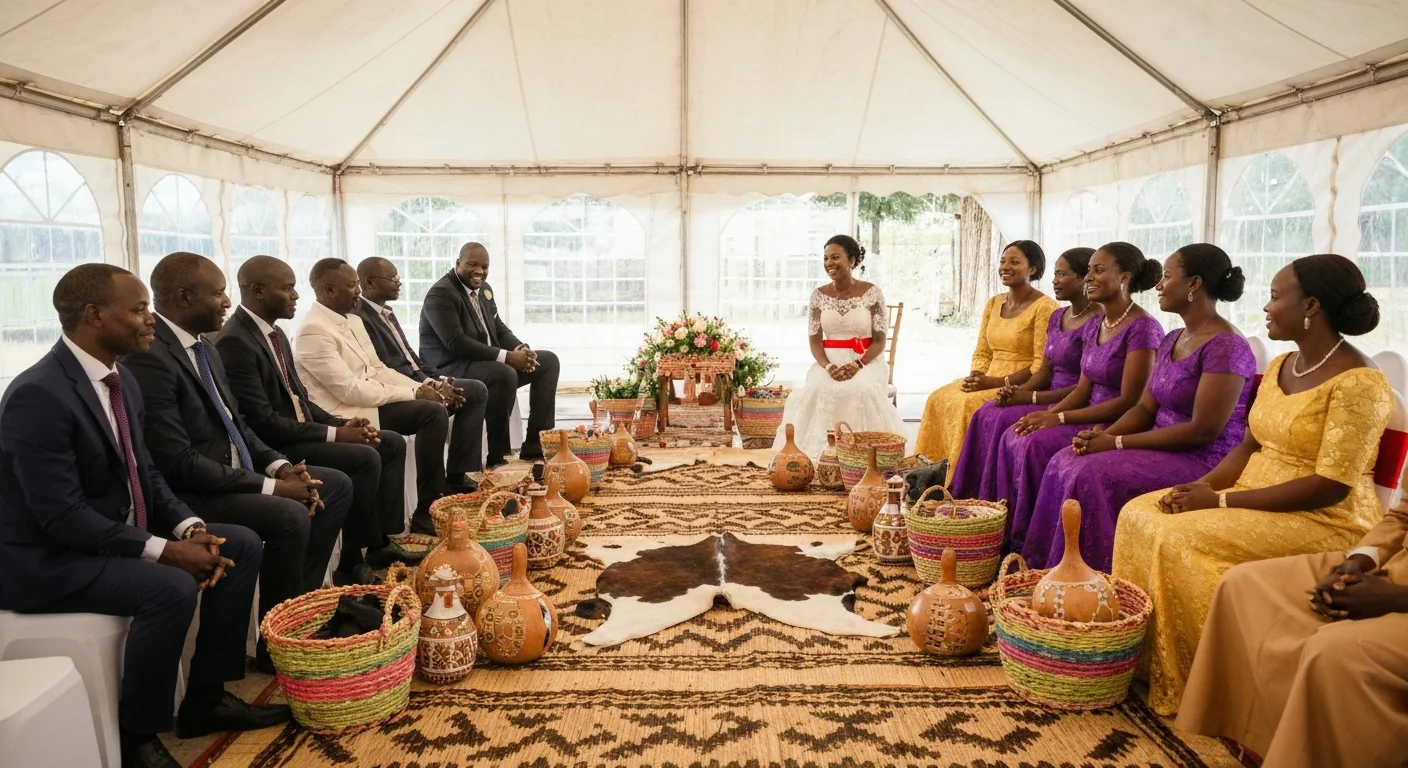
Umukobwa (The Bride): The bride is initially hidden from the groom’s delegation. She will be revealed later in the ceremony, often after a playful sequence where decoy “brides” are presented first.
Umukurambere (The Bride’s Spokesperson): The bride’s family also has a lead speaker. His role is to receive the groom’s delegation, test their seriousness, challenge them with questions and riddles, and ultimately (after appropriate drama) accept the proposal.
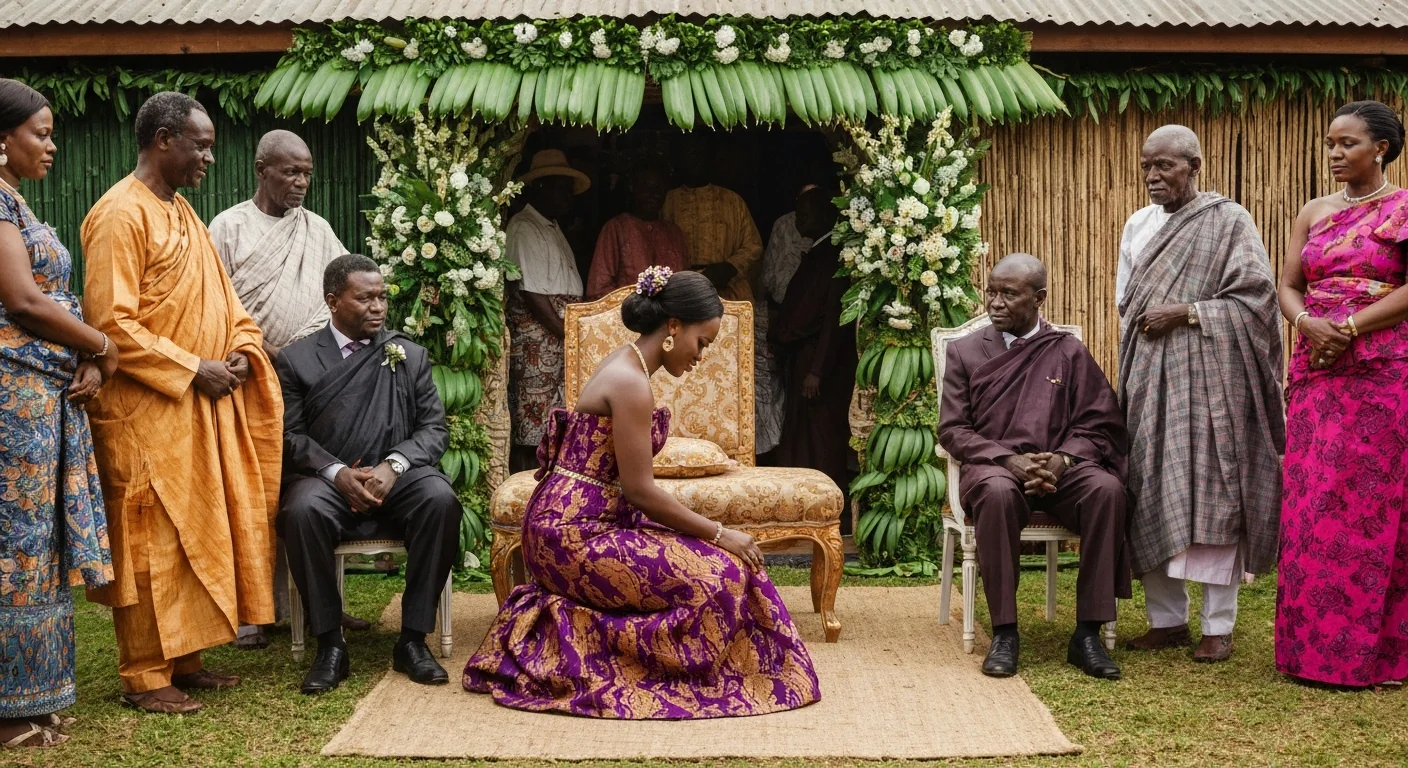
Bride’s Parents: The bride’s father holds ultimate authority to grant or deny permission. The bride’s mother is a key figure in the gift-receiving and blessing portions of the ceremony.
Bride’s Aunts (Ba Nyirasenge): The bride’s paternal aunts play a significant cultural role. They advise the bride, help prepare her, and are traditionally among the most important figures in the ceremony.
The Bride’s Family and Guests: They serve as witnesses, celebrate the occasion, and help create the atmosphere of joy and community.
Planning and Preparation
Timeline
Begin planning the gusaba at least 3–6 months before the intended date. Key preparation milestones:
- 6 months out: Both families agree on a date; groom’s family begins identifying their spokesperson and assembling their delegation
- 3–4 months out: Groom’s family meets to discuss and plan gifts, logistics, and budget; bride’s family begins venue and catering preparations
- 2 months out: Both spokespersons begin rehearsing; groom’s family finalizes gift list with guidance from a cultural advisor
- 1 month out: Invitations sent (printed or WhatsApp); logistics finalized (transport, seating, tents, sound system)
- 1 week out: Final rehearsal with key speakers; gifts purchased and organized; venue setup confirmed
Choosing the Venue
Traditional: The gusaba is held at the bride’s family home. This is still the most culturally authentic setting, particularly in rural areas. The compound is decorated, tents are erected, and seating is arranged for both families.
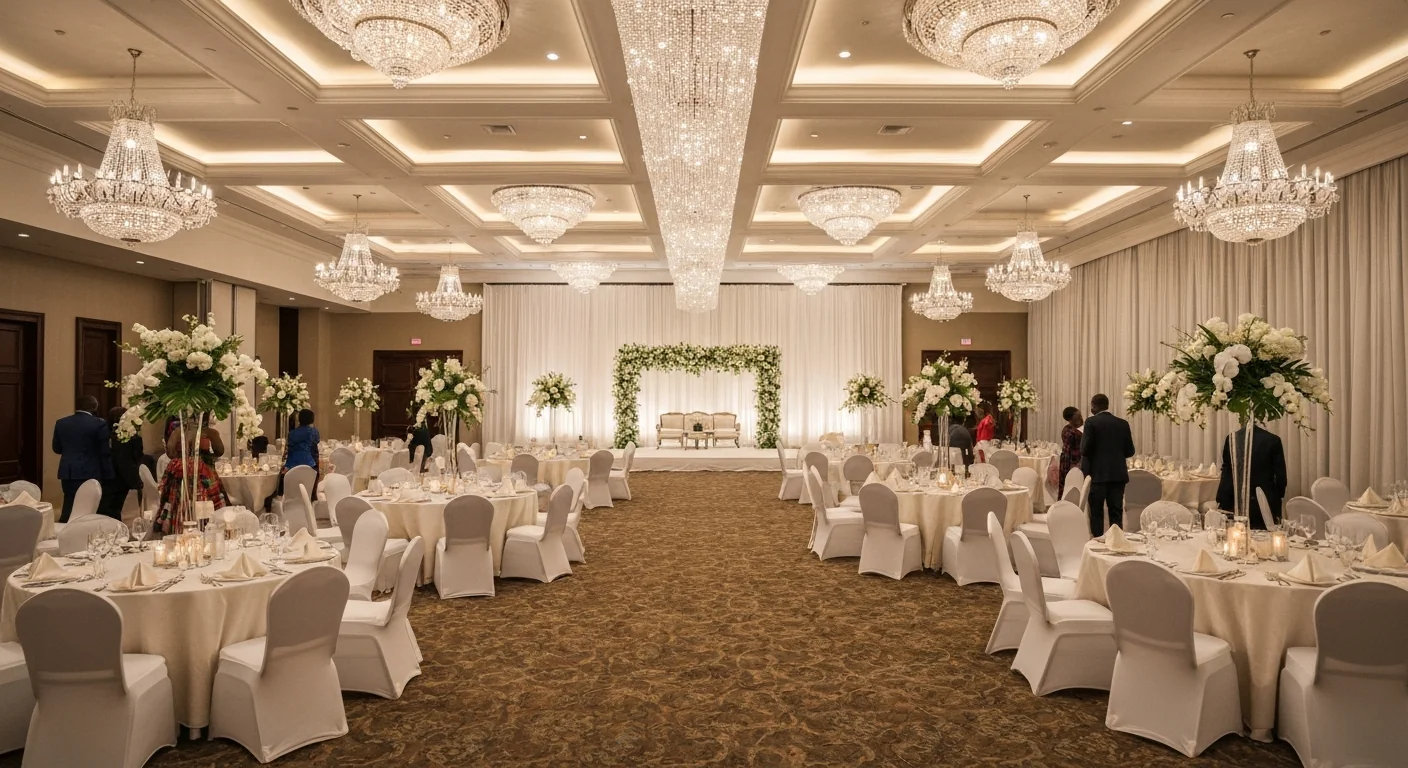
Modern adaptation: Many Kigali-based couples hold gusaba at rented event venues, hotels, or gardens, especially when the bride’s family home is outside of Kigali or too small for a large gathering. Popular choices include garden venues, hotel function rooms, and event halls that can accommodate 100–500 guests.
Wherever you hold it, the seating arrangement follows a specific pattern: the bride’s family sits on one side, the groom’s delegation on the other, facing each other. This arrangement is not decorative — it reflects the ceremonial dynamic of two families engaging in dialogue.
Rehearsals
Gusaba rehearsals are not optional. Both spokespersons need to practice their parts, the delegation needs to understand when to stand, sit, clap, and respond, and the key gift-giving moments need to be choreographed. Most families hold at least two rehearsals — one for the groom’s side and one for the bride’s side. Some families hire a cultural advisor (often an elder experienced in gusaba protocols) to guide the rehearsals.
The Gifts: What the Groom’s Family Brings
Gift-giving is central to the gusaba. The gifts are not a “purchase price” for the bride — they are expressions of gratitude, respect, and commitment from the groom’s family to the bride’s family. The specific items and quantities vary by region and family, but here is the standard framework:
Inkongoro (Cows)
The most important gift. Traditionally, the groom’s family brought actual cows to the bride’s family. In modern practice, cows are often represented by their monetary equivalent. The number of cows depends on negotiation between the families — typically 1 to 3 cows for the formal gusaba, with additional cows sometimes agreed upon later.
Current value: One cow in Rwanda costs approximately RWF 300,000 – 800,000 depending on breed, size, and region. Some families in Kigali agree on a symbolic amount (e.g., RWF 500,000 per cow) rather than purchasing actual livestock.
Drinks (Inzoga)
A substantial quantity of drinks is expected:
- Beer: Cases of Mützig, Primus, or Skol — typically 10–30 cases depending on guest count
- Soft drinks: Fanta, Coca-Cola, water — 5–15 cases
- Wine: Several bottles for the bride’s parents and elders
- Traditional banana wine (Urwagwa): Included for cultural authenticity, though not all families require it
Estimated cost: RWF 300,000 – 1,500,000 for drinks alone.
Food Items
The groom’s family typically contributes food items, which may include:
- Sacks of rice (1–3 sacks)
- Sacks of sugar (1–2 sacks)
- Cooking oil
- A goat or sheep for roasting
- Fresh fruit baskets
Gifts for the Bride’s Mother
The bride’s mother receives special gifts in recognition of her role in raising the bride. Common gifts include:
- A mushanana (traditional dress)
- Shoes
- A handbag
- Fabric or clothing material
- Sometimes gold jewellery
Gifts for the Bride’s Father
- A suit or formal outfit
- Shoes
- A traditional walking stick or umbrella (symbolic)
Gifts for the Bride’s Aunts
The aunts (ba nyirasenge) also receive gifts — typically fabric, dresses, or cash gifts. Do not overlook this. Failing to honour the aunts is a significant cultural misstep.
Estimated Total Gift Budget
| Item | Estimated Cost (RWF) |
|---|---|
| Inkongoro (cows, 1–3) | 300,000 – 2,400,000 |
| Drinks (beer, soda, wine) | 300,000 – 1,500,000 |
| Food items | 100,000 – 400,000 |
| Gifts for bride’s mother | 100,000 – 500,000 |
| Gifts for bride’s father | 100,000 – 400,000 |
| Gifts for aunts | 50,000 – 300,000 |
| Miscellaneous gifts | 50,000 – 200,000 |
| Total gifts | 1,000,000 – 5,700,000 |
Add venue, catering, decor, transport, and sound system costs, and the total gusaba budget typically lands between RWF 2,000,000 and 10,000,000+ depending on the family’s ambitions and the guest count.
The Ceremony Flow: Step by Step
The gusaba follows a well-established sequence. While there are regional variations, the core structure is consistent across Rwanda.
1. Arrival of the Groom’s Delegation (Gutaha kw’Intumwa)
The groom’s delegation arrives at the bride’s family venue. They do not simply walk in. In traditional practice, the gate is closed, and the bride’s family sends a representative to meet them at the entrance and ask their business. This is the first moment of theatre — the groom’s spokesperson must formally state their purpose.
The exchange often begins with a formulaic greeting. The bride’s representative may playfully deny knowledge of any eligible daughter, forcing the groom’s side to persist. This back-and-forth can last several minutes and sets the tone for the ceremony.
Once admitted, the delegation is seated on their designated side.
2. Formal Greetings and Introductions
Both families introduce their key members. This is done formally — each person stands, states their name and relationship to the bride or groom, and sits down. The spokespersons manage this process, introducing their respective delegations with flair.
3. The Request (Gusaba Proper)
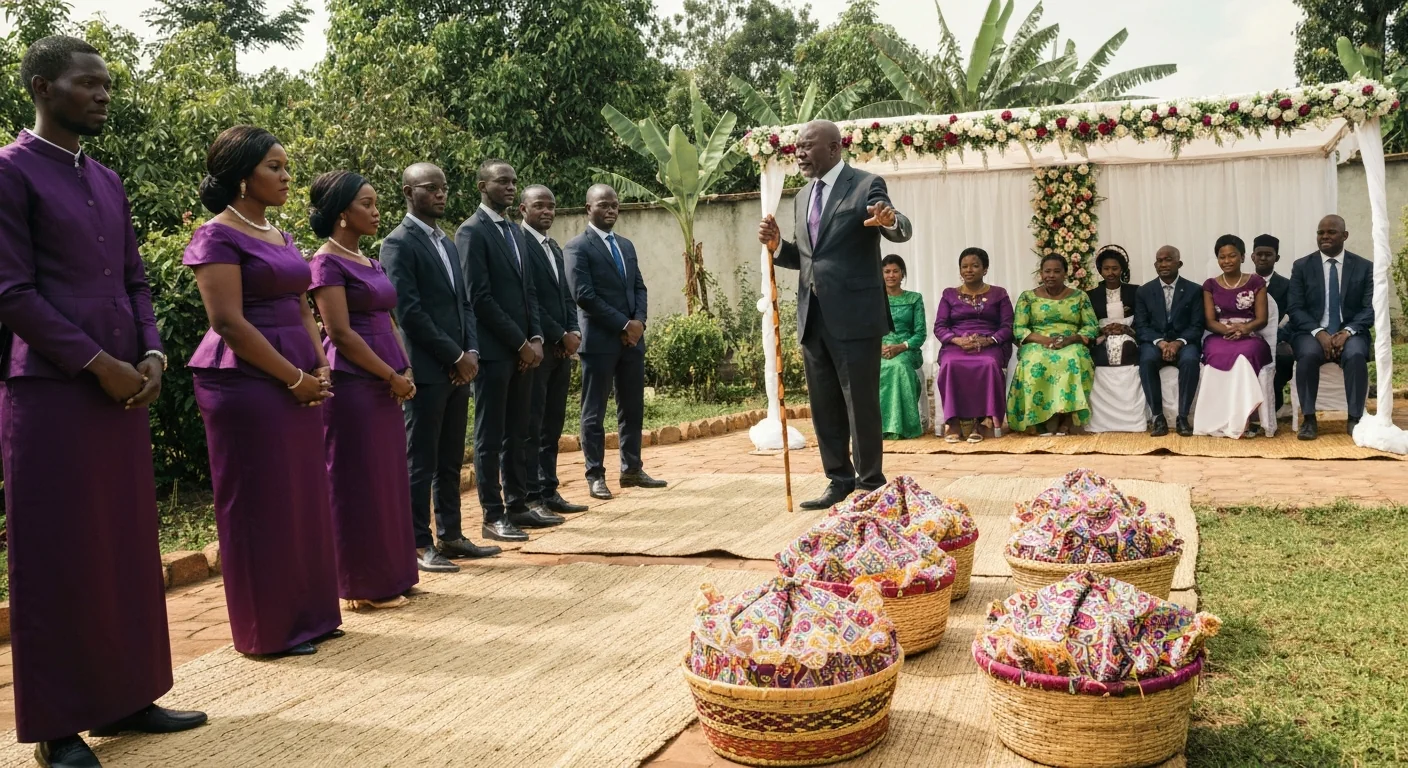
This is the centrepiece of the ceremony. The groom’s spokesperson rises and delivers the formal request. He explains — often using elaborate metaphors, proverbs, and poetic language — that his family has found a “flower” in this household and has come to ask if they may take her to their home.
Rwandan proverbs feature heavily. A skilled spokesperson might say:
“Twaje kubashaka nk’uko umuhigo ushaka ibiryo” — “We have come to seek from you, as the journey seeks nourishment.”
The bride’s spokesperson responds, typically by neither accepting nor rejecting immediately, but by asking questions to test the groom’s family’s sincerity, preparation, and worthiness.
4. Presentation of Gifts
The groom’s family formally presents the gifts. Each category of gift is announced, displayed, and received by the bride’s family. The inkongoro (cows) are presented first as the most important gift, followed by drinks, food items, and personal gifts for family members.
The bride’s spokesperson inspects the gifts and may comment on their quality or quantity — sometimes with humour, sometimes with serious scrutiny. This is all part of the ritual.
5. The Bride’s Reveal (Gushyira Umukobwa Ahagaragara)
One of the most anticipated moments. After the gifts are accepted, the bride’s family brings out the bride — but not immediately. First, they may present one or two “decoy brides” — other young women from the family, covered in veils or shawls. The groom must identify his actual bride. If he points to the wrong woman, laughter erupts. When he correctly identifies his bride, the room celebrates.
The bride then sits beside the groom, often for the first time during the ceremony. She is typically dressed in a stunning mushanana, and the moment she is revealed is one of the most photographed of the entire wedding process.
6. Family Blessings and Speeches
Both families offer blessings and advice to the couple. The bride’s father (or his representative) formally grants permission for the marriage. Elders from both sides speak — offering wisdom, sharing stories, and expressing hopes for the couple’s future.
These speeches can be long and emotional. They are deeply valued in Rwandan culture, and interrupting or rushing them is inappropriate.
7. The Response (Gusubiza)
The bride’s family formally accepts the groom’s request. This is the culminating moment — the official “yes.” It is typically delivered by the bride’s spokesperson, with the bride’s father confirming.
8. Celebration
With the formal ceremony complete, the celebration begins. Food is served, drinks flow, music plays, and both families mingle. This is the joyous conclusion — the moment the two families are officially joined. Dancing, singing, and toasting continue for hours.
Dress Code: The Mushanana and More
Women: The Mushanana
The mushanana is the traditional Rwandan dress and the centrepiece of gusaba attire. It is a long, draped garment that wraps around the body and over one shoulder, typically made from rich, flowing fabric in vibrant colours — deep blues, emerald greens, golds, burgundies, and purples are popular choices.
The bride’s mushanana is the most elaborate. Many brides commission custom designs from Kigali-based fashion designers, incorporating modern touches while maintaining the traditional silhouette. Expect to spend RWF 150,000 – 500,000+ for a high-quality bridal mushanana.
Female family members on both sides also wear mushanana. Coordinated colours within each family’s group are common — the bride’s side might wear shades of green while the groom’s side wears shades of blue, for example.
Men: Suits with Traditional Touches
There is no male equivalent of the mushanana in common modern practice. Most men wear formal suits — dark colours, well-tailored. Some grooms and male family members add traditional elements: a traditional hat, a draped cloth over one shoulder, or traditional accessories. However, a sharp modern suit is perfectly acceptable and, in most urban gusabas, the standard.
Guests
Guests should dress formally. For women, mushanana, kitenge outfits, or elegant dresses are all appropriate. For men, suits or smart formal wear. Jeans, casual wear, and overly revealing outfits are out of place at a gusaba.
Modern Adaptations
While the core structure of gusaba has remained remarkably stable, modern couples have introduced several adaptations:
Venue Shifts
As mentioned, many gusabas have moved from family homes to rented venues, particularly in Kigali. This allows for larger guest lists, professional catering, better sound systems, and Instagram-worthy decor. Some traditionalists view this as a loss of authenticity, but the practical benefits are undeniable.
Monetary Equivalents for Cows
Very few urban gusabas involve actual cows anymore. Most families agree on a monetary figure per cow, which is presented in an envelope or transferred digitally. Some families still bring one physical cow for symbolic purposes and convert the rest to cash.
Professional Event Planning
A growing number of couples hire professional event planners to manage gusaba logistics — decor, catering, sound, photography, and coordination. This is especially common when one or both families are based outside Rwanda and need on-the-ground support.
Social Media and Photography
Modern gusabas are heavily photographed and videographed. Professional photographers capture the ceremony, drone footage adds cinematic quality, and highlights are shared on social media within hours. This has raised the aesthetic bar significantly and means decor, attire, and presentation receive more attention than in previous generations.
Diaspora Gusabas
Rwandans living abroad sometimes hold gusaba ceremonies in their country of residence, with modifications to accommodate the setting and available materials. Others fly back to Rwanda for the gusaba and hold a separate celebration abroad. Some do both.
Combined Events
Some couples combine the gusaba with the civil marriage ceremony to reduce the number of separate events. The gusaba takes place in the morning, and the civil ceremony follows in the afternoon at the same venue. This is practical but not universally accepted by more traditional families.
Common Mistakes to Avoid
-
Choosing a weak spokesperson: The umukurambere makes or breaks the gusaba. Do not choose someone based solely on family relationship — choose someone who is eloquent, experienced, and respected.
-
Underpreparing gifts: Arriving with insufficient or low-quality gifts is a serious cultural faux pas. Consult with a knowledgeable elder or cultural advisor about exactly what is expected by the bride’s family.
-
Skipping rehearsals: The ceremony has a specific flow. Without rehearsal, the delegation will look disorganized, and key moments will lose their impact.
-
Ignoring the aunts: The bride’s paternal aunts hold significant cultural authority. Failing to bring appropriate gifts for them can create lasting resentment.
-
Rushing the ceremony: Gusaba takes time. Speeches are long. Protocols must be followed. Trying to speed things up signals disrespect.
-
Poor sound system: If your gusaba has more than 50 guests and you do not have a professional sound system, half the guests will not hear the speeches. This is particularly important for the spokesperson’s performance.
-
Not accounting for rain: If your gusaba is outdoors, have a tent or indoor backup plan. Rwanda’s weather can change quickly.
Gusaba Etiquette for Non-Rwandan Partners
If you are not Rwandan and your partner’s family is holding a gusaba, here is what to know:
- Learn basic Kinyarwanda phrases. Greetings like “Muraho” (hello), “Murakoze” (thank you), and “Amahoro” (peace) go a long way. If you can deliver a few sentences in Kinyarwanda during the ceremony, the bride’s family will be deeply impressed.
- Defer to your spokesperson. You do not need to speak extensively during the ceremony. Your umukurambere handles the formal dialogue. Be present, respectful, and composed.
- Dress appropriately. Wear your best suit. If your partner’s family suggests adding a traditional element to your attire, embrace it.
- Bring a generous delegation. Arriving with a small group signals weak family support. Recruit friends and family — even non-Rwandan friends who are willing to dress up and participate.
- Expect the unexpected. The playful elements — decoy brides, teasing from the bride’s spokesperson, deliberate delays — are all part of the tradition. Laugh with them, not against them.
The Gusaba in the Context of the Full Wedding
The gusaba is the first major event in the Rwandan wedding journey. After a successful gusaba, the couple proceeds to:
- Civil marriage registration at the sector office
- Church ceremony (for Christian couples)
- Wedding reception (umuhingiro)
Some families hold a “gutaha” (send-off) ceremony for the bride at her parents’ home the evening before or the morning of the church wedding. This is a more intimate event where the bride is formally blessed and sent off by her family.
For the complete guide to planning the full Rwandan wedding journey, read our guide to How to Plan a Wedding in Rwanda.
Planning a gusaba or Rwandan wedding?
Harusi Hub helps couples coordinate every detail — from guest lists and RSVPs to budget tracking and a beautiful wedding website for all your events.
Start Planning on Harusi Hub