How to Plan a Wedding in Rwanda: Complete Guide
The complete guide to planning a wedding in Rwanda — from gusaba and civil ceremonies to church weddings and receptions, covering budgets in RWF, venues in Kigali, vendors, legal requirements, and cultural considerations.
How to Plan a Wedding in Rwanda: Complete Guide
Planning a wedding in Rwanda means navigating a beautiful but complex sequence of events — traditional introduction ceremonies, civil formalities, church blessings, and grand receptions — each with its own rules, expectations, and expenses. Whether you are Rwandan, marrying into a Rwandan family, or planning from the diaspora, this guide walks you through the entire process so nothing catches you off guard.
Rwandan weddings are not a single event. They are a series of celebrations that unfold over weeks or months, each one carrying cultural, legal, and spiritual significance. A couple who skips a step — or gets the sequence wrong — will hear about it from both families for years.
This guide covers the full journey: from the first traditional introduction (gusaba) through to the wedding reception, with practical details on legal requirements, budgets in Rwandan francs, venue options across Kigali and beyond, and how to find reliable vendors in a market that is growing fast but still relies heavily on word of mouth.
Understanding the Rwandan Wedding Structure
A complete Rwandan wedding typically involves four distinct events, often spread across several weekends:
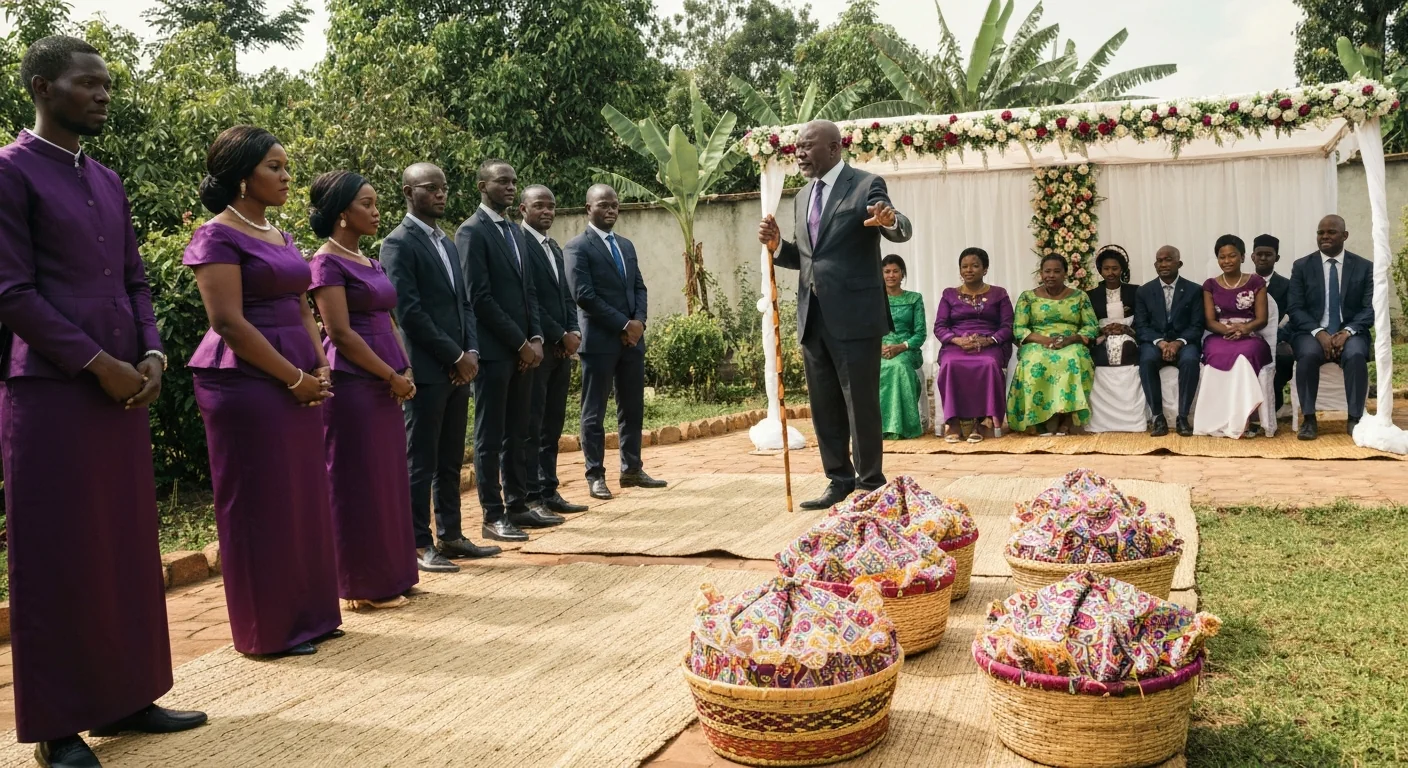
- Gusaba (Traditional Introduction Ceremony) — The groom’s family formally requests the bride’s hand from her family. This is the cultural cornerstone of the entire process.
- Civil Marriage — The legal registration at the sector office (umurenge), which makes the marriage legally binding under Rwandan law.
- Church or Religious Ceremony — For Christian couples, this is the spiritual blessing, most commonly held in Catholic or Protestant churches.
- Reception (Umuhingiro / Wedding Party) — The celebratory party, usually the largest and most expensive event of the series.
Some couples combine the civil ceremony with the church wedding on the same day. Others hold the gusaba and civil ceremony on one weekend, then the church and reception on another. The order is flexible to a degree, but gusaba always comes first.
Important note: Many Rwandan couples today also hold a “send-off party” (gutaha) for the bride at her parents’ home on the eve of the church wedding, where she is formally sent off to begin her new life. This is a more intimate, family-focused event.
Step 1: Set Your Budget
Rwanda’s wedding costs have risen significantly in the past decade, driven by Kigali’s growing middle class and the influence of social media. Before you book anything, sit down with your partner and both families to establish a realistic total budget.
Typical Budget Ranges (2026 Estimates)
| Wedding Scale | Guest Count | Estimated Total Budget (RWF) |
|---|---|---|
| Modest / Intimate | 100–150 guests | 3,000,000 – 6,000,000 |
| Mid-Range | 200–350 guests | 8,000,000 – 15,000,000 |
| Upper Mid-Range | 400–600 guests | 18,000,000 – 30,000,000 |
| Luxury / High-End | 600+ guests | 35,000,000 – 80,000,000+ |
These figures include all events (gusaba, civil, church, and reception). For most couples, the reception accounts for 50–60% of the total spend, with gusaba taking 15–25% and church and civil costs making up the rest.
Budget Breakdown by Category
| Category | % of Total Budget |
|---|---|
| Venue & Catering (Reception) | 30–40% |
| Gusaba Costs (gifts, food, drinks, logistics) | 15–25% |
| Attire (bride, groom, bridal party) | 8–12% |
| Photography & Videography | 8–10% |
| Decor & Flowers | 8–10% |
| Entertainment (DJ, Band, MC) | 5–7% |
| Transport | 3–5% |
| Church & Civil Fees | 2–4% |
| Invitations & Stationery | 1–3% |
| Contingency Buffer | 10–15% |
The contingency is non-negotiable. Guest lists in Rwanda tend to grow — family obligations run deep, and turning someone away is culturally sensitive. Budget for at least 10–15% more guests than your initial count.
How Rwandan Couples Fund Their Weddings
Unlike Kenya, where wedding committees (harambee) are a formal fundraising structure, Rwanda’s approach is more family-driven. Common funding sources include:
- Personal savings — The primary source for most urban couples
- Family contributions — Both families typically contribute, especially toward gusaba costs
- Ibiganiro (informal support groups) — Close friends and family sometimes pool contributions
- Diaspora support — For couples with family abroad, contributions from the Rwandan diaspora in Europe, North America, and other African countries are common
Be transparent with both families about the budget from the start. Misaligned expectations between the families are one of the biggest sources of wedding stress in Rwanda.
Step 2: The Gusaba (Traditional Introduction)
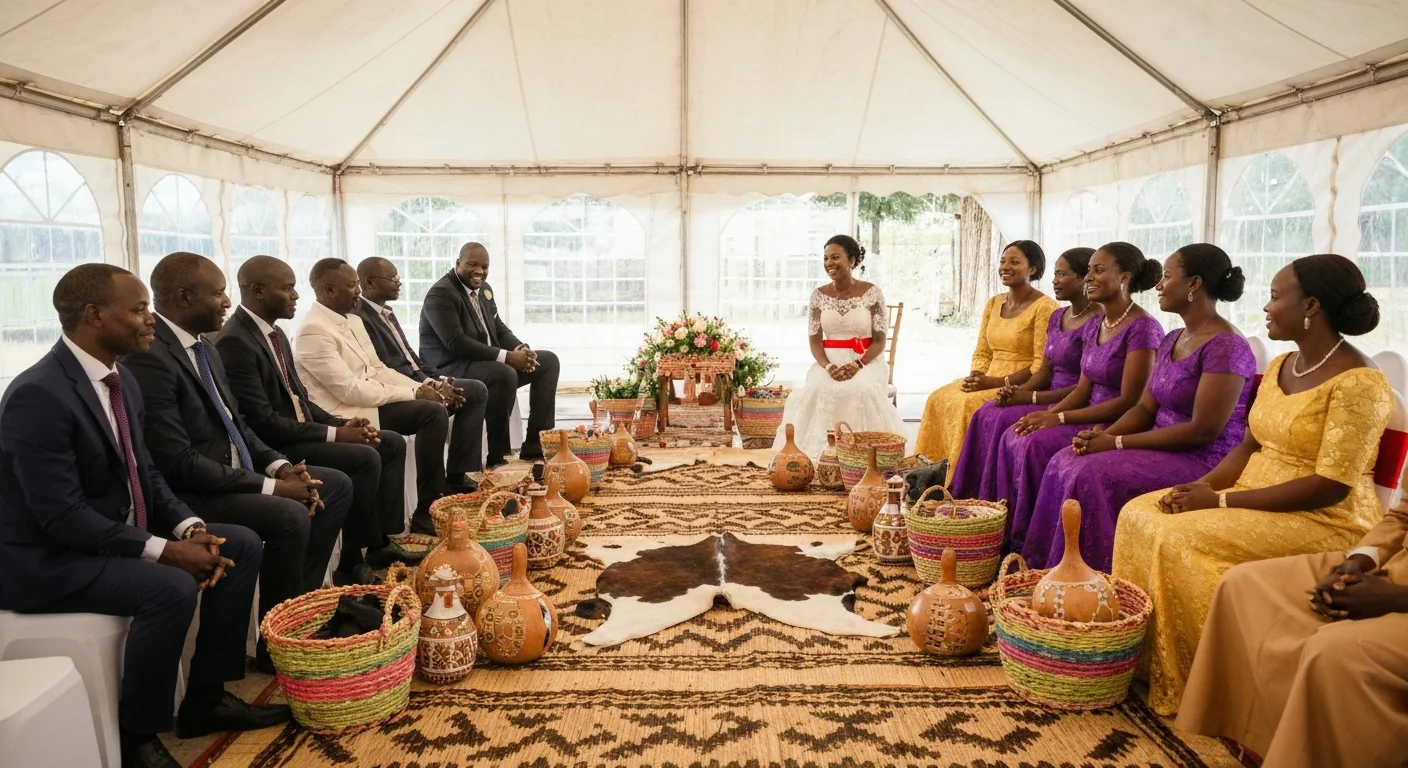
The gusaba is the emotional and cultural heart of a Rwandan wedding. It is a formal ceremony where the groom’s family visits the bride’s family to officially request her hand in marriage. This is not a casual meet-and-greet — it is a structured, ritualized event with specific roles, speeches, gifts, and protocols.
We have written a separate, comprehensive guide to the gusaba ceremony: Rwandan Wedding Traditions: Gusaba (Traditional Introduction). Read it for the full details on planning, costs, gifts, dress code, and ceremony flow.
Key planning considerations for the gusaba:
- Timing: Hold the gusaba at least 2–4 months before the church wedding to give both families time to prepare for subsequent events
- Location: Traditionally held at the bride’s family home, though many modern gusabas take place at rented venues in Kigali
- Budget: Expect to spend RWF 1,500,000 – 8,000,000+ depending on scale, with the groom’s family covering the bulk of the cost (gifts, drinks, transport for their delegation)
- Key purchases: Inkongoro (traditional cows or their monetary equivalent), drinks (beer, wine, soft drinks), traditional food, and gifts for the bride’s family
- Dress code: The bride and female family members wear the mushanana (traditional Rwandan dress). The groom and male family members wear suits or traditional attire
The gusaba must be completed before any civil or religious ceremony can proceed. In many churches, the priest will ask for confirmation that the traditional introduction has taken place.
Step 3: Legal Requirements and Civil Marriage
Rwanda requires all marriages to be legally registered through a civil ceremony. This is handled at the sector (umurenge) level by the Executive Secretary of the sector.
Documents Required
- National identity cards (indangamuntu) for both parties
- Birth certificates
- Certificate of celibacy or proof of single status (for those previously married, a divorce decree or death certificate of former spouse)
- Proof of residence
- Written consent from parents (if either party is under 21)
- Two witnesses with valid ID cards
- Marriage banns must be published at the sector office for at least 15 days before the ceremony
Process
- Visit your sector office — Submit your documents and application at least 30 days before your intended marriage date
- Banns publication — The sector publishes the intended marriage for 15 days to allow any objections
- Civil ceremony — Conducted by the Executive Secretary at the sector office. Both parties, two witnesses, and the officiant must be present. The ceremony is simple and typically takes 30–60 minutes
- Marriage certificate issued — You receive an official marriage certificate (icyemezo cy’ubukwe), which you will need for the church ceremony and any legal matters
Fees
Civil marriage registration fees are minimal — typically RWF 5,000 – 10,000 for the official registration. However, many couples choose to make the civil ceremony a small celebration with close family, which adds catering and venue costs.
Property Regime
During the civil ceremony, you must declare your chosen matrimonial property regime:
- Community of property (ubusumbane bw’umutungo) — All assets acquired during the marriage are shared equally
- Limited community of property — Only assets acquired after marriage are shared; pre-marital assets remain individual
- Separation of property — Each spouse retains full ownership of their own assets
This is a legally binding decision, so discuss it with your partner (and ideally a legal advisor) well before the ceremony.
Step 4: Church or Religious Ceremony
The majority of Rwandan weddings include a church ceremony. Rwanda is predominantly Christian — roughly 44% Catholic, 38% Protestant, and 12% Adventist — so church weddings are deeply important to most families.
Catholic Church Requirements
Catholic churches in Rwanda have the most detailed requirements:
- Pre-marriage course (Inzibacyuho) — Mandatory counselling sessions, typically 3–6 months of weekly classes covering marriage theology, communication, finances, and family planning
- Baptism and confirmation certificates for both parties
- Letter of freedom (proof of single status) from your parish
- Completion of banns — Published in both partners’ parishes for three consecutive Sundays
- Meeting with the parish priest — At least 6 months before the wedding
- Gusaba confirmation — Many parishes require evidence that the traditional introduction has been completed
Protestant Church Requirements
Protestant denominations generally have shorter preparation periods (1–3 months of counselling) but still require:
- Proof of membership
- Pre-marital counselling completion
- Pastor’s approval
- Banns publication (varies by denomination)
Church Fees and Costs
| Item | Estimated Cost (RWF) |
|---|---|
| Church booking fee | 50,000 – 200,000 |
| Pre-marriage course | 20,000 – 50,000 |
| Choir | 50,000 – 150,000 |
| Flower arrangements (church) | 100,000 – 300,000 |
| Church decor | 150,000 – 500,000 |
Book your church early. Popular churches in Kigali — particularly Sainte Famille Cathedral, Remera Catholic Church, and Kigali Anglican Cathedral — are booked months in advance, especially during the dry seasons (June–September and December–February).
Step 5: Choose Your Wedding Date
Rwanda’s climate is mild year-round thanks to its elevation, but there are clear dry and wet seasons that affect outdoor events:
- Long dry season (June – September): The most popular wedding season. Pleasant weather, minimal rain, comfortable temperatures. Book everything 6–12 months ahead.
- Short dry season (December – February): Also popular, but December can be busy with holiday travel.
- Long rains (March – May): Frequent afternoon showers. Outdoor venues are risky without solid tent backup.
- Short rains (October – November): Less predictable. Some couples take the risk for the lower prices and better availability.
Saturday is the standard wedding day in Rwanda. Sunday weddings are less common, and weekday weddings are rare. If you choose a Saturday during peak season, expect higher venue prices and tighter vendor availability.
Step 6: Find Your Venues
Rwanda’s venue landscape has expanded significantly in recent years, particularly in Kigali. You will need venues for potentially three different events: gusaba, church ceremony, and reception.
Venue Types in Rwanda
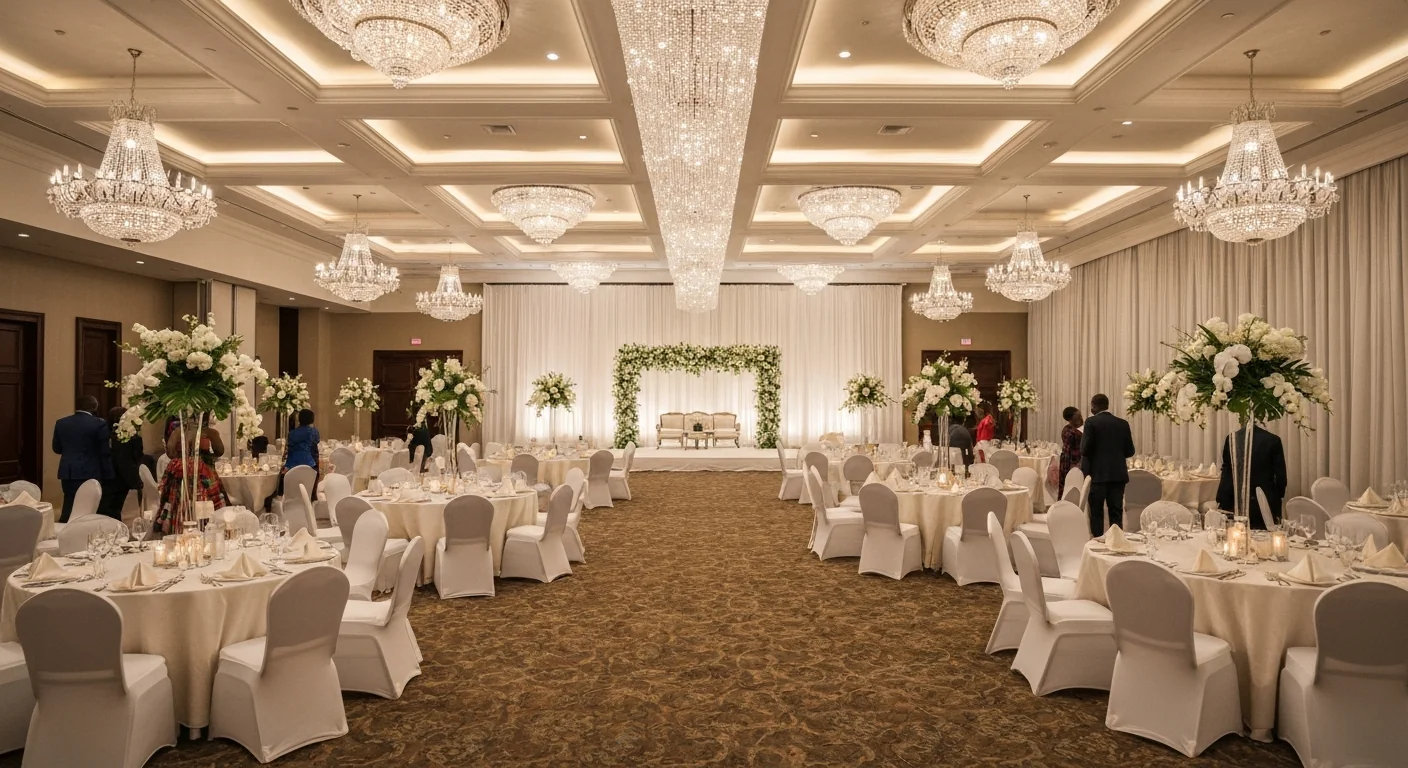
Hotel ballrooms and banquet halls: The Kigali Marriott Hotel, Radisson Blu Hotel & Convention Centre, Kigali Serena Hotel, and Lemigo Hotel are the top-tier options. They offer all-inclusive packages (venue, catering, service staff, equipment) and can handle 200–800+ guests. Expect to pay RWF 5,000,000 – 25,000,000+ for a full reception package.
Garden and outdoor venues: Venues like Inema Arts Center, Kigali Conference and Exhibition Village (Camp Kigali area), and various private gardens around Kigali offer a more relaxed, outdoor atmosphere. Prices range from RWF 1,500,000 – 8,000,000, but you will need to arrange catering, tents, and equipment separately.
Restaurants and event spaces: Mid-range options like Repub Lounge, The Hut, and Pili Pili offer semi-private event spaces that work well for smaller weddings (50–150 guests) at RWF 1,000,000 – 5,000,000.
Lake Kivu destination venues: For couples who want a destination feel, Lake Kivu Serena Hotel in Gisenyi, Cleo Lake Kivu in Kibuye, and Mantis Kivu Marina Bay Hotel offer stunning lakeside settings. These are 3–5 hours from Kigali, so plan for guest transport and accommodation. Prices vary widely but expect a premium for the location.
For a detailed venue-by-venue breakdown, read our guide to Best Wedding Venues in Kigali.
Questions to Ask Every Venue
- What is included in the venue hire fee? (Tables, chairs, linens, sound system, projector?)
- Is catering in-house or can we bring an outside caterer?
- What is the maximum capacity for a seated dinner vs. cocktail style?
- Is there a backup indoor space if it rains?
- What are the overtime charges per hour?
- Is there parking for guests? How many cars?
- What is the deposit and cancellation policy?
Step 7: Build Your Vendor Team
Rwanda’s wedding vendor industry is still maturing compared to Kenya or South Africa, but Kigali now has a solid base of professionals. Here is what to look for in each category.
Photography and Videography
This is one area where you should not cut corners. Kigali has a growing pool of talented wedding photographers, many of whom have trained internationally or shoot across East Africa. Budget RWF 800,000 – 3,000,000 for a quality photography and videography package covering all events. Ask to see full wedding galleries (not just highlight reels) and check how quickly they deliver final images.
Catering
If your venue does not include catering, you will need an independent caterer. Rwandan wedding menus typically include:
- Buffet service with a mix of Rwandan and international dishes
- Rwandan staples: Isombe (cassava leaves), ibihaza (pumpkin), ubugari (maize flour), grilled meats (brochettes), beans, rice, and plantains
- International options: Pasta, roast chicken, beef stew, salads, bread rolls
- Drinks: Soft drinks, beer (Mützig, Primus, and Skol are the local favourites), wine, and sometimes waragi or banana wine for traditional touch
Catering costs range from RWF 5,000 – 15,000 per person for a standard buffet, and RWF 15,000 – 35,000 per person for premium service. For 300 guests at a mid-range per-head cost, catering alone can reach RWF 3,000,000 – 6,000,000.
Decor and Flowers
Kigali has a growing number of event decorators. Fresh flowers are readily available in Rwanda — the country is one of Africa’s leading flower exporters, which means roses, lilies, and tropical flowers are abundant and relatively affordable compared to other East African markets. Decor budgets typically range from RWF 500,000 – 3,000,000 depending on complexity and venue size.
Entertainment
- DJ: RWF 200,000 – 800,000
- Live band: RWF 500,000 – 2,000,000
- MC (Master of Ceremonies): RWF 150,000 – 500,000. A good MC is critical for Rwandan weddings — they manage the flow, handle speeches, and keep the energy right. Book someone who knows Rwandan wedding protocols.
Wedding Cake
Kigali has several excellent bakers. A multi-tier wedding cake runs RWF 200,000 – 1,500,000 depending on size, design, and baker. Order at least 4–6 weeks in advance for custom designs.
Step 8: Wedding Attire
The Bride
Most Rwandan brides wear two outfits:
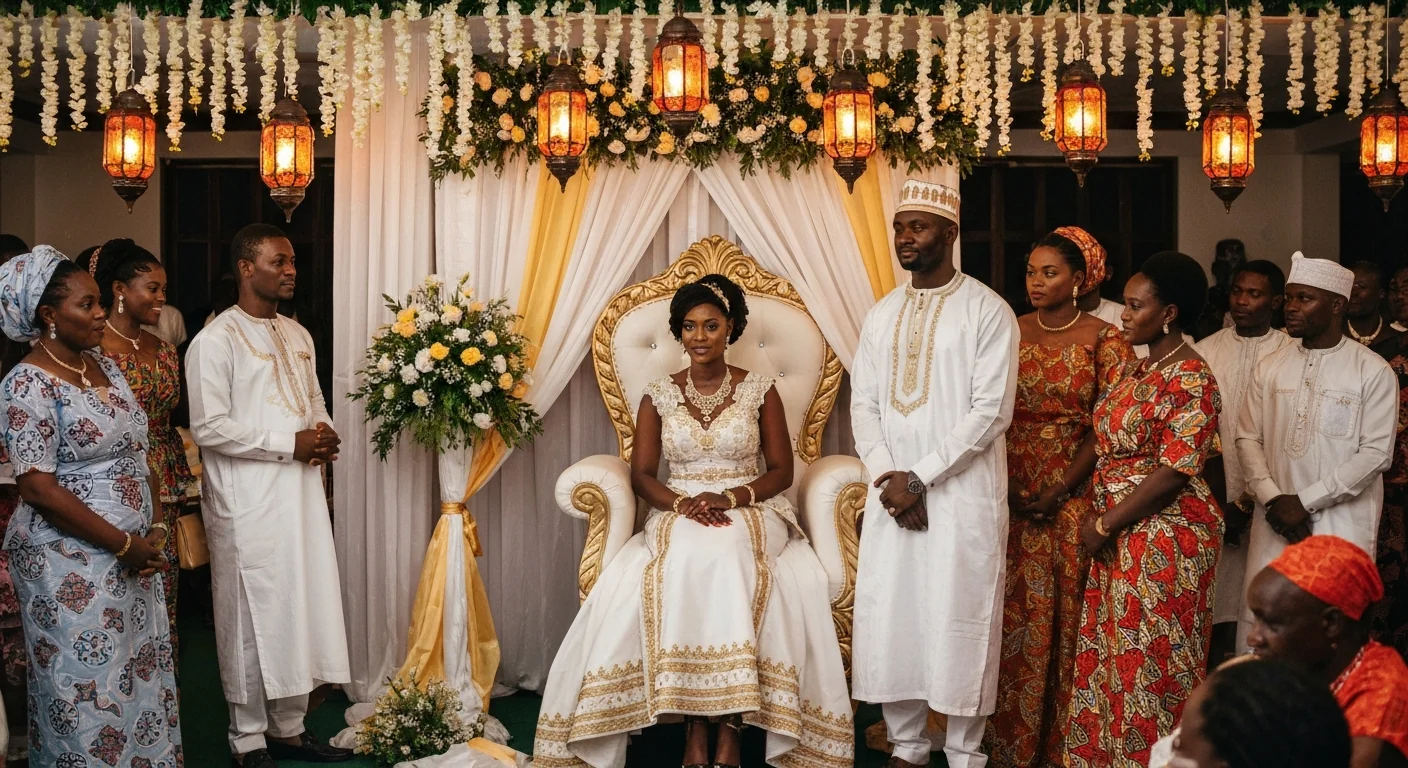
- Mushanana for the gusaba ceremony — The traditional Rwandan dress, a draped garment worn over one shoulder, typically in rich fabrics with vibrant colours. Custom mushanana from Kigali designers cost RWF 100,000 – 500,000+.
- White wedding dress for the church ceremony and reception — Kigali has a growing bridal industry with local designers and bridal shops. Gowns range from RWF 200,000 – 2,000,000+ for custom designs, or RWF 100,000 – 500,000 for rentals.
The Groom
Grooms typically wear a suit for both the gusaba and the church ceremony. Quality suits from Kigali tailors range from RWF 150,000 – 800,000 for custom-made options. Some grooms add traditional elements for the gusaba — a traditional hat or sash — while wearing a modern suit underneath.
Bridal Party
Bridesmaid dresses and groomsmen suits are usually coordinated by the couple. Budget RWF 50,000 – 150,000 per person for bridesmaid dresses (often made by a local tailor in matching fabric) and RWF 80,000 – 200,000 per person for groomsmen suits.
Step 9: Guest List and Invitations
Rwandan weddings tend to have large guest lists. Family obligations are strong, and it is culturally expected to invite extended family, neighbours, colleagues, and church community members. A “small” Rwandan wedding is 150 guests; a typical one is 300–500.
Managing the Guest List
- Start with a hard cap based on your venue capacity and budget
- Divide the list into tiers: immediate family, extended family, close friends, colleagues, community members
- Be prepared for both families to add names — have the conversation early about limits
- Send invitations at least 4–6 weeks before the event
Invitation Styles
- Printed cards remain the standard for formal invitations in Rwanda, especially for older family members
- Digital invitations via WhatsApp are increasingly common for friends and colleagues
- Wedding websites are gaining traction among younger, urban couples — they allow you to share event details, collect RSVPs, and manage logistics from one link
Step 10: Day-of Logistics
Transport
If your church and reception venue are in different locations (which they usually are), coordinate transport carefully:
- Bridal car: RWF 200,000 – 800,000 for a decorated luxury vehicle. Mercedes and Range Rovers are the most popular choices in Kigali.
- Bridal party transport: Arrange a minibus or coordinated vehicles. RWF 100,000 – 300,000.
- Guest transport: If your reception venue is far from the church, consider arranging shuttle buses. This is especially important for destination venues outside Kigali.
Timeline
A typical Rwandan church-wedding-plus-reception day runs:
- 8:00–9:00 AM: Bridal preparation
- 10:00 AM – 12:00 PM: Church ceremony
- 12:30–1:30 PM: Photo session
- 2:00–3:00 PM: Guests arrive at reception, cocktail hour
- 3:00–4:00 PM: Grand entrance, first dance, cake cutting
- 4:00–6:00 PM: Speeches, dinner service, toasts
- 6:00–10:00 PM: Dancing, entertainment, bouquet toss, departure
The church ceremony often runs longer than expected — Rwandan church weddings, particularly Catholic ones, can last 2–3 hours. Build buffer time into every transition.
Step 11: Cultural Considerations for Non-Rwandan Partners
If you are marrying into a Rwandan family and are not Rwandan yourself, there are a few things to understand:
- Language: Kinyarwanda is spoken at most traditional ceremonies. If you do not speak it, arrange for a trusted friend or family member to translate key moments during the gusaba. Learning a few phrases of greeting and respect goes a long way.
- Respect for elders: Rwandan culture places enormous emphasis on respect for elders. Address older family members with appropriate titles, stand when they enter a room, and defer to their guidance during traditional events.
- Gift-giving protocols: The gusaba involves specific gifts from the groom’s family. Work with a knowledgeable family member or cultural advisor to ensure you bring the right items in the right quantities.
- Dress modestly: For church ceremonies and traditional events, conservative attire is expected. Avoid overly revealing clothing, especially at the gusaba and church.
- Patience with process: Rwandan ceremonies are formal and structured. Speeches can be long. Negotiations during gusaba are deliberate. Embrace the pace rather than trying to rush it.
Step 12: Planning from the Diaspora
A significant number of Rwandan weddings are planned by couples living abroad — in Belgium, France, the UK, the US, Canada, or elsewhere in Africa. If that is your situation:
- Assign a local coordinator: You need someone on the ground in Kigali — a trusted family member, friend, or professional wedding coordinator — to handle vendor meetings, venue visits, and logistics that cannot be done remotely.
- Visit at least once before the wedding: Plan a trip 3–6 months before the wedding to finalize venues, meet vendors in person, and do fittings.
- Use digital tools: Video calls for vendor consultations, shared spreadsheets for budget tracking, and a wedding website for communicating details to guests in multiple countries.
- Currency and payments: Many vendors in Kigali accept mobile money (MTN MoMo or Airtel Money) as well as bank transfers. Confirm payment methods and exchange rates early, especially if you are sending money from abroad.
- Factor in travel costs: If many of your guests are flying in, consider their expenses. Providing accommodation recommendations and transport from the airport to the venue shows consideration and helps attendance.
Final Checklist: 12 Months to Wedding Day
| Timeframe | Tasks |
|---|---|
| 12 months out | Set budget, begin gusaba planning discussions with both families, book church, start pre-marital counselling |
| 9 months out | Hold gusaba ceremony, book reception venue, hire photographer and videographer |
| 6 months out | Complete civil marriage registration, book caterer, order wedding cake, begin attire shopping |
| 4 months out | Book DJ/band and MC, finalize decor, send save-the-dates |
| 3 months out | Send formal invitations, arrange transport, finalize menu and decor details |
| 2 months out | Dress fittings, confirm all vendor bookings in writing, finalize guest list |
| 1 month out | Final venue walkthrough, confirm timeline with all vendors, prepare day-of emergency kit |
| 1 week out | Confirm final guest count with caterer, prepare payment envelopes for vendors, rehearsal if needed |
Plan Your Rwandan Wedding with Confidence
A Rwandan wedding is a multi-layered celebration that honours tradition, family, and the beginning of a new chapter. The planning can feel overwhelming when you see the full scope — gusaba, civil ceremony, church, reception, hundreds of guests, two families to coordinate. But taken step by step, with a clear budget and a good team, it comes together.
The key is to start early, communicate openly with both families, and build in buffer time and budget for the inevitable surprises. Rwanda’s wedding industry is growing, the vendors are getting better every year, and the result — when it all comes together — is one of the most joyful celebrations in East Africa.
Planning a wedding in Rwanda?
Harusi Hub helps East African couples plan every detail — budget tracking, guest lists, RSVPs, and a beautiful wedding website, all in one place.
Start Planning on Harusi Hub