
How to Plan a Traditional + White Wedding Weekend
Plan a traditional and white wedding weekend in Kenya — combined timelines, realistic budgets, separate guest lists, and how to manage two events smoothly.
How to Plan a Traditional + White Wedding Weekend
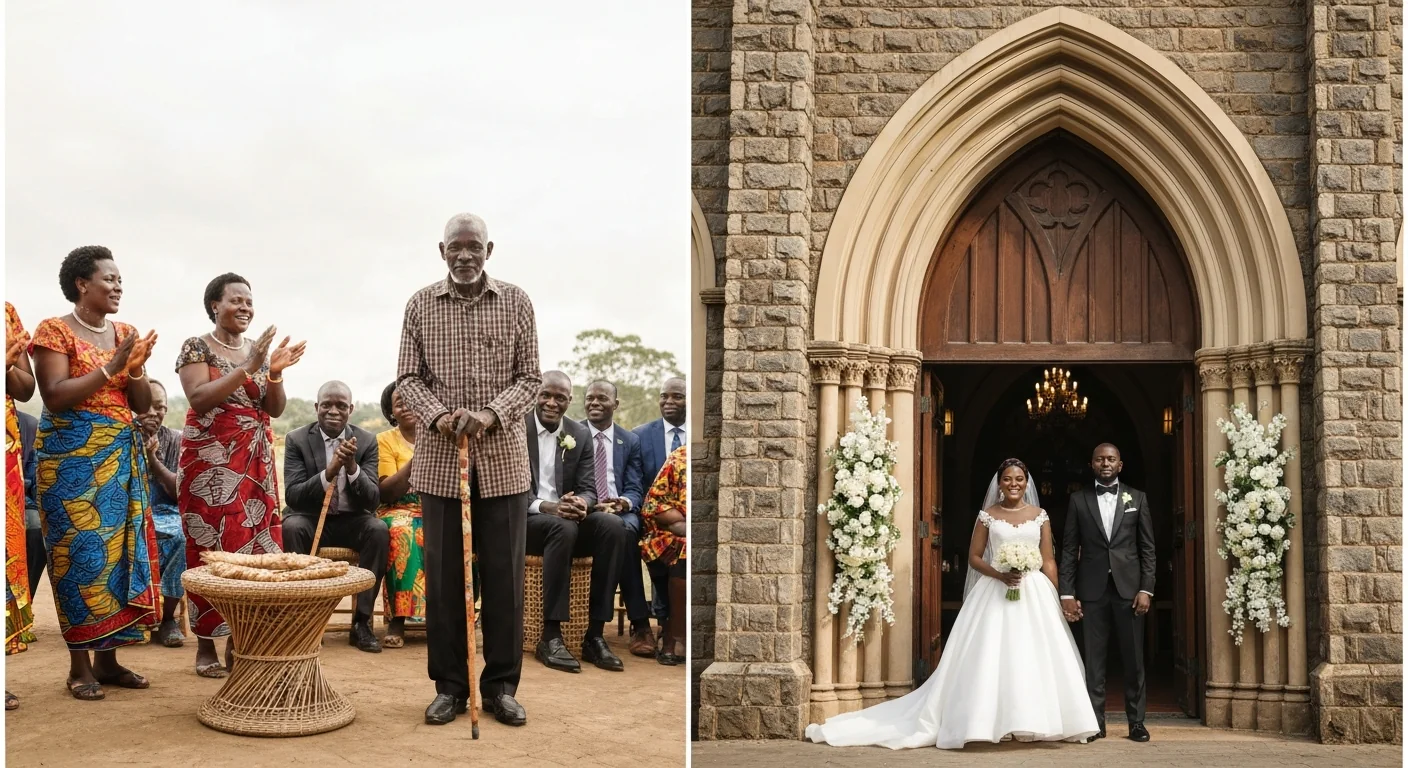
You want the ruracio — the elders, the negotiations, the goats (or their cash equivalent), the ululations. And you also want the church, the white dress, the first dance. Your family expects both. Your budget is sweating. And somehow you need to pull it all together in one weekend.
Most Kenyan couples don’t choose between a traditional ceremony and a white wedding — they plan both. It’s one of the most beautiful aspects of modern Kenyan celebrations: a Friday or Saturday ruracio (or equivalent dowry ceremony in your community) followed by a Sunday church service and reception that brings everyone together. Two events, one weekend, a lifetime of memories.
But two events also means two budgets, two guest lists, two sets of logistics, and twice the coordination. This guide walks you through exactly how to plan a traditional and white wedding weekend in Kenya — without the chaos.
Understanding the Two Ceremonies
Before diving into logistics, it helps to understand what you’re actually planning.
The Traditional Ceremony (Ruracio and Equivalents)
The ruracio is the Kikuyu dowry ceremony — but every Kenyan community has a version of this. The Luo have the nyombo, the Kamba the ndheo ngasya, the Kalenjin the koito, and Swahili communities celebrate harusi traditions. Whatever your community, the traditional ceremony is where the two families formally unite. It involves elders, negotiations, the presentation of bride price (in livestock or cash), feasting, and community blessing.
This event is family-led — you don’t “plan” a ruracio the same way you plan a reception. Your parents and their elders run it. Your job is to provide logistics support: venue, catering, transport, and coordination.
The traditional ceremony typically takes place at the bride’s family home or a rented venue near her home area. It can range from a small family gathering of 50 people to a large communal celebration of 300+.
The White Wedding
The white wedding is the church ceremony and reception you’re probably more familiar with planning. Venue, catering, decor, photography, entertainment — all the usual elements. This is where you have more creative control, and where most of your vendor budget goes.
Read our guide to Kenyan wedding traditions for more context on how both ceremonies fit together.
Should You Do Both in the Same Weekend?
This is the first big decision — and many couples agonize over it. Here’s an honest breakdown:
Same Weekend
Pros:
- Guests (especially those travelling from upcountry or abroad) only need to make one trip
- Overall costs for shared items like photography can be split across both events
- The emotional momentum carries through — one big celebratory weekend
Cons:
- Significantly more planning complexity in a compressed timeframe
- You and your wedding party will be exhausted by day two
- Budget is harder to manage when both events land in the same week
Separate Dates
Pros:
- Each event gets its own dedicated planning attention
- You recover between events and actually enjoy each one
- Cash flow is easier — you’re not paying for everything at once
Cons:
- Out-of-town and diaspora guests have to travel twice, or miss one
- Two sets of venue bookings, vendor retainers, and coordination cycles
The verdict: Same-weekend planning is increasingly popular in Kenya, especially for couples with guests travelling from outside Nairobi or from abroad. If your guest lists overlap significantly (many people attending both events), consolidating into one weekend is usually the right call. If the two events are for quite different groups — the ruracio is a family-only gathering and the white wedding is a larger social event — separate dates give each the space it deserves.
Timeline Options for a Combined Weekend
If you’re going same-weekend, here are the three most common formats:
Option A: Friday + Saturday
| Day | Event |
|---|---|
| Friday afternoon/evening | Ruracio at bride’s family venue |
| Saturday | White wedding ceremony + reception |
Best for: Couples who want a full day for each event and a Sunday to recover. Works well when the ruracio venue is within driving distance of the white wedding venue.
Option B: Saturday + Sunday
| Day | Event |
|---|---|
| Saturday morning/afternoon | Ruracio |
| Sunday | Church ceremony + reception |
Best for: Couples avoiding Friday travel logistics for guests arriving from outside Nairobi. Note: Sunday receptions often end earlier due to work the next day.
Option C: Saturday Only (Sequential)
| Time | Event |
|---|---|
| Morning | Ruracio (traditional ceremony) |
| Afternoon/Evening | White wedding reception |
Best for: Smaller, tight-knit weddings where both events have modest guest counts. Very demanding logistically — tight timing and high risk of delays cascading into the reception.
Most planners recommend Option A or B for the smoothest experience.
Building Two Separate Guest Lists
Here’s something couples often underestimate: your ruracio guest list and your white wedding guest list are not the same list.
The ruracio is typically governed by the families — the elders, the aunties, the clan members who matter to your parents. You may have limited input into this list. The white wedding is where you and your partner have more say over who’s invited.
Expect significant overlap — most guests at the ruracio will also attend the white wedding. But you’ll likely also have:
- White wedding guests who weren’t at the ruracio (work colleagues, friends, younger extended family)
- Ruracio guests (older elders, distant relatives) who may not attend the reception
Managing two guest lists manually is a recipe for confusion. Harusi Hub’s guest management system lets you tag guests by event, track RSVPs per event, and see exactly who’s confirmed for each occasion. See how the multi-event RSVP system makes this manageable.
How Much Does a Traditional and White Wedding Weekend Cost in Kenya?
Two events means two budgets. Here’s a realistic breakdown of what to expect for a combined weekend in Kenya:
Ruracio Budget
| Item | Estimated Cost (KES) |
|---|---|
| Bride price gifts (negotiated) | 200,000 – 800,000+ |
| Catering (food + drinks for guests) | 80,000 – 250,000 |
| Venue / tent hire | 30,000 – 120,000 |
| Traditional attire (couple + bridal party) | 30,000 – 100,000 |
| Transport & logistics | 20,000 – 60,000 |
| Photography/videography | 30,000 – 100,000 |
| Total | ~390,000 – 1,430,000+ |
Note: Bride price amounts vary enormously by community, family negotiation, and income level. The figures above are estimates only.
White Wedding Budget
| Item | Estimated Cost (KES) |
|---|---|
| Venue hire | 80,000 – 400,000 |
| Catering (per person) | 1,500 – 8,000 |
| Photography + videography | 80,000 – 300,000 |
| Wedding attire (dress, suit, accessories) | 50,000 – 300,000 |
| Decor + flowers | 60,000 – 300,000 |
| Entertainment (MC, DJ, live band) | 30,000 – 150,000 |
| Cake | 15,000 – 80,000 |
| Invitations + stationery | 5,000 – 30,000 |
| Total (100 guests) | ~420,000 – 1,560,000 |
Combined weekend total: For most couples, you’re looking at KES 800,000 to KES 3 million+ for both events combined. Build in a 30% buffer — nearly every couple underestimates their final costs.
For a detailed category-by-category breakdown with current pricing, read our Kenya wedding budget guide. You can also set up your full two-event budget in the Harusi Hub budget tracker and track spending per event.
How to Manage Two Events on One Wedding Website
This is where Harusi Hub’s multi-event feature becomes genuinely useful.
When you’re running two ceremonies in one weekend, your guests need to know which event they’re invited to, where it is, what time it starts, and what to bring or wear. Sending this information across multiple WhatsApp groups or in separate invitation messages is a coordination nightmare.
With Harusi Hub, you can add multiple events to your wedding website — your ruracio, your church ceremony, your reception, even a post-wedding brunch if you’re feeling ambitious. Each event has its own:
- Name and description
- Date and time
- Venue details
- RSVP option (you can enable or disable RSVP per event)
- Guest assignment (not all guests need to see all events)
Your wedding website URL — something like harusihub.com/david-and-wanjiku — becomes the single place where every guest finds the information relevant to them. No confusion, no contradictory messages, no last-minute “what time does it start?” calls.
See how to set this up step by step in the Manage Wedding Events guide.
Read more about building your wedding website and how one link handles everything for your guests.
Vendor Coordination Across Two Events
One of the biggest logistical wins of a combined weekend is sharing vendors across both events — but this needs careful coordination.
Photographers/Videographers: Many couples hire one photography team to cover both events. Negotiate a combined package — you’ll get better pricing and visual consistency across both days. Confirm travel time between venues is factored into the schedule.
Caterers: The ruracio and white wedding often have different food expectations. The ruracio leans toward traditional fare — nyama choma, ugali, sukuma wiki, mutura — while the white wedding reception may have a more formal menu. Some caterers handle both styles; others specialize. Confirm early.
MC: If you’re having a master of ceremonies at both events, brief them thoroughly on the flow and cultural expectations of each. A rural ruracio MC and a Nairobi reception MC may be different people.
Transport: If you have guests attending both events at different venues, shuttle logistics between Friday/Saturday and Sunday events matter. Build this into your planning and budget.
What the Ruracio Requires From You (Practically Speaking)
Many couples focus their planning energy almost entirely on the white wedding, then scramble on the ruracio because they assumed the families would “handle it.” The families will handle the traditional proceedings — but the infrastructure is on you.
Here’s what the couple typically needs to arrange for the ruracio:
- Venue: Does it happen at the bride’s family home, or at a rented venue? If the family home is upcountry, is there enough space? Do you need to hire a tent?
- Catering: Who’s cooking? Is it family members, or a hired caterer? Who’s buying the food? Who’s coordinating quantities?
- Seating and setup: Tables, chairs, PA system, possibly a tent
- Transport: The groom’s delegation needs to arrive formally — is there a convoy? Who’s organizing that?
- Photography: Don’t skip this. The ruracio has moments you’ll want documented.
- Traditional attire: Confirm what’s expected from both sides — the bride, groom, parents, and bridal/delegation parties
For a detailed breakdown of the Kikuyu ruracio specifically, see our guide to kikuyu ruracio wedding traditions.
Planning Timeline for a Combined Weekend
12 months out:
- Discuss with both families which traditions each community requires
- Agree on the weekend format (same weekend or separate dates)
- Set a rough combined budget
- Begin venue search for both events
9 months out:
- Book white wedding venue (popular venues book out 9–12 months ahead)
- Confirm ruracio venue or family home logistics
- Begin bride price discussions (families lead this, but early conversations help with budgeting)
6 months out:
- Lock in white wedding vendors (photographer, caterer, florist, MC)
- Confirm ruracio catering arrangements
- Finalize both guest lists
- Set up your Harusi Hub wedding website with both events listed
- Open RSVPs for both events
3 months out:
- Send invitations — digital invitations work beautifully for both events
- Begin tracking RSVPs per event
- Finalize ruracio logistics (tent, transport, gifts)
- Do final fittings for both sets of outfits
1 month out:
- Confirm all vendors with final guest counts
- Share day-of schedules with everyone involved
- Confirm transport logistics between venues
Attire for Two Events
One of the most enjoyable — and expensive — parts of a combined weekend is dressing for both occasions.
Traditional ceremony: Many couples wear their community’s traditional attire — kitenge, ankara, kanga, or community-specific clothing. Check with your families what’s expected and what’s optional. Budget KES 20,000–80,000 per person for quality traditional outfits.
White wedding: Your church outfit and reception look. Some brides do a dress change between ceremony and reception; others stay in one dress all day. See our guide to wedding dress styles in Kenya for inspiration across different body types and budgets.
The bridal party: They’ll also need two sets of outfits for the two events. This adds up quickly — factor it into your overall budget and communicate expectations early so nobody is caught off guard.
Making It Memorable, Not Just Manageable
The couples who enjoy their combined wedding weekend the most are the ones who stop trying to control everything and lean into the different energies of each event.
The ruracio is communal, sometimes chaotic, and deeply meaningful — it doesn’t run on a tight schedule, and that’s okay. The white wedding is more formally orchestrated. Trying to force the ruracio to run like a corporate event, or letting the white wedding get as loose as a family gathering, makes both worse.
Accept that these are two different kinds of celebrations. Prepare well, delegate generously, and let the people around you — your family, your wedding party, your vendors — do their jobs.
Your Harusi Hub dashboard keeps the planning organized so that when the weekend arrives, you can actually be present for it. Set up your wedding checklist and your day-of timeline well in advance, and the weekend will take care of itself.
Two ceremonies, one unforgettable weekend. It takes more planning than either event alone — but it also creates something that neither event alone could: a celebration that honors where you come from and where you’re going, witnessed by everyone who matters to you.
If you’re coordinating this from outside Kenya, read our guide to wedding planning for couples living abroad — it covers the specific challenges of managing both events remotely.
One wedding website for both your ceremonies
Add your ruracio and white wedding as separate events — guests see exactly what's relevant to them, all in one place.
Create Your Free Wedding Website