The Complete Guide to Kenyan Wedding Traditions — Every Ceremony, Explained
From Kikuyu ruracio to Luo ayie, Swahili nikah to Maasai enkiama — a deep dive into the wedding customs of Kenya's diverse communities.
Kenya is home to more than 40 ethnic communities, each with its own wedding traditions that have been practised for centuries. If you are planning a Kenyan wedding — whether you are marrying into a community different from your own or simply want to honour your heritage — understanding these customs is essential. Yet finding accurate, detailed information about each ceremony can be overwhelming.
This guide breaks down the wedding traditions of Kenya’s major communities in one place: what each ceremony is called, what happens during it, what gifts and items are required, and how modern couples are adapting these customs today. By the end, you will have the knowledge you need to plan a wedding that is both culturally authentic and personally meaningful.
Kikuyu Wedding Traditions — The Ruracio
The Kikuyu are Kenya’s largest ethnic group, and their wedding process — known as ruracio — is one of the most elaborate and well-documented in the country. It unfolds across five distinct stages, each with its own purpose and protocol.
For a detailed breakdown of each stage, see our complete guide to Kikuyu ruracio.
The Five Stages of Ruracio
1. Kumenya Mucii (Getting to Know the Home)
This is the introductory visit. The groom, accompanied by a small delegation of close family members, visits the bride’s home for the first time. The purpose is straightforward: to formally introduce himself and his family, and to express his intention to marry their daughter. No dowry is discussed at this stage — it is purely about building rapport and demonstrating good character.
2. Kuhanda Ithigi (Planting the Branch)
The name translates to “planting a branch” or “planting a stick.” The groom’s family brings a branch and plants it at the bride’s homestead, symbolically marking their intention and essentially reserving the bride. This act tells other potential suitors that negotiations have begun. A small gift — typically a goat — accompanies this visit.
3. Kuracia (The Negotiation)
This is the main dowry negotiation stage. The bride’s family presents a list of items and livestock required. The standard Kikuyu bride price is 99 goats, though the actual number can vary depending on the family. Negotiations are often lively, with humour and back-and-forth bargaining that can last hours. The groom’s team, led by a spokesperson, must demonstrate both generosity and financial capability.
4. Itara (The Final Payment)
Itara is the stage where the remaining balance of the dowry is settled. If the groom’s family was unable to deliver everything during Kuracia, this visit completes the transaction. It is common for families to allow payment in instalments, acknowledging that the full 99 goats can be a significant expense.
5. Ngurario (The Traditional Wedding)
Ngurario is the culminating ceremony — the traditional wedding itself. The most iconic moment is the kiande ritual: a goat shoulder is roasted, and the bride and groom cut and feed each other pieces of meat from it. This act seals the union in the eyes of the community. Elders bless the couple, traditional songs are performed, and the celebration continues with food and dance.
Modern Adaptations
Today, many Kikuyu families accept monetary equivalents for the goats. A single goat is valued between KES 8,000 and KES 15,000, so the full 99 goats can translate to KES 800,000–1,500,000 (roughly USD 6,000–11,000). Some families negotiate lower numbers or accept a symbolic portion with the understanding that the rest will come over time.
Luo Wedding Traditions — Ayie, Nyombo, and Meko
Luo weddings are famous for their energy, negotiation drama, and the central role of the bride’s mother. The process is anchored by three major ceremonies, with a trusted go-between known as a jagam facilitating communication between the two families.
Read our in-depth guide to Luo wedding traditions for more detail.
Ayie (The Mother’s Consent)
The word ayie means “I agree” in Dholuo, and this ceremony centres on one moment: the bride’s mother publicly declaring her consent to the marriage. Before she says ayie, the groom’s family must present gifts — typically money, clothing, and household items. The mother inspects these gifts carefully. If they are inadequate, she may refuse to say ayie, sending the groom’s family back to try again.
The mother’s word carries enormous weight. Without her consent, the wedding cannot proceed, regardless of what the father or other elders think.
Nyombo / Keny (The Cattle Dowry)
The second stage is the formal dowry negotiation, called nyombo or keny. The Luo traditionally pay bride price in cattle, and the number is negotiated by the families. The jagam (go-between) plays a critical role here, shuttling between the two camps, proposing figures, and smoothing disagreements. Cattle remain the preferred form of payment, though cash equivalents are widely accepted today.
Meko (The Bride Procession)
Meko is the final ceremony: the bride’s official departure from her home to her husband’s. It is a procession accompanied by singing, dancing, and ohangla music — a high-energy genre featuring the nyatiti (an eight-stringed lyre) and drums. Fish, particularly fried tilapia, is central to the feast. The celebration often lasts well into the night.
Cultural Details
Luo weddings are deeply communal. The entire village often participates, and contributions to the dowry are a collective family effort. Ohangla musicians are typically hired for the meko, and their performance can make or break the celebration’s reputation.
Kamba Wedding Traditions — Ntheo, Ngasya, and the Kilumi Dance
The Kamba people of eastern Kenya have a structured dowry process with specific numbers and rituals that set their traditions apart. Music and dance — particularly the kilumi — play a central role.
For a full walkthrough, see our Kamba wedding traditions guide.
Ntheo (Engagement)
The ntheo is the initial engagement visit, where the groom’s family brings an odd number of goats — typically three, five, or seven — to the bride’s family. The odd number is deliberate and culturally significant: even numbers are associated with finality, while odd numbers suggest that more is coming. This signals the groom’s family’s intention to continue negotiations and pay the full dowry.
Ngasya (The Full Dowry)
The main dowry — ngasya — involves the payment of 48 goats to the bride’s family. This number is relatively fixed and well-known within Kamba culture. In addition to goats, other items may be included, and the bride’s family prepares kaluvu, a traditional brew made from sugarcane, to welcome and celebrate the groom’s delegation.
Kulatya Isanduku (Opening the Suitcase)
This is a colourful ceremony where the groom’s family presents the bride with a suitcase filled with gifts — clothing, cosmetics, shoes, and personal items she will need in her new home. The suitcase is opened publicly, and each item is displayed and inspected by the bride’s family and guests.
Kilumi Dance
No Kamba wedding is complete without the kilumi, a traditional dance characterised by energetic jumping and rhythmic singing. Dancers form a circle, and performers take turns leaping high into the air. The kilumi is both a celebration and a display of physical fitness. It is one of the most visually spectacular wedding dances in Kenya.
Kalenjin Wedding Traditions — Koito, Ratet, and Mursik
The Kalenjin are a group of related sub-tribes — including the Kipsigis, Nandi, Pokot, Tugen, and Marakwet — each with slight variations on shared wedding customs. The central traditions, however, are consistent across the group.
Explore our Kalenjin wedding traditions guide for sub-tribe-specific customs.
Koito (The Engagement)
Koito is the formal engagement process. The groom’s family sends elders to the bride’s home to open negotiations. Gifts — often including livestock and money — are presented as a statement of intent. The koito establishes the groom’s seriousness and begins the relationship between the two families.
Ratet (The Grass Bracelet)
The ratet is one of the most distinctive Kalenjin traditions. The groom ties a bracelet made of special grass or plant fibre around the bride’s wrist. This bracelet signifies that she is now spoken for — it is the Kalenjin equivalent of an engagement ring. The bride wears the ratet until the wedding is complete.
Tunisiet (The Wedding Ceremony)
Tunisiet is the main ceremony. The bride is escorted from her home to the groom’s homestead. Along the way, she may feign reluctance — crying or resisting — as a show of respect and attachment to her family. Upon arrival, she is welcomed with mursik, a fermented milk drink stored in specially treated gourds. Mursik is central to Kalenjin culture and is offered at every significant occasion.
Mursik: More Than a Drink
The gourd in which mursik is served is lined with charred pieces of a specific tree (sosiot), which gives the milk its distinctive smoky flavour and dark colour. Offering mursik to a guest is a sign of high honour. At weddings, the bride drinking mursik at her new home symbolises her acceptance of her husband’s family.
Luhya Wedding Traditions — Khuchukhira and the Isukuti
The Luhya are the second-largest ethnic group in Kenya, with 18 sub-tribes spread across western Kenya. Their wedding traditions are marked by high-energy celebrations, generous feasts, and one culturally significant rule: the dowry is never paid in full.
Our Luhya wedding traditions guide covers the customs in greater detail.
Khuchukhira (The Wedding Visit)
The wedding process begins with khuchukhira, the groom’s formal visit to the bride’s home. The groom brings a delegation, and the two families discuss the dowry — known as eng’anana. The standard dowry ranges from 13 to 20 cattle, depending on the sub-tribe and the bride’s family.
Why the Dowry Is Never Paid in Full
Among the Luhya, there is a well-known custom that the dowry should never be fully settled. Three reasons are given for this:
- It keeps the relationship alive. An outstanding dowry balance gives the two families a reason to continue visiting and negotiating, strengthening the bond over time.
- It protects the bride. If the dowry were fully paid, the groom’s family might feel they have “purchased” the bride outright, potentially reducing her standing in the household.
- It provides a safety net. If the marriage faces difficulties, the unpaid balance gives the bride’s family leverage to intervene and advocate for their daughter.
Isukuti Drumming
The isukuti is a traditional Luhya drum and the dance named after it. Isukuti drumming and dancing were recognised by UNESCO as an element of intangible cultural heritage in need of urgent safeguarding. At Luhya weddings, isukuti performances are the centrepiece of the celebration — large drums are played by teams of musicians while dancers perform energetic routines.
Busaa
Busaa is a traditional millet-based brew served at Luhya weddings and other celebrations. It is thick, slightly sour, and communally shared from large pots using long straws. Busaa serves as a symbol of hospitality and community.
Swahili and Coastal Wedding Traditions — Kuposa, Nikah, and Kupamba
The Swahili coastal communities — concentrated in Mombasa, Lamu, Malindi, and surrounding areas — follow Islamic traditions blended with African coastal customs. The result is some of the most visually stunning weddings in Kenya.
See our Swahili coastal wedding traditions guide for more detail.
Kuposa (The Proposal)
Kuposa is the formal proposal process. The groom’s family sends a delegation to the bride’s family to express their intention. Unlike some other Kenyan traditions, kuposa is relatively brief and ceremonial. The families agree on the mahr — a mandatory gift from the groom to the bride (not her family). The mahr is the bride’s personal property, and it can be money, gold, property, or other valuables. It is her right under Islamic law and cannot be taken from her.
Nikah (The Marriage Contract)
The nikah is the Islamic marriage ceremony itself. It is conducted by an Imam or Kadhi in the presence of witnesses. The groom formally asks for the bride’s hand, and the bride’s representative (wali) gives consent. The mahr is declared publicly, and prayers are recited. The nikah is typically a relatively brief, solemn ceremony focused on the spiritual and legal union.
Kupamba (The Women’s Celebration)
Kupamba — sometimes called “the pamba” — is a women-only celebration that takes place before or after the nikah. It is one of the most distinctive Swahili wedding traditions. The bride is dressed in elaborate outfits (often changing multiple times), adorned with gold jewellery, and her hands and feet are decorated with henna (locally called khamri).
Henna application is an event in itself. A specialist applies intricate designs to the bride’s hands and feet over several hours, and the bride’s closest female friends and relatives also get henna. The patterns are both decorative and symbolic, representing fertility, joy, and good fortune.
Taarab Music
Taarab is the signature music of the Swahili coast, blending Arabic melodies, Indian instruments, and African rhythms. At weddings, taarab bands perform love songs in Kiswahili, and guests pin money on the bride or place it on her during the celebration. Taarab performances at a kupamba can last for hours.
The Feast
Swahili wedding food is a highlight. Biryani and pilau — richly spiced rice dishes with meat — are served alongside coconut-based curries, chapati, mahamri (fried dough), and elaborate desserts. Swahili cuisine reflects centuries of trade and cultural exchange with Arab, Indian, and Persian communities.
Kisii (Abagusii) Wedding Traditions — Ogotimia and Ekeremo
The Kisii people of southwestern Kenya have a dowry process overseen by respected clan elders known as abagaka. Their wedding customs are known for spirited negotiations and the musical centrepiece of their celebrations.
Read more in our Kisii wedding traditions guide.
Ogotimia (Bride Wealth Negotiation)
Ogotimia is the bride wealth negotiation process. The groom’s family, led by their own abagaka, visits the bride’s home to negotiate the bride price. Cattle and cash are the primary forms of payment. The abagaka elders from both sides handle the discussions, and the negotiations can be intense — both families want to demonstrate their stature and commitment.
The process often includes multiple visits, with each round bringing the two sides closer to agreement. The specific number of cattle and the cash amount depend on factors including the bride’s education level, her family’s standing, and regional norms.
Ekeremo (The Bride Procession)
Once the bride price is agreed upon and paid (at least in part), the ekeremo takes place. This is the bride’s ceremonial departure from her home. She is escorted by a group of women — usually her mother, aunties, and close friends — who sing traditional songs that are both celebratory and bittersweet. The songs acknowledge the joy of marriage while mourning the family’s loss of their daughter.
Obokano Lyre
The obokano is a large, traditional lyre that is central to Kisii music and celebrations. At weddings, obokano players perform songs that tell stories, praise the couple, and entertain guests. The instrument produces a deep, resonant sound and is considered a symbol of Kisii cultural identity.
Maasai Wedding Traditions — The Enkiama
Maasai weddings are inseparable from the community’s broader social structure, particularly the age-set system that governs life stages for both men and women. Marriage is not simply a union of two individuals — it is a transaction between families and age-sets, governed by strict rules.
Our Maasai wedding traditions guide explores these customs in depth.
The Age-Set System and Marriage
Maasai men progress through defined stages: junior warrior (moran), senior warrior, junior elder, and senior elder. A man can only marry after advancing beyond the junior warrior stage. Women are typically married shortly after their coming-of-age ceremony. Marriages between incompatible age-sets are forbidden, and the community enforces these rules strictly.
Enkiama (The Wedding Ceremony)
The enkiama is the marriage ceremony itself. Before the wedding day, the bride’s head is shaved by her mother, and lamb fat is applied to her head as a blessing and for beauty. The shaving symbolises a new beginning — the bride leaves behind her girlhood and enters married life.
On the wedding day, the bride walks from her father’s homestead to her husband’s, accompanied by family and well-wishers. A critical rule governs this journey: the bride must not look back. Looking back is believed to bring bad luck and is interpreted as a sign of reluctance. The bride keeps her eyes fixed forward, symbolising her commitment to her new life.
Beadwork and Colour Symbolism
Maasai beadwork is among the most recognisable in the world. At weddings, the bride wears elaborate beaded necklaces, headpieces, and bracelets made by the women of her family. Each colour carries meaning:
- Red — bravery, strength, and unity
- Blue — the sky and water, representing sustenance
- Green — health, land, and fertility
- White — purity, peace, and health
- Orange — hospitality and warmth
- Yellow — fertility and growth
- Black — the people and the struggles endured
The beaded wedding jewellery can take weeks to create and is one of the most prized possessions a bride receives.
Honey Beer and the Wedding Feast
Honey beer (enaisho) is the traditional Maasai wedding drink, brewed from honey and water and fermented using wild yeast. It is served to the elders and the groom’s family. Meat — particularly roasted beef and goat — is the centrepiece of the wedding feast, prepared by the men while women handle other food preparations.
Meru Wedding Traditions — Nteguri and Beer Sharing
The Ameru people of eastern Kenya — encompassing sub-groups such as the Imenti, Tigania, and Igembe — have a dowry process centred on a fixed set of items rather than a negotiated number.
The Standard Dowry
Unlike communities where the dowry is negotiated, the Meru traditionally had a set dowry that applied to all families: one ewe, one ram, one heifer, one bull, and a container of honey. This standardisation meant that even families of modest means could afford to marry, as the items were universally known and did not escalate based on the bride’s background.
Nteguri (Extended Bride Wealth)
In addition to the standard dowry, the groom was expected to provide the nteguri — a more extensive collection of gifts shared with the bride’s extended family. Nteguri included agricultural items like yams (ikwa) and arrowroots (matuma), as well as nchoobi (traditional beer), a blanket (muringeti), and clothing like a shuka or leso. Crucially, the nteguri could be paid in instalments over time, making it accessible to all grooms regardless of wealth.
Beer Sharing and the Wedding Day
Beer holds special significance in Meru weddings. The groom delivers four gourds of beer and snuff to the bride’s clan so that her parents can bless her before she leaves. The communal sharing of beer symbolises goodwill and the joining of the two families.
On the wedding day, one charming tradition stands out: the groom builds a new house for his bride before the ceremony. In place of the door, he hangs banana leaves. The bride replaces these leaves with an actual door the morning after the wedding night — a symbolic act representing her taking charge of the household.
Somali Kenyan Wedding Traditions — The Aroos
Kenya’s Somali community, concentrated in the northeastern counties and in Nairobi’s Eastleigh neighbourhood, follows Islamic wedding customs enriched with distinct Somali cultural practices.
The Nikah
As with other Muslim communities in Kenya, the nikah is the formal marriage contract. It is conducted in the presence of family elders and an Islamic officiant. The Quran is recited, the mahr is agreed upon and declared, and the couple exchanges vows. The ceremony is typically gender-segregated, with men and women celebrating in separate areas.
The Aroos (Wedding Celebration)
The aroos is the reception and celebration that follows the nikah, typically held in the evening. Somali aroos celebrations are known for their grandeur — elaborate decorations, large guest lists (often several hundred), and lavish food. The bride changes outfits multiple times throughout the evening, each more ornate than the last. Traditional Somali dresses are complemented with gold jewellery.
Henna Night
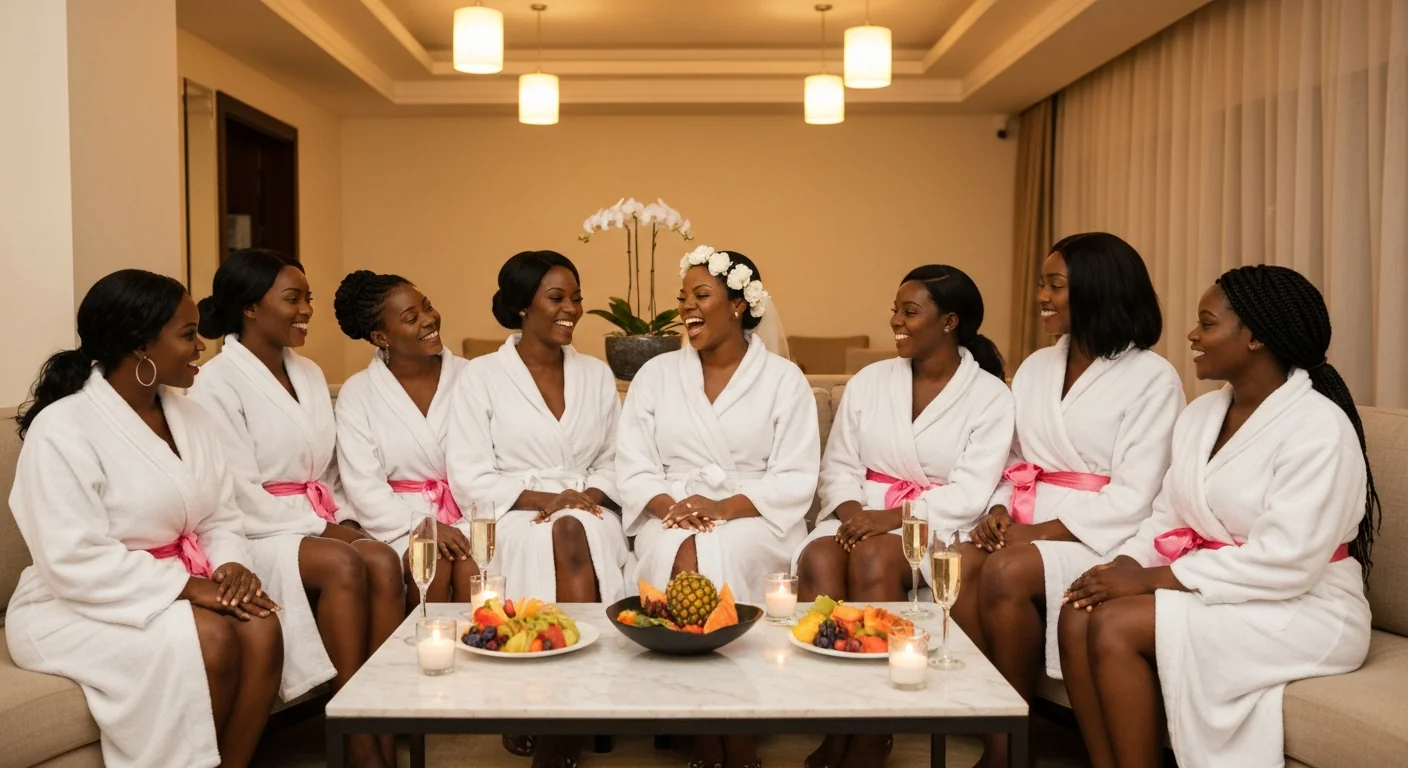
Before the aroos, the bride hosts a henna night with her female friends and relatives. Intricate henna designs are applied to her hands and feet, and the evening includes singing, dancing, and gift-giving. The henna night is one of the most anticipated pre-wedding events.
Xeedho (The Gift Basket)
The xeedho is a distinctively Somali custom. It is an ornate, woven container — traditionally a basket or bowl — filled with muqmad (sun-dried meat fried in butter and seasoned with spices) and dates. The xeedho is sealed and presented to the couple. It is ceremonially opened on the seventh night of the honeymoon, marking the end of the traditional seven-day honeymoon period. The contents are then distributed among male family members, while a separate xeedho is prepared for the women.
Mijikenda Wedding Traditions — Kuhaswa and the Nine Sub-Tribes
The Mijikenda (“Nine Towns”) are a group of nine Bantu sub-tribes along Kenya’s coast: the Giriama, Digo, Duruma, Chonyi, Jibana, Kambe, Kauma, Ribe, and Rabai. While each sub-tribe has distinct nuances, their wedding customs share a common structure.
Kuhaswa (The Bride Price Process)
Kuhaswa is the overarching term for the traditional marriage and bride price process. The groom’s family negotiates with the bride’s family over multiple visits, presenting gifts that increase in value with each round. The process includes a significant moment called kifunga mlango (“closing the door”), where the groom’s female relatives present a kitamba cha utumba — a collection that includes coconut oil, soap, clothing (kanga), slippers, and personal items for the bride. This gift symbolises the groom’s family’s commitment and seals the engagement.
The Wedding Day
On the wedding day, farewell songs are sung as the bride leaves her family home. She carries firewood with her — a practical and symbolic gesture, as she will cook for her husband on their wedding night. She is also given chiga (steak) to roast for him. Part of the ceremony involves the bride grinding maize using a traditional kinu (mortar) and iwalwa (pestle), demonstrating her readiness for married life.
Sengenya Dance
The sengenya is one of the most famous Mijikenda traditional dances, characterised by fast, synchronised footwork and rhythmic clapping. At weddings, the sengenya is performed by men and women together, creating a vibrant and energetic celebration. Historically, sengenya dance events doubled as opportunities for young men and women to meet potential spouses.
Other Kenyan Wedding Traditions
While the communities above represent Kenya’s largest and most documented wedding traditions, several other groups have equally meaningful customs.
Turkana
The Turkana of northwestern Kenya practise a bride price system centred on livestock — cattle, goats, camels, and donkeys. The number is negotiated between families and reflects the groom’s wealth and the bride’s family’s status. Turkana weddings feature singing, dancing, and communal feasting. Beadwork, similar to the Maasai, plays a significant decorative role.
Taita
The Taita people of the Taita Hills in coastal Kenya have a multi-stage dowry process. The groom’s family brings livestock and traditional beer to the bride’s family over several visits. The Taita are known for their distinctive traditional dances and songs that accompany the wedding celebrations.
Samburu
The Samburu, closely related to the Maasai, share many wedding customs including the age-set system, beadwork, and the importance of cattle in bride price. However, the Samburu have their own distinctive beading patterns and ceremonial songs. The bride is adorned with layers of beaded necklaces that indicate her marital status.
Embu, Tharaka, and Mbeere
These three communities from the Mount Kenya region share cultural similarities with both the Kikuyu and Meru. Their dowry processes involve livestock and beer, with negotiations conducted through respected elders. Traditional dances and songs specific to each community mark the wedding celebrations. The Tharaka are particularly known for their elaborate traditional costumes worn during wedding ceremonies.
How Modern Couples Are Blending Traditions
Across all of Kenya’s communities, a clear trend has emerged: couples are blending traditional ceremonies with modern elements. Here is what that looks like in practice.
Cash equivalents for livestock. While cattle and goats remain the ideal, most families now accept cash equivalents, making the process more practical for urban couples.
Shortened timelines. Traditional dowry processes that once took months or years are now often condensed into fewer visits, sometimes completed in a single weekend.
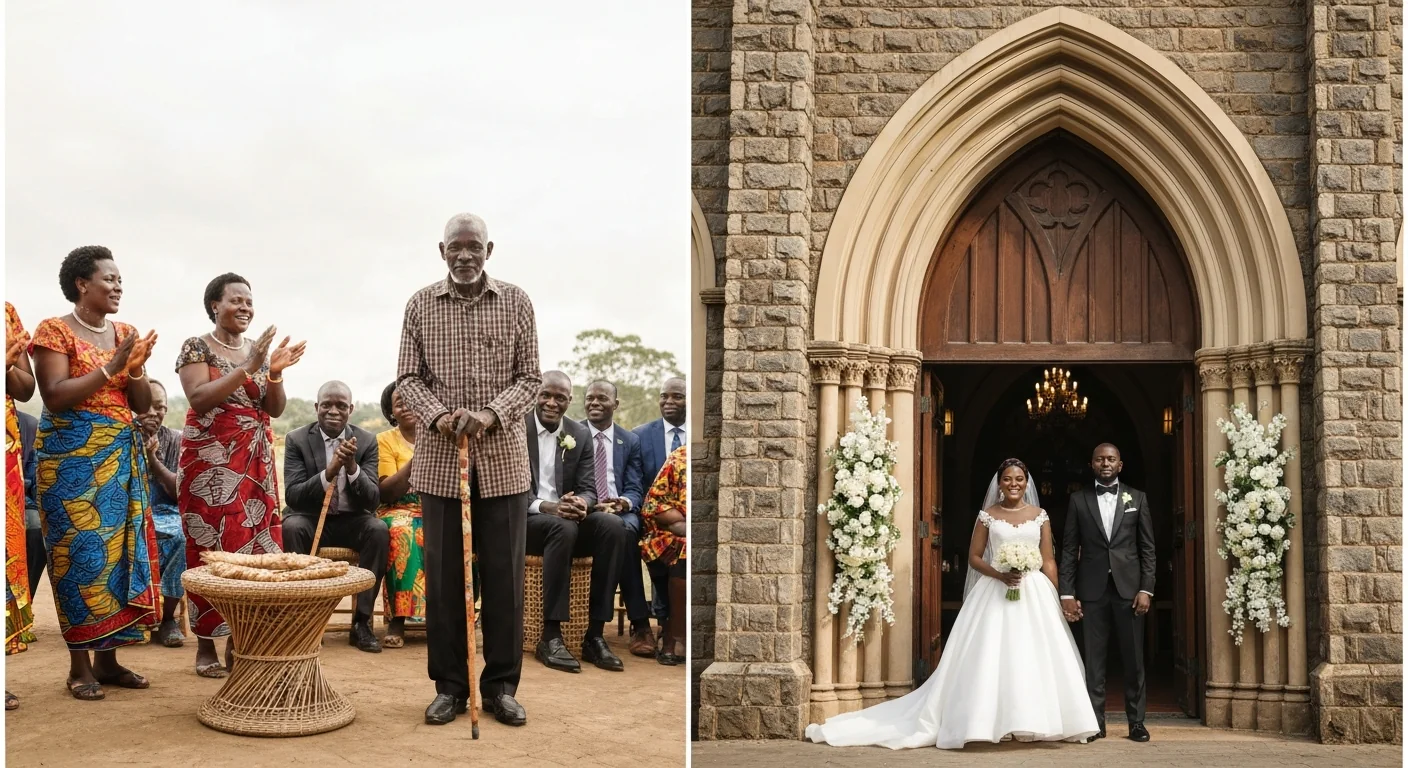
Combined ceremonies. Many couples hold a traditional ceremony on one day and a church or civil wedding on another, honouring both their cultural and religious identities.
Inter-community marriages. As Kenya urbanises and communities mix, inter-ethnic marriages are increasingly common. Couples often negotiate which traditions to follow, sometimes holding two separate traditional ceremonies — one for each community.
Social media and documentation. Modern couples hire professional photographers and videographers for their traditional ceremonies, and many share these moments on social media, helping to preserve and popularise these customs.
Frequently Asked Questions
How much does a Kenyan traditional wedding cost?
Costs vary enormously by community and family expectations. A Kikuyu ruracio with the full 99 goats can cost over KES 1,000,000 (approximately USD 7,500). Kamba ngasya with 48 goats might run KES 400,000–700,000. Many families negotiate lower amounts or accept instalments. Beyond the dowry itself, you should budget for transport, food for the delegation, gifts, and the celebration. It is wise to discuss expectations openly with both families early in the process.
Can the bride price be negotiated?
Yes, in virtually all Kenyan communities, negotiation is expected and encouraged. While certain communities have standard numbers (99 goats for Kikuyu, 48 for Kamba), the actual amount paid is almost always the result of discussion between the families. The tone is typically warm and good-humoured rather than adversarial.
What happens if the groom cannot afford the full dowry?
Most Kenyan communities allow the dowry to be paid in instalments. Among the Luhya, the dowry is deliberately never paid in full. Among the Meru, the nteguri system was specifically designed to be affordable. The key is demonstrating good faith and commitment — families generally care more about the groom’s character and intentions than the speed of payment.
Do I need to follow traditional customs if I am having a modern wedding?
There is no legal requirement to hold a traditional ceremony — a civil or church wedding is sufficient under Kenyan law. However, most families strongly value the traditional process, and skipping it can create tension. Many couples find that honouring these traditions strengthens family relationships and creates meaningful memories. A common approach is to hold a traditional ceremony and a modern wedding on separate dates.
What should I wear to a Kenyan traditional wedding?
Dress codes vary by community. For Kikuyu ruracio, the bride often wears a dress or outfit in the family’s chosen colours, while the groom wears a suit or traditional attire. Maasai ceremonies call for traditional shukas and beadwork. Swahili weddings feature elaborate kanzus for men and bui-bui or ornate dresses for women. When in doubt, ask the hosting family — they will appreciate your effort to dress appropriately.
How long does the entire traditional wedding process take?
The full process, from the first introductory visit to the final ceremony, can take anywhere from a few months to several years. Historically, extended timelines allowed families to build relationships gradually and grooms to accumulate the required dowry. Today, many couples compress the process into three to six months, especially in urban settings.
Plan your culturally rich wedding
Track your dowry, manage guests across multiple ceremonies, and coordinate with vendors who understand your traditions — all in one place.
Start Planning for Free