Ruracio: The Complete Guide to Kikuyu Wedding Traditions and Dowry Negotiation
Everything you need to know about Kikuyu ruracio — from Kumenya Mucii to Ngurario, shopping lists, costs, etiquette, and how modern couples are adapting these traditions.

Ruracio: The Complete Guide to Kikuyu Wedding Traditions and Dowry Negotiation
Ruracio is the Kikuyu dowry negotiation ceremony — the centrepiece of a marriage process that stretches across five distinct stages, each carrying deep cultural meaning. For Kikuyu couples and those marrying into Kikuyu families, understanding ruracio is not optional. It is the foundation upon which the marriage is built, binding not just two people but two entire clans.
This guide covers every stage of the Kikuyu marriage journey, from the first investigative visit to the sacred Ngurario rite. Whether you are planning your own ruracio or attending one for the first time, you will find the practical details — costs, shopping lists, etiquette, and timelines — alongside the cultural context that makes these traditions meaningful.
Planning a traditional Kikuyu wedding? Harusi Hub helps couples coordinate every detail. Read our Complete Guide to Kenyan Wedding Traditions for an overview of ceremonies across all communities.
The Origins: Gikuyu and Mumbi
The Kikuyu trace their origin to the foot of Mount Kenya (Kirinyaga), where Ngai (God) placed the first man, Gikuyu, and his wife Mumbi — “the moulder.” Together they had nine daughters, and after Gikuyu prayed under a mugumo (fig) tree, nine men appeared to marry them. These nine unions gave rise to the nine Kikuyu clans — the “kenda muiyuru” (the nine full ones). Every Kikuyu today traces their lineage to one of these clans, which is why lineage investigation is the very first step in the marriage process. The clans must ensure there is no shared ancestry that would make the union taboo.
The Five Stages of Kikuyu Marriage
The Kikuyu marriage process unfolds across five stages, each with its own rituals, obligations, and symbolic acts. Rushing or skipping stages is considered disrespectful and can sour relations between the families permanently. Here is what to expect at each stage.
Stage 1: Kumenya Mucii — Getting to Know the Home
Purpose: Investigation and first introduction.
Before any formal engagement, the groom’s family must learn about the bride’s family. This is Kumenya Mucii — literally “knowing the home.” It is both practical and spiritual. The groom’s parents quietly investigate the bride’s lineage to confirm there is no shared ancestry between the two clans. Cross-marriage within related lines is a serious taboo (mugiro) in Kikuyu culture, and this step exists to prevent it.
Once the family is satisfied, the groom’s father selects a spokesman — a respected elder who will represent the family throughout the marriage negotiations. This is not a casual choice. The spokesman (muthuuri wa kiama) must be eloquent, knowledgeable in tradition, and respected by both sides. He is drawn from a committee of elders (athuri) within the groom’s clan.
What happens on the day:
The groom’s delegation arrives at the bride’s home carrying “Njohi ya Njurio” — beer for asking. This is not ordinary beer; it is the formal request for an audience. The spokesman addresses the bride’s family with the traditional declaration:
“Twonire ngoima yanyu imwe, na tukwenda kumitura gwitu.” (“We have noticed one of your sheep, and we would like to bring her to our homestead.”)
The bride is referred to as a “sheep” — not in a diminishing way, but as a symbol of value. Sheep are among the most prized livestock in Kikuyu culture.
Critical rule: There is no negotiation on this first visit. Kumenya Mucii is about introduction and intent. The bride’s family will not quote any price or make any demands. They receive the visitors, listen, and confirm they are open to discussion. The families get to know each other, share a meal, and part ways with the understanding that a formal process will follow.
What to bring:
- Njohi ya Njurio (traditionally millet beer, now often replaced with bottled drinks or commercial beer)
- A small token gift for the household
- Respectful, well-dressed delegation (typically 5-10 people from the groom’s side)
Stage 2: Kuhanda Ithigi — Planting the Branch
Purpose: Official booking — the bride is taken off the market.
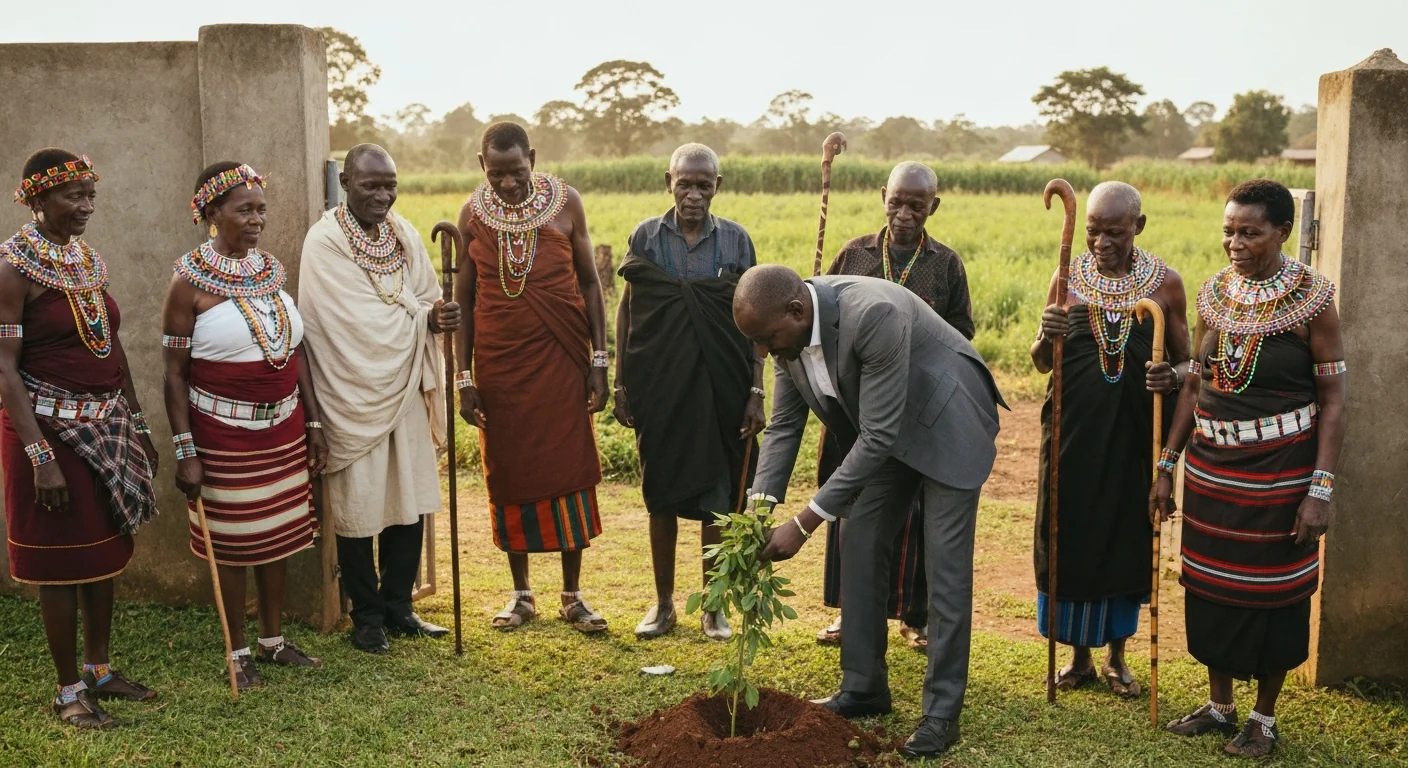
Kuhanda Ithigi literally means “planting a branch” or “planting a stick.” In older times, a branch from a specific tree was physically planted at the bride’s home to signal that she was spoken for. Today, the act is symbolic but the weight is the same: after this stage, the bride is officially “booked,” and no other suitor may approach her family.
What the groom delivers:
- Mwati — a ewe (female sheep)
- Harika — a small he-goat
These animals are not part of the bride price. They are a deposit — proof of serious intent. The giving of Mwati and Harika tells the bride’s family that the groom’s clan is committed and will return for the full negotiation.
How serious is this stage?
Extremely. In traditional Kikuyu culture, Kuhanda Ithigi was considered so binding that the couple could begin living together after this stage. While modern families rarely follow this practice, the principle remains: breaking off the engagement after Kuhanda Ithigi is a grave matter with social consequences. The Kikuyu proverb warns: “Cira munene ni wa uthoni igikua” — the most serious case is when a betrothal is broken.
Timing: Kuhanda Ithigi usually happens a few weeks to a few months after Kumenya Mucii, depending on how quickly the families want to proceed. The groom’s family should not rush this — eagerness is good, but impatience suggests desperation.
Stage 3: Kuracia / Ruracio — The Main Dowry Negotiation
Purpose: Bride price negotiation, the central event.
This is the stage most people refer to when they say “ruracio.” It is the main event — a day of negotiation, ceremony, celebration, and symbolic acts that formalize the union between the two families.
Ruracio is typically an all-day affair, often starting in the morning and extending into the late afternoon. It is held at the bride’s family home, and attendance can range from 50 to over 300 people depending on the families involved.
Preparation by the groom’s side:
The groom’s delegation arrives with two ngoima — fattened rams. These are not ordinary goats; they must be visibly well-fed and impressive. Arriving with skinny goats is considered an insult and will be commented on publicly.
Beyond the ngoima, the groom’s side brings the shopping list items (covered in detail below), drinks, and their negotiation team led by the spokesman.
The arrival and gate-locking:
One of the most entertaining moments of ruracio is the gate-locking. The bride’s aunties and female relatives block the entrance to the compound, demanding a fee before the groom’s delegation can enter. This is not symbolic — real money changes hands, and skilled aunties can negotiate substantial sums. The groom’s side should budget for this and approach it with humour and generosity. Being stingy at the gate sets a poor tone for the day.
Gucagura Muka Wake — Identifying the bride:
Once inside, the groom faces one of the most nerve-wracking moments of the ceremony. Several young women from the bride’s family are brought out, covered in lessos (colourful wraps). Their faces are hidden. The groom must identify his bride from among them — gucagura muka wake.
If he chooses correctly, the crowd erupts in celebration. If he picks the wrong woman, he must pay a penalty — typically a goat. Some families make this particularly challenging by covering 10 or more girls and including women of similar build. The groom is advised to study subtle cues — his bride’s hands, her posture, the way she stands — before the ceremony.
The father’s question:
After the bride is identified, a critical moment follows. The bride’s father takes a calabash of beer (or a drink) and asks his daughter directly:
“Shall I drink this beer?”
This is the father asking: “Do you consent to this marriage?” If the bride says “yes” (or nods), the father drinks, and the compound erupts in ululation — the high-pitched celebration cry known as ngemi. This is one of the most emotional moments of ruracio, and it signifies that the bride has given her free consent.
If the bride says no, the ceremony stops. While this is extremely rare, the tradition exists to protect the bride’s agency. No Kikuyu marriage can proceed without the woman’s consent, a principle embedded in the culture long before modern legal requirements.
The negotiation:
With consent given, the real negotiation begins. Only elders speak. The groom himself must remain silent throughout — it is taboo for the groom to address the bride’s family during ruracio. All communication goes through the spokesman.
The bride’s family quotes their price in traditional terms: goats, honey, and brew. The standard figure is 99 goats. This number is traditional, not arbitrary — it has been the benchmark in Kikuyu dowry negotiations for generations. Some families quote more, rarely less.
The 99 goats are then converted to a cash equivalent. At current market rates (KSh 5,000 to KSh 18,000+ per goat depending on size and region), the base figure lands between approximately KSh 500,000 and KSh 1,800,000 or more. However — and this is critical — the full amount is almost never paid on the day.
The payment structure:
Typically, only about 15 goats’ worth is paid during ruracio itself. The remainder becomes a lifelong obligation — paid gradually through visits, holidays, and family occasions. This is intentional: the ongoing debt keeps the families connected. Paying in full at once would sever that bond.
After the negotiation:
The families celebrate together with food, drinks, songs, and speeches. The groom’s family departs before nightfall — “Uthoni nduraragwo” — you never spend the night at your in-laws’ home.
Stage 4: Itara — The Bride’s Family Visits
Purpose: Reciprocal visit and formal handover.
After ruracio, the bride’s family makes a return visit to the groom’s home. This stage is called Itara, named after the storage shelf (itara) traditionally found above the doorway in Kikuyu homes.
What happens:
The bride’s mother formally hands her daughter over to the groom’s mother. This is a deeply emotional moment — it symbolizes the transfer of care and responsibility from one family to another. The two mothers acknowledge each other as co-guardians of the young woman’s wellbeing.
The groom’s family grants the bride access to the itara — the storage area above the door where the family keeps important items. In traditional Kikuyu homes, only trusted family members could access the itara. Granting the bride this access is a profound gesture of welcome. It says: “You are not a guest here. You are family. This home and everything in it is now yours too.”
Modern adaptation: Most modern homes do not have a literal itara, but the symbolic gesture persists. Some families point to a kitchen cabinet or pantry and declare it the bride’s domain. The meaning transcends the physical object.
Stage 5: Ngurario / Gutinia Kiande — The Sacred Final Rite
Purpose: Permanent, irrevocable union.
Ngurario is the final and most sacred stage of Kikuyu marriage. After Ngurario, the marriage is considered complete and permanent under Kikuyu customary law. Traditionally, a woman who has undergone Ngurario can never be divorced — the bond is considered eternal.
What the groom delivers:
- 5 goats — 3 are slaughtered for the ceremony, 2 are kept by the bride’s family
- An unblemished ram — this is the most important animal. It must have no scars, no broken horns, no blemishes of any kind. A flawed ram would be an ominous sign.
The ceremony:
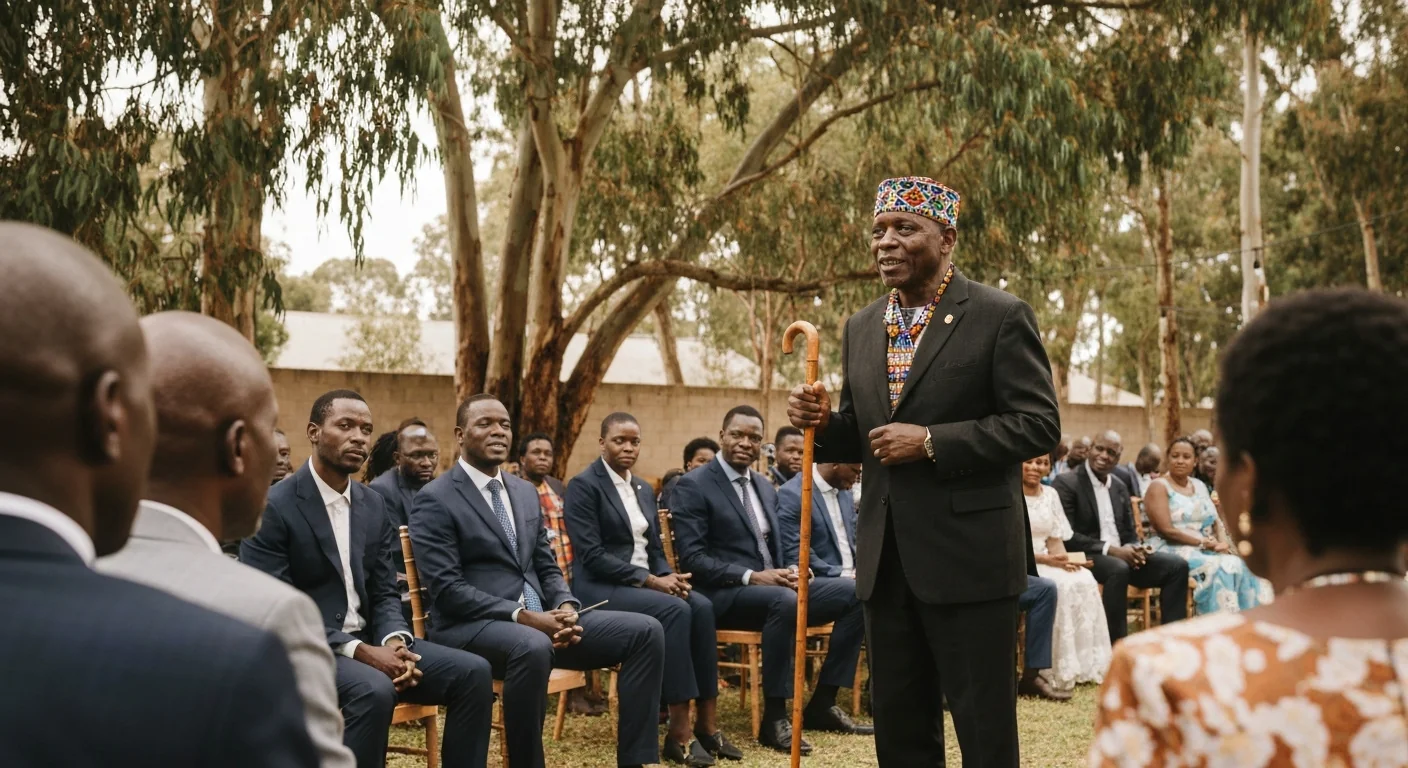
The ceremony is presided over by elders from both families. Before the ritual slaughter can begin, the bride’s sister hides the knives. The groom must pay a fee — kumuthaitha — to retrieve them. This is one of many small negotiations woven into the Kikuyu marriage process, each one reinforcing the relationship between the families.
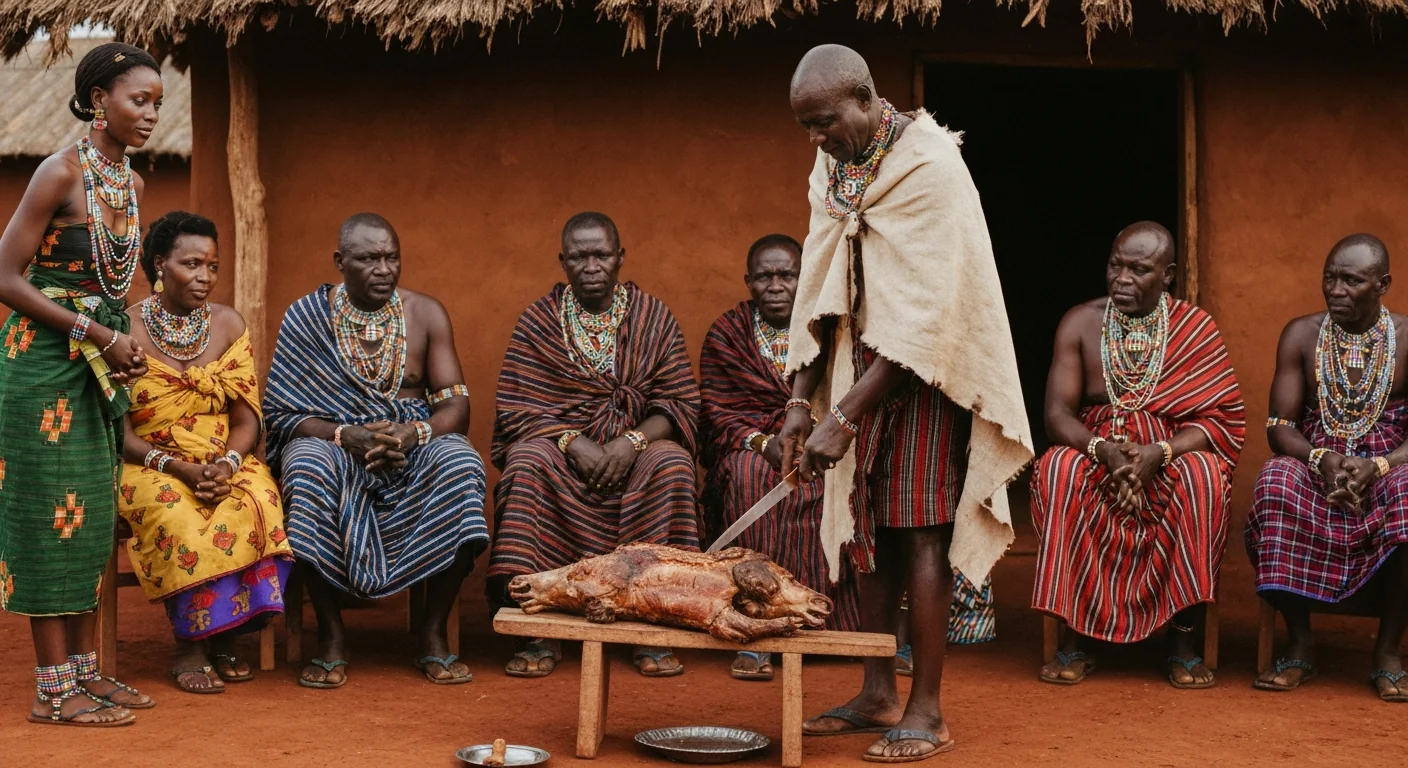
The unblemished ram is slaughtered. The groom is then handed the kiande — the shoulder joint — and must cut it cleanly without breaking the bone. This requires skill and composure. Breaking the bone is considered a bad omen and brings embarrassment. If the groom is not confident in his butchery skills, he would be wise to practise beforehand.
Feeding each other:
The groom cuts a piece of meat and feeds it to the bride. She then feeds a piece to him. This act of feeding each other symbolizes mutual care and provision — each one nourishing the other.
Eating the ears — Kuria Matu:
Both the bride and groom eat pieces of the goat’s ears. This is kuria matu — literally “eating ears.” The symbolism is direct: from this day forward, they must always listen to each other. Communication, patience, and attentiveness are presented not as suggestions but as sacred obligations.
Drinking from one cup:
The couple shares a single cup of drink — traditionally honey beer. Drinking from the same vessel seals their unity. They are no longer two individuals negotiating a relationship; they are one household.
The proverb that seals it:
After Ngurario, the community says: “Ndamutinire kiande” — “She has been given the shoulder.” This phrase is the Kikuyu equivalent of saying someone is fully, permanently married. It is the highest confirmation of marital status in the culture.
The Complete Ruracio Shopping List
The shopping list for ruracio varies by family and region, but certain items are considered standard. Modern families may substitute some items, but the categories remain consistent. Here is what to expect.
Items for the Men (Groom’s Obligations)
| Item | Purpose |
|---|---|
| Fattened ram (ngoima) x2 | Central to the negotiation ceremony |
| He-goat (harika) | Delivered during Kuhanda Ithigi |
| Ewe/sheep (mwati) | Delivered during Kuhanda Ithigi |
| Heifer (young cow) | High-value gift for bride’s family |
| Goats in tens | Bride price installment |
| Honey beer (njohi ya uki) | Traditional ceremonial drink |
| Father’s personal items | Suit, shoes, hat, watch, walking stick, coat |
| Blankets for grandfathers | One per living grandfather |
| Coat, hat, and walking stick for grandfathers | One set per living grandfather |
Items for the Women (Bride’s Family Requests)
| Item | Purpose |
|---|---|
| Cooking pot (nyungu) | Symbol of homemaking |
| Calabashes (kinya) | Traditional vessels for storage and serving |
| Axe (ithoka) | Symbol of provision and hard work |
| Rope (mugwe) | Practical household item |
| Women’s wear | Dresses, kanga, leso sets for mother and aunties |
| Lessos (colourful wraps) | Multiple sets for bride’s female relatives |
| Sodas and soft drinks | For the women’s gathering |
| Fermented porridge (ucuru wa mukio) | Traditional ceremonial drink for women |
Symbolic and Household Items
| Item | Purpose |
|---|---|
| Blankets for grandmothers | One per living grandmother |
| Water tank | Gift for the bride’s mother |
| Wheat, corn, and tea | Staple food gifts |
| Sufuria (cooking pots) | Various sizes for the household |
| Bedsheets and blankets | For the bride’s parents’ home |
| Sword (ruhiu) | Ceremonial — symbol of protection and authority |
Note: Every family has its own specific list — the above is a general guide. The bride’s family will send their requirements in advance. Receive the list graciously; negotiate privately through the spokesman if needed.
How Much Does Ruracio Cost?
This is the question every groom asks first. The honest answer: it depends on the family, but it is a significant financial commitment.
Breaking Down the Numbers
Goat prices (2026 estimates):
- Small goat: KSh 5,000 - 8,000
- Medium goat: KSh 8,000 - 12,000
- Large, fattened ram (ngoima): KSh 15,000 - 18,000+
- Heifer: KSh 30,000 - 60,000+
Base bride price (99 goats):
- At KSh 5,000 per goat (low end): KSh 495,000
- At KSh 10,000 per goat (mid-range): KSh 990,000
- At KSh 18,000 per goat (high end): KSh 1,782,000
Additional costs beyond the goats:
- Shopping list items: KSh 50,000 - 200,000+
- Transport and logistics: KSh 20,000 - 50,000
- Gate-locking fees: KSh 5,000 - 30,000
- Drinks and refreshments: KSh 20,000 - 50,000
- Spokesman and elders’ facilitation: KSh 10,000 - 30,000
- Contingency for penalties and surprises: KSh 10,000 - 20,000
Realistic total outlay on ruracio day: KSh 200,000 - 500,000+ (remembering that only about 15 goats’ worth is paid on the day, not the full 99).
Lifetime obligation: The remaining balance (80+ goats’ worth) is paid gradually over the years. Many Kikuyu men are still paying ruracio obligations decades after their wedding. This is by design, not by default.
How Modern Couples Manage Costs
- Start saving early — 1-2 years before the ceremony
- Buy goats off-season — prices are lower outside December/holiday periods
- Pool family resources — the groom’s extended family traditionally contributes
- Communicate through a trusted uncle on the bride’s side to advocate for reasonable terms
- Save together — many modern couples share the financial responsibility
Ruracio Etiquette: The Do’s and Don’ts
Getting the ceremony right is about more than money. Etiquette matters deeply in Kikuyu culture, and violations — even unintentional ones — can cause lasting offence. Here is what to observe.
Do’s
- Respect the elders — defer to their speaking order and never interrupt
- Dress appropriately — suits or smart traditional attire; the groom should look his best
- Choose your spokesman carefully — he must be eloquent in Kikuyu, know the traditions, and negotiate firmly without aggression
- Learn key Kikuyu words — even basic greetings earn enormous goodwill if you are not Kikuyu
- Befriend a trusted uncle on the bride’s side for insider guidance and advocacy
- Bring more than the minimum — if the list says 10 lessos, bring 12; generosity is noticed
Don’ts
- Never carry meat to your in-laws’ home — this implies the host cannot provide, a grave insult (ceremonial animals are the exception)
- Never pay the full bride price at once — it severs the ongoing relationship between families
- Never sleep at your in-laws’ home — Uthoni nduraragwo; depart before nightfall, stay at a hotel if needed
- Do not sneer at traditional food or drink — accept graciously even if it is not to your taste
- Do not bring fish — not considered appropriate for ceremonial occasions in many Kikuyu households
- The groom must not speak — all communication goes through the spokesman; speaking out of turn shows disrespect for the process
Ruracio Proverbs and Their Meanings
Kikuyu marriage proverbs (thimo) capture the values woven through the entire process:
- “Uthoni nduraragwo” — You never spend the night at your in-laws’ home. Boundaries and respect: visit with purpose, depart with dignity.
- “Cira munene ni wa uthoni igikua” — The most serious case is when a betrothal is broken. Breaking an engagement after Kuhanda Ithigi carries severe social and material consequences.
- “Mendanite ta gikwa na mukungugu” — They love each other like a yam and its support. The ideal marriage: two people incomplete without each other.
- “Ndamutinire kiande” — She has been given the shoulder. Confirms a woman has completed Ngurario and is permanently married.
Modern Adaptations: How Today’s Couples Navigate Tradition
Kikuyu ruracio has survived centuries because it adapts. While the core stages and values remain intact, modern couples have introduced practical adjustments.
Combining stages: Some families merge Kumenya Mucii and Kuhanda Ithigi into one visit when the families already know each other, as long as both sets of rituals are observed.
Cash instead of livestock: Most modern ceremonies convert everything to cash on the day. Actual goats are still brought for ceremonial slaughter (ngoima), but the bride price installment is typically paid in cash — some families even accept mobile money transfers.
Christian integration: Many Kikuyu families incorporate prayer and pastoral blessings alongside the traditional elder-led rituals. This blending of faith and culture is widely accepted.
Intercultural marriages: When a non-Kikuyu person marries into a Kikuyu family, the ruracio process still applies. The groom’s side may enlist a Kikuyu cultural adviser to help navigate the ceremony. The bride’s family usually makes allowances while maintaining the essential steps.
Urban venues: Some families now host ruracio at rented venues in Nairobi or other cities rather than the rural homestead, especially when most guests live in urban areas.
Shared costs: While tradition places the financial burden on the groom, many modern brides contribute discreetly, particularly for shopping list items or logistics.
Planning Your Ruracio: A Practical Timeline
| Timeframe | Milestone |
|---|---|
| 6-12 months before | Begin family conversations and start saving |
| 4-6 months before | Kumenya Mucii — select spokesman, make formal first visit |
| 3-4 months before | Kuhanda Ithigi — deliver Mwati and Harika, receive shopping list |
| 1-2 months before | Purchase goats, assemble shopping list, coordinate transport, brief delegation |
| Ruracio day | Main ceremony — arrive on time, depart before nightfall |
| 1-3 months after | Itara — bride’s family visits groom’s home |
| 3-12 months after | Ngurario — sacred final rite when both families are ready |
Many couples hold their church or civil wedding between ruracio and Ngurario — the ruracio establishes the customary union, while the church or civil ceremony adds legal recognition.
Frequently Asked Questions
How much does ruracio cost in total?
The upfront cost on ruracio day typically ranges from KSh 200,000 to KSh 500,000+. The total bride price (99 goats) converts to KSh 500,000-1,800,000+, but is paid gradually over a lifetime — no family expects the full amount on day one.
Can the groom speak during ruracio?
No. The groom must remain silent throughout. All communication goes through the spokesman. If something urgent arises, the groom whispers to the spokesman.
What if I can’t afford 99 goats?
Only about 15 goats’ worth is paid on the day — the rest becomes a lifelong obligation paid in installments. Communicate through your spokesman if the initial amount is beyond your means; most families will work with you.
What happens if the groom picks the wrong bride?
He pays a goat penalty (cash equivalent) for each wrong guess and tries again. Study your bride’s hands, posture, and mannerisms beforehand.
Do both families need to be Kikuyu?
No. Ruracio is expected whenever someone marries into a Kikuyu family, regardless of the groom’s background. A Kikuyu cultural adviser can help non-Kikuyu families navigate the ceremony.
Is ruracio legally binding?
Ruracio is recognized under the Marriage Act, 2014, as a customary marriage. Many couples also pursue a civil or church wedding for additional legal recognition, particularly for inheritance and property matters.
Can the bride refuse during ruracio?
Yes. When the father asks “Shall I drink this beer?” the bride can say no, and the ceremony stops. This safeguard ensures no woman is married against her will.
A Living Tradition
Ruracio is not a relic of the past. It continues to bind Kikuyu families across generations, reinforcing respect for elders, the primacy of family, and the belief that marriage is a covenant, not a transaction. For couples who go through it, ruracio is unforgettable — nerve-wracking, expensive, and deeply meaningful.
“Mendanite ta gikwa na mukungugu” — may you love each other like the yam and its support.
Planning your ruracio?
Track your dowry shopping list, manage guest lists for every ceremony, and keep both families coordinated — all in one place.
Start Planning for FreeFor more on traditional ceremonies across Kenya’s diverse communities, read our Complete Guide to Kenyan Wedding Traditions.