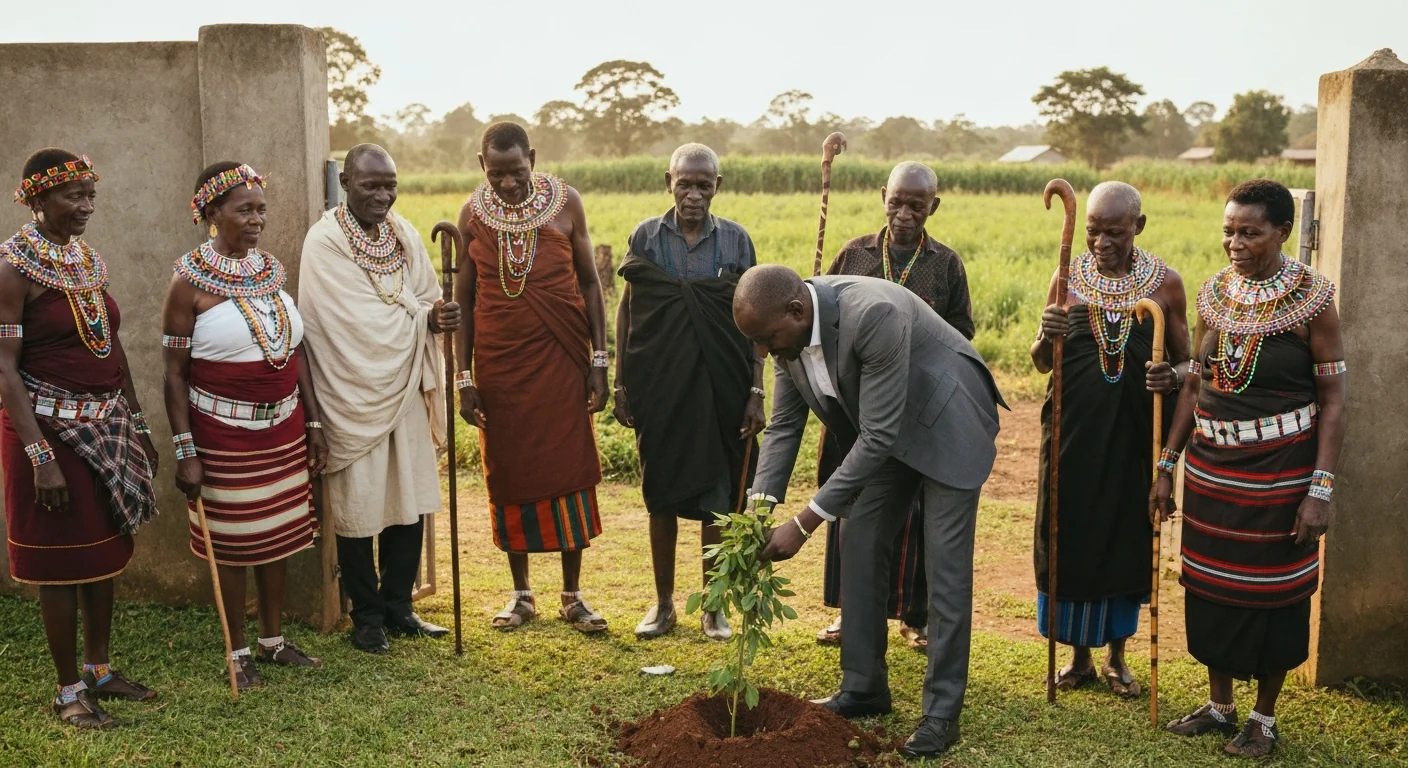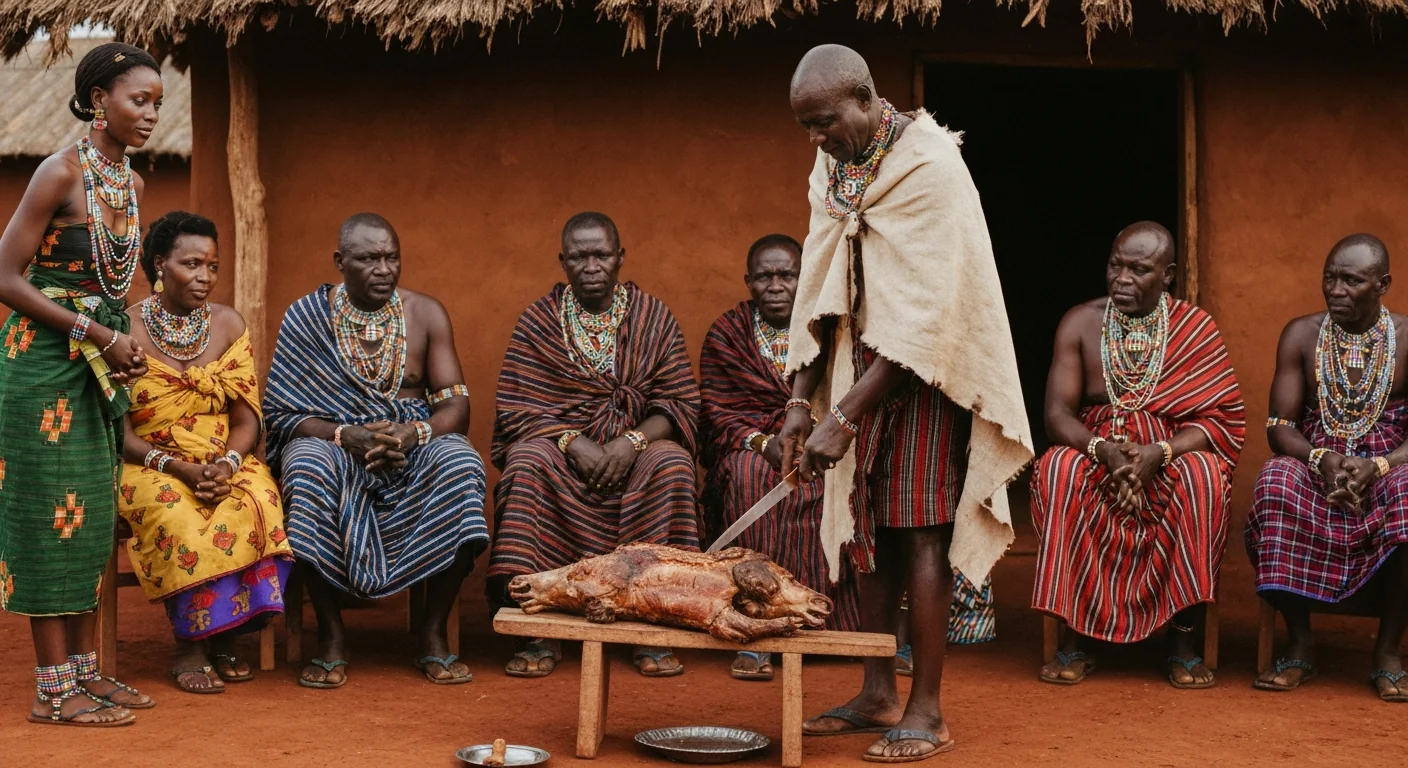
Ruracio Speech Templates: What the Spokesman Should Say
Complete ruracio speech templates for both families' spokesmen — formal Kikuyu greetings, negotiation phrases, and modern adaptations for the dowry ceremony.
Ruracio Speech Templates: What the Spokesman Should Say
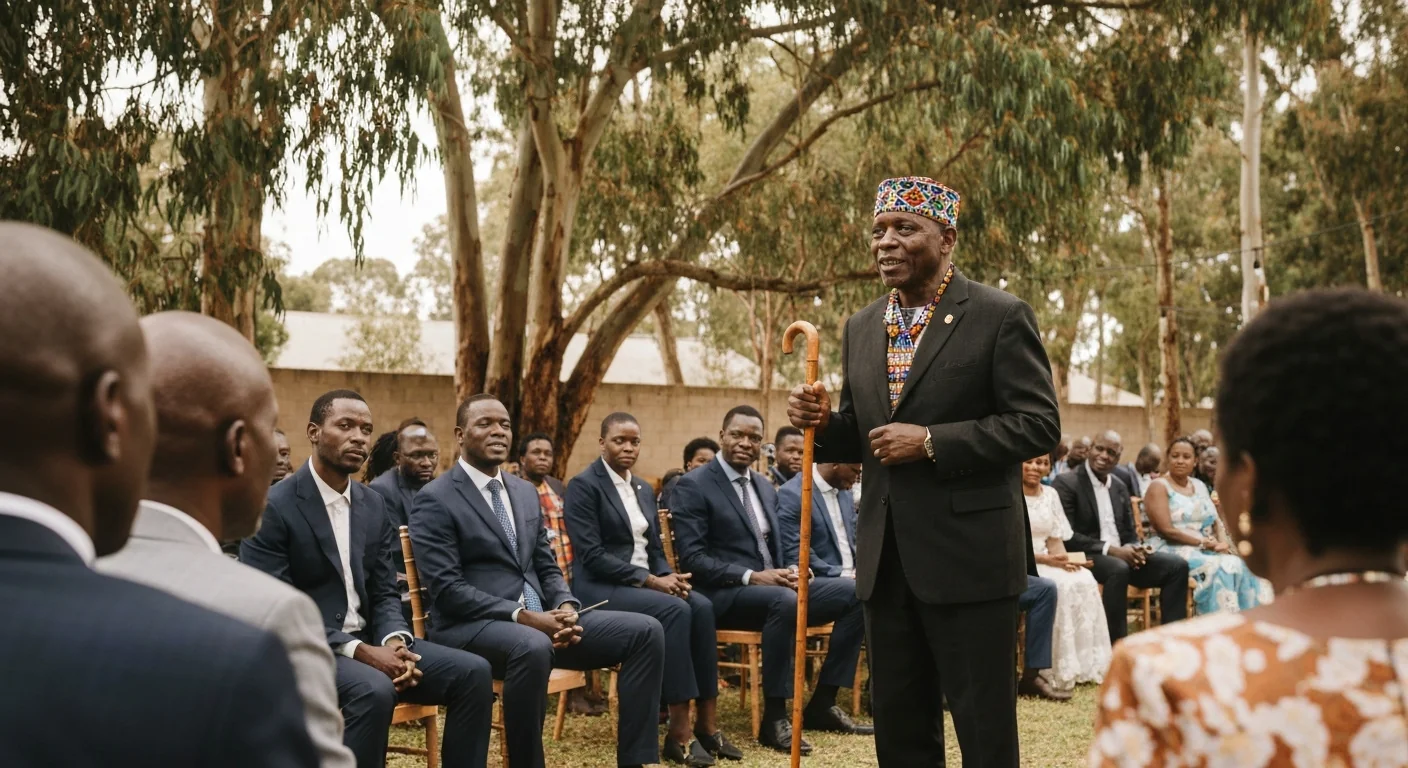
The elders have settled. The compound is full. Everyone is watching. And your spokesman stands up to speak — and goes completely blank.
The ruracio spokesman carries the weight of the entire ceremony. A poor spokesman can derail negotiations, offend the bride’s family, and create an atmosphere of tension that lingers long after the day. A great spokesman brings warmth, authority, cultural knowledge, and just the right amount of wit to keep things moving smoothly.
Whether you are the groom’s spokesman making your case, the bride’s family spokesman holding your ground, or an MC trying to manage the proceedings — this guide gives you the speech templates, formal Kikuyu phrases, and structural guidance to navigate the day with confidence.
For broader context on the whole ruracio journey — the stages, shopping list, and costs — read our Complete Guide to Kikuyu Ruracio Wedding Traditions first.
Who Is the Ruracio Spokesman?
The spokesman (sometimes called the muthuuri wa kiama) is not simply a talkative elder — he is the formal voice of his delegation throughout the entire ceremony. He is chosen from the committee of elders (athuri) within the groom’s clan, and his selection is taken seriously.
Qualities of a strong spokesman:
- Fluent in Kikuyu — ideally a native speaker or deeply versed in the language
- Knowledgeable in Kikuyu customary law and the specific stages of marriage
- Self-controlled and calm under pressure — negotiations can get heated
- Able to use proverbs (thimo) naturally, not mechanically
- Diplomatic enough to push back without causing offence
- A sense of humour — ceremonies should be joyful, not courtroom-stiff
Important: The groom himself must not speak during ruracio. All communication between the two families flows through the spokesmen. This is not a suggestion — it is protocol. If the groom needs to pass a message urgently, he whispers to his spokesman.
The bride’s family also appoints a spokesman of equal standing. The two spokesmen address each other directly, with the rest of the delegation as witnesses.
What Is the Order of Speeches at a Ruracio?
Understanding the sequence of events helps you prepare your speech for the right moment.
- Arrival and gate-locking — the groom’s delegation sings and pays to enter
- Formal greetings — spokesmen exchange opening greetings
- Statement of purpose — groom’s spokesman declares the intent of the visit
- Bride’s family response — acknowledgement and formal welcome
- Gucagura muka wake — groom identifies his bride
- Father’s consent question — the bride’s father asks for her consent
- Main negotiation — spokesmen negotiate the bride price (99 goats)
- Agreement and acceptance — terms agreed, items presented
- Celebration speeches — final blessings from both sides
- Closing — groom’s delegation departs before nightfall
Each stage has its own speech conventions. What follows are templates for the key moments.
Formal Opening: Greetings in Kikuyu
The ceremony opens with formal greetings exchanged between the two spokesmen. These must be done with deliberate respect — not rushed.
Groom’s Spokesman — Opening Greeting
“Nĩ tũgũcookia mĩhaato yothe ya athuri na andũ othe mũriũ ũyũ. Tũkĩrwo nĩ mwega, na nĩ tũrathiĩ thayũ.”
“We return all the greetings of the elders and everyone gathered here. We are well, and we come in peace.”
Follow this immediately with a statement of gratitude for being received:
“Tũrathankio mũno nĩ ũhoro mwega wa kũhũrũrĩrwo thĩ ĩno.”
“We are deeply grateful to have been welcomed to this homestead today.”
Bride’s Family Spokesman — Response
“Mũgĩthĩ thayũ. Tũmũhũrũra nĩ ũhoro mwega. Mũngĩthĩ na amani, na ũhuro nĩ mwega gwĩ itũ.”
“You are welcome. We receive you with good will. You have come in peace, and there is peace here with us too.”
The bride’s spokesman may add:
“Athuri arĩa mũriũ ũyũ nĩ twathiĩ na indo cia ũhoro mwega. Tũrakĩrĩria.”
“The elders of this homestead have received you with good spirit. Let us discuss.”
Practical note: These exchanges should not be rushed. Speak slowly. Allow each phrase to land. Elders on both sides are listening not just for content but for the manner of delivery. Composure communicates respect.
Statement of Purpose: The Groom’s Spokesman Declares Intent
This is the most important speech moment for the groom’s side. It must be clear, respectful, and rooted in the traditional formula.
Template — Statement of Purpose
“Honourable elders of this homestead. We have not come today as strangers. We come as men who have seen your homestead and admired its character. We come representing our son [groom’s name], who sent us ahead of him — because in our culture, a man does not negotiate his own marriage. He sends those wiser than himself.
‘Twonire ngoima yanyu imwe, na tũkwenda kumitura gwitu.’ We have noticed one of your sheep, and we would like to bring her to our homestead.
We come not to take anything from you. We come to begin a relationship — the most important relationship between two families. Everything we do today, we do with respect, with sincerity, and with the intention that this union brings blessing to both clans for many generations.
We ask your permission to proceed.”
After this statement, pause. The bride’s spokesman will respond — do not continue until he does.
The Bride’s Family Spokesman: Receiving the Intent
The bride’s family spokesman must acknowledge the intent, protect the family’s dignity, and open the space for negotiation — without being either too eager or unnecessarily stiff.
Template — Acknowledgement of Intent
“We have heard the words of our brothers. We are not surprised by your visit — good things are rarely hidden for long.
We want to tell you what our daughter means to this family. She was not raised carelessly. She has been cared for, educated, and prepared well. The elders of this clan are gathered here today to ensure that she leaves our home in a manner that honours both her and the family she was raised in.
We are open. We are listening. And we trust that you have come ready.”
This speech sets the tone for negotiation — it communicates value without aggression.
Negotiation Phrases: Useful Language for Both Sides
Dowry negotiation is a formal process, but it is not meant to be hostile. The right language maintains dignity while leaving room for agreement.
For the Groom’s Spokesman (Asking for Patience or Adjustment)
| Situation | Kikuyu Phrase | English Meaning |
|---|---|---|
| Requesting patience | Tũkwenda mũtũmanĩre | We ask you to be patient with us |
| Proposing a smaller initial payment | Nĩ tũrenda kũhanda mwanake ũyũ thĩĩni | We want to establish our son here first |
| Acknowledging the bride’s worth | Nĩ tũũĩ atĩ mwana wanyu nĩ wa thogora | We know your child is of great value |
| Asking to confer privately | Tũhote gũcũrũrĩka kanini | Allow us a moment to consult among ourselves |
| Expressing commitment | Nĩ tũgwĩkĩra | We are committed / We accept |
For the Bride’s Family Spokesman (Holding the Position)
| Situation | Phrase | Meaning |
|---|---|---|
| Restating the bride price | Mwana nĩ wake ona ngembe | This child is worth a full price |
| Refusing to negotiate down too early | Ndĩrĩ na ũhoro wa gũtũma | I am not in a position to reduce |
| Inviting the groom’s side to do better | Mũhote gũkora ũhoro mwega | You can do better / let us find a good outcome |
| Acknowledging goodwill | Tũrona atĩ mũrĩ na ngoro nzuri | We can see you come with good hearts |
The Consent Moment: The Father’s Question
One of the most emotionally charged moments in any ruracio is when the bride’s father asks for his daughter’s consent. The spokesman does not deliver this line — the father asks it himself, directly to his daughter. However, the spokesman should prepare the moment by framing it properly.
Spokesman’s Introduction Before the Father Speaks
“Before we go further — before any agreement is made — our culture demands that we hear one voice above all others. Not the spokesman’s voice. Not the elders’ voices. The voice of the one this day is truly about.
We ask the father of the bride to speak to his daughter.”
The father then turns to his daughter and asks:
“Ngarikie kaaria gaka?” “Shall I drink this beer?”
If she says yes, the father drinks and the compound erupts in ululation (ngemi). If she says no, the ceremony must pause — her consent is not optional under Kikuyu custom or modern law.
Note for the spokesman: After the father drinks, acknowledge the moment publicly before proceeding. Something as simple as: “The beer has been drunk. Let us proceed with joy” sets a celebratory tone.
Proverbs to Use During the Ceremony
Proverbs (thimo) are the hallmark of a skilled spokesman. Using them correctly signals cultural depth and earns the respect of the elders.
| Proverb | Meaning | When to Use |
|---|---|---|
| ”Uthoni nduraragwo” | You never sleep at your in-laws’ | To remind the groom’s delegation of the departure etiquette |
| ”Cira munene ni wa uthoni igikua” | The gravest case is a broken betrothal | To emphasize the seriousness of today’s commitment |
| ”Mendanite ta gikwa na mukungugu” | They love each other like a yam and its support | A blessing during closing speeches |
| ”Ndamutinire kiande” | She has been given the shoulder | Used after the ceremony to confirm the union |
| ”Mũrĩ na amani” | You are in peace / Go in peace | A closing blessing |
Closing Speeches: Blessing the Union
The final speeches should lift the mood and send both delegations away with warmth. Both spokesmen should speak in the closing — the groom’s side first, then the bride’s family.
Groom’s Spokesman — Closing
“We came here today as strangers. We leave as family. The work that was done here today between these two clans will bear fruit for many years to come.
On behalf of our son, his parents, and every elder who accompanied us — we say thank you. Thank you for receiving us. Thank you for your generosity. Thank you for raising a daughter of this character.
Ngai agũthĩĩte. May God go with you all.”
Bride’s Family Spokesman — Closing
“We have seen how you have honoured our home today. You came with respect, you negotiated in the spirit of our ancestors, and you have shown us the kind of family our daughter is joining.
We release her with joy and with prayer. Take care of her as we have taken care of her. Remember: she is not lost to us — she is extended. And you are now our family too.
Mũgĩthĩ thayũ. Go in peace.”
Modern Adaptations for the Speech
Today’s ruracio ceremonies often include guests who are not Kikuyu — the groom may be from a different community, or many attendees may not speak Kikuyu fluently. Here is how skilled modern spokesmen adapt.
Bilingual delivery: Experienced spokesmen deliver key phrases in Kikuyu and then translate to Swahili or English. This includes both audiences without breaking the cultural integrity of the ceremony.
Acknowledge the interpreter: If the ceremony is fully bilingual, the spokesman can open with: “I will speak in Kikuyu and then in Kiswahili, so that no guest is left behind.” This is widely accepted and appreciated.
When the groom is not Kikuyu: The groom’s spokesman should acknowledge this directly and respectfully: “Our son comes from a different community. He has humbled himself to learn our ways. We ask that you receive his effort as a sign of his love and commitment.”
Shorter ceremonies: When families agree to combine stages or streamline for time, the spokesman must still cover all essential declarations — purpose, consent, and agreement — even if the ceremony is condensed. For more on navigating modern adaptations of Kikuyu traditions, read our article on how modern couples are adapting traditional ceremonies.
Planning Your Ruracio: Tools That Help
Coordinating a ruracio involves managing two families, multiple guests, a shopping list, and often more than one ceremony in the broader wedding weekend. Start planning your ruracio on Harusi Hub for free → — the multi-event planning feature lets you add your ruracio as a separate event alongside your church or civil wedding, with its own guest list and RSVP settings.
Learn how to set up multiple events for your traditional and white wedding with the Manage Wedding Events guide.
If you are still in the early planning stages and want a central place to track your ruracio costs, shopping list, and ceremony details, the Complete Ruracio Planning Guide and our Ruracio Cost Breakdown for 2026 are excellent starting points.
You can also start your wedding website on Harusi Hub — it takes less than five minutes, and you will have a single link to share all event details with both families.
Planning your ruracio and white wedding weekend?
Keep both families organised with separate event pages, guest lists, and RSVPs — all on one free platform built for Kenyan couples.
Start Planning Free