How Modern Couples Are Adapting Kenyan Wedding Traditions
How modern Kenyan couples are adapting traditions — blending ruracio, ayie, koito, harusi, and white weddings into one cohesive multi-ceremony celebration.

How Modern Couples Are Adapting Kenyan Wedding Traditions
Two ceremonies, two families, two sets of traditions — and one couple navigating it all. Here is how modern Kenyan couples are reshaping what it means to have a traditional wedding.
Somewhere in Nairobi right now, a Kikuyu bride is trying on a white gown for her church wedding while her mother finalises the shopping list for the ruracio happening three weeks earlier. In Kisumu, a Luo groom is rehearsing the family speech for the ayie ceremony while quietly comparing wedding website themes with his fiancée. In Eldoret, a Kipsigis couple is planning a koito that respects both sets of elders — and a reception that reflects both their personalities. This is how modern Kenyan couples are adapting traditions: with intention, creativity, and deep respect for both worlds.
This is the modern Kenyan wedding: layered, deliberate, and deeply personal. More couples than ever are choosing to honour traditional ceremonies while also hosting contemporary receptions. Many are navigating inter-ethnic marriages, blending customs from two different communities into a single coherent celebration. And almost all of them are discovering that the logistics of a multi-ceremony wedding require more planning than any single event alone.
This article explores how couples from Kenya’s major communities are adapting their traditions — what they are keeping, what they are modifying, and how platforms like Harusi Hub are making the multi-ceremony wedding easier to manage.
For an overview of traditional wedding customs across all communities, start with our Complete Guide to Kenyan Wedding Traditions.
Why Are Modern Kenyan Couples Choosing to Honour Both Traditional and Contemporary Weddings?
The impulse to preserve tradition has grown stronger, not weaker, in recent years. Urban migration, social media, and exposure to global wedding culture have not diluted Kenyan wedding traditions — they have made couples more intentional about them.
A few key reasons are driving the trend:
Family expectation. For most Kenyan communities, traditional ceremonies are not optional. The ruracio, ayie, koito, or equivalent ceremony is the event that the parents and elders consider the real wedding. The white wedding or civil ceremony that follows is understood as the couple’s addition — welcome, even celebrated, but secondary in cultural weight.
Personal pride. Younger Kenyans increasingly see their traditional ceremonies as something to be proud of, not hidden. Traditional attire is photographed and celebrated on social media. Dowry negotiations are livestreamed. The ruracio has become, in many urban families, as elaborate and well-attended as the white wedding.
Legal requirements. Kenya’s Marriage Act recognises customary marriages, but many couples also opt for civil or religious ceremonies to ensure legal registration. This naturally creates a multi-event structure — the traditional ceremony plus the legal one.
Inter-ethnic marriages. When two people from different communities marry, two traditions are on the table. Navigating that respectfully takes thoughtfulness and, often, a willingness to honour both in full.
Kikuyu Couples: Evolving the Ruracio
For Kikuyu couples, the ruracio — the bride price negotiation ceremony — remains the undisputed centrepiece of the traditional wedding process. It is conducted at the bride’s family home, involves elders and negotiators from both sides, and formally bonds the two families.
What has changed is how couples engage with it.
Traditionally, the ruracio was strictly a family-managed event. The groom sat quietly while elders spoke on his behalf. Lists were negotiated: how many goats, how many blankets, what symbolic items represented the bride’s worth. Today, many Kikuyu couples are active participants in their own ruracio planning. They help draft the shopping list, choose the decorations, select the caterers, and sometimes coordinate the event almost entirely.
The kuhanda ithigi (tree-planting engagement ceremony) has also seen a revival in urban communities. What was once a quiet, largely symbolic act has become a photographed, catered occasion — a pre-ruracio event that publicly declares the couple’s intention to marry.
The white wedding typically follows the ruracio by weeks or months, giving families time to rest and giving the couple time to celebrate properly twice. Many couples coordinate both under a single wedding website, so guests know which events they are invited to and can RSVP accordingly.
For a detailed breakdown of the Kikuyu wedding process, see our guide to Kikuyu Ruracio Wedding Traditions, including a step-by-step ruracio planning guide and ruracio shopping lists.
Luo Couples: The Ayie and the Modern Reception
Among the Luo, the ayie ceremony — the formal acceptance of the groom’s proposal by the bride’s family — anchors the traditional wedding process. The word ayie literally means “I agree,” and the ceremony marks the bride’s mother’s formal acceptance of the union, accompanied by the payment of ayie money.
The nyombo (also known as keny) — the broader bride price paid in cattle or cash — is negotiated separately and involves the wider family.
Modern Luo couples are finding creative ways to honour these ceremonies while accommodating guests who may not be familiar with Luo tradition. In urban settings, ayie ceremonies are increasingly held in rented event spaces rather than rural homesteads, with a programme that explains each step to guests from different communities or from the diaspora.
The music at a Luo traditional wedding — the driving rhythms of ohangla — remains non-negotiable for most families. Ohangla bands are flown in for weddings in Nairobi, Mombasa, and beyond. The dancing is energetic, communal, and infectious.
What many modern Luo couples are adapting is the timeline. Rather than spreading ceremonies across multiple trips upcountry, families increasingly compress the traditional and white wedding into a single extended weekend — traditional ceremony on Saturday, white wedding on Sunday — using a single venue for both. This requires careful event sequencing and clear communication with guests about which ceremony they are attending.
For more on the Luo marriage process, see the Luo ayie ceremony guide and Luo nyombo bride price.
Kalenjin Couples: Keeping the Koito Central
Kalenjin couples — whether Kipsigis, Nandi, Tugen, or from other sub-tribes — are navigating a similar evolution. The koito (formal engagement and dowry negotiation) has become increasingly elaborate and publicly celebrated. What was once a relatively intimate family gathering has in many families grown into a full wedding-scale event, with matching outfits, professional photography, catered food, and hundreds of guests.
Some Kalenjin families now treat the koito as the primary celebration, investing more in it than in the white wedding that follows. This reflects a broader trend across Kenyan communities: the traditional ceremony as event, not just ritual.
The ratet — the sacred grass-tying ceremony that formally binds the couple — remains more private and spiritually significant, typically observed by immediate family. It is one of the traditional ceremonies that most couples choose not to modernise, preserving its intimacy and gravity.
The mursik (fermented milk) sharing remains a beloved moment at Kalenjin weddings, connecting the celebration to pastoral identity. Even Kalenjin couples who grew up entirely in Nairobi often request mursik at their koito — a deliberate act of cultural reclamation.
Our Kalenjin koito engagement guide covers the koito process in detail.
Kamba Couples: The Cooking Groom
The Kamba traditional wedding has one feature that surprises many guests: at the introduction ceremony, it is the groom’s delegation — not the bride’s family — who does the cooking. It is a deliberate cultural statement: the groom’s family demonstrates their willingness to serve, literally feeding the bride’s family as an act of respect.
Blessing rituals also characterise Kamba ceremonies. The groom’s father may take a sip of alcohol or water and spray it onto the couple’s outstretched hands — a physical transmission of blessing from one generation to the next. Modern Kamba couples tend to be fiercely protective of these small, specific rituals.
Read our full guide to Kenyan Wedding Traditions for more on Kamba and other community customs.
Luhya Couples: Community at the Centre
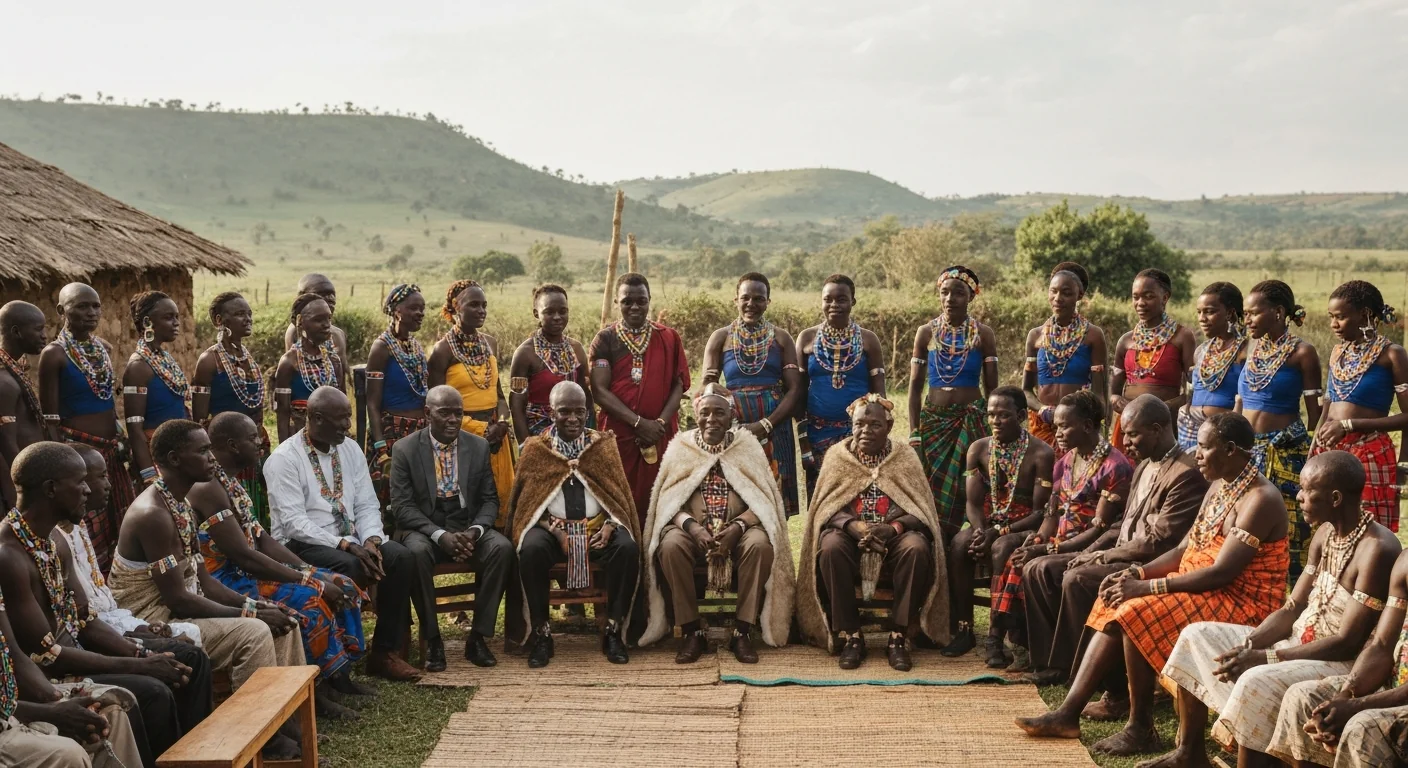
Luhya wedding traditions are defined by the involvement of the entire community. The isukuti drums — the heartbeat of Luhya celebration — are not background music. They are the event. When isukuti drums play at a Luhya wedding, dancing is not optional.
The traditional gifts — including the ruderu (tray) and ingokho (chicken) presented to the bride — remain standard at Luhya traditional ceremonies. Communal brewing of busaa (traditional beer) connects the celebration to the community’s agricultural roots.
What modern Luhya couples are adapting most significantly is geographic: the traditional ceremony is still ideally held at the ancestral rural home, but urban Luhya families increasingly hold abbreviated traditional ceremonies in Nairobi before travelling home for a fuller celebration at a later date. Managing this split — different ceremonies in different locations for different guest lists — is where digital tools become genuinely useful.
Our Kenyan wedding traditions overview covers Luhya customs in detail alongside all other communities.
Coastal and Swahili Couples: The Multi-Day Harusi
For couples from Kenya’s Swahili coast, the wedding has always been multi-day by design. The traditional Swahili harusi involves distinct ceremonies: the kuposa (formal proposal), kisomo (Quran recitation), kupeana mikono (gift exchange), nikah (marriage contract), usiku wa henna (henna night), kupamba (bridal display), and walimah (grand feast).
Modern coastal couples are compressing rather than eliminating. A harusi that once unfolded over one to two weeks now more commonly spans three to five days, with ceremonies combined or held on consecutive days rather than spaced out. Professional photographers and videographers have become standard. Social media sharing has given kupamba — the women-only bridal display — a broader audience beyond the women’s circle.
What has not changed is the scale of the walimah. Coastal families feed their entire community. This is not just tradition — it is understood as a religious and social obligation. The walimah catering budget remains the largest line item in a Swahili wedding.
For Somali-Kenyan couples along the coast and in Nairobi, a similar multi-ceremony structure applies — read our dedicated guide to Somali Wedding Traditions in Kenya for the full breakdown of the aroos, xeedho, and toddobobax.
Read our guide to Mijikenda wedding traditions for more on coastal Kenyan customs, and our article on Muslim Nikah Registration in Kenya for the legal side of Islamic marriages.
Indian-Kenyan Couples: Layers of Ceremony
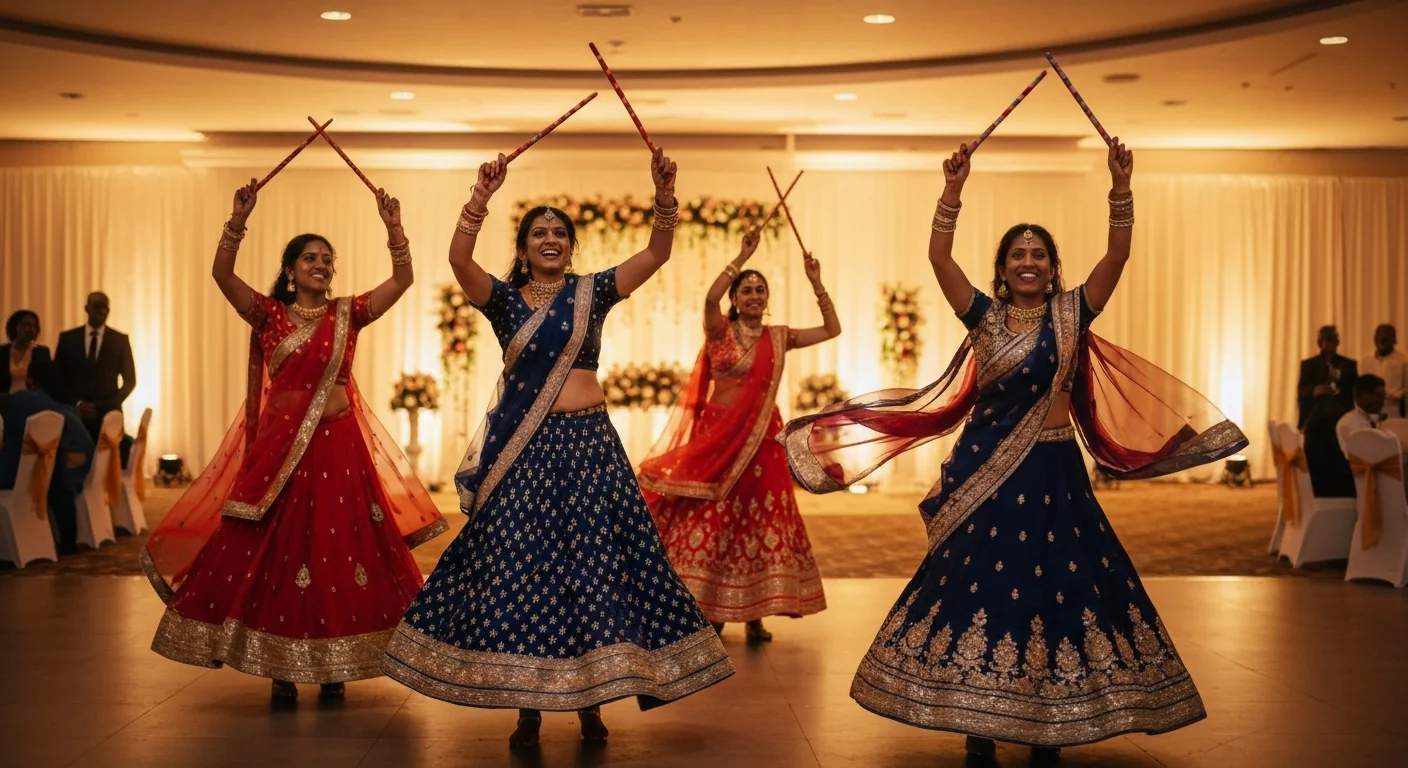
Kenya’s Indian community — Gujarati, Punjabi, Ismaili, and others with roots stretching back over a century — has one of the most elaborate wedding formats of any community in the country. A traditional celebration involves pre-wedding functions (mehendi, sangeet, roka), the religious ceremony (Hindu saptapadi, Sikh Anand Karaj, or Muslim nikah), and post-wedding events including the vidaai (bride’s farewell).
Modern Indian-Kenyan couples adapt in two directions simultaneously: some incorporate Kenyan elements — nyama choma alongside biryani, Kenyan venues, mixed guest lists — while others are reviving elaborate multi-day traditions their parents’ generation compressed into a single day. Inter-community marriages between Indian-Kenyan and African-Kenyan families are increasingly common in urban areas. The most successful tend to be those where both families feel genuinely honoured, not just tolerated.
How Do Inter-Ethnic Couples Navigate Honouring Two Different Wedding Traditions?
When two people from different communities marry, the question is never whether to honour both traditions — it is how.
The most common approach is sequential: complete the traditional ceremony of one community (usually the bride’s), then hold a joint white wedding or civil ceremony that both families attend together. In some cases, couples choose to observe elements of both traditional ceremonies, particularly when both sets of parents feel strongly about their community’s specific rites.
Common challenges in inter-ethnic weddings:
- Language. Elders from one community may not understand what is happening in another’s ceremony. A good MC who can translate and explain in real time makes a significant difference.
- Food. Every community has strong feelings about what should be served. A feast that acknowledges both traditions — nyama choma alongside fish, ugali alongside rice, a mursik station beside a juice bar — signals care and thoughtfulness.
- The programme. A clear, well-structured programme that names each element and its meaning helps guests from outside the community feel included rather than confused.
For couples planning across multiple locations — perhaps a traditional ceremony in the rural home and a reception in Nairobi — see our guide on planning your traditional and white wedding weekend.
How Harusi Hub Supports Multi-Ceremony Weddings
The practical challenge of a multi-ceremony wedding is coordination. Different events have different guest lists, different venues, different dates, and different RSVP needs. A spreadsheet can manage one event. Managing three or four is where it breaks down.
Harusi Hub is built specifically for this reality.
The multi-event feature lets you set up each ceremony as a separate event — your ruracio, your church wedding, your reception — each with its own date, venue, and status. You can enable or disable public RSVP for each event independently, so casual acquaintances receive invitations only to the reception, while family members get access to the traditional ceremony details as well. See the Harusi Hub guide to managing wedding events for a step-by-step walkthrough.
The guest management system lets you track who is invited to which events — keeping your 60-person ruracio list separate from your 300-person reception list, with RSVPs tracked for each. Manage it all from the guests dashboard.
The wedding website gives every guest a single link with all the information they need: multiple event dates, venue details, RSVP forms, and your gift registry. Everything lives at one URL. Create your wedding website in minutes and follow the step-by-step creation guide to get started. For diaspora couples, see wedding planning for Kenyan couples abroad.
What Stays Constant
For all the adaptation, four elements remain non-negotiable across virtually every Kenyan community:
The presence of elders. Modern couples may handle all the logistics, but the ceremony requires the elders. Their blessing carries weight no MC can replicate.
The bride price process. Whether ruracio, keny, yarad, or mahr — the form may adapt (goats become cash, lists become spreadsheets) but the act of one family formally honouring another remains fundamental.
Community feeding. Budget constraints may reduce the venue, but the feast remains sacred. Kenyan hospitality is non-negotiable.
The music. Ohangla at a Luo wedding. Isukuti at a Luhya celebration. Taarab at a coastal harusi. Buraanbur at a Somali aroos. These are not background playlists — they are the sonic identity of the community.
Adapting a tradition does not mean diluting it. Every generation of Kenyan couples has adapted: the grandparents from pre-colonial forms, the parents who added white weddings in the 1980s, the current generation adding more intentional documentation and multi-cultural family dynamics. What stays constant is the intention — to mark the beginning of a marriage with the full witness and blessing of the community.
For more on traditional ceremonies across Kenya’s communities:
- Complete Guide to Kenyan Wedding Traditions
- Kikuyu Ruracio Wedding Traditions
- Luo Ayie Ceremony Guide
- Kalenjin Koito Engagement
- Turkana Wedding Traditions
- Samburu Wedding Traditions
- Mijikenda Wedding Traditions
- Somali Wedding Traditions in Kenya
- Indian Kenyan Wedding Traditions
Managing multiple wedding ceremonies?
Harusi Hub lets you set up your ruracio, church wedding, and reception as separate events — with individual guest lists, RSVPs, and venues, all on one wedding website.
Create Your Wedding Website Free