Indian Kenyan Wedding Traditions: Hindu, Sikh & Ismaili
A complete guide to Indian Kenyan wedding traditions — Hindu saptapadi, Sikh Anand Karaj, Ismaili nikah, Nairobi venues, and multi-day celebrations.
Indian Kenyan Wedding Traditions: Hindu, Sikh & Ismaili
Walk through Parklands on a Saturday afternoon and you will hear it — the rhythmic beat of a dhol drum, the scent of rose garlands and incense drifting from a hall, women in vivid lehengas and saris moving between cars. Indian Kenyan weddings are among the most sensory, layered, and joyfully elaborate celebrations in the country. And they are entirely their own thing.
Indian Kenyan wedding traditions are among the most layered and joyfully elaborate in the country — multi-day celebrations that blend Hindu, Sikh, and Ismaili ceremonies with an East African sensibility built across generations. The Indian Kenyan community has been part of Kenya’s social fabric for over a century. The ancestors of most Indian Kenyan families arrived during the late nineteenth and early twentieth centuries — first as indentured laborers brought to build the Uganda Railway between 1896 and 1901, then as free migrants from Gujarat, Punjab, and other regions who came to trade and settle. Over generations, they built temples, gurdwaras, and jamatkhanas across Nairobi. In 2017, the Kenyan government formally recognized Kenyan Asians as the country’s 44th tribe — an acknowledgment of a community woven deeply into the national story.
Today, Nairobi’s Indian Kenyan community is concentrated in neighborhoods like Parklands and Westlands, home to temples, community centers, Diamond Plaza’s bustling bazaars, and some of Nairobi’s finest wedding halls. The community spans multiple faith traditions — primarily Hindu, Sikh, and Ismaili Muslim — each with its own marriage ceremonies, its own multi-day pre-wedding rituals, and its own blend of South Asian heritage and East African identity.
This guide covers each tradition in depth: the Hindu mandap and saptapadi, the Sikh Anand Karaj, and the Ismaili nikah, along with the pre-wedding celebrations that precede them and the practical details of planning an Indian Kenyan wedding in Nairobi.
For a broader look at how Kenya’s diverse communities celebrate marriage, read our Complete Guide to Kenyan Wedding Traditions.
The Indian Kenyan Community: Who They Are
The majority of Kenyan Indians trace their origins to Gujarat — a western Indian state — with significant numbers from Punjab, and smaller communities from Maharashtra, Rajasthan, Sindh, and Tamil Nadu. The Gujarati origin explains why many Kenyan Indian families are Hindu; Gujarati Hindus form the largest sub-group within Kenyan Hindu communities, including Lohanas, Patels, and Mehtas, among others.
The Sikh community in Kenya is smaller but tightly knit, largely descended from Punjabi workers who remained after the railway construction and built businesses across East Africa. Kenya’s Sikh community maintains active gurdwaras (temples) in Nairobi and other cities.
The Ismaili Muslim community — followers of the Aga Khan — traces its presence in Kenya to Gujarati Muslim traders who arrived in the nineteenth century. Ismailis in Nairobi are one of the city’s most well-organized communities, centered around their jamatkhanas (community and prayer centers), most notably the historic Nairobi Town Jamatkhana (popularly known as the Khoja Mosque) built in 1920, which stands at the junction of Moi Avenue.
All three communities share certain commonalities: large, joyful multi-day weddings; deep family involvement; a blend of South Asian ceremony with an East African sensibility; and a social culture in which weddings are major community events.
Hindu Kenyan Weddings
Pre-Wedding Celebrations
Hindu Kenyan weddings are typically spread across two to four days of celebration before and after the main ceremony. The pre-wedding events are often as eagerly anticipated as the ceremony itself.
Mehendi (Henna Night)
The mehendi evening is held one to two days before the wedding, usually at the bride’s family home or a rented hall. The bride’s hands and feet are elaborately decorated with henna by a professional mehendi artist, while female relatives and friends from both families gather to celebrate. Music plays, food is served, and the bride’s design is revealed at the end — often incorporating the groom’s name hidden within the pattern.
Garba and Sangeet
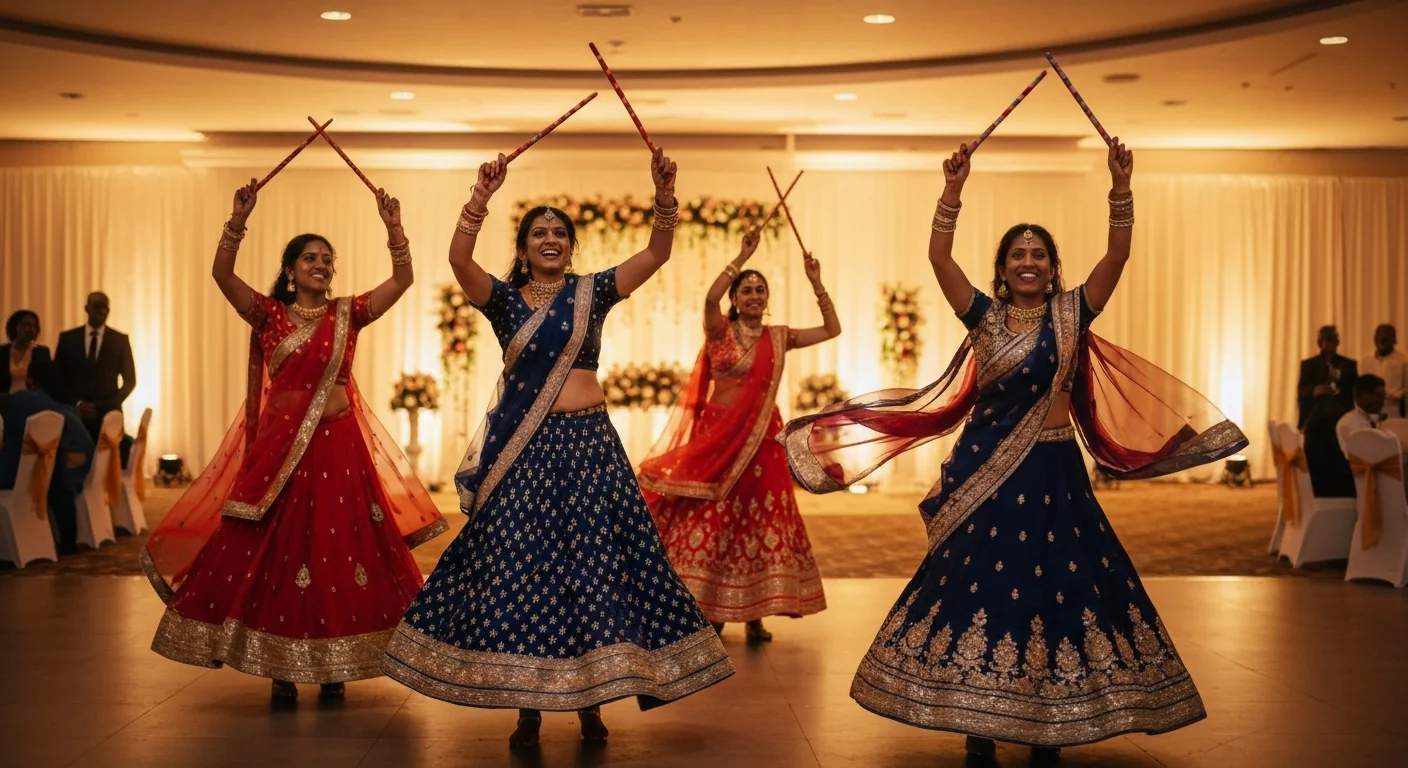
Many Gujarati-origin families hold a garba or sangeet evening — a night of dancing and music celebrating the upcoming wedding. Garba involves traditional circular folk dance movements performed to devotional songs, often with dandiya (decorated sticks). The sangeet is a performance event where family members sing and dance for the couple. These events, which can draw hundreds of guests, are held in large halls in Westlands, Parklands, or at hotel ballrooms across Nairobi.
Haldi (Turmeric) Ceremony
On the morning of the wedding day or the day before, the haldi ceremony takes place at both the bride’s and groom’s homes separately. Turmeric paste — mixed with sandalwood, rosewater, and sometimes oil — is applied to the bride’s (or groom’s) face and body by female relatives. Turmeric is believed to bless the couple with prosperity and a glowing complexion. The ceremony is informal and joyful, often one of the most photographed moments of the wedding weekend.
The Main Hindu Wedding Ceremony
The central Hindu wedding ceremony takes place under a mandap — a ceremonial canopy, usually decorated with flowers, fabric, and lights. The mandap is erected either at a temple, a wedding hall, or a large outdoor space, and it is the sacred space in which the couple is married in the presence of their families and the divine.
The ceremony is conducted by a Hindu priest (pandit), who guides the couple through the ritual sequence in Sanskrit, with explanations provided to the congregation in Gujarati, Hindi, Swahili, or English depending on the family.
Key rituals within the Hindu ceremony:
- Ganesh Puja — The ceremony opens with prayers to Ganesha (the remover of obstacles), asking for blessings on the proceedings.
- Kanyadaan — The bride’s father formally “gives away” his daughter by placing her hand in the groom’s. This is one of the most emotionally significant moments of the ceremony.
- Vivah Homa — A sacred fire is lit within the mandap. The fire (agni) serves as the divine witness to the vows.
- Saptapadi (Seven Steps) — The ritual at the heart of the Hindu wedding. The bride and groom take seven steps together around the sacred fire, each step accompanied by a vow — for sustenance, strength, prosperity, happiness, offspring, health, and lifelong friendship. With the completion of the seventh step, the marriage is considered legally and spiritually complete.
- Sindoor and Mangalsutra — In many Gujarati traditions, the groom applies sindoor (vermilion powder) to the parting of the bride’s hair and places a mangalsutra (sacred marriage necklace) around her neck. Both are visible symbols of her married status.
The full ceremony typically lasts two to four hours, followed by a reception with a full meal, speeches, and dancing.
Hindu Wedding Venues in Nairobi
Hindu weddings in Nairobi are commonly held at:
- Hindu temples across Parklands and Westlands — many have their own halls suitable for medium-to-large ceremonies
- Hotel ballrooms in Westlands (including Hyatt Regency Nairobi Westlands and other hotels along Waiyaki Way)
- Dedicated wedding halls in Parklands, some of which have been purpose-built for the Indian Kenyan community
- Naivasha and Ngong Hills venues for destination-style weddings with outdoor mandap settings
For Nairobi venue options that accommodate large Indian Kenyan weddings, see our guide to the best wedding venues in Nairobi and our article on destination weddings in Kenya.
Sikh Kenyan Weddings: Anand Karaj
The Sikh Community in Kenya
Kenya’s Sikh community is small — estimated at a few thousand — but deeply rooted, close-knit, and well-organized. Many families have been in Kenya for three or four generations, maintaining Punjabi language, culture, and Sikh faith while building East African identities. Nairobi’s gurdwaras serve as community centers for worship, celebration, and mutual support.
Pre-Wedding Events
Chunni Ceremony
The engagement is formally marked by the chunni ceremony, in which the groom’s family visits the bride’s home and drapes a chunni (dupatta/headscarf) over the bride’s head — a symbolic act of acceptance into their family. Gifts are exchanged and sweets are shared.
Jaggo Night
The jaggo is a pre-wedding celebration unique to Punjabi culture — a festive, late-night procession in which family members from the groom’s side (and sometimes both sides) march through the neighborhood singing traditional songs. Women carry decorated pots with candles or lights. The jaggo is loud, joyful, and deliberately designed to announce to the entire neighborhood that a wedding is happening.
Mehendi Night
Like their Hindu counterparts, Sikh families typically hold a mehendi evening for the bride and female relatives, with henna application, dancing, and music.
The Anand Karaj: Blissful Union
The Anand Karaj (ਅਨੰਦ ਕਾਰਜ) — meaning “Act towards blissful life” — is the Sikh wedding ceremony. It is conducted in a Gurdwara (Sikh temple), in the presence of the Guru Granth Sahib (the Sikh holy scripture), which is treated as the living sovereign of the ceremony.
The ceremony is officiated by a Granthi (Sikh officiant), who reads from the Guru Granth Sahib and leads the congregation.
The Milni
Before the ceremony begins, the milni takes place — a formal meeting and introduction of the two families. Corresponding family members from each side garland each other and embrace. The milni acknowledges that a Sikh marriage is the joining of two families, not just two individuals.
The Laavan: Four Rounds
The heart of the Anand Karaj is the laavan — four sacred hymns composed by Guru Ram Das Ji, found in the Siri Guru Granth Sahib on pages 773 to 774. As each laav is sung, the couple walks clockwise around the Guru Granth Sahib — the groom leading, the bride following, joined by a cloth called the palla (given by the bride’s father, signifying the formal giving away of his daughter).
The meaning of each round:
- First Laav — The duty toward God, family, and community. Marriage is affirmed as the best context for spiritual life.
- Second Laav — The awakening of love between the couple, moving from formal commitment toward true devotion.
- Third Laav — Detachment from worldly possessions. The couple turns toward spiritual union over material ambition.
- Fourth Laav — The completion of the spiritual journey. Two souls unite in love, devotion, and God’s grace.
After the four rounds are complete, the couple is married. The religious ceremony typically lasts one to three hours.
The Anand Karaj is a joyous and informal ceremony — the atmosphere in the gurdwara is lively, family members are engaged and often emotional, and children move freely. There is no rigid silence. The community’s presence and participation are part of the ceremony’s meaning.
The Reception
After the Anand Karaj, the wedding reception is held — often at a hotel ballroom, community hall, or large outdoor venue. Punjabi wedding receptions are known for their abundant food (typically vegetarian for ceremonies, meat options often available at reception), bhangra dancing, live music or DJ sets, and hours of celebration.
Ismaili Kenyan Weddings
The Ismaili Community in Kenya
Ismaili Muslims in Kenya follow the Shia Imami Ismaili tradition, led spiritually by His Highness the Aga Khan. The community has a long history in East Africa — Ismaili traders were among the earliest South Asian arrivals in the region, and the community today is well-established, well-organized, and cosmopolitan in character. Nairobi’s Town Jamatkhana, built in 1920 on Moi Avenue, is the historical and ceremonial heart of the Kenyan Ismaili community.
Ismaili weddings in Nairobi are known for being modern and elegant — they blend Islamic ritual with South Asian cultural elements and a distinctly East African sensibility, often incorporating Swahili phrases, Kenyan music, and local catering alongside the formal ceremony.
The Nikah
The core of an Ismaili wedding is the nikah — the Islamic marriage contract. In Ismaili practice, the nikah is traditionally conducted at the jamatkhana, officiated by a community religious leader. The ceremony involves formal declaration of the marriage contract in the presence of witnesses, with the exchange of rings often conducted by the Mukhi (community leader) who places them on the couple’s fingers on behalf of the ceremony.
The nikah is typically followed by prayers and blessings from the congregation. A typical Ismaili wedding day moves from the formal nikah at the jamatkhana to a photograph session and then a reception at a separate venue — which one photographer described as “photographing two weddings in one day” given how distinct the two halves feel.
Pre-Wedding and Reception Events
Ismaili weddings commonly include:
- Mehendi nights — henna and celebration with female relatives and friends
- Garba or dandia evenings — drawing on the Gujarati cultural roots of many Kenyan Ismaili families
- A formal reception with speeches, dancing, a live band or DJ, and a multi-course meal
- Community gatherings at the jamatkhana in the days around the wedding
Ismaili wedding receptions in Nairobi are typically held in the city’s top hotel ballrooms — the Fairmont Norfolk, Hilton Nairobi, Aga Khan University Hospital Conference Centre, and similar venues — though garden weddings and destination settings have grown more popular among younger couples.
What Makes Indian Kenyan Weddings Different from Weddings in India?
Indian Kenyan weddings are not simply transplanted South Asian ceremonies. Over several generations, they have developed a character that is genuinely East African.
- Multi-language celebrations — Ceremonies and speeches mix Gujarati, Punjabi, Urdu, Hindi, Swahili, and English, often within the same hall and the same family.
- Kenyan food fusion — Receptions frequently blend Indian catering (biryani, mithai, samosas) with Kenyan favorites (nyama choma, pilau, mandazi), reflecting the community’s dual identity.
- Large, open guest lists — Indian Kenyan weddings reflect the broader Kenyan tradition of large, inclusive celebrations. Guest lists of 300 to 600 people are common for established families.
- Outdoor and destination settings — Younger Indian Kenyan couples are increasingly drawn to destination weddings — at Naivasha, the coast, or Amboseli — setting traditional ceremonies against Kenya’s extraordinary landscapes. See our guide to destination weddings in Kenya.
- Digital planning — With family members often scattered between Nairobi, Mombasa, the UK, Canada, and India, Indian Kenyan couples are among the most enthusiastic adopters of digital wedding planning tools.
How Are Hindu, Sikh, and Ismaili Weddings Legally Registered in Kenya?
Hindu, Sikh, and Ismaili weddings in Kenya can be legally registered. Hindu marriages are registered under the Hindu Marriage and Divorce Act (for Hindu ceremonies) or the Marriage Act 2014. Ismaili nikah ceremonies are registered as Muslim marriages. All require legal registration to be fully recognized.
For details on the legal side, read our guide to Hindu marriage registration in Kenya and our marriage registration overview.
Planning Your Indian Kenyan Wedding
An Indian Kenyan wedding is a multi-day, multi-event production that involves coordinating dozens of vendors, hundreds of guests, multiple ceremonies across different venues, and often family members arriving from abroad. The planning load is real.
Harusi Hub is built for exactly this. You can create your wedding and add separate events for each day — mehendi night, garba, ceremony, and reception — each with its own guest list, RSVP, and budget. The manage events guide walks through how to set up multiple occasions and track them independently.
The budget tracker handles the full complexity of a multi-day Indian Kenyan wedding budget — from the pandit’s fee to the dhol hire to the catering deposit. And with Harusi Hub’s M-Pesa-integrated gift registry, your guests can contribute directly to your honeymoon, household, or chosen causes — no awkward cash envelopes required.
For related reading, see our article on planning a traditional and white wedding weekend for multi-format wedding planning tips, and our overview of the best wedding venues in Nairobi for venue shortlisting.
Frequently Asked Questions
What is the most important ceremony in a Hindu Kenyan wedding?
The saptapadi — the seven steps around the sacred fire — is considered the central and legally binding moment of a Hindu wedding. With the completion of the seventh step, the couple is considered married under Hindu religious tradition.
How long does a Sikh Anand Karaj ceremony last?
The religious portion of the Anand Karaj, including the four laavan rounds, typically lasts one to three hours. The full wedding day, including the milni, ceremony, and reception, commonly runs eight to twelve hours.
Where is the Ismaili nikah typically held in Nairobi?
Ismaili nikah ceremonies in Nairobi are typically held at the community’s jamatkhana. The Nairobi Town Jamatkhana on Moi Avenue is the most historically significant, though ceremonies may be held at other jamatkhanas across the city. The nikah is followed by a separate reception at a hotel or function venue.
How many days does an Indian Kenyan wedding typically last?
Most Indian Kenyan weddings span two to four days of events: pre-wedding celebrations (mehendi, garba/sangeet, haldi), the main ceremony day, and sometimes a post-wedding lunch or brunch. Larger, more traditional families may celebrate across a full week.
Can Indian Kenyan weddings include Kenyan cultural elements?
Absolutely. Many Indian Kenyan couples weave in Kenyan music, Swahili language, local food, and even elements of their spouse’s Kenyan ethnic traditions, particularly in interfaith or intercommunal marriages. The Indian Kenyan community’s multi-generational East African identity makes such fusion natural and well-established.
Planning your Indian Kenyan wedding?
Manage every event — mehendi, garba, ceremony, reception — with one free platform built for Kenya's most elaborate weddings.
Start Planning FreeFor more on how Kenya’s diverse communities celebrate marriage, read our Complete Guide to Kenyan Wedding Traditions and our in-depth article on Somali wedding traditions in Kenya.