Kalenjin Koito: Traditional Engagement Ceremony Guide
Everything you need to know about the Kalenjin koito ceremony — what it is, how it works, who attends, dowry costs, what to wear, and modern adaptations.
Kalenjin Koito: Traditional Engagement Ceremony Guide
If you have been invited to a Kalenjin koito and are not sure what to expect, or if you are planning one and feeling overwhelmed by where to start — this guide is for you. The koito is one of Kenya’s most vibrant traditional ceremonies, and knowing how it works makes all the difference.
Among the Kalenjin people of Kenya’s Rift Valley, the koito is the moment a private relationship becomes a public commitment. It is the ceremony that transforms two individuals into a couple recognized by both families, the clan, and the wider community.
The word koito means “to give away,” and it refers to the formal engagement and dowry negotiation that takes place between the groom’s family and the bride’s family. It is not a quiet, back-room agreement. It is a celebration — colourful, musical, full of food, elders, and community — and it has become one of the most culturally significant events in a Kalenjin couple’s marriage journey.
In recent years, the koito has grown in prominence. Many Kalenjin families now treat it as the centrepiece of their traditional celebrations, sometimes foregoing the later tunisiet (public feast) in favour of making the koito itself the main event. Understanding what it involves, what it costs, and what is expected of everyone present will help you participate fully — whether you are the groom, the bride, a family member, or a guest.
For a full overview of Kenyan wedding traditions across communities, read our Complete Guide to Kenyan Wedding Traditions.
What Comes Before the Koito: Kaayaaet’ap Koito
The koito does not happen out of nowhere. It is preceded by a private, family-level ceremony known as the kaayaaet’ap koito — the proposal stage.
When a Kalenjin young man decides he wants to marry, he informs his parents. This is not a casual conversation. His parents and relatives then begin discussing the suitability of the match. They consider the girl’s family background, her character, and — critically — her clan.
The clan verification (oret) is non-negotiable. The Kalenjin practice strict exogamy, meaning a person must marry outside their own clan. Before any approach is made to the bride’s family, both families share clan names (oret) and animal totems (tiondo) to confirm there is no clan overlap. Marrying within the same clan is a serious taboo, and this check is done carefully.
Once the families confirm compatibility and the groom’s father gives his approval, he may visit the family’s mabwaita — a sacred family altar — to seek ancestral blessing for the marriage. This spiritual step anchors the entire process in the family’s cultural and spiritual life. It is private, reserved for the immediate family, and signals that the clan is ready to proceed.
A date is then set for the formal koito. The two families begin coordinating the guest list, the food, and the logistics of the ceremony.
The Koito Ceremony: Step by Step
1. Arrival of the Groom’s Family
On the day of the koito, the groom’s family and delegation arrive at the bride’s home in a celebratory mood. They may be accompanied by singing, dancing, and the general energy of a community event.
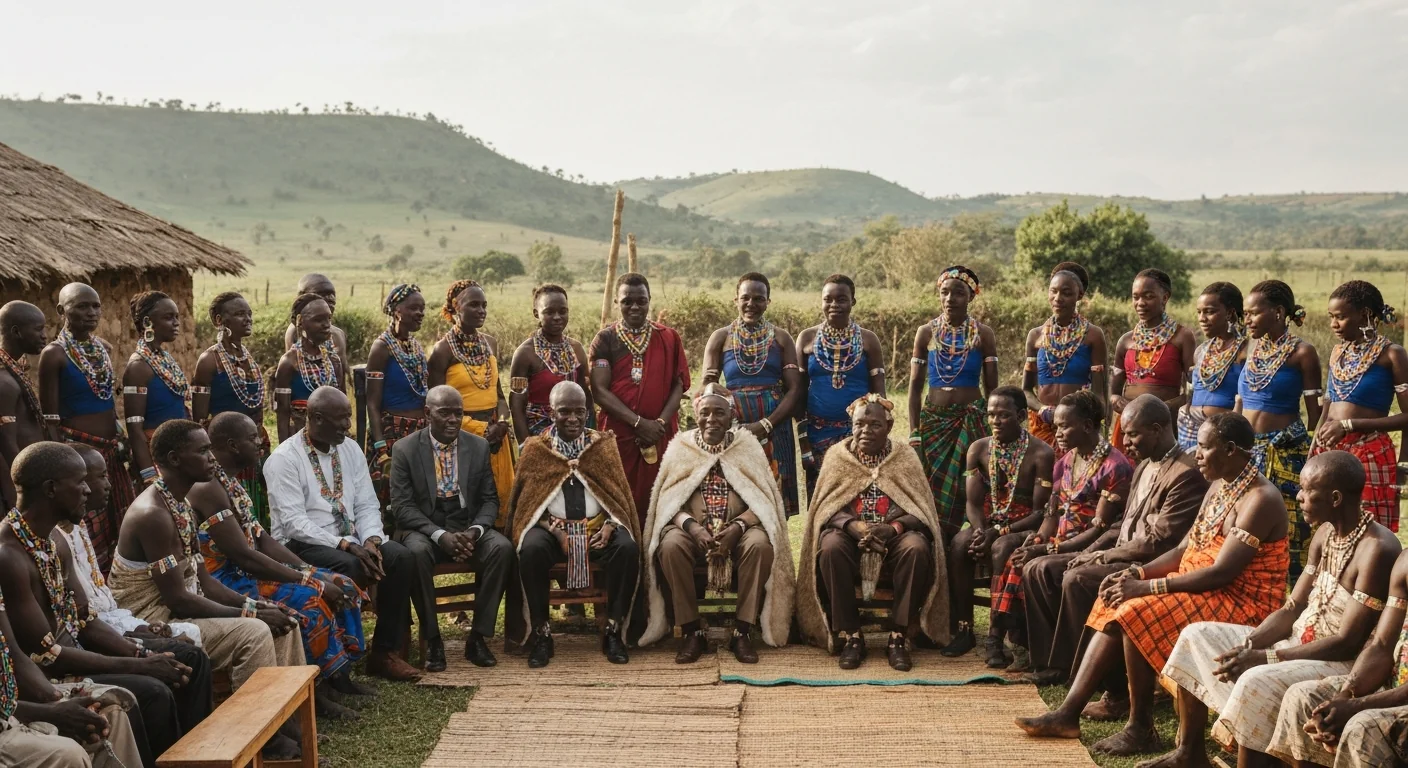
The scale of the arrival depends on the sub-tribe. Among the Nandi, the celebration involves an entire village — guests number in the hundreds, and the event feels like a public festival. Among the Kipsigis, attendance is often more contained, with close family members and clan (oreet) representatives only. The energy is the same — vibrant — but the scale differs.
An important note on who hosts and pays: The koito takes place at the bride’s home, and the bride’s family bears the cost of hosting on this day. They are responsible for the food, the venue preparation, and the reception of guests. The groom’s family brings gifts and the bride price items, but the hospitality is the bride’s family’s responsibility.
2. Formal Reception
The groom’s delegation is formally received and shown to their seating area. The homestead is organized to accommodate both families with clear, respectful separation. Elders are given priority seating.
A key figure in the ceremony is the maid of honour. In Kalenjin tradition, the maid of honour must be deeply conversant with the community’s customs. She acts as a witness during the negotiations and is required to sign a document once the bride price is agreed upon. This is a formal, legally significant role.
3. Dowry Negotiations (in Private)
The most important part of the koito takes place away from the main guests. A select group from both families — typically the fathers, uncles, brothers, and appointed elders from each side — moves into the main house for the negotiations.
The number of people allowed into this room is practical, not arbitrary. It depends on the size of the house, but the composition is intentional: the groom, his father, one uncle, one aunt, senior elders, and possibly a brother on the groom’s side. The bride’s side mirrors this structure with her father, uncles, and senior family members.
The negotiations focus on the moita — the bride price. The bride’s family presents their expectations; the groom’s family responds with what they can offer. There is back and forth. There is respectful persistence from the bride’s side and equally respectful counter-offering from the groom’s. Elders from both sides bring experience and authority to the room.
The groom himself typically sits quietly during this discussion. This is not his moment to negotiate — it is the elders’ domain.
The negotiations can take anywhere from one hour to several hours, depending on how quickly agreement is reached.
4. Sealing with Mursik
Once the bride price is agreed upon, the agreement is sealed with mursik — Kalenjin fermented milk.
A set of cups and calabash gourds is brought into the room. Each man who participated in the negotiations is given a cup and a gourd. The groom’s father is served first, then the uncles, the brother, and finally the elders. The women who participated receive liquid vegetable oil on plates. Everyone who was in the room shares in this ritual.
Mursik is not merely a drink. It is a cultural cornerstone — a symbol of hospitality, unity, strength, and celebration that has been central to Kalenjin identity for over three hundred years. Sharing mursik to seal an agreement carries genuine cultural weight.
5. Parading the Bride
Once negotiations are complete, the bride is called outside to be presented before the gathered guests. This is a public moment — the community sees her, she is presented with lesos (kanga fabric) by the groom’s family, and her agreement to the marriage is acknowledged.
This moment is joyful. Guests celebrate, ululation breaks out, and the mood shifts from formal to festive. The bride’s presentation confirms to everyone that the negotiations succeeded and the engagement is official.
6. Advice and Blessings
After the bride is paraded, elders from both families gather to give the couple advice. These are not casual remarks. Senior family members share wisdom about marriage, family responsibility, the raising of children, and what it means to be a good spouse in the Kalenjin tradition.
Kalenjin proverbs are shared during this portion of the ceremony. You might hear sayings like: “Better a meal of vegetables where there is love than a fatted ox where there is hatred” — a reminder that the quality of a marriage depends not on wealth but on the respect and affection between partners.
Symbolic gifts are given to the couple during this segment, and the atmosphere is warm, celebratory, and communal.
7. The Feast
No koito ends without a feast. Traditional food is prepared by the bride’s family and served to all guests:
- Kimyeet (ugali) — made from millet or sorghum flour, the traditional Kalenjin staple with a nuttier flavour than maize ugali
- White beans — slow-cooked and served generously
- Socheek — roasted or prepared meat from a goat or cow slaughtered for the occasion
- Moriot — traditional Kalenjin vegetable stew
- Mursik — served to all guests as a celebratory drink throughout the feast
The slaughter of an animal for the feast is itself an act of cultural significance. It signals the seriousness of the occasion and the hospitality of the host family.
What to Bring: Gifts for the Koito
The groom’s family arrives with gifts for the bride’s family and the agreed bride price items. Here is what is typically expected:
From the groom’s family:
| Item | Notes |
|---|---|
| Livestock (cows, goats, sheep) | Primary form of bride price; exact number negotiated |
| Cash component (moita) | Negotiated during ceremony; amount varies |
| Lesos and fabric for the bride | Presented during the bride’s parading |
| Household gifts | Kitchen items, bedding, food items |
| Traditional brew or soft drinks | For the celebration; some families prefer non-alcoholic options |
The groom’s family prepares bull’s meat, sheep, or goat as their contribution to the feast. The bride’s family prepares the ugali, beans, and other staples.
What Should You Wear to a Kalenjin Koito?
There is no rigid dress code, but expectations are clear: dress smartly and colourfully.
Many families coordinate colours for the event — the groom’s side may arrive in matching outfits, and the bride’s family may have their own colour theme. If the host family has communicated a colour scheme, follow it.
Traditional Kalenjin attire is always welcome. Women wearing lesos (kanga) in coordinating colours are a common and beautiful sight. Men in smart traditional or formal clothing. In modern koitos, professional fashion and traditional wear blend freely — both are appropriate.
What is not appropriate: casual or underdressed. The koito is a formal, significant occasion. Treat it like you would treat a wedding reception in terms of your personal presentation.
How Much Does a Kalenjin Koito Cost?
The Bride Price (Moita)
The moita varies significantly across sub-tribes and families. Here is a general picture:
| Sub-Tribe | Typical Bride Price |
|---|---|
| Kipsigis | 1 lactating cow + 1 bull + 1 heifer + 1 mature cow + he-goat + sheep + cash (KES 10,000 – 500,000+) |
| Nandi | Livestock + cash component; amount varies by family and negotiation |
| Pokot | Among the highest in Kenya — can include 15 cows, 60 goats, and camels |
| Other groups | Livestock + cash; negotiated between families |
Education adds to the expectation. Families who have invested in their daughter’s university education often expect the moita to reflect that investment. A bride with a degree may command KES 100,000 or more above the baseline expectation.
As of 2024, Kalenjin elders in Nandi County were actively working to standardize moita amounts after concerns that high bride prices were deterring young couples from having koito ceremonies altogether. The community is actively navigating this tension between tradition and economic reality.
Beyond the moita, the bride’s family hosts the day and bears food and venue costs — expect KES 50,000 to KES 300,000+ depending on guest numbers and decor. The groom’s side adds gifts, lesos, transport, and attire on top of the moita itself.
Harusi Hub’s budget tracker lets you set per-event budgets so you can track your koito separately from your white wedding. See the Set Up Your Budget guide for step-by-step instructions.
Sub-Tribal Variations to Know
Kipsigis Koito
The Kipsigis hold a more contained koito, with attendance typically limited to immediate family and oreet (clan) members. A ceremony called suet ap toga takes place beforehand — the bride’s family visits the groom’s homestead to inspect the cattle being offered. This is both practical and social, further cementing the families’ relationship.
Nandi Koito
Nandi celebrations are known for their scale. The whole village is invited, and the event can last an entire day. Nandi families place strong emphasis on community solidarity — the more people who witness the koito, the stronger the communal endorsement of the union.
Marakwet Tradition
Among the Marakwet, a suitor arrives at the bride’s home carrying traditional weapons — a spear, a sword, and a rungu (wooden club). These signal his readiness to provide and protect. The formal koito follows if the bride’s family accepts the approach.
Planning the Koito: Practical Tips
Start the clan check early. Before you announce any engagement, both families need to confirm clan compatibility. This is not a last-minute conversation.
Appoint strong elder representatives. The quality of the negotiators on both sides shapes the entire experience. Choose elders who are respected, patient, and knowledgeable about current norms for moita.
Be transparent about what you can afford. The moita conversation is honest and direct. Coming to the table with a clear position — and genuine flexibility — makes for a more productive negotiation.
Manage multiple events in one place. Many couples follow the koito with a ratet ceremony and then a church wedding. Harusi Hub’s event management tools let you track your koito, ratet, and white wedding in a single dashboard with separate guest lists and budgets for each.
For couples planning both a traditional koito and a church wedding, our guide on Planning a Traditional and White Wedding Weekend covers how to sequence the two without doubling your stress.
Modern Adaptations
Kalenjin wedding traditions continue to evolve while keeping their core intact. Many couples today merge the kaayaaet’ap koito with the koito itself to reduce the number of separate trips — elders generally accept this when there are legitimate practical reasons. An increasing number of families treat the koito as the primary celebration in its own right, investing in professional photography, event décor, and matching outfits. Christianity is widespread in Kalenjin communities, and most couples follow the koito and ratet with a church ceremony and modern reception. The two are typically held separately, giving each its proper weight.
For how other Kenyan couples are navigating this balance, read How Modern Kenyan Couples Are Adapting Traditions.
Frequently Asked Questions
Does the koito need to happen before the church wedding?
Yes, in most Kalenjin families. The traditional koito establishes the marriage in the eyes of the community and the family. It is culturally expected to precede any church or civil ceremony. However, some couples — particularly those based abroad — have reversed this order for logistical reasons, with elders generally accepting this when circumstances demand it.
What is the significance of mursik at the koito?
Mursik — traditional Kalenjin fermented milk — is the drink that seals the agreement. When both sides’ representatives drink mursik after the negotiations, it signals that the agreement is complete and the engagement is official. Sharing mursik is a gesture of unity that carries cultural weight across all Kalenjin sub-tribes.
Can the bride’s family reject the groom’s moita offer?
Yes. If the bride’s family finds the moita offered to be grossly insufficient, negotiations may break down. The kokwet exists partly to mediate these situations and help families reach fair, respectful agreements. Both sides have genuine agency throughout the koito.
What happens after the koito?
After the koito, the couple begins planning the ratet — the sacred grass-tying ceremony that spiritually binds them together. The tunisiet (public feast) may follow, as well as a church wedding. See our Complete Guide to Kenyan Wedding Traditions for broader context on how different communities approach the marriage sequence.
For a broader look at how Kenyan communities approach the marriage process, read our Complete Guide to Kenyan Wedding Traditions and our Kikuyu Ruracio Guide.
Planning your koito ceremony?
Manage your koito, ratet, and white wedding in one place — track budgets, coordinate guest lists, and keep both families informed for free.
Start Planning Free