Mijikenda Wedding Traditions: Coastal Kenya Ceremonies
Complete guide to Mijikenda wedding traditions — kuhaswa ceremony, coastal bride price, sengenya dance, Giriama and Digo customs, and modern adaptations.
Mijikenda Wedding Traditions: Coastal Kenya Ceremonies
The bride’s father hears the delegation at his gate and responds with a single phrase that has opened Giriama wedding negotiations for generations: “Nauhambale” — let the painful cucumber spread. The journey to bring these two families together has only just begun.
Along Kenya’s Indian Ocean coast, where the baobab trees rise from red earth and the salt wind carries the scent of the sea, the Mijikenda people have built one of East Africa’s most layered and distinctive wedding cultures. Nine sub-tribes. One shared origin. And a tradition of marriage ceremonies that weaves together family negotiation, ancestral blessings, vibrant song and dance, symbolic acts of service, and coastal Kenyan hospitality unlike anything found elsewhere in the country.
This guide covers the complete Mijikenda wedding tradition — who the nine sub-tribes are, how the Giriama kuhaswa ceremony works, what the coastal bride price looks like, what distinguishes Digo Islamic-influenced weddings from Giriama animist ceremonies, and how today’s coastal couples blend centuries of tradition with modern celebrations. Whether you are planning a Mijikenda wedding, marrying into a coastal community, or simply want to understand one of Kenya’s most culturally rich peoples, this is your comprehensive overview.
For broader context on Kenyan wedding traditions, see our Complete Guide to Kenyan Wedding Traditions.
Who Are the Mijikenda? The “Nine Homes” People
“Mijikenda” literally means nine homes in Swahili — a name that refers directly to the nine distinct Bantu communities who share a common ancestry and a deeply intertwined cultural heritage along the Kenyan coast. They are not a single tribe but a family of related peoples who speak closely related languages and share core traditions, including their approach to marriage.
The nine sub-tribes are:
| Sub-tribe | Primary County | Notes |
|---|---|---|
| Giriama | Kilifi, Malindi | Largest group, population over 1 million; most documented wedding traditions |
| Digo | Kwale, southern coast | Strongly influenced by Islam; weddings blend Islamic and traditional rites |
| Duruma | Kwale, Mombasa hinterland | Dual descent system (matrilineal and patrilineal); population ~550,000 |
| Chonyi | Kilifi | Strong adherence to traditional Mijikenda customs; population ~200,000 |
| Kambe | Kilifi | Known for traditional medicine and oral tradition preservation |
| Kauma | Kilifi | One of the smaller sub-tribes; shares core wedding customs |
| Jibana | Kilifi | Smaller community; shares Mijikenda marriage framework |
| Ribe | Kilifi | Shares the broader Mijikenda cultural heritage |
| Rabai | Kilifi, near Mombasa | One of the earliest Mijikenda communities documented by missionaries |
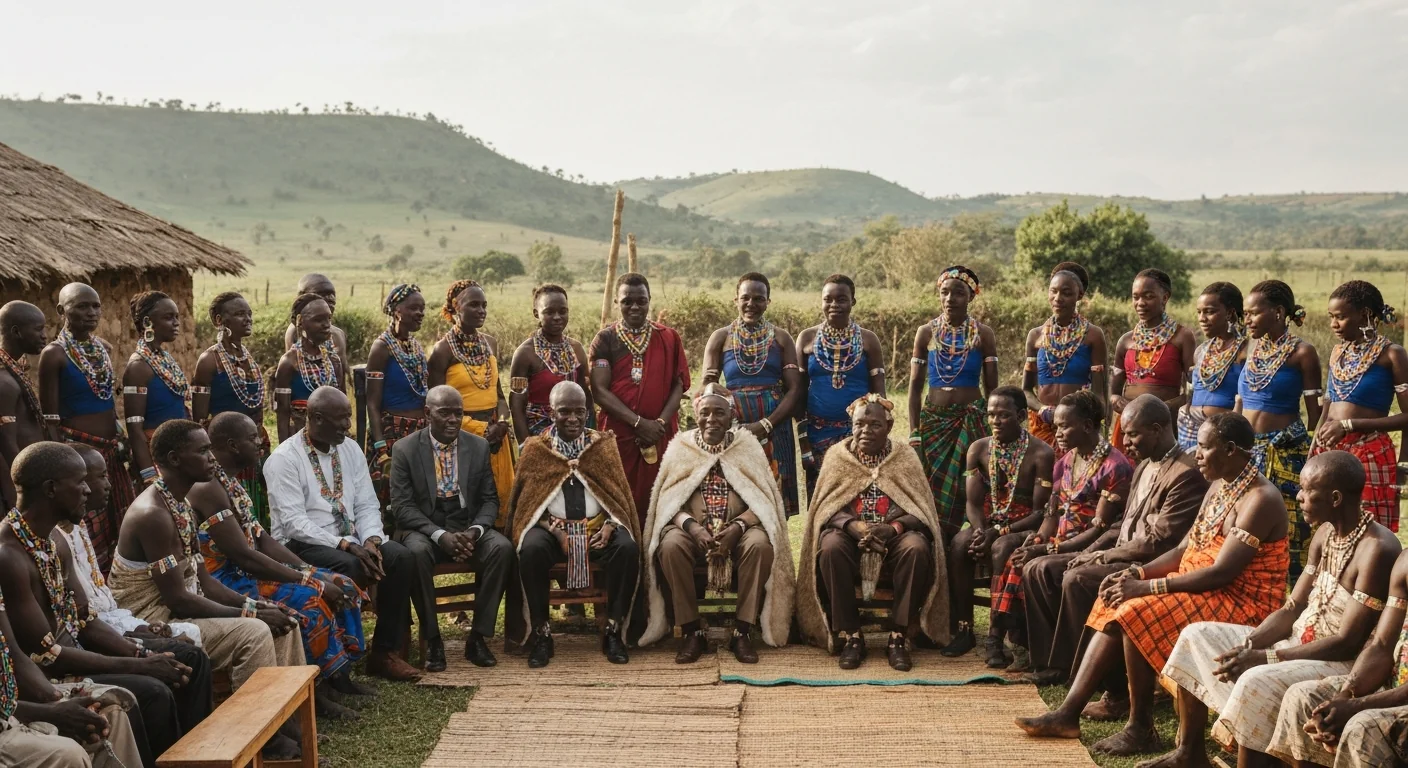
All nine communities share the foundational elements of Mijikenda marriage: family-centred negotiation, bride price (mahali or community-specific terms), ancestral blessing, communal singing and dance, and the central role of elders in legitimising the union. Individual differences reflect geography, religious influence, and historical contact with Arab, Swahili, and later European cultures.
Origins and the Sacred Kayas
To understand Mijikenda marriage, you must first understand the kaya — the sacred forest homestead that is the spiritual and cultural anchor of Mijikenda identity.
According to Mijikenda oral history, their ancestors originated in Shungwaya (Singwaya) on the Somali coast and migrated southward, driven by pressure from the Oromo. As they settled along the coastal ridge, each of the nine communities built a kaya — a fortified, forested homestead that served as their centre of community life, governance, and spiritual practice.
The kayas are not merely historical sites. They are living sacred spaces where ancestral spirits reside and where community decisions — including matters of marriage — were traditionally sanctioned. In 2008, UNESCO inscribed the Mijikenda Sacred Kaya Forests on the World Heritage List, recognising their outstanding cultural significance.
Marriage among the Mijikenda is a covenant not just between two families but between the couple and their ancestral community. A wedding properly conducted according to tradition received the blessing of the ancestors. A marriage conducted carelessly risked ancestral displeasure — a serious matter in Mijikenda cosmology.
Prerequisites for Marriage
Marriage in Mijikenda communities was not open to just anyone at any age. Several prerequisites applied:
Initiation rites for men: Boys were required to undergo circumcision — a rite of passage from boyhood to manhood — before they were considered marriageable. This remains a standard practice in most Mijikenda communities today.
Women’s preparation: Girls, typically between the ages of 16 and 20, attended structured training sessions organised by elder women. These sessions were not casual — they were formal preparation for the duties of a wife, mother, and woman in Mijikenda society: household management, child-rearing, agricultural knowledge, and the social protocols of a married woman.
Clan considerations: Marriage within one’s own homestead was discouraged. Most marriages were negotiated between different clans or family groups, ensuring the community’s social networks expanded through each union. In Duruma tradition specifically, the bride joins the husband’s clan if it differs from hers, and most marriages occur within the broader network of the 14 recognised clans.
How Couples Met: Traditional Pathways
Before family negotiations began, young people found each other through culturally sanctioned channels:
Matchmaking by parents: A mother might present her daughter at community gatherings, making her visible to potential suitors and their families. This was particularly common for families with daughters of high social standing.
Dance competitions (Pingano): Perhaps the most vibrant pathway, young people came together at pingano — competitive dance events where men and women performed dances including the Sengenya and Mabumbumbu. These events, held in gathering spaces called Kinyaka, were socially sanctioned occasions for young people to interact and for men to identify potential partners.
Social events: Funerals, harvests, and community ceremonies provided additional spaces where young people met under the watchful presence of their wider community.
Mutual interest: Even in arranged marriages — where parents had already identified a suitable match — mutual agreement between the prospective partners was expected. A young woman who strongly objected to a proposed match had culturally recognised avenues to express her reluctance.
The Giriama Kuhaswa — Traditional Wedding Ceremony
The kuhaswa is the Giriama word for the traditional wedding ceremony — a multi-stage process rooted in family negotiation, ceremonial blessing, and communal celebration. While the Digo, Duruma, and other sub-tribes have their own variations, the Giriama kuhaswa provides the most thoroughly documented model of Mijikenda marriage and is described in detail below.
Step 1: The First Family Visit — “We Have Come for the Cucumber”
The traditional Giriama marriage begins when the parents of the bridegroom visit the bride’s family home. The bridegroom’s father introduces himself with a ceremonial opening phrase:
“Fudzire mala Mudzungu wa utsunguni” — “We have come to look for the cucumber, which is painful.”
The bride’s father responds:
“Nauhambale” — “Let the painful cucumber spread.”
This exchange — poetic, oblique, and laden with meaning — acknowledges that marriage is a joyful but weighty matter. The cucumber metaphor speaks to the bittersweet nature of releasing a daughter: painful for the family she leaves, yet a source of growth and sustenance for the new household she joins.
Once this greeting is exchanged, the bride’s father calls her and asks her a question designed to take time to answer. The intention is not to hear her response — it is to allow the groom’s parents to observe her character, composure, and body language. If they are satisfied, a date is set for the bridegroom to visit and see the bride for the first time.
Step 2: The Groom’s Visit — “Mautu Ni Tototo”
On the appointed day, the father-in-law calls for his daughter to bring water to the guests. The bridegroom is not particularly thirsty — but he takes the opportunity to observe the bride’s movements, presentation, and manner. When he is satisfied, he conveys his approval to the bride’s grandmother with the phrase:
“Mautu ni tototo” — “It is good.”
Following this, the bride and groom are placed in a room together to formally introduce themselves. The groom addresses her:
“Nidzire haha henu Kwa sababu nidza fahirwa ni uwee, je unanambadze?” — “I have come to your home because I have a passion for you, what do you say about that?”
Her answer sets the direction of what follows.
A significant detail that follows in traditional practice: days after the initial visit, the groom sends a message to the bride’s grandmothers using a metaphor — ‘whahindira mhunga wangu’ — which confirms that the bride was found to be a virgin. In Giriama culture, this was a source of profound pride and honour for the bride’s family.
Step 3: Kuhaswa — Bride Price Negotiation
The parents of the bridegroom return to the bride’s home to negotiate the bride price (ndama — a bull, plus additional gifts). The central negotiated element is:
- Ndama — a bull, the primary livestock component of the bride price
- Kadzama mirongomiri na nane — eight litres of liquor (mnazi — palm wine), to be sent twenty-eight times
The liquor component reflects the coastal Mijikenda relationship with the palm tree — a symbol of abundance and hospitality along the Kenya coast. Palm wine is not simply a beverage; it carries ceremonial significance in sealing agreements between families.
Once a date is fixed for delivering the bull and the liquor, the ceremony is held, and the bride accompanies the groom’s family home. This moment — the bride leaving her natal home — is marked by song.
Step 4: The Farewell Songs
As the bride departs her family home, women sing farewell songs that are among the most emotionally resonant moments of the entire wedding. The main song carries this meaning:
“Nangoza mwanangu, dama mwana anenda, zho kwaatu, anenda kwa mulumewee… dede, mudzungu wa utsunguni nau hambale”
“I am nursing my daughter dama, the daughter is going to people’s home, to her husband, my dear — the cucumber of pain let it spread.”
The songs remind the bride that she now belongs to her husband’s family. They are at once a celebration, a blessing, and an honest acknowledgement of loss. Both families weep and sing simultaneously — a deeply human moment that transcends the formality of everything that preceded it.
Step 5: The Ceremony — Gifts, Blessings, and Ritual Service
At the wedding ceremony itself, a senior elder offers a voya — a prayer that blesses the couple and invokes ancestral protection over the new household.
Family Gifts and Requests
The ceremony includes a structured exchange of gifts between families:
- The father-in-law asks for a blanket as a gift, with which he blesses the couple
- The mother-in-law asks for a mkamba wa kureka mwana — the kanga used for carrying a baby — signifying her hope for grandchildren and her role in the new generation
These requests are not negotiations — they are symbolic expressions of what each elder most values for the new union.
The Groom’s Family’s Contributions
Beyond the bride price itself, the groom’s family brings two specific items on the wedding day:
- Uchi wa malozi — liquor for the dowry payment (part of the formal bride price)
- Uchi wa mwana — liquor for the child, signifying that any child born in the marriage belongs to the man
The manzi (palm wine) is poured into a mboko (goblet) and consumed by the men present during the ceremony. The remaining mnazi is poured into a mvure — a traditional Giriama utensil — and given to the bride’s mother, who may keep it or consume it later.
A mbuzi ya ini — literally “goat for liver” — is slaughtered and eaten by everyone present on the day of the ceremony. The groom’s family brings this goat, and it is prepared communally.
The Blessings
The bride is formally blessed and asked to agree with all that her husband tells her. But the blessing is not one-sided. The father-in-law and mother-in-law both take water, swirl it in their mouths, and blow it onto the chests of both the bride and the bridegroom — a physical blessing that invokes health, prosperity, and harmony for the new couple.
The groom receives his own instruction: he is told that the bride is not a ball for him to beat. He is advised to protect her in happiness and in difficulty. This public counsel to the groom reflects the Mijikenda community’s responsibility to hold both partners accountable within a marriage.
The Bride’s Acts of Service
During the ceremony, the bride performs symbolic acts that demonstrate her readiness for marriage:
- She serves food to the groom and guests, beginning by inviting her husband to wash his hands
- She serves water in a kaha (vessel), starting with her husband and continuing to other guests — a gesture of hospitality and the forming of a new bond between families
- She carries firewood to cook for her husband on their wedding night
- She is given chiga (steak) to roast for him
- She grinds maize using a kinu and iwalwa (traditional grinding tools), demonstrating that she is hardworking and ready for the responsibilities of a household
These acts are not simply domestic demonstrations. They are ritual performances witnessed by the community — public evidence of competence, willingness, and character.
The Name Ceremony
Before the couple can fully marry according to Giriama custom, a remarkable practice takes place: they must be adopted by two different families who symbolically approve the marriage. From the moment their name is drawn by these families, they officially belong to the tribe in a new capacity — not merely as children of their birth families, but as adults recognised by the broader community.
What Do Brides and Grooms Wear at Mijikenda Weddings?
Giriama wedding attire reflects the coastal environment and the community’s aesthetic sensibility.
Women’s traditional dress — the Hando: The signature women’s costume is called hando — a combination of a sarong tied at the waist and a matching bodice. The colour signifies age: blue for older women, white for younger women (brides and young unmarried women). The hando is distinctive on the Kenya coast and recognisable as Giriama at a glance.
Men’s traditional dress: Grooms wore a cowhide and carried a bow (uta) — symbols of strength and the ability to protect and provide for a wife. Today, men often wear kanzu (white robes) or modern suits, sometimes with a traditional cloth element incorporated.
Bride decorations: The bride was decorated (mapambo) by her aunts before the ceremony, wearing a rinda and leso around her waist — given to her by her somo (mentor), the elder woman assigned to guide her preparation for marriage. This mentorship relationship between a bride and her somo is a significant element of Giriama marriage preparation.
Music and Dance: The Soul of a Mijikenda Wedding
The Giriama and Digo are among Kenya’s most accomplished percussionists and dancers. The ngoma — drum — is the heartbeat of every Mijikenda celebration.
Sengenya Dance
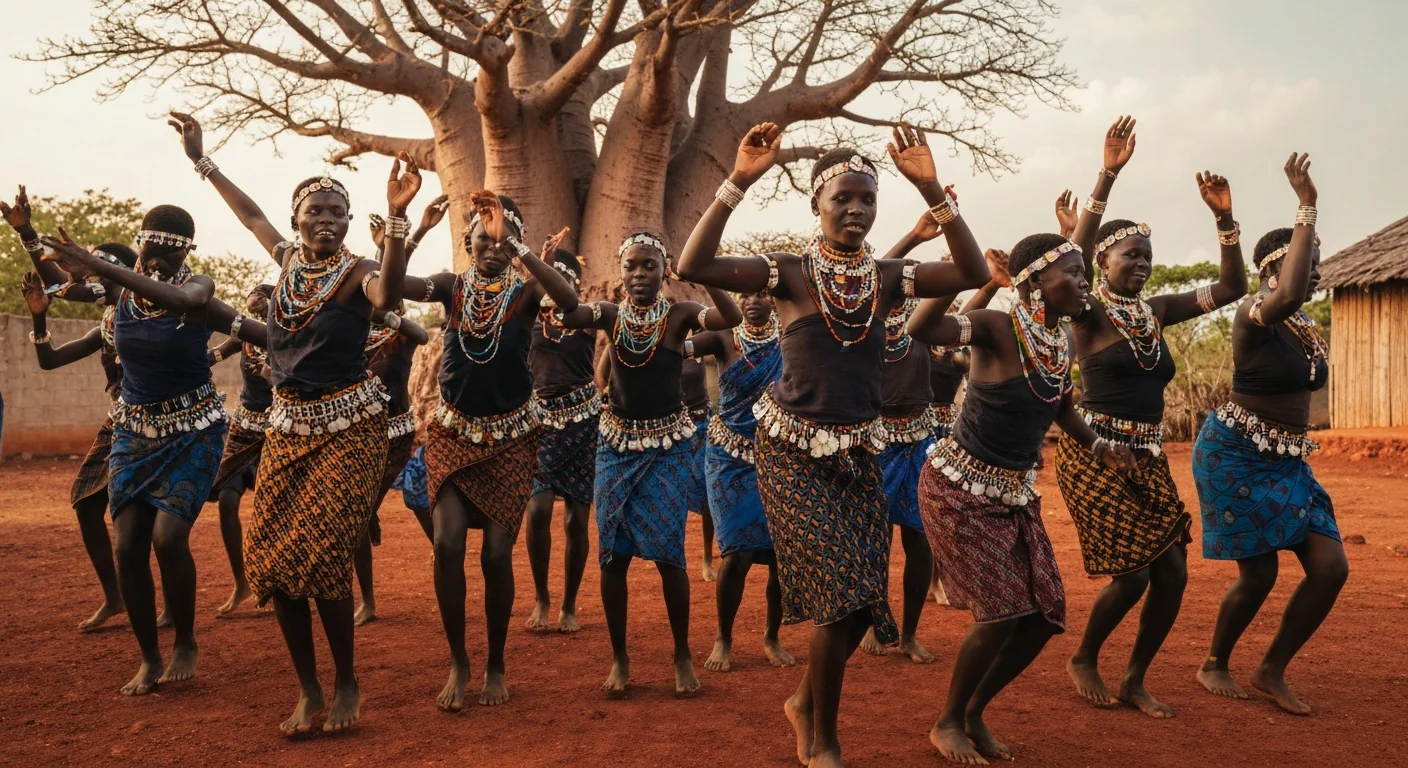
The Sengenya is one of the most famous Mijikenda dances and a centrepiece of wedding celebrations. Men and women perform it together, using fast footwork, body movements, and synchronized clapping to create a lively, infectious rhythm. The dance brings people together, strengthening community bonds and expressing joy.
Sengenya has specific movements reserved exclusively for wedding occasions — the mserego, for example, is only performed at marriage ceremonies. This means the dance itself marks the occasion as singular and sacred.
Mabumbumbu Dance
The Mabumbumbu is another vibrant dance performed at weddings and other celebrations. Like the Sengenya, it is associated with the pingano dance competitions where young people traditionally met and courtship was conducted in a community context.
Ngoma — The Drum Culture
Ngoma means drum, and the instrument gives Mijikenda music its character. Traditional weddings feature orchestral drumming performed by skilled percussionists, with each drum pattern carrying specific ceremonial meaning. The rhythm of the ngoma changes with each stage of the wedding — signalling transitions, calling people together, and anchoring the ceremony in sound.
How Do Traditions Differ Across the Nine Mijikenda Sub-tribes?
While the Giriama tradition provides the clearest template, each Mijikenda sub-tribe brings its own character to the wedding process.
The Digo: Islamic Influence
The Digo, who inhabit the southern coastal area straddling the Kenya-Tanzania border, have been more deeply influenced by Islam than any other Mijikenda sub-tribe. Nearly all Digo are Muslim, and their weddings reflect this:
- Traditional Islamic nikah ceremonies are performed alongside or instead of some customary rites
- Modest dress codes apply during the formal ceremony
- The Digo language (Chidigo) shapes the ceremony’s verbal traditions
Despite Islamic influence, the Digo maintain strong ties with ancestral practices. Bride price among the Digo traditionally included four heads of cattle, two goats or sheep, and palm wine. Their connection to Arab trade culture historically gave them a higher standard of living than many neighbouring communities — a factor that influenced bride price expectations.
For those curious about how Islamic and customary traditions intersect in Kenya, see our article on Muslim nikah registration in Kenya for comparison.
The Duruma: Dual Descent
The Duruma, who inhabit the hinterland around Mombasa, maintain a distinctive dual descent system — recognising both matrilineal (ukuche) and patrilineal (ukulume) lineage. This shapes how families are identified and how marriage negotiations are conducted. In a traditional Duruma household, each wife in a polygamous arrangement lives in a separate hut — a spatial organisation that reflects the family structure the marriage creates.
Shared Traditions
Across all nine sub-tribes, the following elements are consistent:
- Family-centred negotiation — the marriage is a family agreement, not merely a personal one
- Elder authority — no significant marriage decision is made without senior guidance
- Bride price — some form of material exchange from groom’s family to bride’s family is universal
- Communal witnessing — the wedding is a community event, not a private ceremony
- Ancestral blessing — the approval of ancestors is sought through prayer and ritual
Modern Mijikenda Weddings
Contemporary Mijikenda couples navigate between deep tradition and modern life with increasing creativity.
Multi-Layer Ceremonies
Most modern Mijikenda weddings involve at least two, and often three, distinct ceremonies:
- Traditional kuhaswa — at the bride’s family home, following ancestral custom
- Religious ceremony — church (for Christian families) or Islamic nikah (for Muslim families, especially Digo)
- Civil registration — ensuring legal recognition at the Attorney General’s office
- Modern reception — a venue-based celebration with catering, a sound system, photography, and speeches
Managing all of these across different venues and guest lists is complex. Harusi Hub’s multi-event management feature was built for exactly this — you can create separate events for the kuhaswa, the church/mosque ceremony, and the reception, each with its own date, venue, and guest RSVP list. See the guide to managing wedding events to set it up.
Bride Price in Modern Terms
Traditional Mijikenda bride price in the form of cattle and palm wine has evolved significantly. Modern coastal bride price typically ranges from KES 50,000 to KES 500,000, depending on family background, the bride’s education level, and the families’ economic positions. Families with university-educated daughters often negotiate higher amounts, with a degree commanding as much as KES 100,000 more than the base amount.
Cash has largely replaced livestock as the primary currency of bride price negotiations, though symbolic animals — a goat or bull — are sometimes included to honour tradition.
What Endures
Despite modernisation, the following elements persist in most Mijikenda weddings:
- The opening ceremonial phrases — “Fudzire mala Mudzungu wa utsunguni” / “Nauhambale” — are still used by families who value cultural continuity
- Palm wine (mnazi) remains a ceremonial presence at traditional kuhaswa ceremonies
- Elder blessings — the water-blowing blessing from both the father-in-law and mother-in-law onto the couple’s chests — continues in traditional ceremonies
- The farewell songs as the bride departs her parents’ home remain among the most emotionally significant moments of the process
- Sengenya dance features prominently at traditional wedding celebrations and is experiencing growing appreciation among younger generations
For insights into how Kenyan couples are navigating this balance, see how modern couples are adapting traditions and plan your traditional and white wedding weekend.
Planning a Mijikenda Wedding: Practical Guidance
Timeline
Allow significant time for the full process:
- Matchmaking and family introductions — 2 to 6 weeks from initial contact to the groom’s family first visit
- Kuhaswa preparations — once the first visit is complete, both families need time to gather gifts, arrange the bull and palm wine, and prepare food for guests
- The kuhaswa ceremony — typically a full day at the bride’s family home
- Religious ceremony — coordinate with the church or mosque well in advance
- Civil registration — schedule at the civil registry with adequate lead time
Use the Harusi Hub wedding planning checklist to track each stage and ensure nothing is missed across the multiple events.
Budget
The kuhaswa requires planning for:
- The ndama (bull) — the primary bride price item
- Palm wine (mnazi) — a significant quantity is required for the ceremonial drinking component
- Mbuzi ya ini — the wedding day goat
- Food for all guests across both families
- The family’s blanket and kanga gifts to in-laws
For detailed budget planning tools, see the Kenya wedding budget guide and use Harusi Hub’s budget tracker to manage expenses across all your wedding events. The budget setup guide walks you through creating line-item budgets for each event.
Guest Management
Mijikenda weddings involve different guest compositions at each stage — the kuhaswa is a family and close community affair, while the reception may be open to a much wider circle. Digital invite links let you tailor invitations for different guest groups — formal traditional ceremony invitations for elders, and more casual reception invites for younger guests and friends — all managed from one dashboard.
Honouring the Kaya Connection
If your family maintains connections to one of the nine Kaya forests, consider incorporating a ceremony of acknowledgement or blessing at the kaya into your wedding journey. This is not mandatory, but for families who value their ancestral connection to these UNESCO-recognised sacred spaces, it adds a layer of spiritual depth that no reception venue can replicate.
Frequently Asked Questions
What does “Mijikenda” mean?
Mijikenda means “nine homes” in Swahili — a direct reference to the nine distinct Bantu communities (Giriama, Digo, Duruma, Chonyi, Kambe, Kauma, Jibana, Ribe, and Rabai) who share a common origin and cultural heritage along the Kenya coast.
What is kuhaswa in a Giriama wedding?
Kuhaswa is the traditional Giriama wedding ceremony — encompassing the family visits, bride price negotiation, the departure songs, and the ceremonial rituals that transfer the bride from her natal family to her husband’s. It is the cultural cornerstone of the Giriama marriage process.
What is the bride price in a Mijikenda wedding?
Traditional bride price included a bull (ndama) and ceremonial amounts of palm wine. Modern Mijikenda bride price is negotiated in cash, typically ranging from KES 50,000 to KES 500,000, depending on family background and the bride’s education level. Coastal communities blend Swahili, Arab, and traditional customs, creating unique expectations for each negotiation.
How is a Digo wedding different from a Giriama wedding?
The Digo wedding is more strongly influenced by Islamic tradition, incorporating an Islamic nikah ceremony. The Digo speak Chidigo, have been involved in Arab trade for centuries, and maintain Islamic observance more consistently than most other Mijikenda sub-tribes. Both communities share the foundational Mijikenda marriage framework — family negotiation, bride price, elder blessings — but the Digo ceremony has an Islamic overlay that shapes attire, prayer, and ceremony structure.
What is the significance of the “cucumber” phrase in a Giriama wedding?
“Fudzire mala Mudzungu wa utsunguni” — “We have come to look for the cucumber, which is painful” — is the ceremonial opening of the Giriama marriage negotiation. The cucumber metaphor acknowledges that marriage is simultaneously joyful and bittersweet: a daughter’s departure is painful for the family she leaves, yet the union she creates is a source of growth and sustenance. The bride’s father’s response — “nauhambale,” let it spread — accepts both the joy and the pain with grace.
What is the sengenya dance?
Sengenya is one of the most famous Mijikenda dances, performed by men and women together with fast footwork, body movements, and synchronised clapping. It is performed at weddings, funerals, national festivals, and community gatherings, with specific movements (mserego) reserved exclusively for wedding ceremonies. The Sengenya is particularly associated with the Giriama and Digo communities.
What is the hando?
The hando is the traditional Giriama women’s costume — a combination of a sarong tied at the waist and a matching bodice. Blue hando are worn by older women; white by younger women and brides. It is one of the most visually distinctive elements of a Giriama wedding celebration.
The Mijikenda Wedding Legacy
The Mijikenda marriage tradition is a testament to what happens when nine distinct communities share an origin, a coastline, and a commitment to honouring their ancestors through the rituals of daily life. The kuhaswa is not bureaucracy — it is relationship-building. The farewell songs are not performance — they are honest grief and genuine celebration, held together simultaneously. The blessings, the ngoma drums, the sengenya, the palm wine, the hando — all of it exists to launch two people into a marriage with the full weight of their community behind them.
Coastal Kenya has always been a place where cultures meet and transform each other. Arab traders, Swahili merchants, Portuguese explorers, British administrators — all have touched the Mijikenda world and left their mark. The wedding traditions that endure today are not frozen relics; they are living practices that have absorbed, adapted, and survived. They are stronger for it.
If you are planning a Mijikenda wedding — in Kilifi, Kwale, Mombasa, or Nairobi — honour the stages that matter most to your family. Bring the elders. Sing the farewell songs. Pour the palm wine. And know that in doing so, you are adding another chapter to one of Kenya’s most extraordinary cultural stories.
You may also enjoy reading about Luo ayie ceremony, Meru wedding traditions, and Kikuyu ruracio wedding traditions for comparison across Kenya’s diverse communities.
Planning your Mijikenda coastal wedding?
Manage your kuhaswa, religious ceremony, and reception across multiple events — with guest lists, RSVPs, and budget tracking all in one place.
Start Planning FreeFor more on traditional ceremonies across Kenya’s diverse communities, read our Complete Guide to Kenyan Wedding Traditions.