Luo Ayie Ceremony: Complete Guide (What to Expect & What to Bring)
Everything you need to know about the Luo ayie ceremony — what it means, the step-by-step process, what to bring, gifts, food, costs, and modern tips.
Luo Ayie Ceremony: Complete Guide (What to Expect & What to Bring)
You have proposed, she said yes, and now everyone is asking: “When is the ayie?” If you have never been to a Luo ayie ceremony — or if you are planning one and have no idea where to start — this guide will walk you through everything you need to know.
Among the Luo of Western Kenya, the ayie ceremony is not a formality or a warm-up act. It is the moment the marriage becomes real. Before the nyombo cattle arrive, before the meko procession, before any church service — there is ayie. It is the mother’s ceremony, and without it, nothing else can begin.
The word ayie means “I agree” in Dholuo. It refers specifically to the moment the bride’s mother accepts the union and gives her consent. That consent is irreplaceable. In Luo culture, the bond between a mother and her daughter is sacred, and no marriage can be sealed without the mother’s blessing.
This guide covers everything: what ayie is, who attends, what to bring, how the ceremony unfolds, what it costs, and how modern couples are adapting the tradition for today.
For a fuller picture of Kenyan wedding traditions across communities, read our Complete Guide to Kenyan Wedding Traditions.
What Happens Before the Ayie Ceremony?
Before you can plan an ayie, there is a step that must come first: ng’eyo dala (knowing the home).
This is an informal introductory visit where the groom — accompanied by a few relatives — travels to the bride’s family home. He brings a modest gift (sugar, tea, bread, or a small cash contribution) as a gesture of goodwill. The purpose of ng’eyo dala is simple: to signal serious interest and allow both families to observe each other before any commitments are made.
There are no negotiations at ng’eyo dala, no dowry discussions, no formal ceremony. It is a door being opened, not a deal being sealed. Once both families have met and are satisfied, the jagam (the intermediary appointed to speak for the groom’s side) begins making arrangements for the ayie itself.
A jagam is essential. He is typically a senior uncle or respected elder on the groom’s side, and his role is to communicate between the two families, agree on dates, and pre-negotiate the envelope amounts before the ceremony day arrives. Arriving at a Luo homestead without a jagam is considered presumptuous, even in 2025.
Who Attends the Ayie Ceremony?
Knowing who is and is not allowed at ayie is critical — this is where many first-timers get caught off guard.
From the bride’s family:
- Both parents
- Wives of the bride’s father (all wives are expected to attend)
- Uncles from the father’s side and their wives
- Grandmothers, aunts on the paternal side
- Siblings of the bride
A critical rule: Uncles from the mother’s side and their family members are not permitted to attend the ayie ceremony. This rule is strictly observed and departure from it causes real offence.
From the groom’s side:
- The groom himself (though he plays a relatively quiet role)
- His jagam (who does most of the talking)
- Senior male relatives — uncles, brothers, a few elders
- The groom’s parents (if they are attending)
The ceremony takes place at the bride’s parents’ home, and it is the groom’s first official visit. Any earlier visits — meeting the parents casually, attending family events — are considered informal and outside the protocol. The ayie is where the groom formally enters the picture.
The Ayie Ceremony: Step by Step
1. Arrival of the Groom’s Party
The groom and his delegation arrive at the bride’s home at a reasonable time in the morning or early afternoon. They are formally received and shown to a seating area — typically outdoors under shade, or in the main sitting room if the gathering is smaller.
The groom himself tries not to draw attention. He is expected to be humble, relatively quiet, and deferential to his elders throughout the ceremony. The jagam speaks on his behalf.
2. Formal Introductions
Once both delegations are seated, the jagam introduces the groom’s party to the bride’s family. Each relative is named and their relationship to the groom is explained. The bride’s family does the same on their side. This mutual introduction establishes who everyone is and sets the social context for the negotiations that follow.
3. Envelope Presentation
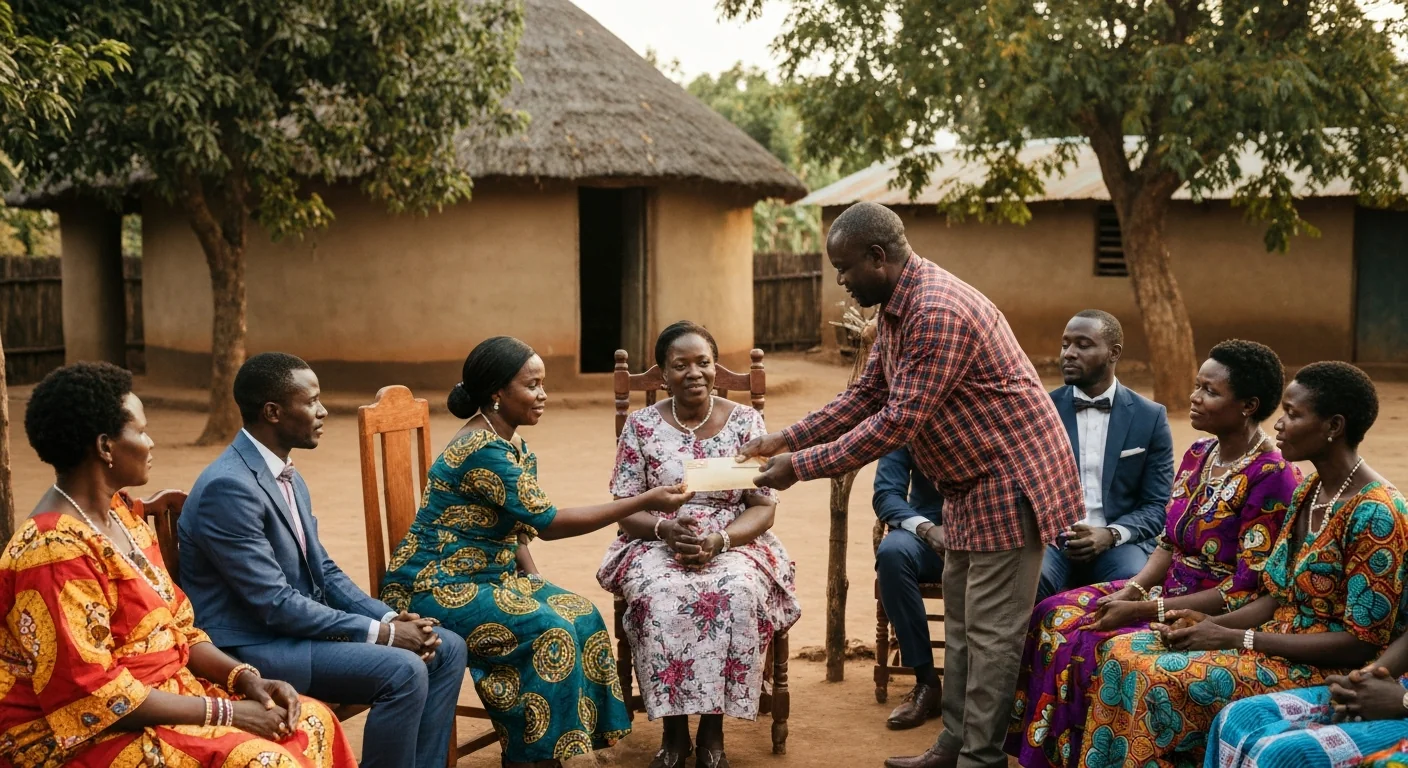
This is the most structurally important moment of the ceremony. The groom’s delegation presents cash envelopes — specific amounts designated for specific people on the bride’s side. Every envelope is named and intentional.
The envelopes typically cover:
- The bride’s mother — her personal ayie envelope, the most important one. The amount was agreed in advance between the jagam and the bride’s family representatives.
- The bride’s father
- Senior aunts and uncles
- Grandmothers
- The cooks who prepared the food — this is non-negotiable in Luo culture and is a mark of genuine respect
The amounts are not fixed by any universal rule — they depend on what the two families agree through the jagam before the day. However, there is a general sense of “ruling bride price” that circulates in different Luo communities, and families know what the current range is. The bride’s mother may negotiate for more; the groom’s jagam will respectfully push back. Both sides expect this, and it is part of the ceremony’s texture.
For uncles and older relatives who enjoy a drink, the groom may also bring bottles of wine or spirits in addition to their cash envelope. This is appreciated and signals cultural attentiveness.
4. The Bride Feeds the Groom
This is the moment that defines ayie for anyone who has witnessed it.
The bride prepares a full meal from scratch — kuon (ugali), traditional vegetables (osuga, akeyo), beef or chicken — and she serves the groom in front of both families. The groom receives a whole fried chicken and a knife, the mark of honor reserved for a respected son-in-law.
This is not simply hospitality. It is a public demonstration. The bride is showing her family — and the groom’s family — that she can cook, that she accepts this man, and that she is ready for marriage. The groom’s mother (maro) is watching closely; she wants to know that her son will be well fed.
A sheep is slaughtered at the ayie ceremony, signifying the seriousness of the occasion and the bond being formed between the two families. The meal is a communal feast involving everyone present.
5. The Mother’s Consent
With the envelopes presented and the meal complete, the bride’s mother gives her formal consent. This is the moment the ceremony is named for — the ayie itself.
The mother’s acceptance releases her daughter into this union. In Luo culture, this moment carries the full weight of the family’s blessing. Once she agrees, the marriage is considered valid in the eyes of the community.
Under Kenya’s Marriage Act 2014, customary marriages — including those completed through ayie — are legally recognized. Many Luo couples consider this ceremony their true wedding day. Any church or civil ceremony that follows is a formality, not the foundation.
6. End of the Ceremony
Once the envelopes have been distributed, the food eaten, and the consent given, the groom’s delegation prepares to leave. The groom’s party must leave before 6:00 PM — staying late is considered disrespectful and a potential source of conflict between the families.
The bride does not leave with the groom on the day of ayie. She typically joins him a few days later — usually within three to seven days — once her family has had time to prepare her departure and say their goodbyes.
From the date of ayie, the groom’s family has a maximum of five weeks to return to begin the nyombo (cattle dowry) negotiations with the bride’s father.
What to Bring: The Full Ayie List
Here is a practical checklist for the groom’s side preparing for ayie:
| Item | Notes |
|---|---|
| Cash envelopes | Pre-agreed amounts for named relatives, prepared in advance |
| Envelope for the mother | The central ayie gift — most important |
| Envelope for cooks | Non-negotiable; failure to give this is disrespectful |
| Bottles of wine or spirits | For elder uncles who enjoy a drink |
| Modest household gifts | Sugar, tea, bread, rice — optional but appreciated |
| Smart traditional or formal attire | The groom and his delegation should dress well |
The bride’s family is responsible for all the food at the ceremony. The groom’s side does not bring the main food — they bring the gifts.
How Much Does a Luo Ayie Ceremony Cost?
Ayie costs are variable and depend on the families involved. Here is a realistic breakdown:
| Expense | Estimated Range |
|---|---|
| Mother’s ayie envelope | KES 5,000 – KES 30,000+ |
| Other family envelopes (combined) | KES 10,000 – KES 50,000 |
| Cook envelopes | KES 2,000 – KES 10,000 |
| Spirits/wine for elders | KES 2,000 – KES 8,000 |
| Transport and accommodation | KES 5,000 – KES 30,000 |
| Attire and personal preparation | KES 3,000 – KES 15,000 |
| Total (groom’s side) | KES 27,000 – KES 143,000+ |
The bride’s family bears the cost of food and hosting, which adds significantly to the overall ceremony spend — a sheep must be slaughtered, a full feast prepared, and guests hosted for most of the day.
For help tracking your ayie budget alongside the rest of your wedding expenses, Harusi Hub’s budget tracker lets you set per-event budgets and track every line item in one place. See the Set Up Your Budget guide to get started, or read our Kenya wedding budget guide for a full breakdown of what to expect.
What Should You Expect as a Guest at an Ayie?
If you are attending a Luo ayie ceremony as a guest, here is what you should know:
Dress well. Ayie is a formal occasion. Women wear their best dresses, often with matching headwraps. Men wear suits or smart shirts and trousers. Arriving underdressed is noticed and quietly commented upon.
Follow the seating. Both delegations are seated in organised groups. Sit with the side you came with and wait to be directed elsewhere. Do not wander between sides casually.
Be patient. Ayie ceremonies can last several hours. The introductions, envelope presentations, food preparation, and meal together take time. There is no rushing this.
Respect the protocols. If you are on the groom’s side, do not initiate informal conversations with the bride’s relatives until after introductions. If you are on the bride’s side, receive the groom’s party warmly but formally.
Expect real food. A Luo ceremony without an abundant feast is unthinkable. You will eat well.
Modern Adaptations
Luo families, particularly those in Nairobi and other cities, are adapting ayie to suit modern realities without abandoning the core tradition.
Urban logistics. When the bride’s family lives in Nairobi rather than in Nyanza, the ceremony is held in the city — often at the family home or a hired venue. The same protocols apply regardless of location.
Combined celebrations. Some modern couples hold ayie and nyombo on consecutive days (or even the same weekend) when families are travelling from far away. Elders generally accept this as practical necessity, provided both ceremonies are conducted properly.
Hybrid ceremonies. Couples who have grown up outside Luo communities may hold a simplified ayie that retains the core elements — the jagam, the envelopes, the mother’s consent, the meal — while abbreviating some of the extended protocols.
Digital coordination. Managing two families, multiple elders, and the logistics of travel across different cities is genuinely complex. Tools like Harusi Hub’s event manager help couples track their traditional and modern events in one place, share details with both families, and manage RSVPs across different occasions. See how to Manage Your Wedding Events for step-by-step guidance.
Frequently Asked Questions
Do we need a jagam or can we negotiate directly?
You need a jagam. Direct negotiation between the groom and the bride’s family bypasses an important cultural buffer. The jagam protects both families from awkwardness, ensures terms are agreed before the ceremony day, and gives the process the dignity it requires.
What if the bride’s mother has passed away?
The ayie still takes place. A senior female relative — the bride’s paternal grandmother, eldest aunt, or her mother’s closest sister — steps into the role. The envelope that would have gone to the mother is given to this designated relative. The principle of maternal consent is upheld through representation.
Is the ayie legally recognized as a marriage?
Yes. Under the Marriage Act 2014, a customary marriage completed through ayie is legally recognized in Kenya. You do not need to also have a church or civil ceremony for the marriage to be valid — though many couples choose to do both.
Can we do ayie and nyombo on the same day?
Traditionally, no. Ayie and nyombo are separate ceremonies that serve different purposes — ayie involves the mother, nyombo involves the father and cattle. Many families accept them being done in close succession, but they are rarely combined into a single ceremony.
How far in advance should we plan?
Give yourself at least two to three months. You need time to appoint a jagam, coordinate between families, agree on envelope amounts, and arrange transport and accommodation for both delegations. Rushing the planning risks misunderstandings between families.
For help planning multiple traditional events alongside your white wedding, read our guide on Planning a Traditional and White Wedding Weekend and see how other Kenyan couples are adapting traditions for modern life.
If you are also planning for nyombo — the next stage in the Luo marriage process — read our detailed guide: Luo Nyombo (Bride Price): How Much and What’s Involved.
Planning your ayie ceremony?
Coordinate ayie, nyombo, and your white wedding across multiple events — track your budget, manage guests, and keep both families on the same page.
Start Planning Free