Luo Nyombo (Bride Price): How Much & What's Involved
A complete guide to Luo nyombo — what it is, the cattle tradition, how negotiations work, typical costs in Kenya, and modern adaptations for urban families.
Luo Nyombo (Bride Price): How Much & What’s Involved
“How many cows?” It is the first question anyone asks about a Luo wedding — and it is the right one. Nyombo is the structural foundation of Luo marriage, and understanding it is the difference between a smooth process and months of confusion.
In the Luo marriage tradition, there are two ceremonies that make a marriage real: ayie, which is the mother’s ceremony, and nyombo, which is the father’s ceremony. Ayie gives the emotional blessing. Nyombo — also called keny — delivers the structural one.
Nyombo is the formal payment of bride price from the groom’s family to the bride’s father. It is paid in cattle. It is negotiated by elders. And when the cows cross through the gate of the bride’s family homestead, the marriage is, in the eyes of Luo custom, complete.
This guide explains what nyombo involves, how the ceremony unfolds, what cattle and cash are typically expected, how negotiations work, and what modern couples are doing to adapt the tradition.
For a full overview of Kenyan wedding traditions across communities, read our Complete Guide to Kenyan Wedding Traditions. For a detailed breakdown of the ceremony that comes before nyombo, see our Luo Ayie Ceremony Guide.
What is Nyombo?
Nyombo (keny in some Luo sub-communities) is the formal bride price paid by the groom’s family to the father of the bride. While ayie is about the mother’s consent and is paid in cash envelopes, nyombo is about the father’s satisfaction and is centered on cattle.
The two ceremonies serve different purposes and cannot be merged. Ayie must happen first — it marks the beginning of the couple’s recognized union. Nyombo follows, completing the obligations to the bride’s father and finalizing the marriage in the structural, property sense.
The significance of nyombo goes beyond tradition. Under Luo custom, if a husband has not paid nyombo, his wife cannot be buried on his land when she dies. She must instead be buried at her parents’ home. Burial and ancestral land are deeply intertwined in Luo culture, and this consequence ensures nyombo is never treated as optional, even by families that have modernized in other ways.
The Order of Nyombo
There is a rule about nyombo that catches many people off guard: a younger daughter’s nyombo cannot be negotiated before her elder sister’s.
If you are marrying the second-born daughter and the first-born is not yet married, the bride’s family may delay or decline to enter nyombo negotiations until the elder sister’s dowry has been resolved first. This rule protects the order of the family and ensures no daughter is bypassed or overlooked. It applies even in cases where the elder sister is in a different relationship or living abroad.
This means that when you are planning your timeline, you may need to factor in the situation of your bride’s siblings — particularly if she has an unmarried elder sister.
Nyombo Ceremony: How It Unfolds
Day One: Arrival with No Ceremony
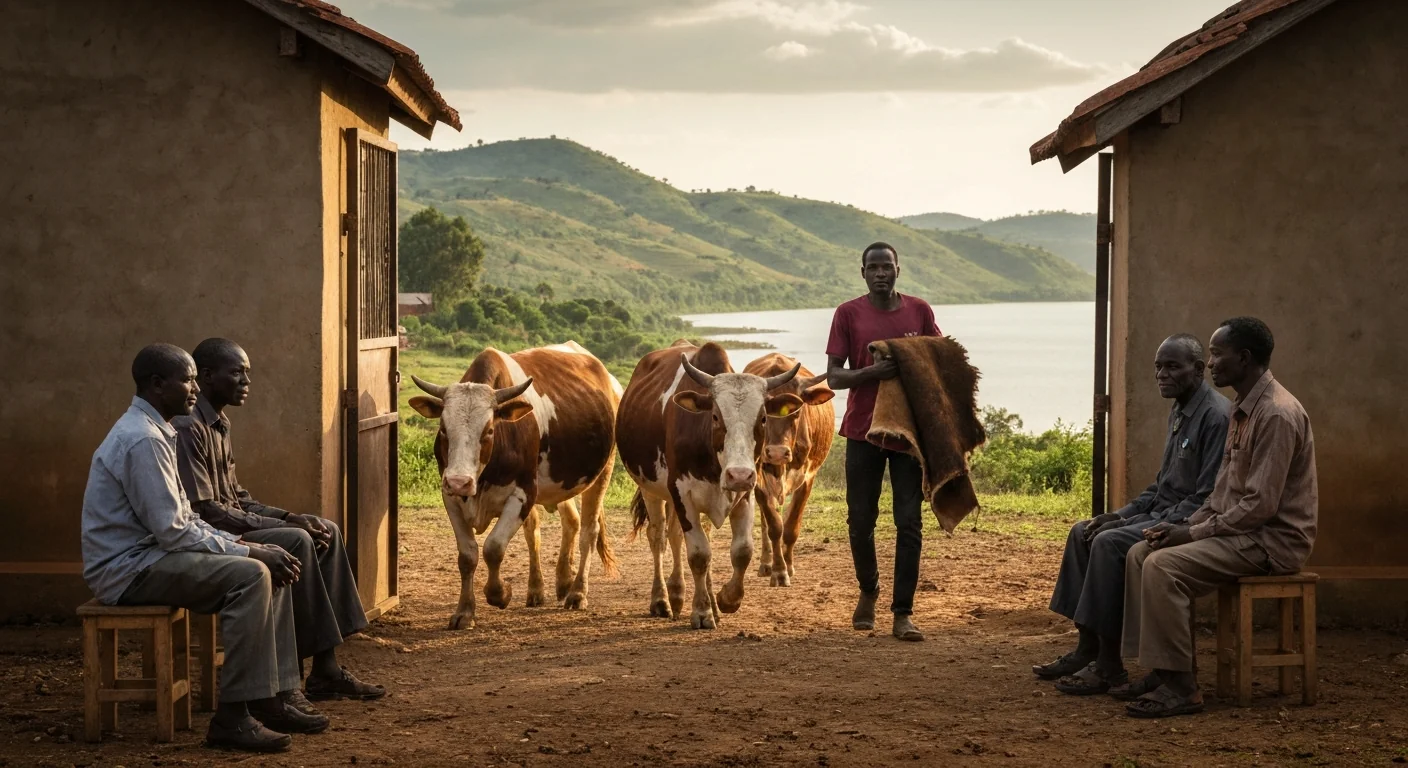
On the agreed day, the groom and his delegation — brothers, uncles, elders — travel to the bride’s family home. They often arrive carrying symbolic items: horns and cowhide (pien) as part of the cultural presentation, along with the cattle themselves.
The groom travels in the group but does not draw attention to himself. Traditionally, he is expected to be inconspicuous among his companions — this is humility in action, not shyness. He is not the center of this day’s attention; the cattle are.
No ceremony takes place on the day of arrival. The guests are received, given food, and shown to their quarters — typically the simba (the unmarried brother’s house at the family compound). They spend the night there.
That evening, unmarried women from the bride’s family serve food and entertain the guests with stories about the home and the land. This tradition has a light, social quality — it is an evening of getting to know one another before the serious business begins the next day.
A groom never sleeps in the same house as his mother-in-law. This is a strict rule.
Day Two: The Negotiations
The next morning, the real ceremony begins.
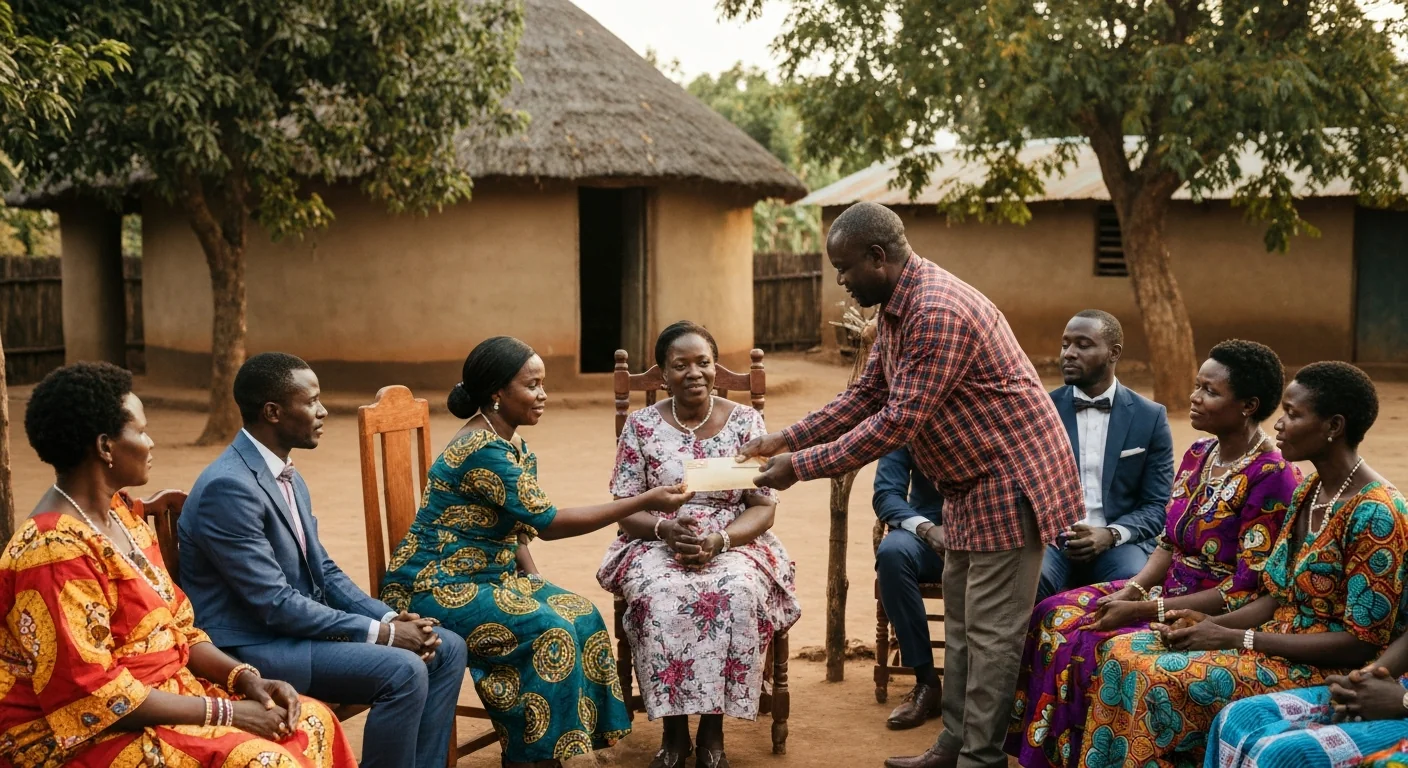
The negotiation takes place in the late afternoon or evening, with the two sides seated across from each other. The groom’s spokesman (or jagam) represents the groom’s side. The bride’s father, supported by his brothers and uncles, represents her family. The groom is present but does not speak freely — this is the domain of the elders.
The process is part serious negotiation and part cultural theatre:
- The bride’s family states their demands — historically expressed in heads of cattle (“30 heads”)
- The groom’s family counters with what they can offer
- There is back and forth, humor, posturing, and patience
- Eventually, both sides reach an agreement
Once the amount is agreed, it is final. No additions or subtractions are permitted after the handshake. Both families understand this going in, which is why the negotiation takes time.
The lady’s father must see and inspect the cattle before accepting them. If the cattle are unhealthy, too few, or not of the expected quality, he can decline to finalize the agreement. The physical quality of the animals matters — local breeds are often preferred over imported ones in Luo tradition.
The Moment That Completes the Marriage
When the cattle are accepted, they are walked into the bride’s family homestead. This is the defining moment.
When the cattle cross through the gate of the compound, the marriage is considered complete in the eyes of the bride’s father and the Luo community. The event is done in broad daylight, publicly, because this is a matter of pride for both families — it should be witnessed.
The rope used to lead the cattle into the homestead is then carried back to the groom’s family home as a symbol of the bond between the two families. This rope is not discarded. It represents the tie between the two lineages.
After the Ceremony
A feast follows the cattle delivery — abundant food, community, and celebration. Once everything is complete, the groom departs. If the bride is the first-born daughter, her husband must spend the night at the family home during the nyombo. This act symbolically opens the door for future sons-in-law to also be welcomed to stay when they visit. Skipping this for a first-born daughter creates complications for younger sisters’ future marriages.
The bride joins her husband at his home typically a day or two after the conclusion of nyombo — the full marriage is now ceremonially and structurally complete.
What Cattle and Items Are Expected
The Cattle Tradition
The Luo attach significant value to cattle as a symbol of wealth, commitment, and respect. Physical cattle must be part of nyombo — this is a firm cultural position even in 2025. Many urban families now accept cash equivalents, but Luo custom holds that at least one traditional cow should still be physically walked in, even if the rest of the obligation is settled in cash. The symbolic act of cattle entering the homestead is what the tradition requires.
Historically, the nyombo involved around 16 cows and 30 goats, though the actual numbers negotiated varied significantly based on:
- The bride’s social standing and family background
- Her level of education
- The groom’s capacity to pay
- The specific Luo sub-community (Jo-Kisumo, Jo-Karachuonyo, Jo-Gem, Jo-Seme all have slight variations)
- Whether the bride is the first-born, middle, or last-born daughter
Modern nyombo negotiations involve far more flexibility, and many families have moved toward a mix of cattle and cash.
Cash Component
Today, the cash component of nyombo varies widely. Here is a realistic range based on current practice:
| Factor | Typical Range (KES) |
|---|---|
| Urban families (Kisumu, Nairobi) | KES 150,000 – KES 500,000 |
| Rural families in Nyanza | KES 50,000 – KES 200,000 |
| Graduate bride premium | Additional KES 50,000 – KES 150,000 |
| First-born daughter premium | Additional consideration varies |
These amounts are in addition to whatever livestock is physically delivered. The negotiation determines the final figure, and both sides go in knowing these ranges.
It is worth noting that in Luo culture, nyombo is recoverable upon divorce. The bride’s family would be expected to return the dowry if the marriage ends. This reciprocal obligation discourages both sides from setting unreasonably high demands — families know they may one day need to return what was given.
Is Nyombo Paid in Full on the Day?
Not necessarily, and most families understand this.
Traditionally, a substantial portion of the nyombo should be paid before meko (the bride procession) can take place. However, many modern families accept partial payment on the ceremony day, with the remainder paid in agreed installments over months or years afterward. What matters is that both families agree to the arrangement, that the groom demonstrates genuine commitment, and that installments are honored.
Leaving nyombo permanently unpaid carries the real consequence described earlier — burial rights. For this reason, even when full payment is deferred, it is never truly forgotten or permanently ignored.
Planning the Nyombo: Practical Tips
Appoint a jagam early. The same intermediary who assisted with ayie typically continues into nyombo negotiations. A capable jagam who knows both families and has the respect of both sides is essential for keeping negotiations respectful and productive.
Coordinate the cattle logistics in advance. If you are sourcing cattle from your rural home and the ceremony is in another location, you need time to arrange transport. Cattle must arrive healthy and inspectable.
Be realistic about your budget. A full nyombo — including livestock, cash payments, hosting costs, transport, and the feast — can represent a significant financial commitment. Start tracking your ceremonial expenses early. Harusi Hub’s budget tracker allows you to set separate budgets for each wedding event, so you can track ayie, nyombo, and your white wedding separately. Use the Set Up Your Budget guide to configure it for your traditional events.
Plan for multi-city families. Many Luo families are spread between Nairobi, Kisumu, Mombasa, and Western Kenya. Getting the right elders in the same place at the same time requires real coordination. Harusi Hub’s event management tools help you set dates, track which guests are attending which events, and keep everyone informed.
Respect the elder sister rule. Before you set a nyombo date, confirm whether your bride has any unmarried elder sisters. If she does, have an honest conversation with the family early so there are no surprises closer to the date.
For a comparison of how bride price traditions differ across Kenya’s communities — Kikuyu ruracio, Kalenjin koito, and more — read our Complete Guide to Kenyan Wedding Traditions and the Kikuyu Ruracio Guide.
Modern Adaptations
Cash equivalents. The biggest practical change in modern nyombo is the acceptance of cash in place of physical cattle, particularly in urban settings. Most families still insist on at least one symbolic cow being walked in, but the bulk of the bride price is now frequently settled in cash.
Diaspora couples. Luo couples based in the UK, US, or Australia are increasingly planning nyombo ceremonies during home visits. The ceremony may be condensed to fit within a two-week trip, with the jagam coordinating all negotiations before the family arrives. Both delegations may travel to Nyanza together, and the ceremony follows the traditional structure even if the timeline is compressed.
Combined traditional weekends. Some couples schedule ng’eyo dala, ayie, and nyombo across a single long weekend to minimize travel costs for elders and relatives coming from across the country. Elders generally accept this as practical necessity provided each ceremony is given its proper time and respect.
Documented agreements. Modern families increasingly put nyombo agreements in writing — a simple document signed by both sides’ representatives stating the agreed amount, what has been paid, and the installment schedule. This is not traditional but is increasingly common as a way of preventing future disputes.
For more on how modern couples are navigating the balance between tradition and practical reality, read How Modern Kenyan Couples Are Adapting Traditions and our guide on Planning a Traditional and White Wedding Weekend.
Frequently Asked Questions
Is nyombo the same as ayie?
No. Ayie and nyombo are two separate ceremonies serving different purposes. Ayie involves the mother’s consent and is paid in cash envelopes. Nyombo involves the father’s acceptance and is centered on cattle. Ayie must happen first; nyombo follows. Many people conflate the two, but they are distinct ceremonies with distinct cultural roles.
What if the groom cannot afford the full nyombo?
This is common and families understand it. A partial payment can be made on the ceremony day with the remainder agreed as installments. What matters most is that the negotiations are completed properly, the cattle are physically walked in (at least symbolically), and the groom demonstrates a genuine commitment to fulfilling his obligation over time.
Can nyombo be paid fully in cash?
In practice, many urban families accept a full cash payment as equivalent. However, traditional Luo expectation holds that at least one physical cow should be walked into the homestead — the symbolic act is important. Even one local cow walked through the gate satisfies the tradition. The rest can be cash.
What happens if nyombo is never paid?
The marriage holds socially and legally — ayie already made it valid. But the unpaid nyombo creates a serious long-term problem: a wife whose husband has not paid nyombo cannot, under Luo custom, be buried on his land when she dies. She must be returned to her family’s land for burial. This consequence carries significant emotional and cultural weight for Luo families.
How long after ayie should nyombo happen?
There is no fixed legal deadline, but the groom’s side has a maximum of five weeks after ayie to formally return to begin nyombo negotiations. In practice, many families take several months — especially when livestock must be sourced and transported. The important thing is not to disappear after ayie. Regular communication through the jagam is expected.
Planning your Luo nyombo ceremony?
Track your ayie and nyombo budgets, manage guests across multiple ceremonies, and coordinate both families in one place — for free.
Start Planning Free