Kamba Wedding Traditions: Ntheo, Ngasya, and the Sacred Goat Ceremonies
A complete guide to Akamba marriage customs — from the ntheo engagement oath to the 48-goat ngasya dowry, kilumi dances, and the grand ilute celebration.
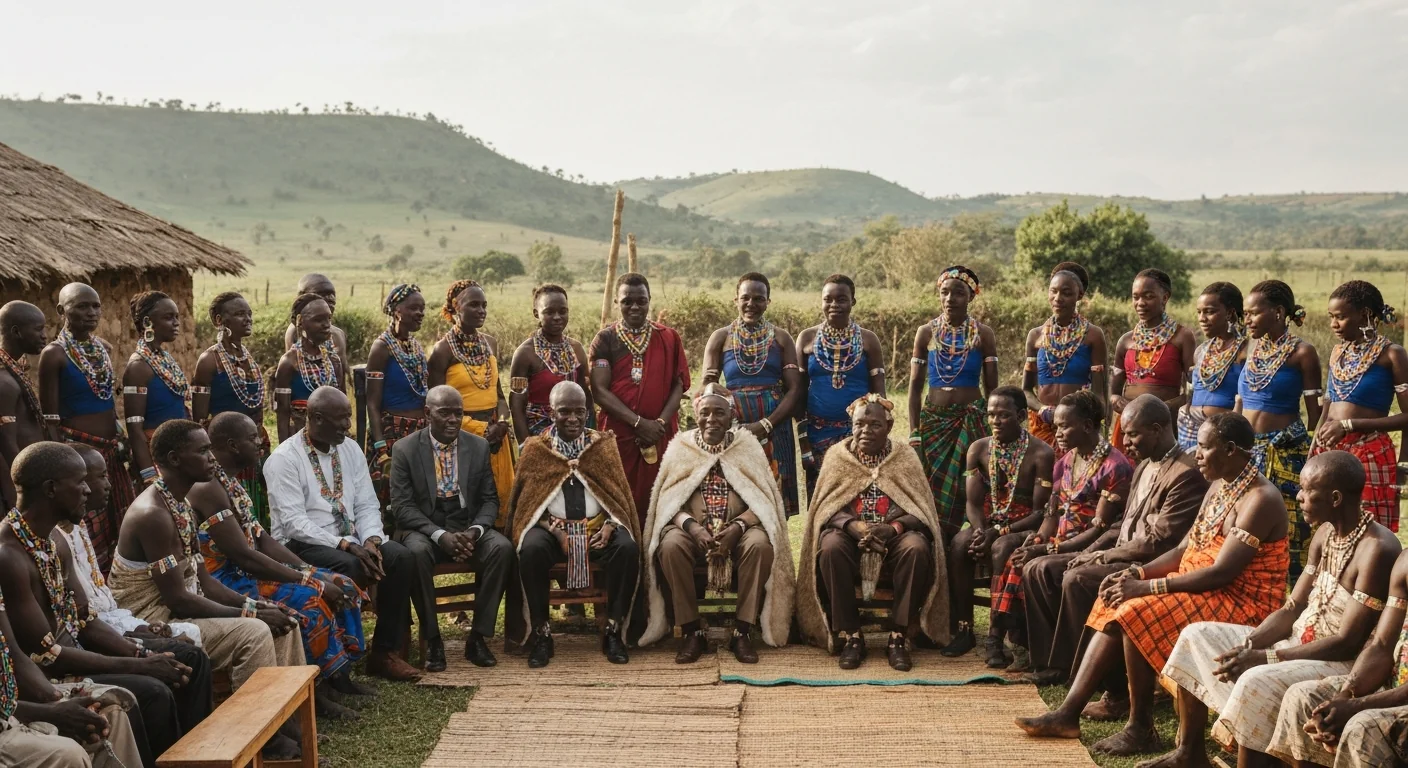
The Akamba people of southeastern Kenya — spread across Machakos, Makueni, and Kitui counties — have one of the most structured and symbolically rich marriage traditions in East Africa. Unlike many African communities where marriages were historically arranged by elders, Kamba marriages have long been rooted in mutual attraction. Forced marriages were virtually unheard of, and both bride and groom had a genuine say in the union.
What makes the Kamba wedding tradition truly distinctive is the central role of the goat. From the ntheo engagement oath to the final ilute feast, every milestone is marked by the presentation, slaughter, or sharing of goats — each with a specific name, purpose, and spiritual meaning. A Kamba wedding is not one event but a series of seven stages that can unfold over months or even years, binding not just two individuals but two entire clans.
This guide walks through every stage of a traditional Kamba wedding, the sacred foods and dances that accompany it, and the deeper cultural values that hold it all together.
The Foundations: Who Can Marry Whom
Before any wedding festivities begin, certain prerequisites must be met. Both the bride and groom must be circumcised — an essential rite of passage in Kamba culture that marks the transition to adulthood. An uncircumcised person is not considered eligible for marriage, and the various courtship dances that precede marriage (like the nduli) are reserved strictly for those who have undergone the rite.
There is also a strict exogamy rule: a man and woman from the same clan cannot marry. The Akamba trace their lineage through patrilineal clans, and marrying within one’s clan is considered taboo. Families would verify clan affiliations early in the courtship process to ensure no violations occurred.
Traditionally, girls married between the ages of 12 and 18, while young men married around 20 to 25. In the modern era, these age ranges have shifted upward considerably, though the ceremonial structure remains largely intact.
The Seven Stages of a Kamba Wedding
Stage 1: Kumenya Mucii — Testing the Waters
The marriage process begins quietly and informally. Once a young man identifies a woman he wishes to marry — and she reciprocates his interest — his father or a senior male relative pays a discreet visit to the woman’s family homestead. This visit, called kumenya mucii (literally “knowing the home”), is designed to gauge the family’s receptiveness without making any formal commitments.
The visit follows established protocol. The suitor’s representative does not arrive empty-handed but brings modest gifts — perhaps a gourd of beer or a small token — to signal goodwill. Conversations are exploratory: the families discuss their respective clans to confirm there are no blood ties, subtly assess the character and reputation of both families, and determine whether the courtship can proceed.
If the visit goes well, both families tacitly agree to move forward. If there are concerns — incompatible clans, character issues, or family disputes — the process ends here with minimal embarrassment to either side. The beauty of kumenya mucii is its discretion; nothing is public, so no reputations are at stake.
Stage 2: Ntheo — The Sacred Engagement Oath
The ntheo is the single most important ceremony in the entire Kamba marriage process. Without it, no Akamba customary marriage is considered valid. It is the legal, spiritual, and social threshold that transforms a courtship into a binding union.
The groom’s family brings a minimum of three goats to the bride’s family — always an odd number, with at least one being an uncastrated male (kathenge). These are the mbui sya ntheo (the goats of the engagement oath), and their quality matters: they must be of good condition, with uniform coloring and no blemishes or spots.
At the ceremony, one goat is slaughtered. The bride and groom are then given kikonde — the soft, tender meat from the animal — to eat together. This shared meal is the oath itself. By eating the kikonde together in the presence of both families and elders, the couple is making a sacred covenant. The act carries spiritual weight: it is witnessed not just by the living but by the ancestors, and breaking it invites serious social and spiritual consequences.
The ntheo’s importance extends far beyond the couple’s own marriage. If a woman’s ntheo was never performed, her own daughters cannot have ntheo performed for them either — the spiritual validity cascades through generations. Furthermore, a woman whose ntheo was not paid cannot be buried by her husband’s family. Even in death, the ntheo determines where a woman belongs.
In modern Kamba society, the ntheo remains non-negotiable. Couples who have church weddings or civil ceremonies still perform the ntheo to ensure their marriage is recognized under Akamba customary law. It is, in every sense, the marriage itself — everything before is courtship, and everything after is celebration and formalization.
Stage 3: Ngasya — The 48-Goat Dowry
With the ntheo complete, attention turns to the ngasya — the bride price or dowry. The standard ngasya consists of 48 goats, though the total package includes much more. The full customary bride price includes:
- 48 goats (with the ntheo goats deducted from this total)
- 2 drums of honey (uki)
- 2 blankets
- 2 bed sheets
- 2 bulls
- Ndua itaa — a large goat specifically designated “for the bed,” symbolizing the conjugal union
- Mbui sya nzama — the mother’s goat, given to the bride’s mother in recognition of her role in raising the bride
- Cash payments (mbesa) as agreed between families
A critical cultural principle governs the ngasya: it is never paid in full at once. The dowry is deliberately spread out over months, years, or even decades of marriage. This is not a sign of inability to pay but a deeply intentional practice. The ongoing payments create a continuous bond between the two families, ensuring that the in-law relationship (uthoni) remains active and maintained throughout the couple’s life together.
The goats used in ngasya are not random livestock. Each goat has a designated name and purpose within the marriage framework. The mbui sya ntheo (engagement goats) count as the first installment of the ngasya. Beyond these, there are mbui sia ndeo (specific dowry goats), the ndua itaa, and the mbui sya nzama — each marking a different dimension of the marriage covenant.
Negotiations over the ngasya are conducted by the extended families, with the bride’s family having the final say on acceptable terms. While the standard is 48 goats, the actual number can vary depending on the families’ agreement, the bride’s education, and other factors. In modern practice, some goats may be converted to their monetary equivalent, though traditionalists insist on actual livestock.
Stage 4: Kulatya Isanduku — Tasting the Suitcase
The fourth stage, kulatya isanduku (literally “tasting the suitcase”), is a more intimate and personal ceremony. The groom prepares a suitcase filled with gifts specifically for his bride — new clothes, shoes, jewelry, perfume, and personal items she will take into her new life.
The suitcase is presented to the bride’s family, and its contents are inspected and displayed. This ceremony serves a dual purpose: it demonstrates the groom’s ability and willingness to provide for his wife’s personal needs, and it provides the bride with a wardrobe and personal effects befitting her new status as a married woman.
The name “tasting” is significant — the family doesn’t just receive the suitcase; they evaluate its contents. A well-packed suitcase reflects well on the groom and his family, signaling that they take the marriage seriously and will treat the bride with generosity and care. The quality and thoughtfulness of the gifts matter as much as their quantity.
Stage 5: Mathaa — Preparing the Bride
The mathaa stage is reserved for women only. Senior women and female elders from both families take the bride aside for an extended period of counsel and preparation. This is the Kamba equivalent of bridal mentorship — a time when experienced married women share practical wisdom about building a household, managing a marriage, navigating in-law relationships, and fulfilling the responsibilities that come with being a wife and eventually a mother.
The advice is pragmatic and grounded in generations of collective experience. Elders speak openly about the realities of marriage — its joys, challenges, and demands. The Kamba have a saying: “Kiveti ni tavia ti umbile” — “A wife is her manners, not her beauty.” This proverb encapsulates the values imparted during mathaa: a successful wife is defined by her character, wisdom, and conduct, not by appearance alone.
The mathaa period can also be emotionally intense. The bride is preparing to leave her father’s homestead permanently, and the gravity of this transition is acknowledged. Women share stories, sing songs of encouragement, and prepare the bride mentally and emotionally for what lies ahead.
Stage 6: Thasya Mukwa — The Betrothal Procession
The thasya mukwa is one of the most visually striking ceremonies in the Kamba wedding tradition. On the appointed day, the bride is carried out of her father’s homestead by her maternal uncles. She must not touch the ground during this procession — a symbolic act that signifies the sacredness of the transition and the protection being afforded to her during this vulnerable passage between two homes.
At the groom’s homestead, preparations are equally elaborate. Lessos (colorful East African fabric wraps) are spread on the ground at the entrance to the compound, creating a ceremonial pathway. The bride is set down on these lessos, symbolizing her welcome into the new family and the comfort and dignity she will be afforded in her new home.
The thasya mukwa marks the bride’s physical departure from her natal home. It is a moment of both celebration and poignancy. The bride’s family releases her with blessings and, sometimes, with maio — mourning songs sung by women of her age group. These songs are not sad in the conventional sense but acknowledge the weight of the transition: a daughter is leaving, and while this is cause for joy, it also represents a profound change in the family’s composition.
The maio singing can continue for up to two days, with women from the bride’s village bringing gifts for her new household and singing songs that mix celebration with tender farewell.
Stage 7: Ilute — The Grand Celebration
The ilute is the climactic finale of the entire marriage process — the grand feast that brings together both families, extended relatives, friends, and the broader community in celebration. A castrated bull is slaughtered for the occasion, and the meat is prepared for a village-wide feast.
The ilute is a no-holds-barred celebration. Food is abundant, traditional beer flows freely, and the atmosphere is one of communal joy. The bride is formally presented as a member of her new family, and she is showered with gifts — household items, livestock, fabric, and other offerings that will help the newlyweds establish their home.
The ilute often features extended music and dance performances, with the kilumi dance serving as the ceremonial crown (more on this below). Elders offer blessings, and prayers are said for the couple’s fertility, prosperity, and harmony. It is, in every way, the Kamba equivalent of a wedding reception — but with deeper communal roots and spiritual dimensions.
The morning after the ilute (or following the bride’s first night at her new home), the new bride performs a symbolic act: she sweeps the house at dawn. This ritual sweeping signals her acceptance of her domestic responsibilities and her readiness to build and maintain her new household.
The Sacred Role of Goats in Kamba Weddings
No animal holds more cultural significance in Kamba marriage customs than the goat. Goats are not merely economic assets; they are sacrificial animals that carry spiritual weight and social meaning. Throughout the seven stages of marriage, different goats serve different ceremonial purposes, each with its own name:
- Mbui sya ntheo — The engagement oath goats (minimum 3, always an odd number)
- Mbui sia ndeo — The formal dowry goats
- Ndua itaa — The “bed goat,” a large goat symbolizing the conjugal union
- Mbui sya nzama — The mother’s goat, honoring the bride’s mother
- Mbui sya maleo — Ceremonial goats for specific ritual purposes
The quality of goats matters immensely. Ceremonial goats must have uniform coloring — no spots, no patches, no blemishes. A spotted or mixed-color goat would be considered inappropriate for a wedding ceremony. The coat must be consistent, whether it is white, brown, or black.
The uncastrated male goat (kathenge) required in the ntheo is particularly significant. It represents virility, continuity, and the unbroken chain of life that marriage is meant to perpetuate. Its inclusion among the ntheo goats is non-negotiable.
Traditional Wedding Foods and Drinks
Kaluvu: The Ancestral Brew
No Kamba ceremony is complete without kaluvu — a traditional fermented beverage made from the fruit of the sausage tree (Kigelia africana, known as muatine in Kikamba), combined with sugarcane juice and honey. Kaluvu is brewed in large barrels or dried gourds (calabashes) and has deep ceremonial significance.
At weddings, kaluvu is reserved for mature adults, particularly the male elders who preside over the negotiations and blessings. Women and children are given soft drinks or non-alcoholic alternatives. The drink is both a social lubricant and a sacred offering.
Before anyone drinks, a few drops of kaluvu are poured onto the ground — a ritual called kundia vau (pouring for the earth). This libation is an offering to the ancestors, inviting their spirits to participate in the celebration and bestow their blessings on the union. The same practice occurs during prayers at shrines, particularly when communities gather to pray for rain.
Traditionally, the groom was expected to provide a dried gourd filled with kaluvu, along with a blanket, to the bride’s parents before the marriage could proceed. When both sets of parents shared this drink together, it was considered a sealing of the marriage accord — a liquid handshake between families.
Ceremonial Foods
The wedding feast features traditional Kamba dishes that carry their own cultural significance:
- Muthokoi — A hearty dish of dried maize kernels cooked with beans. Muthokoi is a staple across Ukambani and represents sustenance, abundance, and the agricultural foundations of Kamba life.
- Kimanga — A dish of beans and bananas mashed together into a thick, rich mixture. Kimanga is comfort food, often served during communal gatherings and celebrations.
- Ugali — While ugali is common across Kenya, the Kamba version is sometimes made from cassava flour rather than the more common maize flour, giving it a distinctive texture and flavor.
- Roasted goat meat — Naturally, given the centrality of goats to the ceremonies, roasted and boiled goat meat is the primary protein at every stage of the wedding.
Music and Dance: The Heartbeat of the Celebration
Kilumi: The Crown of the Ceremony
The kilumi is the most sacred dance in the Kamba wedding tradition. Performed primarily by women, it is accompanied by two drums — the kilumi drums — that produce a rhythmic, hypnotic beat. The dance is both a prayer and a celebration: the songs plead with God (Ngai) and the ancestral spirits to bless the newly married couple with fertility, harmony, and prosperity.
A single kilumi session lasts approximately 30 minutes, but the full performance can extend for up to eight hours, with multiple sessions throughout the day and night. The women sing in call-and-response patterns, and the dancing intensifies as the ceremony progresses. Ululations punctuate the performance, adding to the spiritual atmosphere.
The kilumi is not merely entertainment — it is a spiritual invocation. The rhythms of the drums are believed to bridge the gap between the physical and spiritual worlds, inviting ancestral blessings into the celebration.
Nduli: The Courtship Dance
The nduli is a courtship dance that predates the formal marriage process. It is performed at social gatherings and community events, providing young people with an opportunity to meet, interact, and express romantic interest through dance. Participation in the nduli is restricted to those who have been circumcised — a gatekeeping mechanism that ensures only adults of marriageable age take part.
The nduli is energetic and expressive, featuring synchronized movements, rhythmic clapping, and call-and-response singing. It is in these dances that many Kamba courtships historically began, with young men and women catching each other’s attention through skill, grace, and charisma on the dance floor.
Maio: Songs of Farewell
The maio are mourning songs performed by women from the bride’s age group when she departs her father’s homestead. These songs acknowledge the bittersweet nature of the transition — a family is gaining a son-in-law but losing a daughter from their daily lives. The maio can last up to two days, with the women accompanying the bride and singing as they bring gifts for her new household.
Kamandiko: The Post-Wedding Dance
After the formal ceremonies conclude, the kamandiko dance provides a final, joyful release. This is the celebratory dance that follows the ilute feast, and it is open to all — men, women, young and old. The kamandiko is less structured and more spontaneous than the kilumi, serving as a communal expression of happiness and goodwill toward the newlyweds.
Kamba Proverbs About Marriage
The Akamba have a rich tradition of proverbs (ng’aano) that encapsulate their philosophy on marriage. These sayings are often invoked during the mathaa counseling sessions and at various stages of the wedding process:
“Kiveti ni tavia ti umbile” — A wife is her manners, not her beauty. This proverb emphasizes that character, conduct, and wisdom are the true measures of a good wife, far outweighing physical appearance.
“Kiveti ti cha ukinda ni cha kusuvia musyi” — A wife is for building a family, not merely for physical pleasure. This saying underscores the Kamba view that marriage is fundamentally about creating and nurturing a family unit, with all the responsibilities that entails.
“Marriage is rib-rib; it has no eyes” — This colorful proverb speaks to the unpredictability of marriage. No one can fully know what their marriage will be like until they are in it. It encourages humility and acceptance — marriage requires taking a leap of faith.
These proverbs reflect a deeply pragmatic view of marriage: it is a partnership built on character, shared purpose, and mutual commitment, not on romantic idealism alone.
Divorce in Kamba Tradition
While marriage in Kamba culture is intended to be permanent, divorce (ulee) is recognized as a possibility when a union becomes untenable. The process is formalized and involves specific rituals.
A husband seeking divorce takes two goats — called mbui sya ulee (the goats of divorce) — to the wife’s family. This initiates the dissolution process. Following the divorce, the husband has the right to reclaim the dowry items that were paid during the ngasya, though in practice, negotiations often determine what is actually returned.
Importantly, divorce is not exclusively a male prerogative. Women can also initiate divorce under certain circumstances, including cases of severe domestic violence (merciless beatings), medical neglect, proven infertility without the husband seeking treatment, or failure to provide adequate farmland for cultivation. If a man struck his wife, he could be penalized with a goat sacrifice — a mechanism that provided women with a degree of protection and recourse within the customary system.
Modern Kamba Weddings: Tradition Meets Today
Contemporary Kamba weddings often blend traditional customs with modern elements. Many couples today hold both a traditional ceremony and a church or civil wedding, with the ntheo and ngasya performed alongside Christian vows and Western-style receptions.
Several adaptations have emerged in modern practice:
- Compressed timelines: The seven stages, which traditionally unfolded over months or years, are sometimes consolidated into one or two major events due to financial and logistical constraints.
- Monetary equivalents: Some goats in the ngasya may be converted to their cash equivalent, though many families still insist on receiving actual livestock.
- Urban settings: Kamba families living in Nairobi or other cities find creative ways to honor traditional requirements, sometimes transporting goats from rural Ukambani for the ceremonies.
- Negotiation flexibility: While the 48-goat standard remains the reference point, actual negotiations between families can result in different totals depending on circumstances and mutual agreement.
Despite these modern adaptations, the ntheo remains sacrosanct. No matter how contemporary the overall wedding may be, most Kamba families consider the ntheo non-negotiable — it is the act that makes the marriage real in the eyes of the community and the ancestors.
Frequently Asked Questions
What is ntheo and why is it so important?
Ntheo is the sacred engagement oath that validates a Kamba customary marriage. The groom’s family presents at least three goats (including one uncastrated male) to the bride’s family. A goat is slaughtered and the couple eats the soft meat (kikonde) together as a binding covenant. Without ntheo, no Akamba marriage is considered valid — it affects not only the couple but their descendants, as a woman whose ntheo was not paid cannot have ntheo performed for her own daughters.
How many goats are needed for a Kamba wedding?
The standard ngasya (dowry) is 48 goats, with the ntheo goats (minimum 3) deducted from this total. Beyond the goats, the complete bride price includes 2 drums of honey, 2 blankets, 2 bed sheets, 2 bulls, and special-purpose goats like the ndua itaa (bed goat) and mbui sya nzama (mother’s goat). The dowry is intentionally never paid all at once — it is spread over years to maintain the bond between families.
Can Kamba dowry be paid in cash instead of goats?
In modern practice, some families accept monetary equivalents for a portion of the ngasya. However, many traditionalist families still prefer actual livestock, particularly for the ntheo goats, which carry specific spiritual significance. The ntheo goats almost always need to be real animals, as the ceremony requires slaughtering one for the couple to eat together.
What is kaluvu and what role does it play in Kamba weddings?
Kaluvu is a traditional fermented brew made from sausage tree fruit (Kigelia africana), sugarcane juice, and honey. It plays a central ceremonial role at Kamba weddings — the groom traditionally presents a gourd of kaluvu to the bride’s parents as part of the marriage accord. During celebrations, drops are poured on the ground (kundia vau) as a libation for ancestors before anyone drinks. It is reserved for mature adults and male elders at the ceremony.
How long does a traditional Kamba wedding take?
A traditional Kamba wedding is not a single event but a process spanning seven distinct stages — from kumenya mucii (testing the waters) through ilute (the grand feast). In the past, this process could unfold over several months or even years. In modern practice, some families compress the stages into one or two major events, though the ntheo and ngasya remain separate occasions in most cases.
Can a Kamba woman initiate divorce?
Yes. While divorce is uncommon and discouraged, Kamba custom allows women to initiate divorce under specific grounds, including severe domestic violence, medical neglect, infertility without treatment, or insufficient provision of farmland. Two goats (mbui sya ulee) are taken to the wife’s family to formalize the process, and the husband can reclaim dowry items, though this is typically subject to negotiation.
Planning your Kamba wedding?
Track ntheo and ngasya across every stage — manage goat counts, gift lists, guest coordination, and budgets all in one place.
Start Planning for FreeFor a broader look at how Kenya’s diverse communities celebrate marriage, read our Complete Guide to Kenyan Wedding Traditions.