How to Plan a Wedding in Uganda: Complete Guide
The complete guide to planning a wedding in Uganda — from kwanjula to church ceremony to reception, covering budgets in UGX, venues, vendors, legal requirements, and cultural traditions across tribes.
How to Plan a Wedding in Uganda: Complete Guide
A Ugandan wedding is never just one event. It is a series of celebrations — each with its own meaning, its own budget, and its own logistics — that together form one of the most significant commitments two families will ever make. If you are planning a wedding in Uganda and feeling overwhelmed by the sheer number of moving parts, you are not alone.
This guide walks you through everything you need to know to plan a wedding in Uganda in 2026, from the first family conversations to the final reception dance. Whether you are Muganda, Munyankole, Acholi, Musoga, or from any of Uganda’s more than fifty ethnic groups, the core planning framework applies — and we will cover the cultural specifics that make each tradition unique.
Let us start from the beginning and work through every stage.
Understanding the Structure of a Ugandan Wedding
The first thing every couple planning a wedding in Uganda needs to understand is that you are not planning one event. You are planning at least two, and often three or four.
The typical Ugandan wedding journey includes:
- The Introduction Ceremony (Kwanjula / Kuhingira / Okwanjula) — the traditional ceremony where the groom’s family formally visits the bride’s family, brings gifts, and receives the bride. This is the cultural foundation of the marriage.
- The Church or Mosque Ceremony — the religious solemnisation of the marriage. Most Ugandan couples have a church wedding (Christian) or nikah (Muslim).
- The Reception — the celebration that follows the religious ceremony, typically the largest and most expensive event.
- The Give-Away (Okugabiriza / Send-Off) — in many communities, the bride’s family hosts a separate send-off event the day before or morning of the church wedding.
Each of these events requires its own budget, its own venue, its own guest list, and its own coordination. The introduction ceremony alone can cost as much as the entire church wedding in some families. Plan for all of them from the start — do not budget only for the reception and scramble later.
Step 1: Set Your Budget Across All Events
Before you choose a venue, book a photographer, or even set a date, you need to answer one question: how much money do you actually have for all events combined?
In Uganda, wedding costs vary enormously depending on the scale of each event, the expectations of the families involved, and the region of the country. A realistic 2026 framework:
| Budget Tier | Total Across All Events (UGX) | What It Covers |
|---|---|---|
| Budget | Under 10,000,000 | Simple kwanjula, small church ceremony, modest reception (under 150 guests) |
| Mid-range | 10,000,000 – 30,000,000 | Full kwanjula, church wedding, reception for 200–400 guests with professional vendors |
| Premium | 30,000,000+ | Elaborate kwanjula, premium church venue, large reception (400+ guests), top-tier vendors |
How to divide the total budget across events:
- Introduction ceremony: 20–30% of total budget
- Church ceremony: 10–15%
- Reception: 45–55%
- Buffer / contingency: 10–15%
The buffer is not optional. In Uganda, guest lists grow, family expectations shift, and vendors adjust prices. Build the contingency in from day one and do not touch it unless absolutely necessary.
For a detailed cost breakdown with specific line items and prices, read our guide to wedding costs in Uganda.
Step 2: Choose Your Dates
You are not choosing one date — you are choosing at least two. The introduction ceremony and the church wedding typically happen on different days, often weeks or months apart.
Key timing considerations in Uganda:
Dry seasons are peak wedding season. Uganda’s dry seasons — December to February and June to August — are when most weddings happen. Venues are busiest, vendors charge the most, and availability is tightest. If you are flexible, the shoulder months (March, September, October) offer better pricing and availability.
Saturday is the default but not the only option. Saturday weddings dominate in Uganda, but Sunday and even Friday weddings are increasingly common — and often come with 15–25% lower venue costs.
Church schedules matter. Popular churches in Kampala — Rubaga Cathedral, Namirembe Cathedral, All Saints Nakasero — can be booked months in advance. Check availability before setting your heart on a specific date.
Introduction ceremony timing. Most families hold the kwanjula 1–6 months before the church wedding. In Buganda tradition, the kwanjula must be completed before the church process begins. Plan accordingly.
Avoid public holidays and major events. Liberation Day (26 January), Independence Day (9 October), and the Christmas period affect vendor availability and guest travel.
Step 3: The Introduction Ceremony
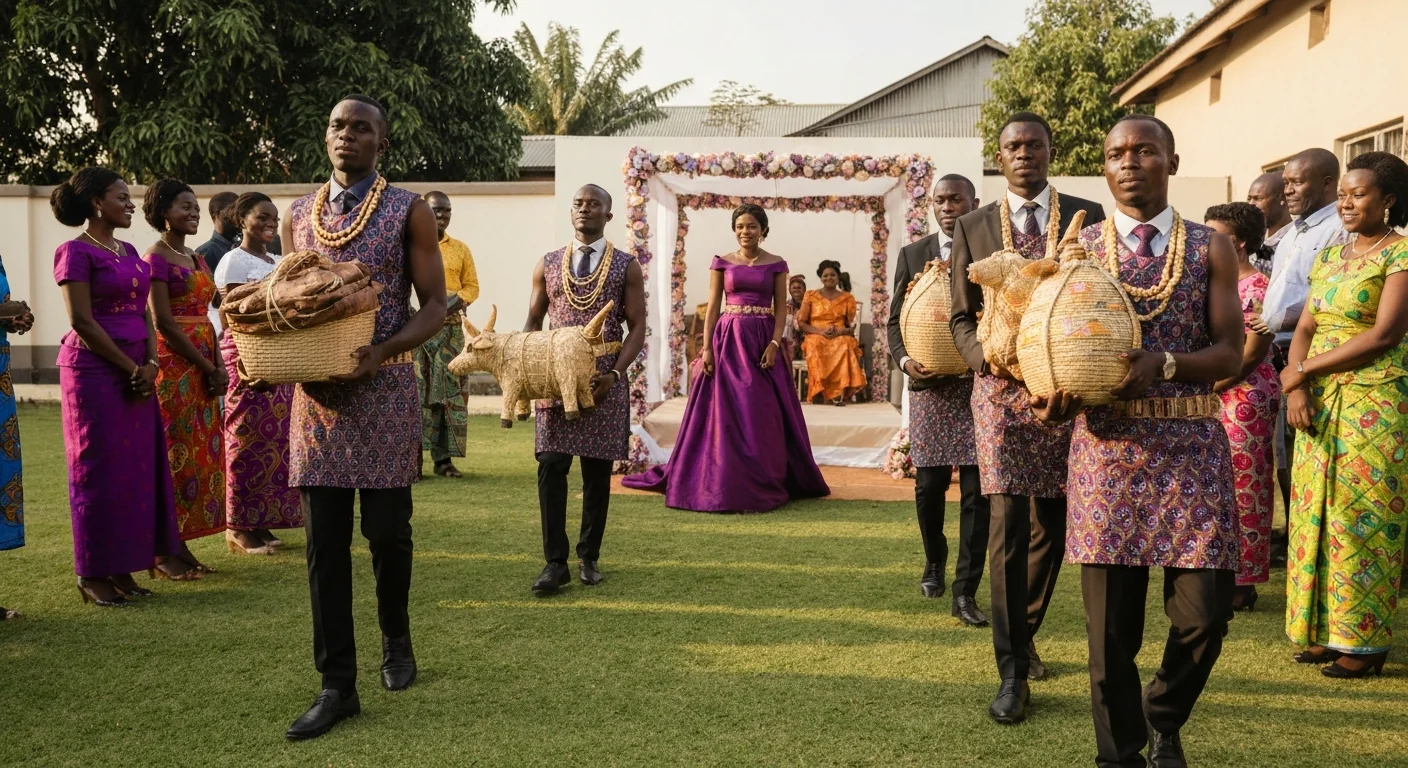
The introduction ceremony is the single most important cultural event in a Ugandan wedding. In Buganda, it is called kwanjula. In Ankole, it is kuhingira. Among the Basoga, it is okwanjula. Among the Bakiga, it is okuhingira. Every Ugandan community has its own version, but the core purpose is the same: the groom’s family formally asks the bride’s family for her hand, brings gifts as a sign of respect and commitment, and receives the bride into the groom’s clan.
Key things every couple needs to know:
- The introduction is the bride’s family’s event. It happens at the bride’s parents’ home (or a designated venue chosen by the bride’s family).
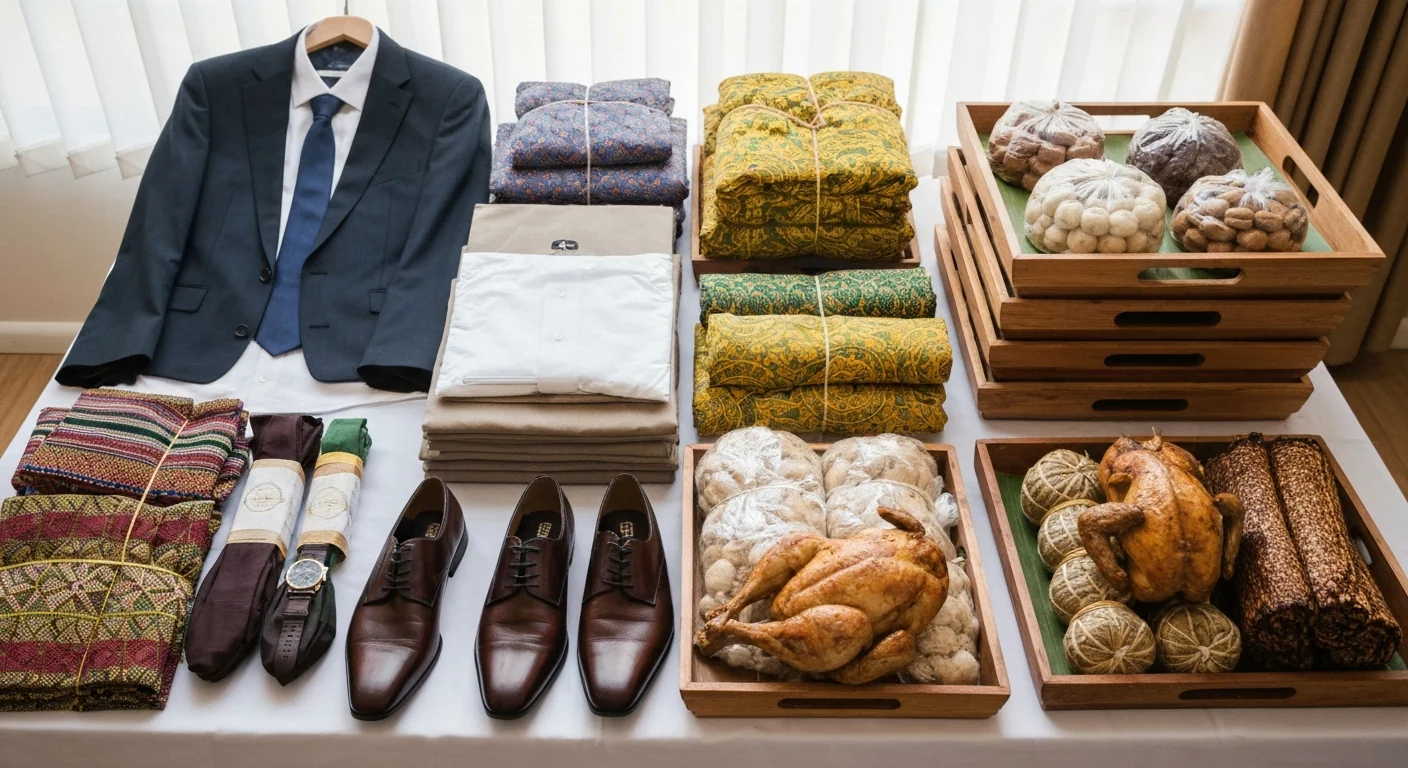
- The groom’s family is responsible for all gifts, items, and the bride price.
- The bride’s family handles venue setup, food, and logistics for the ceremony.
- Each side needs a spokesperson — a senior, respected person who speaks on behalf of the family during the formal proceedings.
The introduction ceremony is not something you can plan in a week. Budget 2–4 months of preparation minimum. The shopping list alone — gifts for parents, aunts, uncles, clan leaders — runs into dozens of items and requires careful coordination with the bride’s family.
For a comprehensive guide to the kwanjula specifically, including ceremony flow, dress code, gift requirements, and costs, read our complete kwanjula guide. For the full shopping list with 2026 prices, see our kwanjula shopping list.
Step 4: Legal Requirements for Marriage in Uganda
Uganda recognises several types of marriage under law. Understanding which applies to you determines the legal process you need to follow.
Types of Legal Marriage in Uganda
1. Civil Marriage (Marriage Act, Cap 251)
- Performed by a Registrar of Marriages
- Requires 21 days’ notice published at the District Registrar’s office
- Both parties must be at least 18 years old
- Requires two witnesses
- Monogamous — no subsequent marriages while the first subsists
- Marriage certificate issued on the day
2. Church/Religious Marriage (Marriage Act)
- Performed by a licensed minister of religion in a licensed place of worship
- Requires publication of banns (announcements in church) for three consecutive Sundays before the wedding, or a special licence from the Registrar
- Must be conducted between 8:00 AM and 6:00 PM
- Requires two witnesses
- Monogamous
3. Customary Marriage (Customary Marriage Registration Act, Cap 248)
- Governed by the customs and traditions of the ethnic group
- Consent of both parties required
- Can be registered at the Sub-County or District Registrar
- Polygamous marriages are permitted under customary law
4. Islamic Marriage (Marriage and Divorce of Mohammedans Act, Cap 252)
- Conducted according to Islamic law
- Registered with the District Kadhi
Documents You Will Need
- National ID cards or passports for both parties
- Birth certificates
- Two passport-size photographs each
- Consent letter from parents (if under 21 for civil marriage)
- Decree absolute (if either party was previously married and divorced)
- Death certificate of former spouse (if widowed)
- Baptism certificates (for church weddings)
- Completed marriage notice forms from the Registrar’s office
Processing timeline: Allow at least 4–6 weeks for the full legal process. For church weddings, the banns process adds a minimum of 3 weeks. Start the paperwork early — this is one of the most common sources of last-minute stress.
Step 5: Choose Your Venues
You need venues for multiple events, and the considerations differ for each.
Introduction Ceremony Venue
Traditionally, the introduction takes place at the bride’s family home in the village. Many urban families still follow this, even if it means travelling upcountry. However, modern adaptations increasingly use hired venues — gardens, hotel grounds, or event spaces — especially for families based in Kampala.
Budget: UGX 500,000 – 3,000,000 for a hired venue. Family home is free but may need tenting, chairs, and setup (UGX 1,000,000 – 5,000,000 for a full setup).
Church Venue
Major church venues in Kampala include:
- Rubaga Cathedral — iconic Catholic cathedral on Rubaga Hill. One of the most prestigious church wedding venues in Uganda.
- Namirembe Cathedral — Church of Uganda (Anglican) cathedral. Historic and beautiful.
- All Saints Cathedral, Nakasero — central Kampala, elegant setting.
- Christ the King Church, Kampala — popular Catholic parish in the city centre.
- Kampala Pentecostal Church (KPC Watoto) — large, modern auditorium-style church.
Church venue fees range from UGX 200,000 to UGX 1,500,000 depending on the parish. Most churches require completion of pre-marital counselling (typically 3–6 sessions over 2–3 months).
Reception Venue
This is where the bulk of your venue budget goes. Kampala and the surrounding areas offer a wide range of options:
- Hotel ballrooms (Sheraton Kampala, Kampala Serena, Speke Resort Munyonyo): UGX 3,000,000 – 10,000,000+
- Garden venues (Silver Springs Hotel gardens, Mestil Hotel gardens): UGX 1,500,000 – 5,000,000
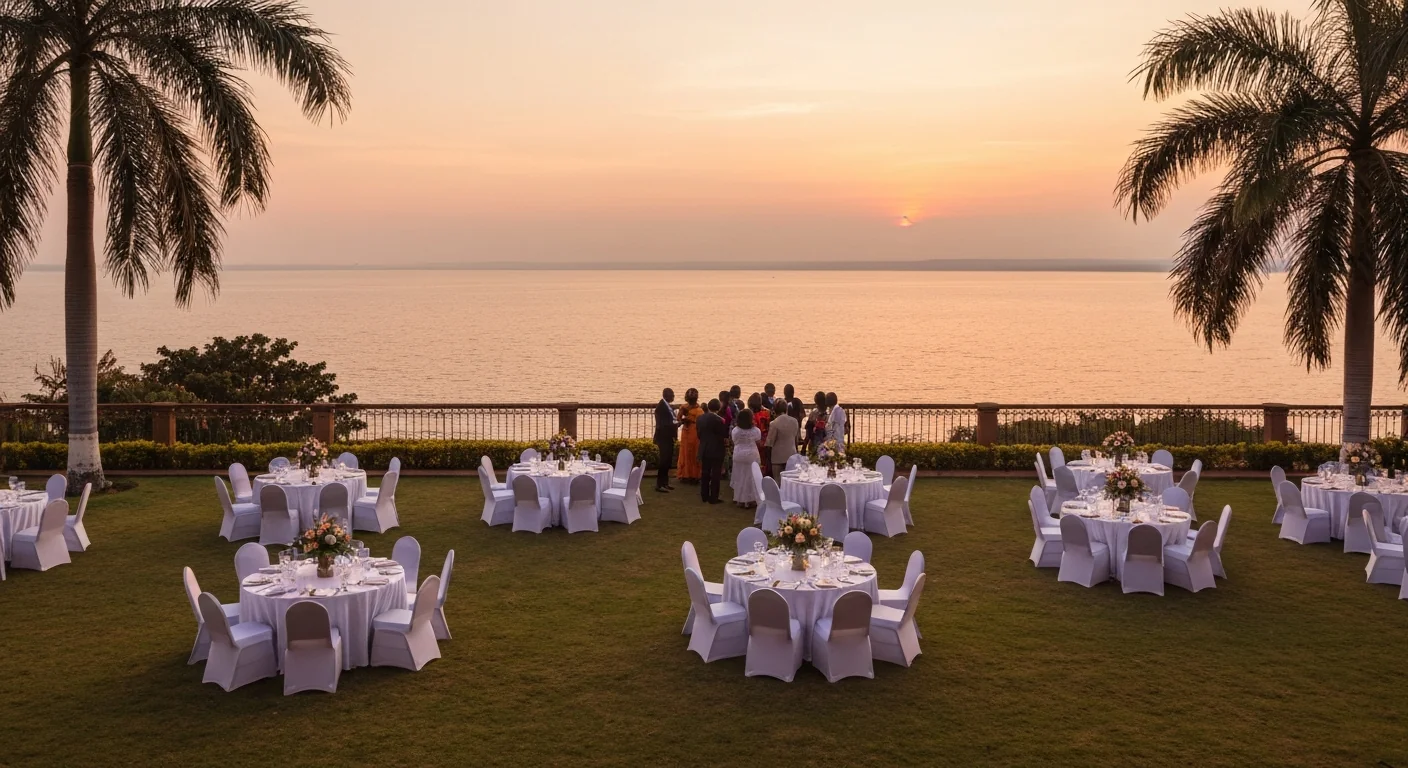
- Lakeside venues (Speke Resort Munyonyo, Gaba Beach venues): UGX 2,000,000 – 8,000,000
- Open-air / tented venues (various locations around Kampala): UGX 1,000,000 – 3,000,000
For a detailed guide to specific venues with capacity, pricing, and pros/cons, read our guide to wedding venues in Kampala.
Step 6: Book Your Vendors
The Ugandan wedding vendor market has matured significantly in recent years. Here is what you need and what to budget:
Photography & Videography
This is your permanent record. Do not cut corners here. Uganda has a growing community of talented wedding photographers, particularly in Kampala.
| Tier | What You Get | Budget (UGX) |
|---|---|---|
| Budget | One photographer, 4–6 hours, 200 edited photos | 500,000 – 1,500,000 |
| Mid-range | Photographer + videographer, full day, 400+ photos, highlights video | 1,500,000 – 4,000,000 |
| Premium | Two photographers, drone, cinematic video, engagement shoot, premium album | 4,000,000 – 10,000,000+ |
Book your photographer 4–6 months in advance for peak season dates.
Catering
Catering is the largest single expense at most Ugandan receptions. Prices are quoted per plate and vary significantly by menu and service style.
| Tier | Style | Per Plate (UGX) |
|---|---|---|
| Budget | Buffet, local menu (luwombo, matooke, rice, chicken) | 15,000 – 25,000 |
| Mid-range | Buffet with varied menu, professional service | 25,000 – 50,000 |
| Premium | Plated service, international menu, multiple courses | 50,000 – 100,000+ |
For a 300-guest reception at mid-range pricing, catering alone runs UGX 7,500,000 – 15,000,000. This is where guest list management directly hits your wallet.
Music & Entertainment
| Option | Budget (UGX) |
|---|---|
| DJ only | 500,000 – 2,000,000 |
| MC (Master of Ceremonies) | 500,000 – 3,000,000 |
| Live band | 2,000,000 – 8,000,000 |
| Sound system hire (if venue does not provide) | 500,000 – 1,500,000 |
Decor & Flowers
| Tier | Budget (UGX) |
|---|---|
| Budget (basic draping, table settings, centrepieces) | 1,000,000 – 3,000,000 |
| Mid-range (full venue transformation, quality flowers) | 3,000,000 – 8,000,000 |
| Premium (designer decor, imported flowers, custom installations) | 8,000,000 – 20,000,000+ |
Other Vendors to Budget For
- Wedding cake: UGX 500,000 – 3,000,000 (depending on size and design)
- Bridal makeup and hair: UGX 200,000 – 1,000,000
- Transport (bridal car, convoy): UGX 500,000 – 3,000,000
- Wedding planner / coordinator: UGX 1,000,000 – 5,000,000 (percentage-based or flat fee)
- Stationery and invitations: UGX 200,000 – 1,000,000
Step 7: Plan Your Attire
Ugandan wedding attire spans multiple events and often multiple outfit changes within a single event.
For the Introduction Ceremony
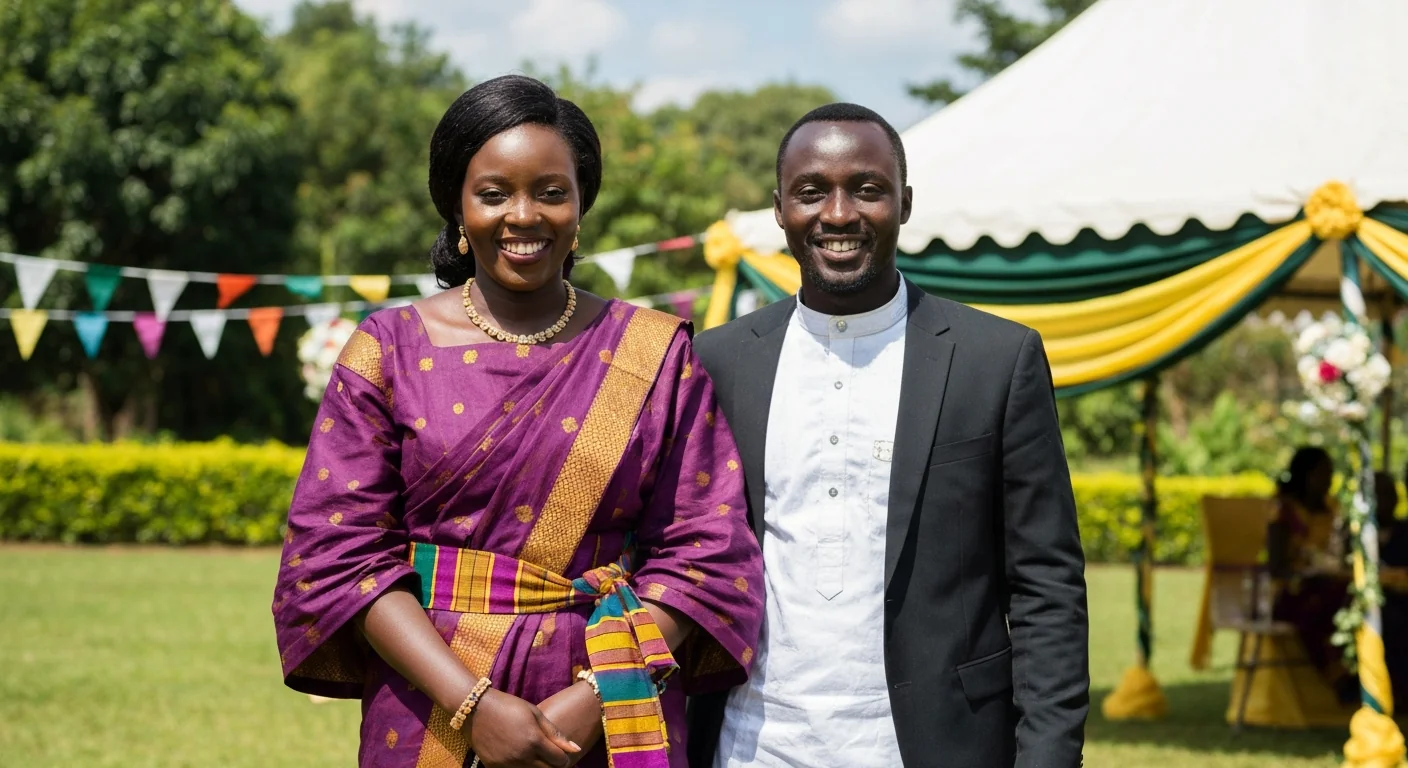
- Bride: Traditionally wears a gomesi (busuuti) — the long, colourful dress with pointed shoulders that is the national dress of Buganda women. The colour and fabric are chosen in coordination with the bride’s family theme.
- Groom: Wears a kanzu — the long white tunic — typically with a suit jacket over it.
- Bride’s attendants: Matching gomesi in the family’s chosen colours.
- Groom’s entourage: Kanzu with matching jackets.
Gomesi costs: UGX 150,000 – 1,000,000+ depending on fabric quality (silk, brocade, cotton blend). Custom-tailored gomesi from a skilled tailor in Owino Market or Wandegeya run UGX 200,000 – 500,000 including fabric and tailoring.
Kanzu costs: UGX 80,000 – 300,000.
For the Church and Reception
- Bride: White wedding gown (purchased or hired). Purchase: UGX 1,000,000 – 5,000,000+. Hire: UGX 300,000 – 1,500,000.
- Groom: Suit or tuxedo. Purchase: UGX 500,000 – 3,000,000. Hire: UGX 200,000 – 800,000.
- Bridesmaids and groomsmen: Budget UGX 100,000 – 300,000 per person for matching outfits, or have each member purchase their own within an agreed dress code.
Step 8: Cultural Considerations Across Tribes
Uganda has over fifty ethnic groups, and wedding traditions vary significantly. Here are key considerations for the most prominent communities:
Baganda (Central Uganda)
The Baganda kwanjula is the most elaborate and widely known introduction ceremony in Uganda. It involves formal gift-giving, the groom identifying the bride among her sisters, and extensive use of the Luganda language and Kiganda protocol. The ssenga (paternal aunt) plays a central advisory role to the bride.
Banyankole (Western Uganda)
The Ankole kuhingira is the equivalent of the kwanjula. The bride’s family sets a bride price, often including cattle. Modern families increasingly accept cash equivalents. The ceremony is typically held in Ankole, which may require travel for Kampala-based families.
Basoga (Eastern Uganda)
The Busoga okwanjula follows similar structures to the Baganda version but with distinct Lusoga language requirements and gift protocols. The maama (aunt) plays a key role similar to the ssenga in Buganda.
Bakiga (Southwestern Uganda)
Bakiga weddings are known for energetic celebrations. The okuhingira involves the bride’s family testing the groom’s family with cultural challenges and riddles. Expect a lively, high-energy ceremony.
Acholi and Langi (Northern Uganda)
Northern Ugandan traditions involve luk (bride price negotiations) that often centre on cattle. The groom’s family is expected to provide a specific number of cattle, goats, and other items agreed upon by the clan elders. These ceremonies are typically held in the bride’s home village in northern Uganda.
Bagisu (Eastern Uganda)
The Bagisu imbalu (circumcision ceremony) is a significant cultural event that intersects with marriage traditions. Grooms are expected to have undergone imbalu. The introduction ceremony follows after this cultural requirement is met.
Cross-Tribal Marriages
Cross-tribal marriages are increasingly common in urban Uganda, particularly in Kampala. When planning a cross-tribal wedding:
- Hold two introduction ceremonies if both families expect it — one following each family’s traditions.
- Communicate early about which traditions are non-negotiable for each side.
- Budget for both — two introduction ceremonies mean twice the logistics and costs.
- Engage cultural liaisons from each community to advise on protocol.
Step 9: Manage Your Guest List
Guest list management is one of the most politically sensitive aspects of wedding planning in Uganda. Extended family expectations, community obligations, and the concept of “social debt” all play a role.
Practical tips:
- Set a firm number early and communicate it clearly to both families. Every additional guest at the reception costs UGX 15,000 – 50,000+ in catering alone.
- Categorise your list: Immediate family, extended family, close friends, work colleagues, community members. Set limits for each category.
- Use digital RSVP tools to track confirmed attendance. Send your wedding website link via WhatsApp — it is the primary communication channel in Uganda. This replaces the need for individual phone calls and avoids the “I thought I was invited” confusion.
- Plan for gate-crashers. Budget an additional 10–15% above your confirmed guest count for uninvited attendees. This is a reality of Ugandan weddings.
- The introduction ceremony guest list is separate from the church/reception list. The bride’s family controls the introduction guest list; the couple controls the reception list.
Step 10: Create Your Timeline
Here is a practical planning timeline for a Ugandan wedding:
12–8 Months Before
- Set total budget across all events
- Choose dates for introduction and church wedding
- Book introduction ceremony venue (or confirm family home logistics)
- Book church and start pre-marital counselling
- Book reception venue
- Begin legal paperwork (marriage notice, documents)
- Book photographer and videographer
- Start shopping for kwanjula items (prices fluctuate — buying early can save money)
6–4 Months Before
- Book caterer, DJ/band, MC, and decorator
- Order wedding attire (gown, suit, gomesi, kanzu)
- Confirm introduction ceremony details with bride’s family
- Finalise guest list for both events
- Set up wedding website and send save-the-dates
- Book transport (bridal car, guest transport)
3–1 Month Before
- Complete introduction ceremony shopping
- Confirm all vendor bookings and pay deposits
- Final fittings for attire
- Send formal invitations
- Confirm church logistics (rehearsal date, requirements)
- Plan reception programme (MC script, speeches, cake cutting, first dance)
- Arrange accommodation for out-of-town guests
Final 2 Weeks
- Final vendor confirmations and payments
- Wedding rehearsal at church
- Confirm transport routes and timings
- Pack kwanjula items (if introduction is first)
- Prepare emergency kit (sewing kit, painkillers, phone chargers, cash for tips)
- Delegate day-of responsibilities to trusted friends or coordinator
Common Mistakes to Avoid
1. Underbudgeting the introduction ceremony. Many couples allocate most of their budget to the reception and then scramble to fund the kwanjula. The introduction is not a minor event — it can easily consume 25–30% of your total wedding budget.
2. Not starting the church process early enough. Pre-marital counselling, banns, and paperwork can take 3–6 months. Start this process the moment you have your date.
3. Ignoring the bride’s family’s expectations. The introduction ceremony is the bride’s family’s event. Failing to meet their cultural expectations — whether in gifts, protocol, or respect — creates lasting damage to the family relationship.
4. No contingency budget. Something will go wrong. A vendor will underdeliver. The guest list will grow. Rain will force a tent rental. Budget 10–15% contingency and protect it.
5. Trying to plan everything via WhatsApp. WhatsApp is great for communication, but wedding planning requires centralised tracking — budgets, vendor contacts, timelines, guest lists. Use a proper planning tool and share it with your partner and key family members.
6. Not confirming vendor payments and deliverables in writing. Verbal agreements lead to disputes. Get every vendor quote, delivery timeline, and cancellation policy in writing.
Plan Your Uganda Wedding With Confidence
Planning a wedding in Uganda is a beautiful, complex, deeply cultural process. The multi-event nature of Ugandan weddings means there is more to coordinate than in most other countries — but it also means there are more moments of celebration, more family connection, and more memories.
Start with a clear budget, understand the cultural expectations of both families, book your key vendors early, and track everything in one place. The couples who plan well are the ones who actually enjoy the process — rather than surviving it.
Plan Your Ugandan Wedding in One Place
Track your budget across kwanjula, church, and reception. Manage your guest list, coordinate vendors, and share everything with your partner — all free on Harusi Hub.
Start Planning on Harusi Hub