South African Wedding Traditions: Lobola, Umabo & Ukuthwala
A comprehensive guide to South African wedding traditions — from lobola negotiations and the Zulu Umabo ceremony to Xhosa Umbhaco attire, Sotho Patlo rituals, Ndebele beadwork, and modern vineyard and bush weddings.
South African Wedding Traditions: Lobola, Umabo & Ukuthwala
South Africa’s wedding traditions are as diverse as its people. A country of eleven official languages and dozens of ethnic communities — Zulu, Xhosa, Sotho, Ndebele, Tswana, Venda, Tsonga, Swati, and more — South Africa does not have one wedding tradition. It has many, layered together, often in the same ceremony. This is a country where a couple might negotiate lobola in the morning, attend a vineyard reception in the afternoon, and dance to amapiano until sunrise. This guide takes you through the most significant traditions and what they mean today.
South Africa’s cultural landscape is unlike anywhere else on the continent. The legacy of apartheid, the post-1994 democratic rebirth, urbanisation, the diaspora, and a cosmopolitan middle class have all shaped how South Africans celebrate marriage in the 21st century. Yet despite — or perhaps because of — this complexity, traditional wedding customs have not faded. If anything, they have deepened in meaning. For many couples, maintaining cultural practices is an act of identity, pride, and connection to ancestry.
For those planning, attending, or simply curious about South African weddings, this guide covers the foundational traditions across the major ethnic groups: what each ceremony involves, what it signifies, and how it is practised today.
The Dual Ceremony Structure
One of the defining features of modern South African weddings is the dual ceremony structure: most couples hold both a traditional ceremony and a Western-style white wedding. These are usually separate events, sometimes held weeks or even months apart.
The traditional ceremony comes first. It is here that the family negotiations are completed, the cultural rites are observed, and the couple is married according to customary law. The white wedding — often held at a venue, with a church or civil service, followed by a reception — is the public celebration that friends, colleagues, and guests from outside the family circle are more likely to attend.
This structure reflects how South African law recognises marriage. The Recognition of Customary Marriages Act (1998) gives full legal standing to customary marriages, meaning the traditional ceremony is not merely symbolic — it is legally binding. Many couples register their customary marriage alongside or instead of a civil ceremony.
For couples planning this dual structure, the logistical challenge is real: two sets of vendors, two guest lists, two budgets, and often two sets of family expectations. Tools like Harusi Hub help couples manage multiple events under a single dashboard — tracking each ceremony’s timeline, vendors, and guest lists separately without losing the overview.
Lobola — The Foundation of South African Marriage
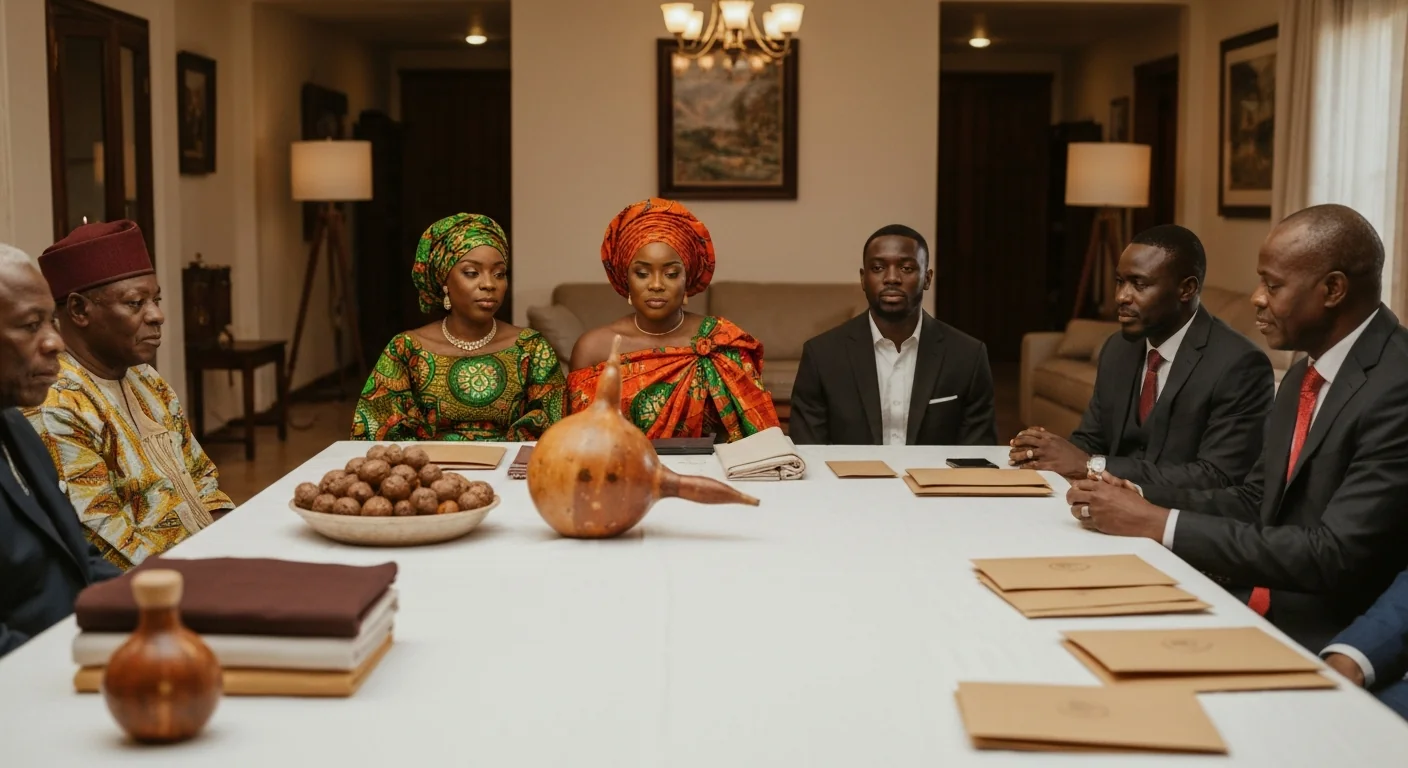
Before any ceremony can take place — before the first song is sung or the first dress is tried on — there is lobola. Known as ilobolo in Zulu, lobola across Sotho and Ndebele groups, and by various names in other cultures, this is the bride price negotiation that forms the foundation of the marriage.
What Lobola Is
Lobola is the transfer of wealth from the groom’s family to the bride’s family as a formal acknowledgement of the marriage. Historically quantified in cattle, it is today almost universally paid in cash, though cattle remain symbolically and sometimes practically significant, particularly in rural KwaZulu-Natal and the Eastern Cape.
Lobola is not a purchase price. This distinction matters enormously and is frequently misunderstood. Lobola is a covenant between two families — a gesture of gratitude to the bride’s parents for raising her, a demonstration that the groom’s family values and respects the marriage, and a formal bond that ties the two families together. The transfer creates obligations on both sides and is the legal foundation of the customary marriage.
How Negotiations Work
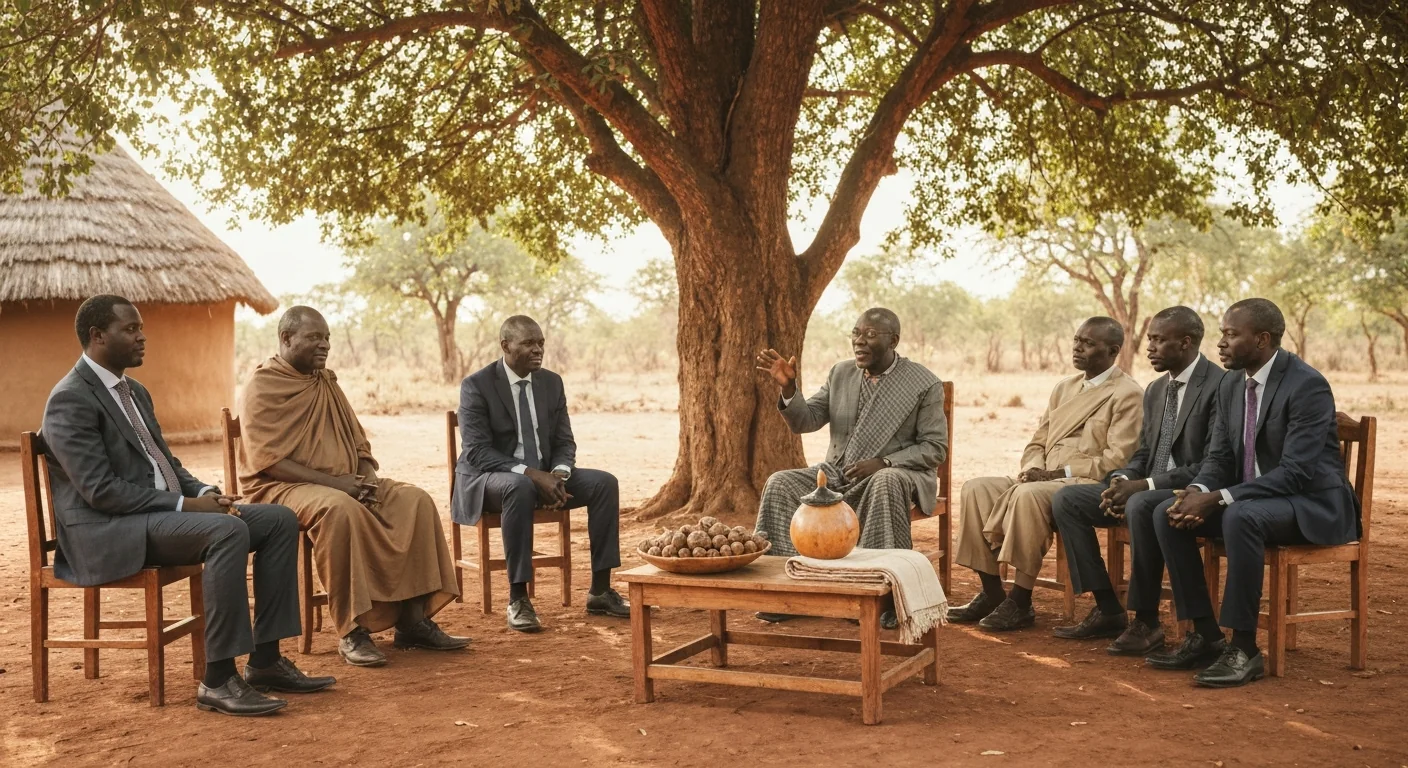
Lobola negotiations are conducted by male representatives from each family — typically uncles, brothers, or trusted elders — never by the couple themselves. The groom’s delegation (called the delegation or ibandla in Zulu) arrives at the bride’s family home and presents the case for their son. The bride’s family receives them formally, often with refreshments and formality.
The negotiations may take place over a single day or across multiple meetings. A list (ilobola list) is presented by the bride’s family, detailing not just the lobola amount but additional customary gifts that may include items for the bride’s mother and grandmother. The groom’s side may negotiate individual items, and the process involves considerable back-and-forth — but always conducted with dignity and respect.
The final agreed figure is not publicly announced. It is a private matter between the families. For couples tracking lobola alongside other wedding expenses, a budget tracker with per-event categories helps keep the full financial picture in one place.
Modern Costs
In 2024 and 2025, lobola amounts in South Africa typically range between:
| Context | Typical Range (ZAR) |
|---|---|
| Rural / conservative negotiation | R10,000 – R30,000 |
| Urban / middle class | R50,000 – R150,000 |
| Professional, educated bride | R80,000 – R250,000+ |
| High-profile or prominent families | R250,000 – R400,000+ |
The equivalent in cattle ranges from 5 to 15 head of cattle, though urban families usually prefer the cash equivalent. Each cow is typically valued at approximately R5,000 – R15,000 depending on the region and the cattle market at the time.
Factors that influence the amount include the bride’s level of education, her professional status, whether she has children from a previous relationship, the groom’s perceived financial standing, and which province the families are in. Urban centres like Johannesburg and Cape Town consistently see higher figures than rural communities.
The Feminist Debate
Lobola is one of the most debated customs in South Africa today. Critics — including many South African women — argue that commodifying women in any context, even symbolically, creates a power imbalance within the marriage. Some argue that high lobola amounts create financial strain on young men, contributing to debt and delayed marriages. Others point out cases where men have used lobola payments to justify control over their wives.
Defenders — also including many women — counter that lobola, properly understood, elevates the bride rather than diminishes her. A high lobola is a statement of her worth. It creates a formal relationship between the families that offers the couple a wider support network. And in communities where customary law governs property and inheritance, the customary marriage that lobola formalises provides the wife with legal protections.
The debate is real, and most thoughtful South Africans hold nuanced positions. What is clear is that lobola remains widely practised — including by highly educated, urban, and professional couples who are very much choosing it as a meaningful cultural act rather than simply following obligation.
Zulu Wedding Traditions
The Zulu people are South Africa’s largest ethnic group, with approximately 12 million speakers of isiZulu. Zulu wedding traditions are among the most visually spectacular and ceremonially rich on the continent.
The Umabo Ceremony
The Umabo is the central traditional Zulu wedding ceremony — the point at which the marriage is fully established in the eyes of the ancestors and the community. Some believe that without the Umabo, a couple is not truly married in the Zulu tradition, regardless of any civil or church ceremony.
The Umabo typically takes place at the groom’s family home and involves several key moments:
The bride’s arrival: The bride arrives with her delegation, dressed in traditional Zulu attire. She is often carried or escorted to avoid her feet touching the ground — a gesture of protection and honour.
Ancestral rituals: A cow is slaughtered to honour the ancestors of both families and seek their blessing on the union. This is not a gesture of superstition but a deeply theological act — an acknowledgement that the living exist in relationship with those who came before, and that a marriage requires the blessing of both.
The bride’s gifts: The bride distributes gifts to the groom’s family members — starting with the most senior relatives. Each gift is presented with a song and a ceremony. The gifts (blankets, fabric, household items) are the bride’s way of introducing herself to her new family and expressing her commitment to them.
Ukuvuma: The bride performs a dance of acceptance, signalling her willing entry into the marriage and the new family.
The feast: A communal meal follows, with traditional Zulu food and beer. The celebration continues with singing, dancing, and the coming together of both family delegations.
Ukukhomba — The Beer of Respect
Ukukhomba is the tradition in which the bride presents homemade traditional beer (utshwala) to the groom’s family as a gesture of respect and welcome. The brewing of the beer is itself significant — it is done by the bride and female relatives, and the quality of the beer is noted. Presenting beer to elders is one of the oldest forms of respect in Zulu culture, and Ukukhomba formalises this within the wedding.
Umemulo — Coming of Age
While not technically part of the wedding itself, the Umemulo ceremony is closely tied to marriage in Zulu culture and is worth understanding. Umemulo celebrates a young woman who has reached adulthood (traditionally at age 21) and signals that she is now ready for marriage. The ceremony involves the slaughter of a cow, the young woman’s wearing of traditional attire, and the performance of the ukusina dance with a spear. Guests bring gifts and offer blessings.
A woman who has had her Umemulo carries that ceremonial status into her lobola negotiations — it is understood to reflect the care and investment her family has made in her upbringing.
Traditional Zulu Attire
Zulu wedding attire is a visual language in itself:
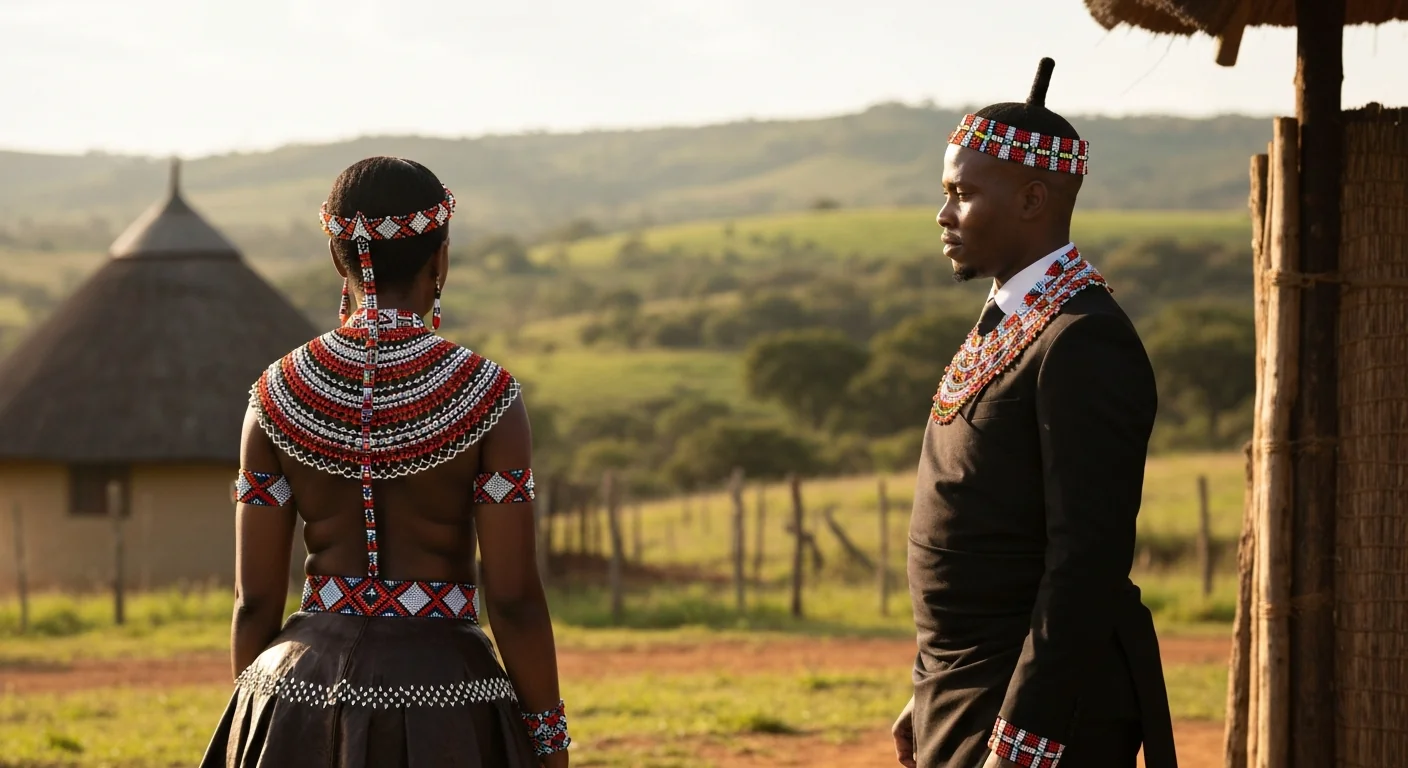
- The bride (umakoti): Typically wears an isidwaba (black cowhide skirt), a red-and-white beaded top, a headscarf, and elaborate beaded jewellery. After joining the groom’s family, she may cover her face with a red ochre face covering as a sign of modesty before her new in-laws.
- The groom: Wears animal skin attire (ibheshu), carrying a shield and spear as symbols of protection and strength.
- Female guests: Often wear isishweshwe fabric dresses in rich colours — navy, burgundy, or green — with matching doeks (headscarves).
Xhosa Wedding Traditions
The Xhosa people, concentrated primarily in the Eastern Cape, are the second-largest ethnic group in South Africa. Xhosa wedding traditions share certain elements with Zulu customs (including lobola) but have their own distinct ceremonies, attire, and symbolism.
Ukuthwala — A Note on History
Ukuthwala is a practice that appears in many accounts of Xhosa wedding traditions, but it must be framed carefully. Historically, Ukuthwala described a symbolic ritual in which a consenting couple would stage a mock “capture” of the bride — a ceremonial enactment that formally launched the marriage process. It was never intended as a coercive act between consenting adults in its original traditional context.
In recent decades, however, the term has been associated with cases of forced marriage in some rural communities, which South African courts and child protection authorities have consistently condemned as illegal. These practices bear no resemblance to the respectful customary tradition and are not representative of Xhosa culture as practised by the vast majority of Xhosa people. Contemporary Xhosa weddings are celebrations of mutual consent, family agreement, and cultural pride.
The Wedding Ceremony
A traditional Xhosa wedding involves multiple stages spread across days. The groom’s family formally arrives at the bride’s family home for negotiations and the initial customary payments. The ancestors are honoured through prayer and the slaughter of livestock. Elders from both families speak, offer blessings, and formalise the union.
The Three Attire Changes
One of the most distinctive features of a Xhosa wedding is the bride’s attire journey across the day. The bride changes outfits multiple times, each change marking a transition in her ceremonial status:
First attire: The bride begins in her family’s colours and fabric, representing her as her parents’ daughter. She is presented to the groom’s family as she was raised.
Second attire: After being formally received by the groom’s family, the bride changes into a darker, more muted outfit for the ukudliswa amasi ceremony — a ritual in which she is welcomed as a daughter into the new family, symbolised by the shared consumption of amasi (soured milk).
Third attire: The full umakoti (new bride) dress — a complete Umbhaco outfit that signals she is now a member of the groom’s family. This outfit is often gifted by the groom’s family.
Umbhaco — The Fabric of Xhosa Celebration
Umbhaco refers to the traditional attire worn by Xhosa women and, specifically, the five-piece ensemble worn by a Xhosa bride. The foundation is isishweshwe fabric — a distinctive printed and dyed cotton textile with intricate geometric patterns, typically in navy blue, burgundy, or rich brown. The word “isishweshwe” derives from “shweshwe” (also written “shweshwe”), and the fabric has been central to Xhosa and Sotho celebration attire for over a century.
A complete Umbhaco ensemble includes:
- A long skirt of isishweshwe fabric
- A matching blouse or top
- An iqhiya (black headscarf) signifying married status
- An ingcawa (small blanket) tied at the waist
- Beaded necklaces and bracelets
The full Umbhaco is the visual statement that the transformation from daughter to wife is complete.
Sotho Wedding Traditions
The Sotho people — broadly encompassing the Basotho of Lesotho and the South Sotho, North Sotho (Bapedi), and Tswana peoples of South Africa — share a broad family of wedding customs. South Sotho (Sesotho) traditions are particularly rich and structured.
The Patlo Ceremony
Patlo (meaning “seeking” or “requesting”) is the formal Sotho engagement ceremony, equivalent in function to a lobola negotiation. The groom’s male representatives visit the bride’s family to formally request her hand in marriage. Unlike some other ethnic groups where lobola negotiations and the wedding may be closely spaced, the Patlo can precede the wedding by many months, giving families time to plan and relationships time to develop.
During the Patlo, the bride’s family receives the groom’s delegation with formality. Gifts are presented, the groom’s family makes their case, and the bride’s family deliberates. The outcome of the Patlo determines the lobola amount and the terms of the marriage agreement.
The Hoba — Welcome to the Groom’s Family
The Hoba is a ceremony in which the bride is formally welcomed into the groom’s family and community. The groom’s family receives the bride with singing, dancing, and celebration. It is an act of public acceptance — the family announces to the community that this woman is now one of them.
The Hoba involves the presentation of gifts from the groom’s family to the bride, including clothing, fabric, and household items. In some communities, it is also the occasion for the bride’s first presentation to the groom’s extended family and neighbours.
The Seana Marena Blanket
Few items in South African wedding iconography are as immediately recognisable as the Basotho blanket, and no blanket carries more status than the Seana Marena. The name translates as “chief’s blanket” or “to swear by the king” — it is historically the blanket of royalty and high status.
At Sotho weddings, the Seana Marena blanket is a bridal gift of profound significance. The bride may be wrapped in the blanket as she is welcomed into her new family — a gesture that simultaneously warms, honours, and symbolises the protection the family extends to her. The blanket’s distinctive design (featuring geometric patterns in ochre, brown, and black, with maize cob motifs) is immediately recognisable across southern Africa.
The Seana Marena is also given as a gift at other major life events — births, initiations, funerals — which speaks to its function as a marker of life’s most significant transitions.
Ndebele Wedding Traditions
The Ndebele people of Mpumalanga and Limpopo are famous throughout the world for their bold geometric art — the painted houses of Ndebele villages have appeared in fashion collections, airline liveries, and design museums globally. Less well-known is the fact that this same visual language extends to an extraordinarily codified system of beadwork that maps the entire journey of a woman’s life.
Beadwork as a Life Stage System
In Ndebele culture, the type, quantity, and arrangement of beadwork worn by a woman communicates precisely where she stands in her life journey. This is not metaphorical — it is a literal visual grammar that any member of the community can read.
The progression works as follows:
Young girls wear a small beaded apron (lighabi) — simple, with minimal coverage, appropriate to childhood.
Pubescent girls transition to the isiphephethu — a larger rectangular apron of hide or canvas, decorated with geometric beaded patterns. This signals the transition out of childhood.
Engaged women begin to accumulate additional beaded items, particularly around the neck, wrists, and ankles. The anticipation of marriage begins to be read in her adornment.
The bride wears an isiyaya (bridal veil) that may cover her face during the liminal transition of the wedding ceremony — moving from one status to another. She also wears a nyoga: a long train of white beads woven by her female relatives. The patterns, length, and structure of the nyoga communicate whether she is the groom’s first wife and details about her family lineage.
Married women wear isigolwani — thick hooped rings of twisted grass covered in beads, worn around the neck, arms, legs, and waist. These rings dramatically alter the visual silhouette of a married Ndebele woman and are among the most iconic images in South African culture. Copper and brass dzilla (rings) are worn around the arms, neck, and legs as symbols of loyalty to the husband — traditionally removed only upon the husband’s death.
Mothers add the ijogolo apron — a five-sided beaded apron in which the central panel depicts a mother figure surrounded by children. The apron is earned through motherhood, not simply marriage.
The Wedding Ceremony
The Ndebele wedding ceremony itself involves lobola negotiations, the formal presentation of the bride to the groom’s family, and celebratory feasting and dancing. The bride’s family presents her in the full ceremonial beadwork appropriate to her status. The visual richness of a Ndebele wedding — the painted homestead backdrop, the bride’s beadwork, the geometric-patterned fabrics of the female guests — creates a celebration that is, quite literally, a work of art.
Modern South African Weddings
South Africa’s wedding industry is one of the most sophisticated and varied on the continent, shaped by the country’s economic diversity, its cosmopolitan cities, and its extraordinary natural landscapes.
Vineyard Weddings
The Cape Winelands — Stellenbosch, Franschhoek, Paarl, and the surrounding valleys — have become one of the world’s most sought-after wedding destinations. Estates like Cavalli, Mont Rochelle, and dozens of others offer a combination that is hard to match anywhere: European-style architecture, world-class wine, mountain backdrops, and the warm South African sun.
A Cape Winelands wedding typically features outdoor ceremonies on estate grounds, reception dinners in barrel cellars or glass pavilions, and accommodation on the estate for the couple and core family. The food — incorporating Cape Malay flavours, South African braai traditions, and international cuisine — is invariably excellent. Prices reflect the premium experience, but for international guests paying in foreign currency, South Africa’s exchange rate makes even high-end experiences accessible at a fraction of equivalent European costs.
Bush Weddings
For couples drawn to wilder landscapes, a South African bush wedding offers something genuinely extraordinary. Private game reserves in Limpopo, Mpumalanga, the Karoo, and the Eastern Cape provide an incomparable backdrop. The ceremony takes place as the sun sets over the bush, with the sound of birdsong and the possibility — which is real — that elephants are visible in the distance.
Bush weddings require careful planning (generator power, transport logistics, tent structures for unpredictable weather) but the payoff is a wedding that no guest will ever forget. A planning checklist tailored to your wedding date helps ensure nothing is overlooked when the venue is remote and last-minute fixes are not an option. Some lodges specialise in bush weddings and manage all the details in-house.
Diaspora Adaptations
South Africa has a significant diaspora in the United Kingdom, Australia, Canada, and the United States. For South Africans abroad marrying someone from the same cultural background — or introducing their traditions to a partner from elsewhere — diaspora weddings have developed creative adaptations.
Traditional ceremonies abroad: Some diaspora couples hold a stripped-down lobola and traditional ceremony in their country of residence, with a delegation of family members (sometimes video-calling relatives in South Africa) before a larger celebration.
Return weddings: Many diaspora couples return to South Africa specifically to marry, combining the cultural ceremonies with a destination wedding experience for international guests. The exchange rate advantage means that international guests paying in GBP, AUD, or USD find South Africa remarkably affordable — and the couple gets access to the full range of South African venue and vendor options.
Hybrid ceremonies: In cities like London and Melbourne with significant South African communities, caterers, DJs, and ceremony specialists who understand Zulu, Xhosa, and Sotho traditions are increasingly available.
The Role of Multi-Ceremony Planning
Whether you are navigating a traditional Umabo followed by a white wedding, or coordinating a Patlo ceremony in Lesotho with a vineyard reception in Franschhoek, the logistical complexity of a dual or multi-ceremony South African wedding is real. Separate timelines, separate vendor relationships, two sets of family expectations, and a budget that must stretch across multiple events all require disciplined planning.
This is why tools that consolidate multi-event wedding planning into a single dashboard — like Harusi Hub — have become genuinely useful for South African couples navigating this complexity. Managing your traditional and white wedding from one place, with shared guest lists, unified vendor tracking, and a single wedding website, reduces friction and keeps both families informed.
For those interested in a broader overview of African wedding traditions, our African Wedding Traditions Guide covers ceremonies from across the continent and the common threads that connect them.
South African weddings are not simple celebrations. They are negotiations, ceremonies, ancestral conversations, family reunions, fashion statements, and community events all at once. The lobola establishes the covenant. The Umabo honours the ancestors. The Umbhaco marks the transformation. The Seana Marena wraps the bride in status. The beadwork tells the story. And the vineyard or bush reception celebrates the result.
In a country that has navigated immense complexity — and emerged with eleven languages, a constitutional democracy, and an extraordinary cultural flowering — the wedding is, in many ways, South Africa in miniature: diverse, layered, occasionally complicated, and ultimately deeply worth celebrating.
Planning a multi-ceremony wedding?
Manage your traditional and white wedding from one dashboard.
Start Planning Your Wedding