African Wedding Traditions: A Complete Guide to 20+ Countries
A region-by-region guide to the most important wedding traditions across Africa — East, West, North, Southern, and Central — with practical planning context for each.
African Wedding Traditions: A Complete Guide to 20+ Countries
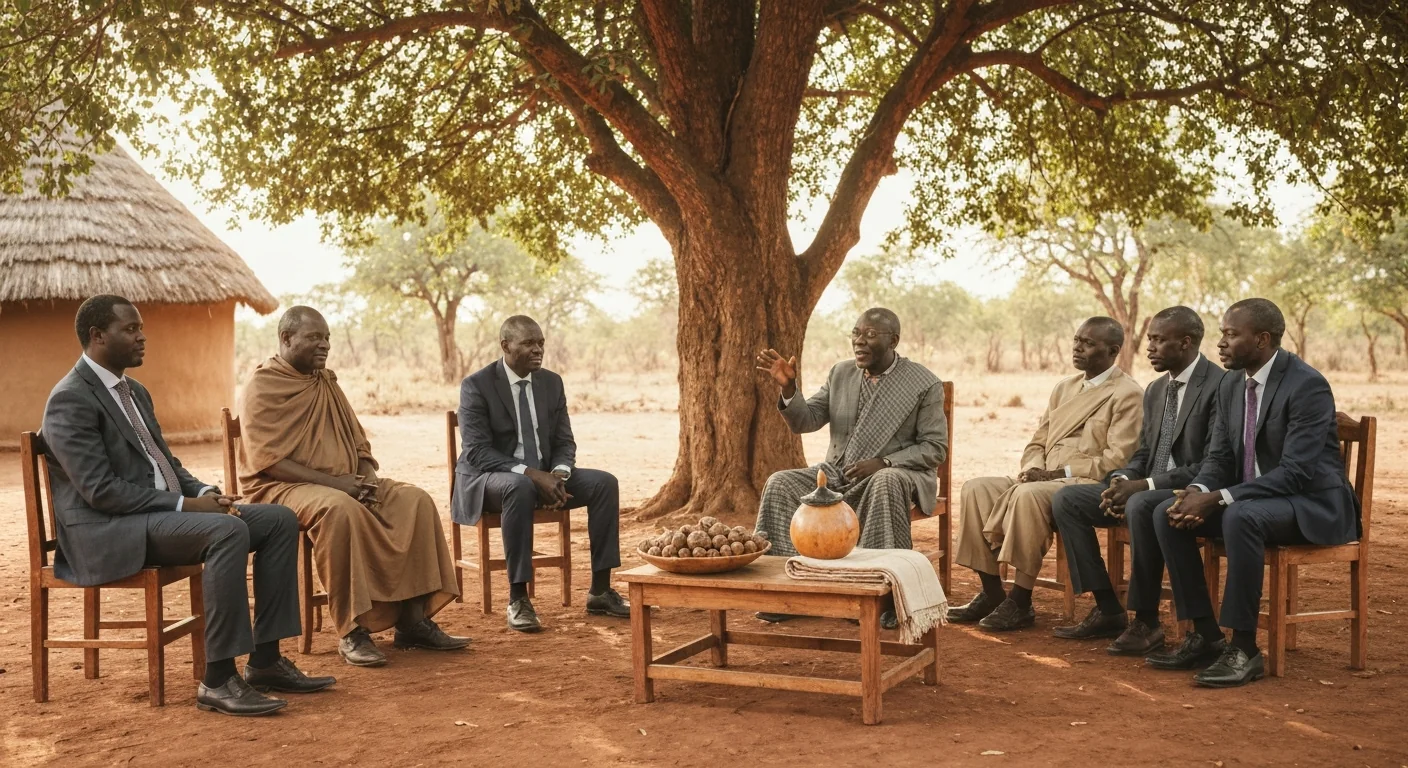
Picture two families sitting across from each other — elders in the middle, a list of gifts on one side and a daughter’s future on the other. An uncle speaks in proverbs. Someone passes a calabash of millet beer. A negotiation stretches across three hours that feel less like a transaction and more like the beginning of an alliance between lineages. Then, three weeks later, the same couple stands in church. And three days after that, they’re at the registrar’s office signing government forms. By the time it’s all over, they’ve been “married” in three distinct ceremonies, each witnessed by a different set of people, each carrying its own kind of legitimacy.
This is African marriage. Not one event — a series of events. Not one tradition — dozens of them, each evolved across centuries of distinct cultures.
You’re planning an African wedding — or you’re marrying into one — and the traditions feel overwhelming. Every family seems to expect something different, every community has its own ceremonies, and no single guide covers it all. That’s not your imagination. Africa has 54 countries, over 3,000 distinct ethnic groups, and marriage traditions as varied as the continent itself. Of course there’s no simple checklist.
What this guide does is give you a region-by-region map of the most widely practiced and most commonly searched traditions across the continent — with enough practical context to actually use it. You won’t become an expert on every culture (neither will we). But you’ll go from confused about customs to confidently navigating the traditions that matter to your families. You’ll honour your heritage and your partner’s — without the guesswork.
A note upfront: no single article can do justice to 3,000 ethnic groups. This guide covers the traditions that are most widely practiced, most commonly asked about, and most likely to be relevant to couples planning a wedding today. Where we go shallow, we link to deeper resources. Where communities are underrepresented in online content, we say so honestly.
Understanding African Wedding Structure — Traditional, Religious, and Civil
Before diving into specific traditions, there’s one framework you need to understand: most African couples navigate not one wedding, but three. This is the single most practically useful thing this article can tell you.
The Three-Ceremony Structure
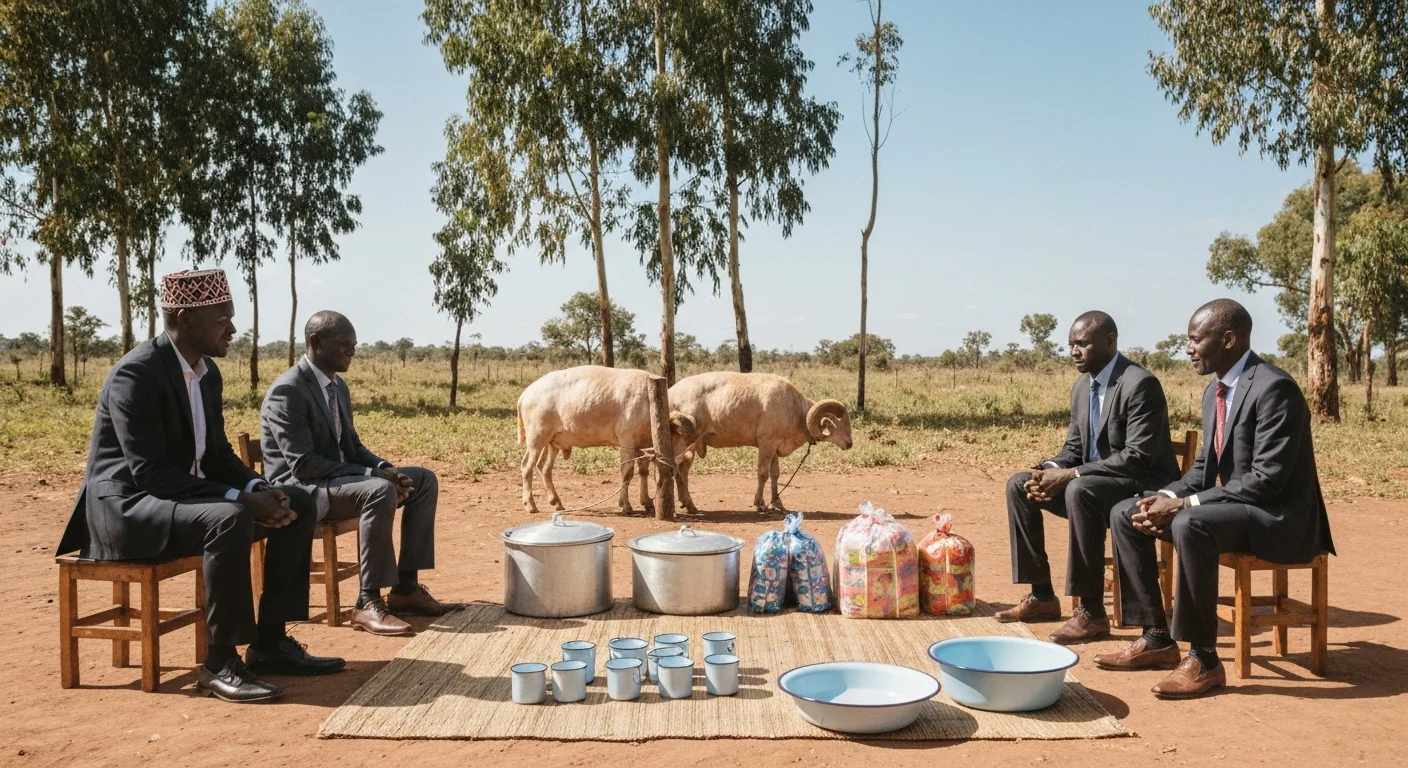
1. The Traditional Ceremony This is the cultural wedding — the one the families care most deeply about. It’s rooted in ethnic customs, governed by elders, and often involves bridewealth negotiations, symbolic rituals, specific attire, and community celebration. In Kenya, this might be a ruracio or ayie. In Uganda, a kwanjula. In Zimbabwe, a roora. In South Africa, a lobola negotiation followed by an umabo. Legally speaking, a traditional ceremony alone doesn’t register your marriage in most countries — but socially and spiritually, it’s the ceremony that counts.
2. The Religious Ceremony For the majority of Africans, marriage involves a church or mosque blessing. Christian denominations (Catholic, Anglican, Pentecostal, and many others) and Islamic nikah ceremonies each have their own requirements and rituals. The religious ceremony often carries deep personal meaning and is the one most guests associate with the word “wedding.” In many families, the religious ceremony is the most visible and most photographed event.
3. The Civil Registration This is the legal marriage — the government paperwork that makes your union recognised by the state. In Kenya, this means registering under the Marriage Act, 2014, at the registrar’s office. Most African countries have similar requirements. Civil registration can happen on the same day as one of the other ceremonies or at a completely separate appointment. Either way, it’s legally required for the marriage to exist in the eyes of the state.
How Couples Sequence the Three
There’s no single right order, and different communities have different conventions. The most common sequence in East Africa is: traditional ceremony first, religious ceremony second, civil registration third (sometimes on the same day as the church wedding). Some couples do civil registration before either ceremony to have the legal paperwork done. Some do the traditional and religious on the same weekend, back to back.
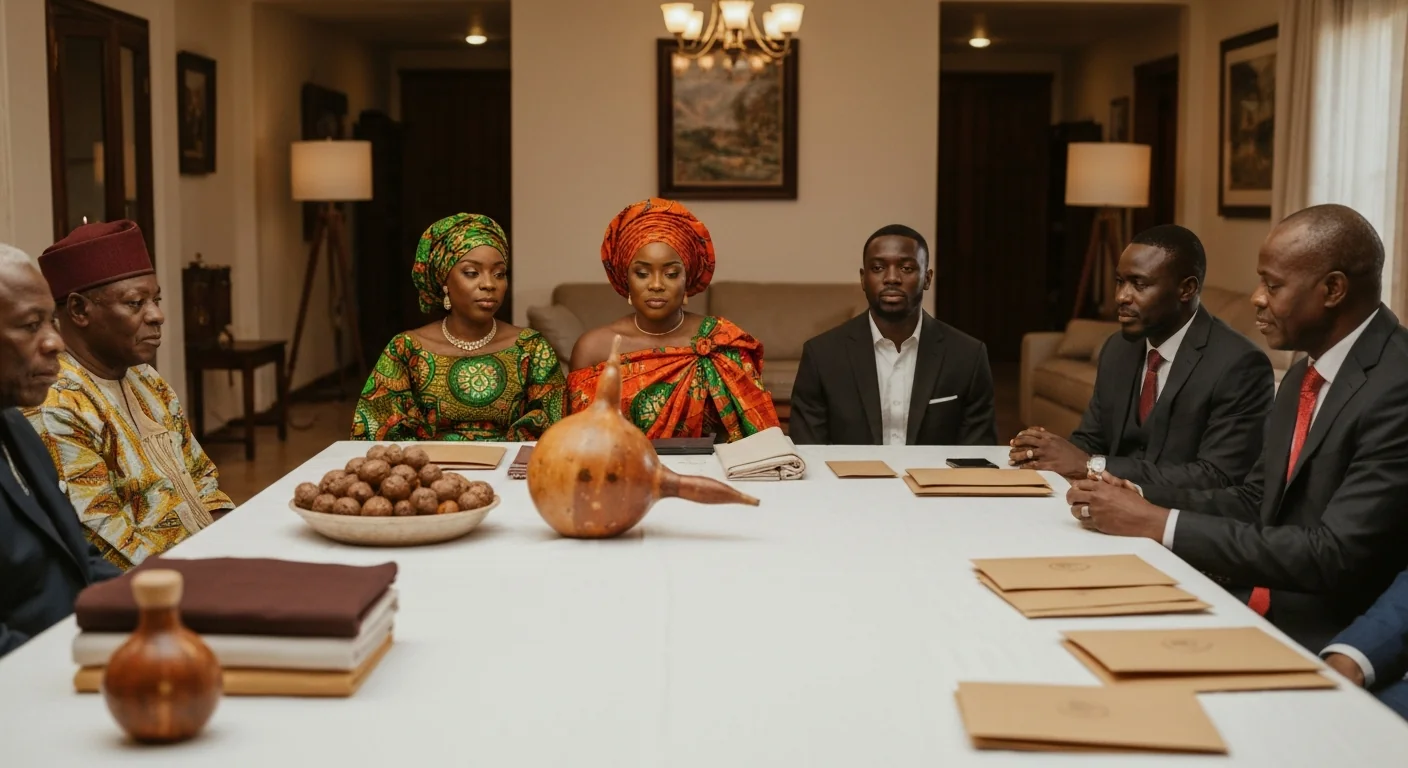
What matters is understanding that these ceremonies serve different purposes and different audiences. Traditional ceremonies are for the families and community. Religious ceremonies are for the faith community and personal conviction. Civil registration is for the government. Planning an African wedding means planning for all three — with separate budgets, separate guest lists, and separate logistics for each. Harusi Hub’s event management is built for exactly this — you can create separate events for each ceremony, each with its own guest list, RSVP tracking, and budget.
Bridewealth — The Pan-African Institution
Before going country by country, there’s one concept that appears — in some form — across nearly every region of Africa: bridewealth.
What Is Bridewealth?
Bridewealth is a transfer of gifts, animals, or money from the groom’s family to the bride’s family as part of the marriage process. It appears under many names: lobola in Southern Africa, ruracio in Kikuyu tradition, roora in Zimbabwe, bogadi in Botswana, dot in DRC, mahr (in Islamic tradition, paid to the bride herself rather than her family). The specifics vary enormously — what’s given, how much, who negotiates, and what the exchange symbolises.
The Terminology Debate: “Bride Price” vs. “Bridewealth”
The term “bride price” is still widely used, but many African scholars, feminists, and cultural practitioners prefer “bridewealth” — and for good reason. “Bride price” implies a purchase transaction, as though the woman is a commodity being sold. “Bridewealth” frames the exchange differently: it’s a transfer between two families that creates alliance, expresses gratitude, and establishes the groom’s family’s commitment. The bride’s family isn’t selling her — they’re entering a long-term relationship with another family, and the exchange marks that relationship with material seriousness.
This doesn’t resolve the feminist critique, which is real and worth acknowledging: bridewealth can inflate beyond what families can realistically pay, driving men into debt or creating pressure to delay marriage. In some contexts, it has been used to enforce a transactional view of women. Across Africa, women’s rights organisations and community groups have advocated for reform — not necessarily abolition, but moderation, standardisation, and removing the financial coercion that sometimes accompanies negotiations.
Modern Adaptations
In practice, most families are pragmatic. Bridewealth is increasingly symbolic — paid in instalments, negotiated down by mutual agreement, or expressed through token gifts rather than full cattle herds. Urban couples often go through the ritual form while both families quietly agree on a manageable amount. Some communities have codified maximum limits. Social media has created a genre of “roora reveal” and “ruracio recap” content that sometimes glamourises the spectacle while quietly glossing over the financial stress. The tradition is alive, evolving, and genuinely meaningful — while also carrying tensions that many families are actively navigating.
East African Wedding Traditions
East Africa is Harusi Hub’s home territory — and it’s the most diverse wedding culture region on the continent. Kenya alone has over 40 distinct ethnic groups, each with its own marriage practices.
Kenya
Kenya’s wedding scene is a study in multitude. The Kenyan wedding traditions overview covers the landscape broadly, but the depth is in the communities themselves.
Kikuyu — Ruracio
The Kikuyu are Kenya’s largest ethnic group, and their marriage process is one of the most elaborate on the continent. The centrepiece is ruracio — the bridewealth negotiation ceremony — but it sits within a five-stage marriage process that begins with Kumenya Mucii (investigating the bride’s home) and ends with Ngurario (the sacred final sealing of the union with a ring).
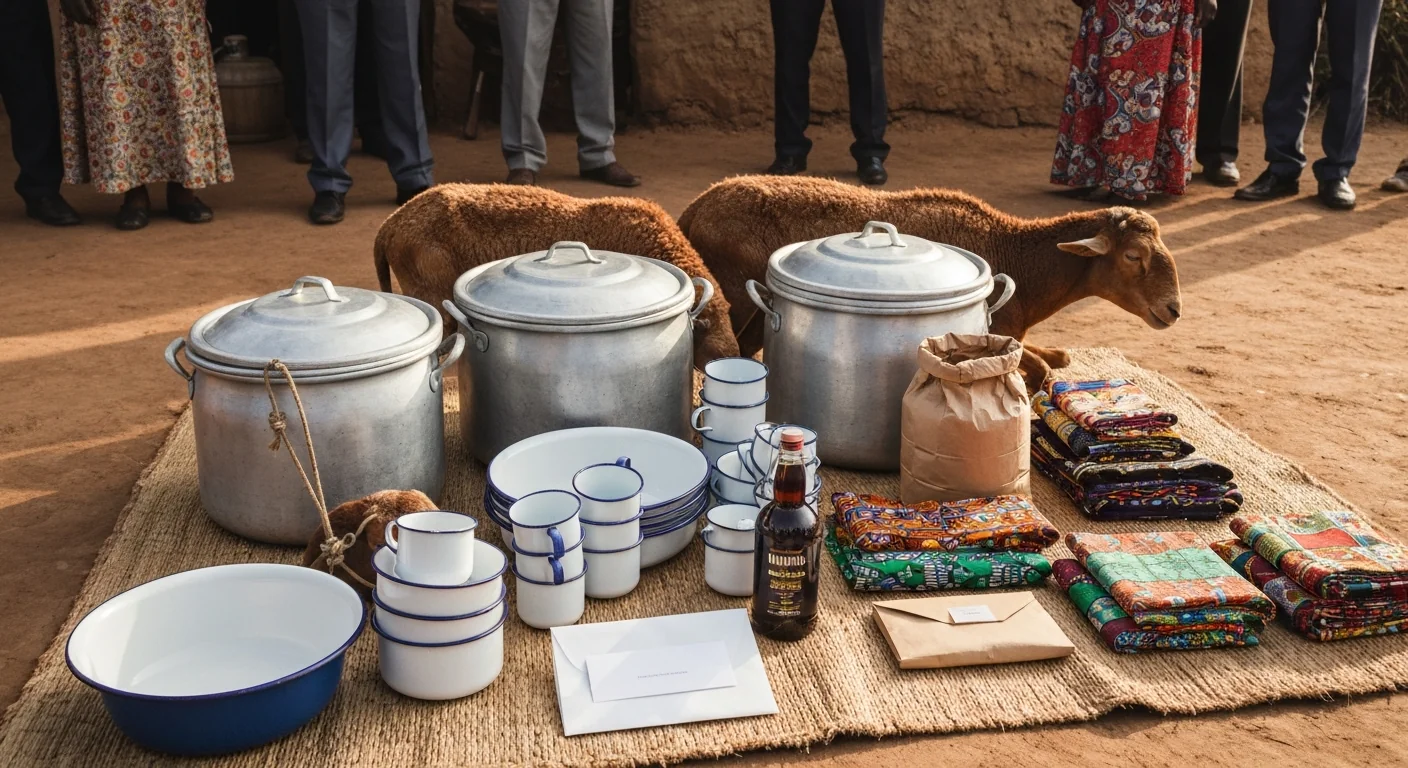
Ruracio involves the groom’s family arriving at the bride’s home with gifts: historically goats and cattle, now often including cash, household items, and specific ceremonial gifts (a suit for the father, fabric for the mother, goats for specific relatives). Negotiations can span multiple visits over months. The complete Kikuyu ruracio guide covers every stage, every gift category, and every etiquette rule in detail.
What makes Kikuyu tradition distinctive is its clan system: both families’ lineages must be investigated to ensure there’s no shared ancestry. An elder recites genealogies. The nine clans of Gikuyu and Mumbi are the framework within which every marriage is situated. The Kuhanda Ithigi engagement ceremony and the Ngurario ceremony each have their own dedicated guides.
Luo — Ayie
The Luo of western Kenya practice ayie — a consent and bridewealth ceremony rooted in cattle, community, and the explicit consent of the bride herself. Ayie literally means “I agree” — the bride’s verbal acceptance is a central, non-negotiable moment in the ceremony. Without her consent, the marriage is not considered legitimate.
The Luo wedding traditions guide and the dedicated ayie ceremony guide cover the cattle negotiations, the role of the jagam (spokesperson), the feast, and how modern Luo couples are adapting the tradition. The Luo nyombo bride price guide covers the financial side in detail.
Maasai
Maasai marriage is elder-arranged and deeply tied to the age-grade system that governs Maasai society. Marriages are typically arranged between families, with the father’s blessing central to the legitimacy of the union. The groom must be a moran (warrior) who has graduated to the next age-grade before marriage is appropriate. Cattle form the core of the bridewealth exchange.
The Maasai wedding traditions guide covers the ceremony structure, the role of the laiboni (spiritual leader), and how urban Maasai couples are navigating tradition in modern contexts.
Other Kenyan Communities
Kenya’s wedding traditions don’t end with the three most visible communities. Each of the following has its own full guide on Harusi Hub:
- Kalenjin wedding traditions — and the dedicated Kalenjin koito engagement guide
- Kamba wedding traditions
- Luhya wedding traditions
- Kisii wedding traditions
- Meru wedding traditions
- Samburu wedding traditions
- Turkana wedding traditions
- Mijikenda wedding traditions
- Somali wedding traditions (Kenya)
- Swahili coastal traditions
The coastal Swahili tradition in particular is distinct — a sophisticated blend of Bantu, Arab, and Islamic influences that produces multi-day wedding celebrations with elaborate henna ceremonies, kanzu and buibui attire, and taarab music.
Tanzania
Tanzania’s mainland wedding traditions share roots with neighbouring communities across East Africa, while the Zanzibar coast follows a distinctly Swahili-Arab-influenced tradition. The distinction matters: a wedding in Dar es Salaam and a wedding in Stone Town are culturally very different events.
On the mainland, the Chagga of Kilimanjaro are one of Tanzania’s most well-documented communities for marriage traditions. The Chagga wedding traditions guide covers their ceremonies, including the ngoma (drum) dances that mark key moments in the celebration. Cattle remain central to Chagga bridewealth.
The Haya of northwest Tanzania (Kagera region) have their own distinctive practices covered in the Haya wedding traditions guide. Haya marriage ceremonies emphasise clan consultation and the exchange of obugabe (royal-lineage related gifts for noble families).
Tanzania is also notable for the legal landscape: the marriage registration in Tanzania guide covers what couples need to do to register their union legally under Tanzanian law.
Uganda
Uganda’s most celebrated traditional wedding ceremony is the kwanjula — a Buganda (Ganda) introduction and wedding ceremony that has become something of a national template, observed with variations across many Ugandan communities.
In kwanjula, the groom’s delegation — dressed in kanzu (long white robes) for men and gomesi (formal floor-length dresses) for women — arrives at the bride’s family compound. The delegation must follow strict protocol: they cannot enter without invitation, must prove their identity and intentions through formal speeches, and must present gifts at every stage of the proceedings. The ssenga (the bride’s paternal aunt) plays a central role, coaching the bride and acting as cultural mediator.
One of the most distinctive moments is the roasted coffee ceremony: the bride and groom share roasted coffee beans as a symbol of their bond — a gesture rooted in Buganda’s coffee-growing culture. The kwanjula guide for Uganda and the kwanjula shopping list cover the ceremony and gift requirements in full detail.
Rwanda
Rwanda’s traditional wedding ceremony is the gusaba — the formal proposal and request for the bride’s hand. Gusaba translates roughly as “to ask” or “to request,” and the ceremony centres on the groom’s family formally approaching the bride’s family with gifts and an eloquent request.
Elder speeches are central: both families present eloquent ibyivugo (oral poetry and praises) and the proceedings are conducted with great formality. Banana beer (inzoga y’ubuki) is poured and shared as a symbol of welcome and agreement. The Gusaba Rwandan wedding traditions guide covers the full ceremony.
Rwanda’s wedding culture is also notable for how quickly it has modernised — Kigali has one of Africa’s fastest-growing wedding industries, with contemporary couples often combining gusaba with church ceremonies and increasingly elaborate receptions.
Ethiopia
Ethiopian wedding traditions are structured around a three-day celebration that remains one of the most elaborate on the continent. The process begins with telosh (the formal engagement and gift presentation), moves through shimgilina (elder mediation to resolve any family concerns), and culminates in the wedding day itself.
Shimgilina is particularly distinctive: elders from both sides act as mediators, ensuring both families are genuinely aligned before the marriage proceeds. This isn’t mere formality — it’s a structured conflict-resolution process designed to surface and address any objections before they become post-wedding problems.
The habesha kemis — a traditional white cotton dress with colourful embroidery along the hem and neckline — is the iconic bridal attire, though many urban Ethiopian brides wear multiple outfits across the three days. The eskista dance, with its characteristic rolling shoulder and arm movements, is central to Ethiopian wedding celebrations.
Ethiopia’s diversity means this three-day structure has many regional variations: Amhara, Tigrinya, Oromo, and Somali-Ethiopian traditions all have their own specific elements. The Ethiopian wedding traditions guide covers the most widely practiced elements.
Sudan and Somalia (Brief)
Sudan’s wedding traditions reflect its Arab-African cultural blend. The henna night (laylat al-henna) is one of the most celebrated pre-wedding events — an elaborate women’s gathering where intricate henna patterns are applied to the bride’s hands and feet. The zaffa procession (a musical escort of the bride and groom) and the jirtik ritual (in which the bride’s female relatives dance around her before the wedding) are distinctive elements.
Somalia follows Islamic tradition closely. The nikah is the central religious ceremony. The diq ritual involves the bride’s female relatives cooking and serving a special rice-and-meat dish as part of the celebration. Dirac (the traditional Somali dress — a long, flowing garment in bright silk or organza) is the signature bridal attire.
West African Wedding Traditions
West Africa produces some of the continent’s most visually spectacular weddings — and some of its most complex ceremonial structures.
Nigeria
Nigeria is a country of 250+ ethnic groups, and its three dominant groups — Yoruba, Igbo, and Hausa — have three entirely different ceremonial traditions. Nigerian weddings are famous for their scale, colour, and the meticulous organisation of aso-ebi (matching outfits for family and friends). Understanding Nigeria means understanding that there is no single “Nigerian wedding.”
Yoruba
The Yoruba traditional wedding (igbeyawo) is one of the most choreographed ceremonies in Africa. Two female MCs — called alagas — run the entire event with a combination of formality, humour, and command that makes them genuinely essential. The alagas control who enters, who sits, what happens when, and how much money is extracted from the groom’s family at each stage.
Key moments include:
- Prostration: The groom and his male relatives prostrate fully (lie flat on the floor) before the bride’s father and senior male relatives as a sign of respect. This is non-negotiable.
- The Tasting of Four Elements: The bride offers the groom four symbolic tastes — lemon (bitterness/hardship), vinegar (sourness/challenges), cayenne pepper (passion/heat), and honey (sweetness/joy) — representing the full range of married life.
- Aso-Ebi: Family and friends of both sides wear matching outfits, carefully coordinated in fabric and colour. The aso-ebi selection, purchase, and distribution is itself a significant logistical and social undertaking.
- Gele: The bride’s gele (elaborate head wrap) is a work of art — often tied by a specialist on the day. The style, height, and fabric communicate status.
Igbo
The Igbo traditional wine-carrying ceremony (ikú aka or ime ego) is one of Africa’s most recognisable wedding moments. After the iku aka — the formal inquiry and permission visit by the groom’s family — the wedding proper begins with the wine-carrying: the bride, carrying a calabash of palm wine, must find the groom in a crowd of people. He’s often hidden by his friends. When she finds him and presents him with the wine, he drinks, and then both return to pour wine for their parents. It’s simultaneously a public declaration of love and a test of commitment — she has to find him among everyone.
The exchange of nzu (white chalk) and omu (fresh palm fronds) marks various stages of the ceremony, each with protective and symbolic meaning.
Hausa
Hausa marriage is deeply Islamic in structure. The Fatiha (Fatiha ceremony) is the Islamic solemnisation of the marriage before witnesses. Kunshi is the bridal preparation — a multi-day process in which the bride is prepared, beautified, and readied for her transition to her husband’s home. Kola nuts are presented at every significant moment as a symbol of welcome and respect. Hausa weddings are typically more private than Yoruba or Igbo celebrations, with strict gender separation and an emphasis on family intimacy over public spectacle.
Ghana
Ghana’s wedding traditions are built around Kente cloth and the Knocking ceremony (kokoo ko in Akan — literally “knock knock”). The knocking ceremony is the formal request for the woman’s hand: the groom’s family arrives at the bride’s family home and literally knocks (or sends a representative to knock) to formally request entry and permission to marry.
Kente is far more than fabric. With over 300 distinct patterns, each Kente cloth carries symbolic meaning — specific patterns are reserved for royalty, others for marriage, others for specific clans. Wearing the wrong Kente to a formal occasion is a genuine faux pas. The choice of Kente for a wedding is a serious family decision.
Libation pouring — calling on the ancestors to bless the union — is central to Ghanaian traditional ceremonies. An elder pours water, schnapps, or local gin while speaking to the ancestors in the local language. And money spraying — guests dancing up to the couple and placing cash directly on their foreheads or throwing it in the air around them — is as central to the celebration as the cake.
Senegal
Wolof weddings in Senegal centre on the khaddu — the marriage ceremony itself — preceded by a structured engagement process. Sabar drumming (the rapid, high-energy drum style unique to Senegambia) is the soundtrack to celebration. The lakh ritual involves serving a sweet millet porridge (thiakry) as a communal sharing. Women wear elaborate boubou (floor-length embroidered robes) in brocade or bazin fabric.
A Note on Francophone West Africa
Wedding traditions in Ivory Coast, Cameroon, and other Francophone West African countries often fly under the radar in English-language wedding content, but they’re rich. In Cameroon, the traditional ceremony includes a literal hand-tying ritual — this, incidentally, is the likely origin of the English expression “tying the knot.” In Ivory Coast, the kokoko is the traditional knocking/introduction ceremony.
North African Wedding Traditions
North Africa sits at the intersection of Arab, Amazigh (Berber), and African cultural traditions — producing wedding ceremonies that are multi-day affairs with elaborate costume, music, and ritual.
Morocco
Moroccan weddings are legendary for their duration, visual grandeur, and sheer logistical complexity. Traditionally seven days long (now more commonly three), a Moroccan wedding involves a series of distinct events:
- Day 1 — Hammam: The bride attends a purification bath (hammam) with female relatives and friends. This is both practical preparation and a ritual marking the transition from single to married life.
- Day 2 — Henna ceremony: The bride wears a green kaftan (green symbolises luck and prosperity in Moroccan tradition) while a neggafa (specialist henna artist) applies intricate patterns to her hands and feet. The henna night is a women’s celebration with music, sweets, and the singing of aita (traditional folk songs).
- Wedding Day — Up to 5 outfit changes: This is distinctive to Moroccan tradition. The bride changes outfits multiple times throughout the evening — each change representing a different region or aspect of Moroccan culture. Each outfit is announced, and the bride is carried into the room on a Amaria — a decorated platform carried on the shoulders of four men.
An important distinction: urban Arab Moroccan traditions differ significantly from rural Amazigh (Berber) traditions. Amazigh weddings can last up to a week, involve specific ahwash group dance performances, and use different ceremonial attire. Morocco is not monolithic.
Egypt
Egyptian weddings are famous for the zaffa — a musical procession that escorts the bride and groom into the wedding venue. A full zaffa includes drummers, trumpeters, dancers with candles or torches, and sometimes a live band playing a mix of traditional and contemporary music. The sound is unmistakable and the procession can stop traffic.
Zaghareet — the high-pitched ululation produced by women — punctuates every joyful moment of an Egyptian wedding. The henna night (laylat al-henna) precedes the wedding and is a significant celebration in its own right.
A Maghreb Note
The Maghreb (Algeria, Tunisia, Libya, Morocco) shares enough cultural DNA to be discussed together but has enough local variation to require separate treatment when planning. Algeria’s Karakou — an elaborately embroidered velvet jacket worn over a skirt, often in midnight blue or green — is one of North Africa’s most distinctive bridal garments. Tunisia’s Sefsari (a traditional white wrap worn in public) is a different aesthetic entirely. Regional variations across the Maghreb are significant, and assuming one North African tradition applies universally is a mistake.
Southern African Wedding Traditions
Southern Africa’s wedding traditions are dominated by the institution of lobola (the Southern African term for bridewealth) and a rich diversity of ceremonial practices across the region’s many ethnic groups.
South Africa
South Africa has 11 official languages and dozens of distinct ethnic wedding traditions. Four stand out for their prevalence and distinctiveness:
Zulu
Zulu weddings begin with lobola negotiations (ilobolo) — traditionally cattle, now increasingly cash or a combination of both. The standard lobola is 11 cattle (one for the bride’s mother, inhlawulo), though this varies by family and is subject to negotiation. The umkhongi (go-between) is the designated negotiator from the groom’s side.
After lobola is agreed, the umabo ceremony is the traditional wedding itself. The bride and her female relatives present gifts to the groom’s family — blankets, crockery, household items — signifying the bride’s acceptance of her new home. Ukukhomba is the act of the bride offering homemade beer to her new in-laws as a gesture of respect and welcome.
Xhosa
Xhosa tradition includes a symbolic ritual called ukutwala — historically this involved a symbolic “taking” of the bride by the groom’s family, representing her departure from her birth family. It’s important to frame this historically and carefully: modern ukutwala is a symbolic ceremony marking the bride’s transition, not a coercive act. The practice has a complex history and contemporary communities are actively reinterpreting its meaning.
The Xhosa bride changes attire three times during the ceremony, and umbhaco fabric (white cotton with woven patterns in red, black, and white) is the distinctive traditional textile. The amathanga (ceremonial beer) and the role of ancestral spirits in blessing the union are central.
Ndebele
The Ndebele of Mpumalanga and Limpopo are renowned for their beadwork, which constitutes one of Africa’s most codified visual communication systems. Each beaded piece worn by a woman signals her life stage: a young girl wears different beadwork to an engaged woman, who wears different pieces to a married woman. The bridal beadwork (isigolwani) is a complete symbolic statement of her marital status, woven in colours and patterns with specific meaning to her community.
Sotho
The Sotho patlo is the bridal delegation visit — the equivalent of a knocking ceremony. The Seana Marena blanket is central to Sotho wedding symbolism: this specifically patterned blanket is given to the bride and marks her transition to married life. It’s one of the most recognisable garments in Southern African tradition.
Zimbabwe
Zimbabwe’s bridewealth tradition is called roora, and it’s negotiated through a munyai — a designated intermediary who carries messages and proposals between the two families. Direct negotiation between the families themselves is considered too confrontational; the munyai provides both distance and formality.
What’s fascinating about contemporary Zimbabwean roora is how social media has accelerated its commercialisation. “Roora packages” — codified lists of required items with published prices ranging from $300 to $2,000+ — circulate on WhatsApp, discussed openly on social media, and marketed by event planners. The list typically includes the bride’s mother’s payment (mai vamwari), the father’s clothing, lobola cattle (or cash equivalent), a list of household items, and increasingly, catering and photography for the ceremony itself. This is the social media era evolution of a centuries-old practice — simultaneously standardising it and expanding it.
Botswana
Botswana’s traditional wedding process begins with Go Batla Mosadi — the bride-seeking delegation. A representative group from the groom’s family formally approaches the bride’s family to announce their intentions and request negotiations.
Bogadi (the Tswana term for bridewealth) was traditionally 8 cattle, but like most bridewealth traditions across the continent, it has increasingly shifted to symbolic amounts or cash equivalents, especially in urban contexts. What has NOT become symbolic is Seswaa — the pounded meat dish that is absolutely central to every Botswana wedding celebration. Seswaa (slow-cooked beef or goat, pounded until it falls apart) is served at every significant gathering. A wedding without seswaa is, in Botswana, barely a wedding at all.
Zambia
Zambia has two distinctly Zambian wedding traditions worth knowing:
The kitchen party is unique to Zambia among African cultures. Both the bride’s and groom’s female relatives gather to advise the bride (and sometimes the couple) on marriage, household management, and family life. It’s part celebration, part counselling session, and a genuinely warm community tradition.
Cilanga mulilo means “show the fire” — a food ceremony in which the bride demonstrates her cooking ability to her new in-laws. It’s a formal presentation of domestic competence that has both practical and symbolic dimensions, signalling the bride’s readiness to manage a household.
Central African Wedding Traditions
Central Africa is one of the most underrepresented regions in English-language wedding content. The traditions here are rich, sophisticated, and distinctive — and they deserve far more attention than they typically receive online.
Democratic Republic of Congo
The DRC’s traditional wedding ceremony, called the dot (from the French dot — dowry), has one of the most distinctive elements of any wedding tradition on the continent: the groom cannot speak during negotiations. He sits in silence while his male relatives — uncles, brothers, his father — conduct all negotiations on his behalf. He is present but voiceless; his family speaks for him.
The hidden bride tradition is another distinctive element: the bride is concealed from the groom’s delegation until the negotiations are complete and gifts have been accepted. Her revelation is a formal, celebratory moment.
The liputa (a wrapper-style garment in bright printed fabric) is the festive attire, and Congolese rumba and soukous music is central — not background music, but an integral part of the ceremony. Congolese rumba is UNESCO-listed intangible cultural heritage, and its role in Congolese weddings reflects how deeply music and dance are woven into the cultural fabric.
Republic of Congo
Across the river in the Republic of Congo, palm wine is the ceremonial drink of choice for wedding celebrations, elder blessings are central to the ceremony’s legitimacy, and drumming provides the ceremonial heartbeat.
An honest note on Central Africa: Central African wedding traditions are significantly underrepresented in online wedding planning content — including this article. If you’re planning a ceremony rooted in Congolese, Cameroonian, CAR, Gabonese, Equatorial Guinean, or Burundian traditions, the most valuable resource is not any website — it’s the elders and cultural practitioners within your community. Connect with them directly. Their knowledge goes far deeper than anything written down.
Indian Ocean and Southeast Africa
This region is the true differentiator in any comprehensive guide to African wedding traditions — almost no English-language wedding content covers it. But for the couples planning weddings rooted in these cultures, the traditions are as rich and meaningful as anywhere on the continent.
Madagascar
Madagascar’s wedding traditions are deeply connected to ancestor veneration — the relationship between the living and the dead is not metaphorical but actively maintained.
Vodiondry (literally “rump of the sheep”) is the symbolic gift that initiates bridewealth negotiations — the name comes from the traditional practice of presenting a sheep with the rump as a ceremonial offering. Lamba — silk-cotton cloth woven in Madagascar — is the ceremonial textile, worn wrapped around the body and exchanged as a gift.
Famadihana (the Turning of the Bones) deserves mention here, even though it’s not a wedding ceremony: it’s a funerary celebration in which families unwrap ancestral remains, re-wrap them in fresh lamba, dance with them, and return them to the tomb. Why mention it in a wedding guide? Because Malagasy marriage culture is deeply shaped by this relationship with ancestors — weddings invoke ancestral blessing as explicitly as any other life milestone, and understanding the depth of ancestor veneration helps explain why the ceremonies carry such weight.
Mozambique
Mozambique’s bridewealth ceremony is called lobolo (same term as Southern Africa, reflecting shared Bantu cultural roots). The ceremony involves the groom’s family formally approaching the bride’s family through a mediator.
What’s particularly interesting about Mozambique is its internal variation: among the Tsonga and Sena communities of southern Mozambique, bridewealth is practiced. But among the Lomwe and Macua communities of northern Mozambique, bridewealth is traditionally NOT practiced — making them a significant exception to the pan-African pattern. This reflects the matrilineal social structure of these northern communities, where inheritance and lineage pass through the mother’s line.
Malawi
Malawi is another region with fascinating internal variation. In southern Malawi, the dominant marriage pattern is chikamwini — matrilocal residence, meaning the groom moves to the bride’s village after marriage rather than the bride moving to the groom’s family. This inverts the most common pattern across Africa.
In central Malawi, the pattern is chitengwa — patrilocal, with the bride moving to the groom’s village, more similar to other East African patterns.
And then there’s Pelikani — which loosely translates as “share it.” This is the reception format: a 6+ hour event in which different family groups take turns dancing into the central space around the couple, showering them with cash, gifts, and celebration. Each group — the bride’s parents, the groom’s siblings, the bride’s aunts — has its own turn, its own songs, its own moment. The ceremony can feel endless if you don’t understand the structure, but once you do, you realise it’s a beautifully organised way of ensuring every branch of both families gets their moment to publicly celebrate and contribute to the couple.
Modern African Weddings — How Traditions Are Evolving
African wedding traditions are not static. They never were — cultures evolve constantly — but the pace of change in the past two decades has been extraordinary.
Gen Z Adaptations
The generation currently getting married in most of Africa grew up with smartphones, social media, and a global awareness of how their traditions look to the outside world. The results are interesting: condensed ceremonies (a three-day Ethiopian wedding compressed into one day with a curated highlight reel on Instagram), social media ruracio/roora packages (pre-negotiated bundles marketed online), and hybrid aesthetics that blend traditional attire with contemporary styling.
Gen Z couples are also more likely to document their traditional ceremonies with the same production quality as their white weddings — professional photographers at the ruracio, videographers at the kwanjula, live streaming for diaspora relatives who can’t travel.
Diaspora Adaptations
The African diaspora across the UK, US, Canada, and Australia is one of the most active groups engaging with traditional ceremonies — often more actively than their counterparts back home, because for diaspora couples, the ceremony is an act of cultural maintenance in a context that doesn’t automatically provide it.
Common adaptations include: holding a condensed traditional ceremony in a rented community hall in London or Houston; shipping traditional attire internationally; having elders join via video call for ceremonies they can’t attend in person; and combining the traditional ceremony with elements from the partner’s cultural background when the couple is inter-ethnic or international.
Interfaith and Inter-Ethnic Couples
When two traditions meet, the question of whose ceremonies to follow (and how many) is one of the most sensitive negotiations of the engagement period. Increasingly, couples are doing both — a Yoruba traditional ceremony followed by a Kikuyu ruracio, or a Muslim nikah alongside a Zulu lobola negotiation. Elder involvement in planning these conversations early is critical. Surprises on the day are avoidable if both families communicate their non-negotiables in advance.
Bridewealth Inflation and Community Responses
Across most communities, bridewealth demands have inflated significantly over the past generation — driven by urbanisation, shifting social status signals, and in some cases families treating the ceremony as a commercial opportunity. Community responses have been varied: some churches and mosques have issued guidance on “reasonable” amounts; some governments have considered legislation; and many individual families have simply agreed informally to token amounts while preserving the form of the ceremony.
The Rise of Digital Wedding Planning
Wedding websites, digital RSVPs, and online planning tools are now standard for urban African couples. Platforms like Harusi Hub provide the infrastructure to manage multiple ceremonies, multiple guest lists, and the complex logistics of a three-ceremony wedding from a single dashboard. The idea that digital planning tools are somehow in tension with traditional ceremonies misses the point — technology is just the new logistics layer.
LGBTQ+ Couples
It would be dishonest to write a guide to modern African weddings without acknowledging this: same-sex marriage is legally prohibited in the majority of African countries, and in some countries, same-sex relationships carry criminal penalties. This is the legal reality. At the same time, LGBTQ+ Africans exist, form partnerships, and in diaspora and some urban contexts, find ways to honour their relationships with ceremony and community. Traditional ceremonies — in their essence — are about family, community, and commitment. How those values are navigated by LGBTQ+ couples varies enormously by context, family, and community. This guide acknowledges that reality without pretending the legal and social barriers don’t exist.
Planning Your African Wedding — Key Decisions
Understanding traditions is one thing. Planning an actual wedding is another. Here’s the practical framework.
Decision 1: Which Ceremonies Will You Include?
Not every couple does every ceremony. Start by having an honest conversation with both families about which ceremonies are non-negotiable for each family, which are desired but flexible, and which can be simplified or combined.
| Ceremony | Who It’s For | Can It Be Skipped? |
|---|---|---|
| Traditional | Both families, community | Rarely — family pressure is real |
| Religious | Faith community, personal conviction | Depends on family religiosity |
| Civil registration | Legal requirements | No — it’s the law |
Decision 2: Ceremony Sequencing
The most common sequence: traditional → religious → civil. But there are practical reasons to do civil registration first (travel documents, insurance, hospital access). Discuss with your families and your registrar what order makes sense.
Decision 3: Budget Across Multiple Ceremonies
Budgeting for an African wedding means budgeting for multiple events, each with their own venue, catering, attire, and guest list. Harusi Hub’s budget tracker lets you set per-event budgets with over 20 expense categories, so your ruracio spending stays separate from your reception spending while you still see the combined total. A rough framework for Kenyan couples:
- Traditional ceremony: 30-40% of total budget (venues, gifts, bridewealth, food)
- Religious ceremony: 30-40% (venue, flowers, photography)
- Civil registration: 5-10% (fees, small celebration)
- Reception: 20-30% (if separate from religious ceremony)
These are rough guides. Every family is different.
Decision 4: Who Leads the Negotiations?
Bridewealth negotiations should not be led by the couple themselves. Identify the lead negotiators on both sides — typically uncles, fathers, or designated family representatives — early in the process. Brief them on what the other side is expecting. Surprises in a negotiation room are not romantic.
Decision 5: Vendor Lead Times
Traditional ceremonies have different vendor needs than church weddings. Attire for traditional ceremonies often requires longer lead times — Kente cloth from Ghana, habesha kemis from Ethiopia, or custom beadwork takes time to source. If you’re in the diaspora, factor in international shipping. Book early. A planning checklist that generates tasks based on your wedding date will flag vendor booking deadlines automatically, so you don’t miss critical windows.
Decision 6: Use the Right Tools
Managing a three-ceremony wedding across multiple months, with two family networks, multiple guest lists, and a complex budget, is genuinely difficult. Digital planning tools exist precisely for this. Create your wedding website on Harusi Hub to keep everything — traditional, religious, and civil — in one place.
Frequently Asked Questions
Do all African couples have both a traditional wedding and a white (Western) wedding?
Not necessarily, but it’s extremely common. Urban couples across most of Africa conduct at least two ceremonies: the traditional one and a church/reception. The “white wedding” (Western-style church ceremony with white dress) has been absorbed into African wedding culture so thoroughly that many families consider it equally important to the traditional ceremony. Rural couples may do only the traditional ceremony plus civil registration.
What is bridewealth/lobola and can it be paid in instalments?
Bridewealth is a family-to-family transfer of gifts, animals, or money that marks the marriage agreement. Yes — in many communities, it can absolutely be paid in instalments. This is increasingly common as amounts have inflated. Most families would rather receive a genuine, relationship-building instalment arrangement than demand a lump sum that causes financial hardship. Always negotiate openly and honestly.
What happens when partners come from different ethnic groups or countries?
It’s increasingly common, and there’s no single answer — it depends entirely on both families. In general, both families’ traditions deserve respect. Many couples conduct two separate traditional ceremonies (one for each community) or negotiate a combined ceremony that incorporates elements from both. The key is early, honest communication between the families. Don’t assume one tradition will automatically supersede the other.
How long do African weddings last?
It depends entirely on the tradition. Yoruba and Moroccan weddings often span multiple days. A Kenyan church wedding plus reception might be a single full day. An Ethiopian wedding is traditionally three days. The civil registration appointment might be 30 minutes. Plan for the actual tradition you’re following, not a generic estimate.
What should I wear as a guest at an African wedding?
The safest rule: dress up, not down, and when in doubt, ask the couple. Many African weddings specify aso-ebi (matching fabric for guests) — if you receive fabric, wear it. If not, dress formally in something that respects the cultural context. For traditional ceremonies, wearing traditional attire from your own community is usually welcomed and appreciated. Avoid white (often reserved for the bride in Christian-influenced ceremonies). In Islamic ceremonies, modest dressing is essential.
How do diaspora couples handle traditional ceremonies abroad?
With creativity and community. Many diaspora couples hire a community hall, bring in elders from their local community, source attire online or from community members, and video call family members who can’t travel. It’s not the same as being home, but it’s meaningful — and the effort of recreating the ceremony in a foreign context often makes it more consciously intentional than ceremonies back home. Some couples do a symbolic ceremony abroad and a fuller ceremony when they visit home.
Is bridewealth compatible with a feminist view of marriage?
This is genuinely contested, and there’s no consensus answer. Some African feminist scholars argue that bridewealth, properly understood, is about family alliance and mutual respect — not commodification. Others argue that its practice in inflated, coercive forms does treat women transactionally. Many African women hold both views simultaneously: they want their bridewealth paid (it carries social and personal meaning) while also opposing the inflation and pressure. Like many traditions, what matters is the spirit in which it’s practiced.
Planning an African wedding?
Create your free wedding website and manage every ceremony — traditional, religious, and civil — in one place.
Start Planning Your Wedding