Wedding MC Script for Kenya (Bilingual English/Swahili)
A complete bilingual wedding MC script template for Kenyan weddings. Covers every ceremony phase with English and Swahili phrases, timing cues, and tips for a seamless reception.
Wedding MC Script for Kenya (Bilingual English/Swahili)
You have been asked to MC a Kenyan wedding — or you are a couple handing a script to your MC — and you need more than a vague outline. You need the actual words. The Swahili phrases. The transitions. The cues for when to call the DJ, when to pause for laughter, and when to let a moment breathe.
A great MC script is not a cage — it is a safety net. The best emcees in Kenya improvise, read the room, and add their own personality. But they do all of that from a foundation of preparation. Without a script, even experienced MCs lose track of names, fumble transitions, and let the programme drift.
This guide gives you a complete, bilingual MC script template covering every phase of a Kenyan wedding reception. Every section includes English and Swahili options, timing estimates, and practical notes on what is actually happening behind the scenes at each moment.
Use it as-is or adapt it to your specific programme. If you are building your wedding programme from scratch, pair this with our Wedding Program Template for Kenya.
Before the Script: MC Preparation Checklist
Before you step behind the microphone, make sure you have covered these essentials:
- Correct names and pronunciations — Get the full names of the couple, parents, best man, maid of honor, bridal party members, pastor/officiant, and any VIPs. Write phonetic spellings for difficult names.
- Programme order — Confirm the exact sequence with the couple or wedding planner. Do not assume.
- Cultural notes — Which communities are represented? Are there elders who should be acknowledged? Any taboo topics or family sensitivities?
- Language balance — Agree with the couple on the ratio of English to Swahili (and any community language). In most Nairobi weddings, a 60/40 English-Swahili mix works well. For upcountry weddings, Swahili may dominate.
- Sound check — Arrive at least one hour early. Test the microphone. Coordinate with the DJ on music cues.
- Key contacts — Have the phone numbers of the wedding planner, DJ, photographer, and caterer.
- Printed script — Always have a physical copy. Phones die. Screens glare. Paper does not fail.
Phase 1: Guest Arrival and Welcome (30-45 minutes before programme start)
During this phase, guests are arriving and finding their seats. The MC’s role is light — welcoming people, setting the mood, and filling the time without being overbearing.
Script: Informal Welcome
English: “Good afternoon, ladies and gentlemen, and welcome to the wedding reception of [Groom’s Name] and [Bride’s Name]. Please find your seats — your table number is on your escort card at the entrance. We will begin our programme shortly. In the meantime, please enjoy the music, greet your neighbours, and settle in. It is going to be a beautiful afternoon.”
Swahili: “Habari za mchana, mabibi na mabwana. Karibuni sana kwenye sherehe ya harusi ya [Groom’s Name] na [Bride’s Name]. Tafadhali tafuteni viti vyenu — nambari ya meza yenu iko kwenye kadi mliyopewa mlangoni. Tutaanza programu yetu hivi karibuni. Kwa sasa, furahieni muziki na kusalimu majirani wenu. Itakuwa siku njema sana.”
MC Note: Keep this relaxed. Do not start the formal programme yet. You are simply letting people know they are in the right place. If guests are arriving slowly (this is Kenya — they will), fill with light banter: “We see some of you are still navigating Nairobi traffic. We understand. We will give you a few more minutes.”
Phase 2: Opening and Prayer (5-7 minutes)
Once the majority of guests are seated and the couple is ready, the formal programme begins.
Script: Formal Opening
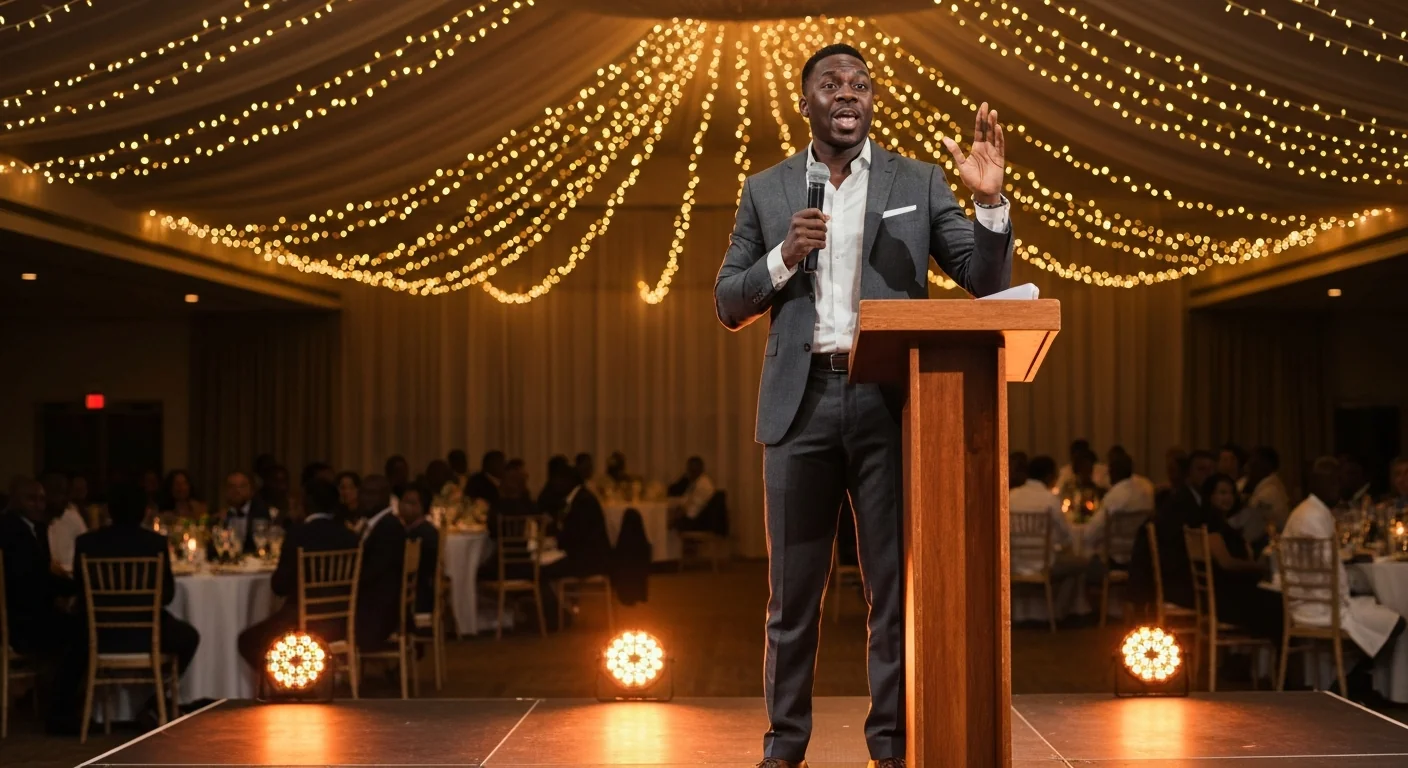
English: “Ladies and gentlemen, it is now time to officially begin our programme. My name is [MC’s Name], and I have the great honour of being your Master of Ceremonies this afternoon. On behalf of the [Groom’s Family Name] family and the [Bride’s Family Name] family, I welcome each and every one of you to this joyous occasion.”
Swahili: “Mabibi na mabwana, sasa ni wakati wa kuanza programu yetu rasmi. Jina langu ni [MC’s Name], na nina heshima kubwa kuwa Msimamizi wa Sherehe hii leo. Kwa niaba ya familia ya [Groom’s Family Name] na familia ya [Bride’s Family Name], nawakaribisha nyote kwenye tukio hili la furaha.”
Script: Calling the Officiant for Prayer
English: “Before we go any further, let us invite the Lord into this celebration. I would like to call upon [Pastor’s/Imam’s Name] to lead us in an opening prayer. [Pastor’s Name], please.”
Swahili: “Kabla hatujaendelea, tunamwalika Mungu katika sherehe hii. Naomba kumwalika [Pastor’s/Imam’s Name] atuongoze katika sala ya ufunguzi. [Pastor’s Name], tafadhali.”
MC Note: Always confirm the officiant’s name and title beforehand. Is it Pastor, Reverend, Father, Sheikh, or Imam? Getting this wrong in front of the congregation is not a recoverable error.
Phase 3: Introduction of the Bridal Party (10-15 minutes)
This is one of the most energetic parts of the reception. The DJ should be ready with the entrance song. Coordinate the order in advance: typically groomsmen and bridesmaids enter in pairs, followed by the flower girl and ring bearer, then the couple.
Script: Bridal Party Entrance
English: “Ladies and gentlemen, the moment you have been waiting for. Please rise to your feet as we welcome the bridal party into the room! DJ, let us set the mood!”
Swahili: “Mabibi na mabwana, wakati mliokuwa mkiungoja umefika! Tafadhali simameni tulipokaribishe washiriki wa harusi ndani! DJ, tuwekee muziki!”
[DJ plays entrance song. MC announces each pair as they enter.]
“Entering first, groomsman [Name] and bridesmaid [Name]!” “Wakiingia kwanza, mshiriki wa bwana harusi [Name] na mshiriki wa bibi harusi [Name]!”
[Repeat for each pair.]
“And now, our adorable flower girl, [Name], and ring bearer, [Name]!” “Na sasa, msichana wetu wa maua, [Name], na mbeba pete, [Name]!”
Script: Couple’s Grand Entrance
English: “Ladies and gentlemen, please remain standing! It is my absolute pleasure to introduce to you, for the very first time as husband and wife — Mr. and Mrs. [Surname]! Let us make some noise!”
Swahili: “Mabibi na mabwana, tafadhali endelezeni kusimama! Ni furaha yangu kubwa kuwasilisha kwenu, kwa mara ya kwanza kama mume na mke — Bwana na Bibi [Surname]! Tupige makofi!”
MC Note: This moment lives or dies on energy. Your voice should peak here. Coordinate with the DJ to have the music at full volume as the couple enters. Let them dance, wave, and enjoy the entrance for at least 60-90 seconds before asking guests to sit.
Phase 4: First Course / Starter (10-15 minutes)
If the reception includes a plated meal, this is when the first course is served. If it is a buffet, this section may be shorter or skipped entirely.
Script: Transition to Meal
English: “Please be seated, everyone. As we settle in, our wonderful catering team will begin serving the first course. Please enjoy, and we will continue with our programme shortly.”
Swahili: “Tafadhali ketini, wote. Timu yetu ya upishi itaanza kutuletea chakula cha kwanza. Furahieni, na tutaendelea na programu yetu hivi karibuni.”
MC Note: This is a natural pause. Let people eat and talk. Do not fill every second with chatter. A good MC knows when to step back.
Phase 5: Speeches (30-45 minutes)
The speech segment is the heart of the reception. In Kenyan weddings, this typically includes: the best man, the maid of honor, parents of the bride, parents of the groom, and sometimes close family friends or the couple themselves.
Script: Introducing the Best Man
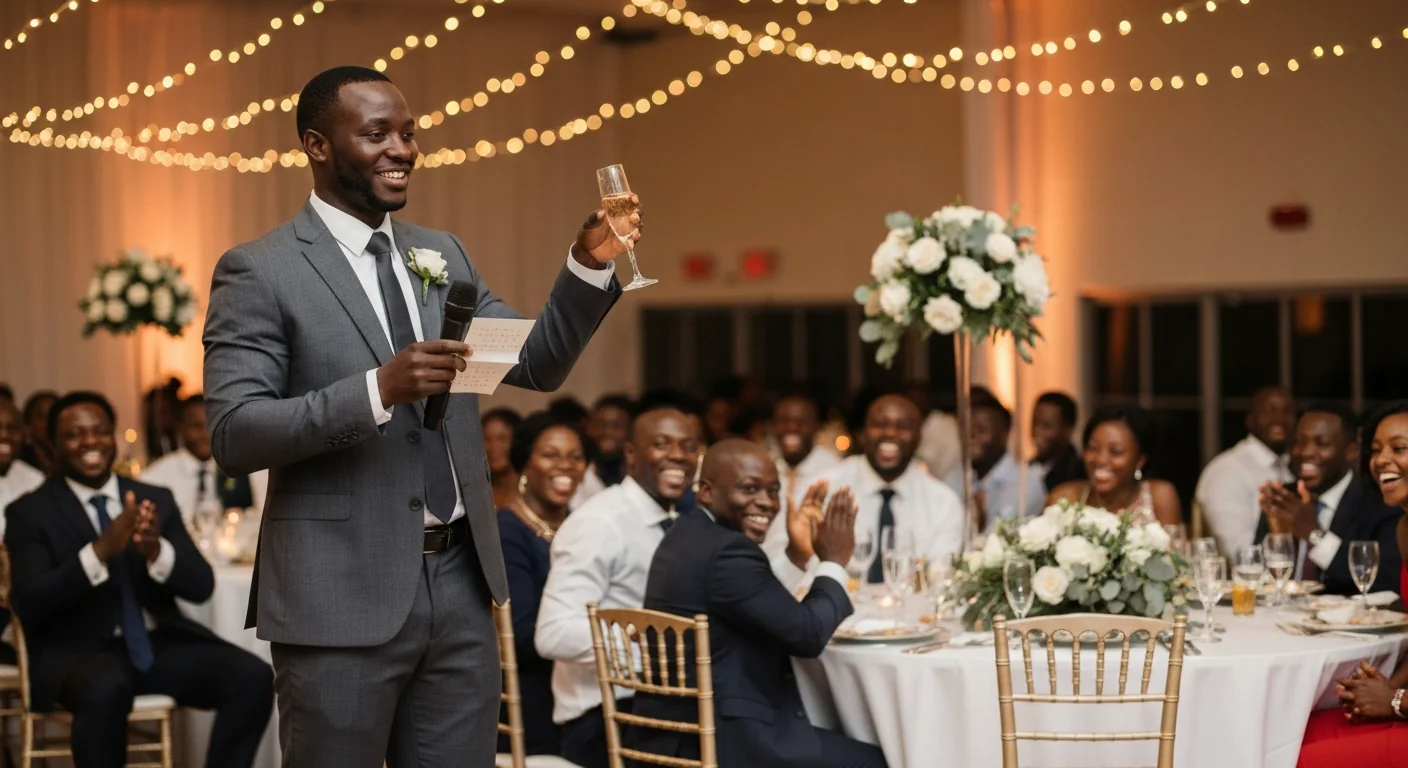
English: “Ladies and gentlemen, it is now time for the speeches — the part of the evening where we hear from those who know and love our couple best. First up, a man who has stood beside the groom through thick and thin — his best man, [Best Man’s Name]. [Name], the floor is yours.”
Swahili: “Mabibi na mabwana, sasa ni wakati wa hotuba — sehemu ambayo tunasikia kutoka kwa wale wanaowajua na kuwapenda wanandoa wetu zaidi. Wa kwanza, mtu ambaye amesimama kando ya bwana harusi kupitia magumu na mazuri — msaidizi wake mkuu, [Best Man’s Name]. [Name], jukwaa ni lako.”
Script: Introducing the Maid of Honor
English: “Thank you, [Best Man’s Name], for those wonderful words. Next, we hear from someone who has been the bride’s confidante, advisor, and partner in crime — her maid of honor, [Maid of Honor’s Name].”
Swahili: “Asante, [Best Man’s Name], kwa maneno hayo mazuri. Sasa tunamsikia mtu ambaye amekuwa msiri, mshauri, na rafiki wa karibu wa bibi harusi — mshiriki wake mkuu, [Maid of Honor’s Name].”
Script: Introducing Parents
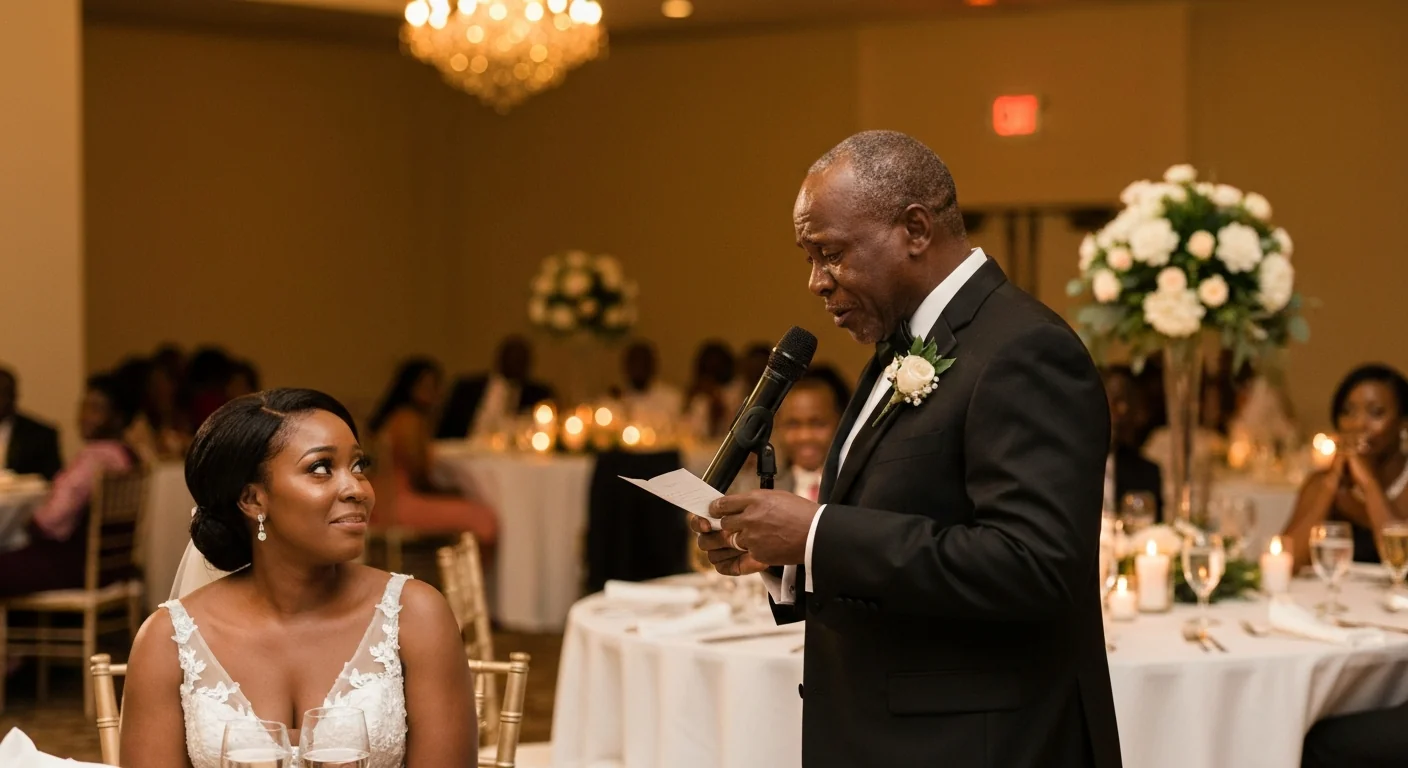
English: “We now turn to the people who raised, nurtured, and shaped the two lives we are celebrating today. I would like to invite the father of the bride, [Father’s Name], to share a few words.”
Swahili: “Sasa tunawaelekea watu ambao waliwakuza na kuwaunda maisha mawili tunayoyasherehekea leo. Naomba kumwalika baba wa bibi harusi, [Father’s Name], kushiriki maneno machache.”
MC Note: Keep speech introductions warm but brief. The speaker, not the MC, should be the star. If speeches are running long, have a pre-agreed signal with the couple (e.g., a subtle hand gesture) for when to gently wrap someone up. Never embarrass a speaker publicly — walk over during applause and quietly say, “Beautiful words. Let us bring it to a close.”
Useful Transition Phrases Between Speeches
- “What beautiful words. Thank you, [Name].” / “Maneno mazuri sana. Asante, [Name].”
- “I think we can all agree that was spoken from the heart.” / “Nadhani sote tunakubaliana kuwa maneno hayo yalitoka moyoni.”
- “Let us give [Name] another round of applause.” / “Tumpigieni [Name] makofi tena.”
Phase 6: Cake Cutting (5-10 minutes)
The cake cutting is a photo-heavy moment. Coordinate with the photographer to ensure they are in position before you call the couple up.
Script: Cake Cutting
English: “Ladies and gentlemen, it is time for one of the sweetest moments of the day — quite literally. Would the newlyweds please make their way to the cake table? [Groom’s Name] and [Bride’s Name], this cake represents the sweetness of your love and the promise of a beautiful life together. Go ahead — cut the cake!”
Swahili: “Mabibi na mabwana, ni wakati wa moja ya nyakati tamu zaidi za siku hii — kwa maana halisi. Je, wanandoa wapya wanaweza kuelekea meza ya keki? [Groom’s Name] na [Bride’s Name], keki hii inawakilisha utamu wa upendo wenu na ahadi ya maisha mazuri pamoja. Endelezeni — kateni keki!”
MC Note: After the couple cuts the first slice, give them a moment to feed each other (if they want to — confirm in advance). Then let the caterer take over distribution. Move the programme forward while the cake is being served.
Phase 7: First Dance (5-7 minutes)
Script: First Dance
English: “There is a moment in every wedding that belongs only to the couple — a moment where the rest of us simply watch and remember why we are here. Ladies and gentlemen, please clear the floor as Mr. and Mrs. [Surname] share their first dance as husband and wife.”
Swahili: “Kuna wakati katika kila harusi ambao ni wa wanandoa peke yao — wakati ambapo sisi wengine tunaangalia tu na kukumbuka kwa nini tuko hapa. Mabibi na mabwana, tafadhali ondokeni kwenye sakafu ya dansi wakati Bwana na Bibi [Surname] wanashiriki dansi yao ya kwanza kama mume na mke.”
MC Note: Let the song play for at least 90 seconds to two minutes before inviting others to join. Do not rush this. If the couple seems comfortable, let them have the floor for the full song. If they look nervous, invite the bridal party to join after about a minute, then open it up: “Bridal party, please join the couple on the floor. And now — everyone! Let us dance!”
Phase 8: Main Course / Buffet (20-30 minutes)
Script: Calling Guests to the Buffet
English: “Ladies and gentlemen, dinner is served! We will invite tables one at a time to the buffet. Please wait for your table to be called. Let us start with the high table… Table one… Table two…”
Swahili: “Mabibi na mabwana, chakula kimeandaliwa! Tutawaita meza moja baada ya nyingine kwenda kupakua. Tafadhali subiri meza yako iitwe. Tuanze na meza kuu… Meza ya kwanza… Meza ya pili…”
MC Note: Calling tables in order prevents chaos at the buffet. Some MCs use humour here: “Table seven, I can see you are already standing. Patience is a virtue. Your time is coming.” This is a good moment for light banter.
Phase 9: Entertainment and Games (15-30 minutes)
This section varies by wedding. Common options include: musical performances, dance-offs, couple trivia games, bouquet and garter toss, or a photo montage screening.
Script: Bouquet Toss
English: “All the single ladies — and I mean all of you, do not be shy — please make your way to the dance floor. The bride is about to toss the bouquet, and whoever catches it… well, let us just say your turn might be next! [Bride’s Name], are you ready?”
Swahili: “Wasichana wote ambao hawajaolewa — na namaanisha nyote, msiwe na aibu — tafadhali njooni kwenye sakafu ya dansi. Bibi harusi anakaribia kutupa bouquet, na yeyote atakayeipata… tuseme tu zamu yako inaweza kuwa inayofuata! [Bride’s Name], uko tayari?”
Script: Couple Trivia Game
English: “Let us find out how well our couple really knows each other. [Groom’s Name] and [Bride’s Name], please sit back to back. You will each hold one shoe of your own and one shoe of your partner. I will ask questions, and you will raise the shoe of the person you think the answer applies to. Ready?”
Swahili: “Tujue wanandoa wetu wanajuana vizuri kiasi gani. [Groom’s Name] na [Bride’s Name], tafadhali ketini mkiwa nyuma kwa nyuma. Kila mmoja wenu atashika kiatu chake kimoja na kiatu kimoja cha mwenzake. Nitauliza maswali, na mtainua kiatu cha mtu mnayedhani jibu linamhusu. Mko tayari?”
Sample questions:
- “Who said ‘I love you’ first?” / “Nani alisema ‘Nakupenda’ kwanza?”
- “Who is the better cook?” / “Nani anapika vizuri zaidi?”
- “Who takes longer to get ready?” / “Nani anachukua muda mrefu kujiandaa?”
- “Who is more likely to apologize first after an argument?” / “Nani ana uwezekano mkubwa wa kuomba msamaha kwanza baada ya ugomvi?”
Phase 10: Vote of Thanks (5-10 minutes)
This is usually given by a family representative or a member of the wedding committee, thanking vendors, guests, and supporters.
Script: Introducing the Vote of Thanks
English: “Before we close, there are many people who have worked tirelessly behind the scenes to make this day possible. I would like to invite [Name], representing the wedding committee, to give the vote of thanks.”
Swahili: “Kabla hatujafunga, kuna watu wengi ambao wamefanya kazi bila kuchoka nyuma ya pazia kufanya siku hii iwezekane. Naomba kumwalika [Name], akiwakilisha kamati ya harusi, kutoa shukrani.”
Phase 11: Closing and Send-Off (5-7 minutes)
Script: Closing Remarks
English: “Ladies and gentlemen, what a day it has been. We have laughed, we have shed a tear or two, we have eaten well — and most importantly, we have witnessed two beautiful people begin their journey together as one. On behalf of the [Groom’s Family Name] and [Bride’s Family Name] families, I thank each and every one of you for being here. Your presence, your prayers, and your love have made this day unforgettable.”
Swahili: “Mabibi na mabwana, imekuwa siku ya ajabu. Tumecheka, tumetoa machozi kidogo, tumekula vizuri — na muhimu zaidi, tumeshuhudia watu wawili warembo wakianza safari yao pamoja kama wamoja. Kwa niaba ya familia ya [Groom’s Family Name] na [Bride’s Family Name], nashukuru kila mmoja wenu kwa kuwepo hapa. Uwepo wenu, sala zenu, na upendo wenu umefanya siku hii isiyosahaulika.”
Script: Final Send-Off
English: “And now, let us give Mr. and Mrs. [Surname] the send-off they deserve! Please line up along the path as our couple makes their exit. [Groom’s Name] and [Bride’s Name] — congratulations. Your story is just beginning, and it is already beautiful. Ladies and gentlemen — the newlyweds!”
Swahili: “Na sasa, tuwape Bwana na Bibi [Surname] kuagwa wanakostahili! Tafadhali pangeni mstari kando ya njia wakati wanandoa wetu wanaondoka. [Groom’s Name] na [Bride’s Name] — hongera. Hadithi yenu inaanza tu, na tayari ni nzuri. Mabibi na mabwana — wanandoa wapya!”
Quick-Reference Swahili Phrases Every MC Should Know
| English | Swahili |
|---|---|
| Ladies and gentlemen | Mabibi na mabwana |
| Welcome | Karibuni |
| Please be seated | Tafadhali ketini |
| Please stand | Tafadhali simameni |
| Let us pray | Tuombe |
| A round of applause | Tupige makofi |
| The bride and groom | Bibi harusi na bwana harusi |
| Congratulations | Hongera |
| Thank you | Asante / Asanteni (plural) |
| Let us celebrate | Tusherehekee |
| God bless you | Mungu awabariki |
| Cheers | Maisha marefu (long life) |
| Love | Upendo / Mapenzi |
| Family | Familia |
| Joy | Furaha |
MC Timing Summary
| Programme Element | Estimated Duration |
|---|---|
| Guest arrival and informal welcome | 30-45 min |
| Formal opening and prayer | 5-7 min |
| Bridal party entrance | 10-15 min |
| Starter / first course | 10-15 min |
| Speeches | 30-45 min |
| Cake cutting | 5-10 min |
| First dance | 5-7 min |
| Main course / buffet | 20-30 min |
| Entertainment and games | 15-30 min |
| Vote of thanks | 5-10 min |
| Closing and send-off | 5-7 min |
| Total estimated programme time | 2.5-4 hours |
Tips for Delivering a Great MC Performance
Read the Room
A script is a starting point, not a rulebook. If the crowd is energetic and the speeches are running smoothly, lean into the momentum. If the room is quiet and people are still eating, do not force high energy. Match the audience.
Do Not Make It About You
The best MCs are remembered for how the event felt, not for how funny the MC was. Your job is to make the couple and their families shine. If you are getting more attention than the bride and groom, recalibrate.
Handle Delays Gracefully
In Kenya, delays are nearly guaranteed. The MC who panics when things run late makes everything worse. The MC who calmly adjusts — “We are going to shift our cake cutting up a few minutes while we wait for our next speaker” — keeps the event feeling intentional.
Manage Overrunning Speakers
Agree with the couple in advance on a time limit for each speaker (typically 5-7 minutes). Have a gentle system: a subtle visual cue at the 4-minute mark, a firmer one at 6 minutes. If someone is still going at 8 minutes, walk over during a natural pause, applaud, and smoothly say, “Beautiful words — thank you so much.”
Pronounce Every Name Correctly
Write phonetic guides for every name you will say. Practice them before the event. Mispronouncing someone’s name at their own wedding — especially a parent’s name — is not something guests forget.
Adapting This Script for Different Wedding Types
Muslim Nikah Reception
Replace prayer sections with appropriate Islamic invocations (Bismillah, Dua). The Nikah itself is typically a separate event, so the reception script applies with minor adjustments. Avoid alcohol references. Coordinate with the Imam if Islamic elements are part of the programme.
Garden or Outdoor Wedding
The programme flow is the same, but sound management is more challenging outdoors. Test your microphone in the actual space. Speak more slowly and clearly. Wind, open air, and outdoor acoustics require more vocal projection.
Traditional Ceremony (Ruracio/Dowry)
Traditional ceremonies have their own programme structure with negotiators (muthamaki) who play the MC-adjacent role. If a white wedding reception follows a traditional ceremony on the same day, the MC script above applies to the reception portion. Acknowledge the traditional ceremony in your opening: “Earlier today, we witnessed a beautiful [ruracio/ayie/koito] ceremony. Now, we continue the celebration.”
Plan Your Wedding Programme Online
Build your wedding timeline, coordinate with your MC and vendors, and keep every detail organized — all free on Harusi Hub.
Start Planning on Harusi Hub