Wedding Trends in Kenya 2026: What's In and What's Out
A Kenya-specific guide to what's actually happening at weddings in 2026 — from decor and fashion to food and tech. Forget the global trend reports; this is what Kenyan couples are actually doing.
Wedding Trends in Kenya 2026: What’s In and What’s Out
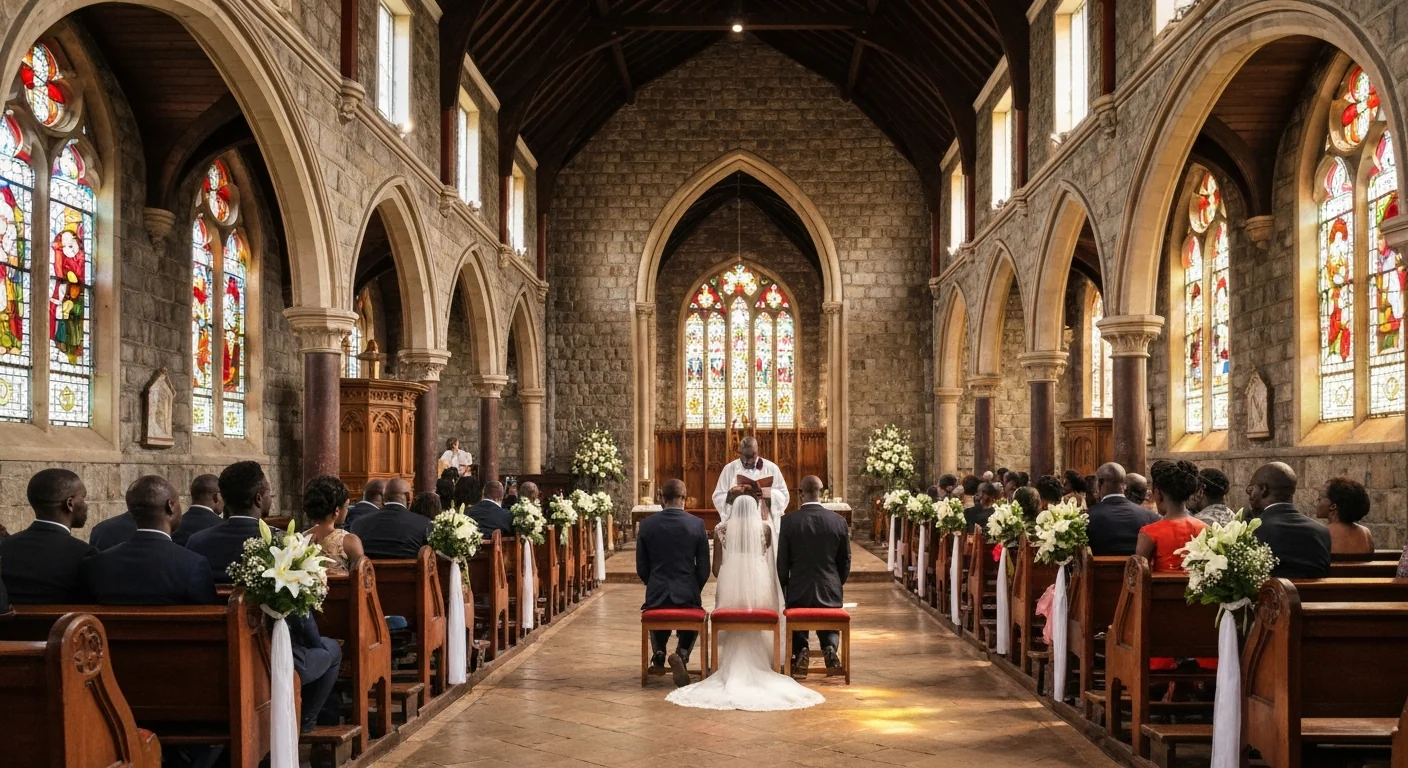
Forget what Brides.com told you. Kenyan weddings in 2026 look nothing like what the global trend reports describe. While international publications are busy declaring dried pampas grass dead and maximalist tablescapes the new minimal, something far more interesting — and far more specific — is happening at venues in Karen, on beaches in Diani, in lodges tucked into the Mara, and in churches across Westlands. This is what is actually happening on the ground in Kenya right now. Plan accordingly.
Trend lists are only useful when they reflect your reality. A report written for couples planning weddings in New York or London does you almost no good when you are trying to decide between pilau or a pasta station, between a Naivasha lakeside lodge and a Westlands rooftop, or between a 200-person guest list and a 35-person micro-celebration at Angama Mara.
So here is the Kenya-specific guide to 2026 wedding trends. What is coming in. What is going out. And what you should absolutely steal for your own big day.
The Big Shift — Smaller, Deeper, More Intentional
The single most significant trend reshaping Kenyan weddings in 2026 is not a colour palette or a floral style. It is scale. The era of the 300-to-600-guest wedding is fading — at least for urban couples — and in its place is something many couples find genuinely more appealing: the micro-luxury wedding.
Micro-luxury weddings range from 10 to 50 guests. The guest list is ruthlessly edited. Every person in that room matters to the couple. And because you are not feeding, seating, and entertaining 400 people, your per-guest spend can be extraordinary. Think plated courses at KES 8,000 per head instead of a KES 1,500 buffet. Think Champagne at every table instead of a single shared bottle for the toast. Think a venue that would be completely unaffordable at scale suddenly within reach.
What is driving this shift? Two things, running in parallel. First, genuine economic pressure. Inflation has hit every wedding supplier category — food, flowers, fabric, fuel, staff. Couples are doing the arithmetic — often using a budget tracker to model different guest-count scenarios — and choosing quality over quantity. Second, and perhaps more meaningful: couples are actively choosing intimacy. They want to be present on their wedding day. They want to remember it. And you simply cannot be fully present when you are greeting 500 people one at a time.
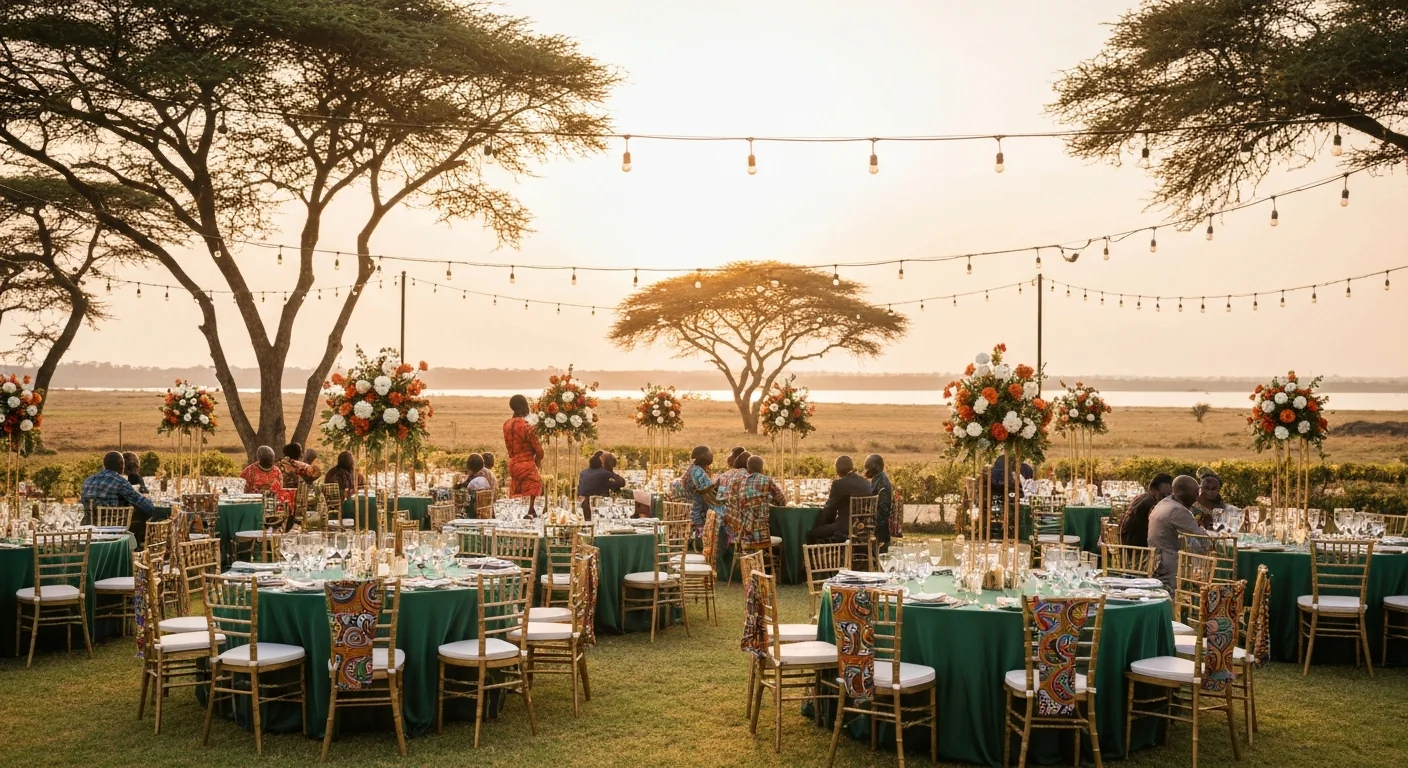
Multi-day wedding weekends are accelerating alongside this trend. Rather than a single high-stress Saturday, couples are booking safari lodges and coastal properties for two or three nights and making the whole thing an experience. Properties like Angama Mara on the Mara escarpment, Medina Palms on the Watamu coast, and Swahili Beach in Diani are seeing unprecedented wedding weekend bookings — many running 12 months or more into the future. The logic is simple: if you have flown 40 people in from Nairobi for your wedding, give them a weekend worth the trip.
Destination weddings within Kenya are booming. Naivasha, Nanyuki, Diani, and Laikipia are all experiencing a surge in wedding bookings from urban couples. The reasons are layered: a sense of occasion that a Nairobi hotel simply cannot replicate, dramatically improved photography backdrops, and the built-in intimacy that comes when guests have traveled to be with you. A weekend at Ol Pejeta Conservancy with 30 of your closest people hits differently than a Saturday evening function in a Upperhill hotel ballroom.
If you are planning a smaller celebration, read our guide on how to plan a small wedding in Kenya — it covers budgeting, venue selection, and how to make an intimate wedding feel special rather than sparse.
Decor and Design — Maximalist, Cultural, Immersive
Kenyan wedding decor in 2026 is going big, going bold, and going deeply cultural. The minimalist “less is more” aesthetic that dominated Instagram for the past several years is not disappearing entirely — but it is giving way to something richer, more layered, and more personal.
Bold colour palettes are leading the charge. Cobalt blue. Hot pink. Deep forest green. Burnt terracotta paired with hammered gold. These are the palettes showing up at weddings across the country, and they are being applied with confidence — not as accent touches but as the entire visual language of the event. Couples are choosing colours that mean something to them, that reflect their personalities, that make the reception hall look unmistakably like their wedding and no one else’s.
Sculptural floral design is replacing the predictable. The standard arch of roses and baby’s breath is being retired (more on that in the “Out” section). What is replacing it is architectural: suspended floral installations hanging from ceilings, meadow-style aisles where flowers spill naturally across the ground, oversized centrepiece arrangements that function more as sculptures than decoration. Florists like Bliss Events Kenya and Flowers & Events Nairobi are reporting that couples are coming in with increasingly ambitious briefs — and the budgets to match.
Cultural fabric is becoming a design element, not just a clothing choice. Kitenge, leso, and Ankara fabrics are being draped across tables, used as aisle runners, incorporated into chair decor, and hung as backdrops. This is a meaningful shift: it moves cultural fabric from something you wear to something you inhabit. The entire environment becomes a statement of cultural pride and identity. When done well — and it is increasingly being done very well — it is stunning.
Immersive design is the new standard for high-end Kenyan weddings. Forward-thinking event designers are thinking about the full sensory experience: custom scents (signature room fragrances, scented candle arrangements), tactile elements (velvet linens, textured centrepieces guests can touch), lighting that shifts and evolves through the evening. The question couples are now asking their decorators is not “how will this photograph?” but “how will this feel?” Finding decorators and event designers who understand this approach is easier through a vendor marketplace where you can filter by speciality and review portfolios before reaching out.
What is dying: cookie-cutter fairy-light arches, the matchy-matchy everything aesthetic, and the generic white-and-gold colour scheme that has dominated mid-range weddings for a decade. Florists will tell you privately that they are relieved.
For more on specific colour directions, see our guides on wedding decor trends in Kenya and wedding colour palettes for Kenyan couples.
Fashion — Cultural Fusion Takes Over
Kenyan bridal fashion in 2026 is in the middle of a genuinely exciting era. The strict binary of “Western dress” versus “African dress” is dissolving, and what is emerging in its place is something more interesting: fusion that feels intentional rather than forced.
Brides are combining Western silhouettes with African cultural elements in ways that feel deeply personal rather than performative. A fitted ivory gown with a Maasai beadwork belt. A structured ball gown with a Kikuyu-inspired kikoi wrap for the reception. A mermaid silhouette with Luo kanga fabric worked into the train or overlay. These are not costume choices — they are deliberate expressions of identity. And they photograph beautifully.
Designers and bridal boutiques in Nairobi are responding. Labels like Katungulu Mwendwa and Vivienne Riri have built reputations on exactly this kind of culturally rooted, architecturally sophisticated design. International bridal brands are losing ground to local designers who understand the specific context of Kenyan bodies, Kenyan light, and Kenyan cultural nuance.
Grooms are investing significantly more in their look than in previous years. Custom-tailored suits from tailors on Biashara Street and in the Westgate Fashion Market are the entry point. But the real movement is in accessories: beaded jewellery with cultural significance, Ankara-print pocket squares, embroidered lapels, loafers in complementary kitenge-print fabric. The groom no longer defaults to a generic navy suit. He shows up as a co-author of the day’s visual story.
Mismatched bridesmaids are now the dominant approach among couples who care about fashion. The idea that all bridesmaids must wear identical dresses in the same shade of dusty rose has been quietly retired. Instead, couples are choosing a colour family — say, blush to terracotta — and letting each bridesmaid find a style that works for her body and her personality. The result is a wedding party that looks coordinated without looking like a uniform.
Comfort-forward bridal wear is a genuine trend, not just a talking point. Brides increasingly want to dance. They want to eat. They want to greet 80 guests without their ribs threatening to crack. This means structured but flexible fabrics, sensible heel heights, and silhouettes that allow full range of movement. The corset-over-everything trend from international runways is not landing the same way in Nairobi, where the reception lasts four hours and the dance floor gets serious.
What is going out: strictly formal Western attire with zero cultural reference, matching bridesmaids in identical dresses, and sky-high heels that require the bride to be carried off the dance floor by 9 PM.
For a deeper look at bridal fashion directions, see our guide to wedding dress styles in Kenya.
Food — Local Cuisine as a Statement of Pride
If there is one area where the shift in Kenyan weddings is most emotionally resonant, it is food. For years, the aspiration at a “proper” Kenyan wedding was to serve food that felt international — continental buffets, pasta stations, generic salad bars. That aspiration is now being confidently reversed.
Kenyan food is being served as the centrepiece, not the side offering. Nyama choma stations with whole goats carved at the table. Pilau served from massive copper pots by chefs in full uniform. Mukimo presented in sculptural portions alongside slow-cooked lamb. Coastal biryani — the real Mombasa variety, cooked with bone-in chicken and fresh coconut milk — as the signature dish. These are not backup options for guests who did not want the chicken cordon bleu. They are the star of the menu.
The logic here is cultural pride meeting good economics. Local ingredients are fresher, more available, and often less expensive than imported alternatives. A well-executed nyama choma station with fresh kachumbari and ugali costs less than a mediocre continental buffet and creates far more atmosphere. Guests remember it. They talk about it. It feels real.
Interactive food stations are replacing static buffets at weddings where the budget allows. The station model — where a chef is present, where food is prepared or assembled to order, where guests can customise — creates energy and engagement that a row of silver trays under heat lamps simply cannot. Swahili mezze stations, live ugali-and-stew serving points, freshly carved meat stations: these are becoming the markers of a well-thought-out wedding reception.
Storytelling menus are emerging as a meaningful trend. Some couples are working with their caterers to design menus that trace their cultural roots — dishes from both families’ backgrounds, regional specialties from where they grew up, drinks that reflect their shared history. The menu becomes a form of autobiography. Guests are eating the couple’s story.
Locally sourced, seasonal ingredients are increasingly positioned as a quality signal. Citing specific farms, using vegetables grown in the Rift Valley, featuring honey from Mount Kenya smallholders — these details appear on more wedding menus each year, and guests notice.
Vegetarian and vegan options are no longer optional add-ons that the couple remembers two weeks before the wedding. They are expected from the start, and the best caterers in Nairobi now design menus where the plant-based options are as considered and delicious as everything else.
Tech at the Wedding — Streaming, Digital Invites, and AI
Technology has quietly become one of the biggest trend drivers in Kenyan weddings — not because couples are chasing novelty, but because it is solving real problems in practical ways.
Live streaming for diaspora guests is no longer a luxury add-on. It is a family expectation. If you have a significant Kenyan diaspora — relatives in the UK, the US, the Gulf states, across East Africa — they expect to watch your wedding live. Professional streaming setups with multiple cameras, good audio, and reliable connectivity are becoming standard budget line items. The pandemic normalised remote attendance; the diaspora has made it permanent. A family member in London who cannot afford the flight should not be excluded from the ceremony.
Digital wedding invitations have replaced printed stationery as the first point of contact for most urban Kenyan weddings. The initial “save the date” and formal invitation are now arriving via WhatsApp, email, and increasingly via video — short cinematic clips that set the tone for the day and include an embedded RSVP link. Some couples are incorporating augmented reality elements: scan a QR code and watch a 3D version of the venue appear on your phone screen. These feel gimmicky in description but genuinely impressive in execution.
Wedding websites are now standard for urban Kenyan couples planning weddings with more than 50 guests. A well-built wedding website consolidates RSVP management, accommodation logistics, dress code guidance, and gift registry in one place. It saves the couple dozens of repeated WhatsApp explanations and gives guests a single source of truth. You can build yours in minutes — create your free wedding website with Harusi Hub.
Drone photography and videography are standard at destination weddings. Any couple getting married at a property in the Mara, along the coast, or in the highlands expects aerial coverage. The scale of these landscapes almost demands it — a ground-level shot of your ceremony at Angama Mara captures maybe 10% of the visual drama that a drone can communicate. Cinematographers across Kenya now include drone packages as standard rather than premium.
Social-media-first video edits are being produced alongside traditional cinematic films. Couples want a 60-second Instagram Reel and a 45-second TikTok ready within 24 hours of the wedding — same-day or next-day edits are becoming an explicit part of videographer contracts. These short-form edits exist alongside the full 20-minute cinematic film, not in place of it.
Documentary and candid photography is replacing posed catalog photography as the dominant aesthetic preference. Couples want to look like they were actually living their wedding day — laughing, crying, dancing, eating — not like they paused the whole event every 20 minutes to assemble for formal portraits. The best wedding photographers in Kenya are now shooting in a photojournalistic style that prioritises emotional truth over technical perfection. The film-hybrid aesthetic — mixing analog film frames with digital photography — is also gaining significant traction among couples who want images that feel warm, tactile, and timeless.
What’s Out — The Trends Kenya Couples Are Dropping
Every trend piece that lists what is “in” owes you an honest accounting of what is going out. Here is the unsentimental version.
| What’s Out | Why It’s Fading |
|---|---|
| Huge guest lists (300–600 people) | Cost pressure + genuine desire for intimacy is overriding social obligation |
| Identical matching bridesmaids | Viewed as dated; mismatched complementary tones is now the standard |
| Cash bouquets | Legally complicated (see below) and aesthetically overdone |
| Cookie-cutter venue decor | Instagram fatigue; couples want personal expression, not a template |
| Baby’s breath arrangements | Globally overdone; florists are moving to architectural, meadow-style design |
| Bouquet and garter toss | Culturally uncomfortable across multiple Kenyan communities; quietly dropped |
| Photo booths | Replaced by analog film photography and dedicated content creators |
| Over-posed photography | Documentary/candid is the new gold standard |
| Venues chosen purely for Instagram | Experience and atmosphere are winning over visual performance |
| Continental buffets as the aspirational default | Kenyan food has reclaimed its rightful place at the top of the menu |
A dedicated note on cash bouquets: This one deserves more than a line in a table. In February 2026, the Central Bank of Kenya formally issued a warning against the practice of assembling bouquets from Kenyan banknotes, citing provisions of the Penal Code that prohibit defacement or damage of currency. The announcement was widely covered and sent genuine shockwaves through the wedding community — the cash bouquet has been a fixture at Kenyan weddings, particularly the dowry ceremony and the reception, for years.
Couples are adapting in two directions. Some are switching to foreign currency — US dollars and UAE dirhams are most common — which sidesteps the Penal Code issue. Others are pivoting to alternative gifting formats: decorative money envelopes, beautifully designed gift boxes, or coordinated M-Pesa gifting setups where guests contribute to a digital fund displayed in real time. The cash bouquet as a trend is not dead — it is transforming. But the Kenyan banknote version, at least for the moment, is legally fraught.
Quick Reference — 2026 at a Glance
For the couples who want to screenshot this and send it to their planner: here is the full picture in two columns.
| IN for 2026 | OUT for 2026 |
|---|---|
| Micro-luxury weddings (10–50 guests) | 300–600 guest mega-weddings |
| Multi-day wedding weekends at safari lodges | Single-day, single-venue events |
| Destination weddings within Kenya | Generic Nairobi hotel ballrooms |
| Bold, saturated colour palettes | All-white, all-gold, all-beige |
| Sculptural, architectural florals | Baby’s breath arches, fairy-light arches |
| Kitenge and Ankara as design environment | Cultural fabric only in clothing |
| Full sensory immersive design | Visual-only decoration thinking |
| Cultural fusion bridal fashion | Strictly Western or strictly traditional |
| Mismatched bridesmaids | Identical bridesmaid dresses |
| Comfort-forward bridal wear | Corsets so tight the bride can’t eat |
| Kenyan food as the centrepiece | Continental buffets as aspiration |
| Interactive food stations | Static silver-tray buffets |
| Storytelling menus | Generic catering packages |
| Live streaming for diaspora | Excluding relatives who can’t travel |
| Digital invitations with video/AR | Printed stationery as first contact |
| Wedding websites | 47 separate WhatsApp messages |
| Documentary/candid photography | Catalog-style posed portraits |
| Film-hybrid photography aesthetic | Pure digital with heavy editing |
| Social-media-first video edits | Only a long cinematic film |
| Drone footage as standard | Drone footage as expensive add-on |
The through-line connecting every trend on this list is the same: Kenyan couples in 2026 are making more intentional choices. More personal. More culturally grounded. Less driven by what looked impressive five years ago and more driven by what actually feels right for this specific couple, in this specific moment, with these specific people.
That is a genuinely exciting place for Kenyan weddings to be. The weddings coming out of this era — the ones at Angama and Swahili Beach and Ol Pejeta, but also the ones in church halls in Ruiru and garden venues in Rongai — are going to look better, feel better, and mean more than weddings did in the era of ticking generic boxes.
Use this guide. Steal freely. And plan a wedding that is unmistakably yours. If you are ready to start, Harusi Hub gives you the tools to bring these trends to life: a free wedding website with 146+ themes, a budget tracker to keep spending intentional, a planning checklist that adapts to your timeline, and a vendor marketplace to find the right people for the job.
Plan a wedding that's distinctly 2026
Create your free wedding website with Harusi Hub — modern, mobile-first, and built for Kenyan couples.
Create Your Wedding Website