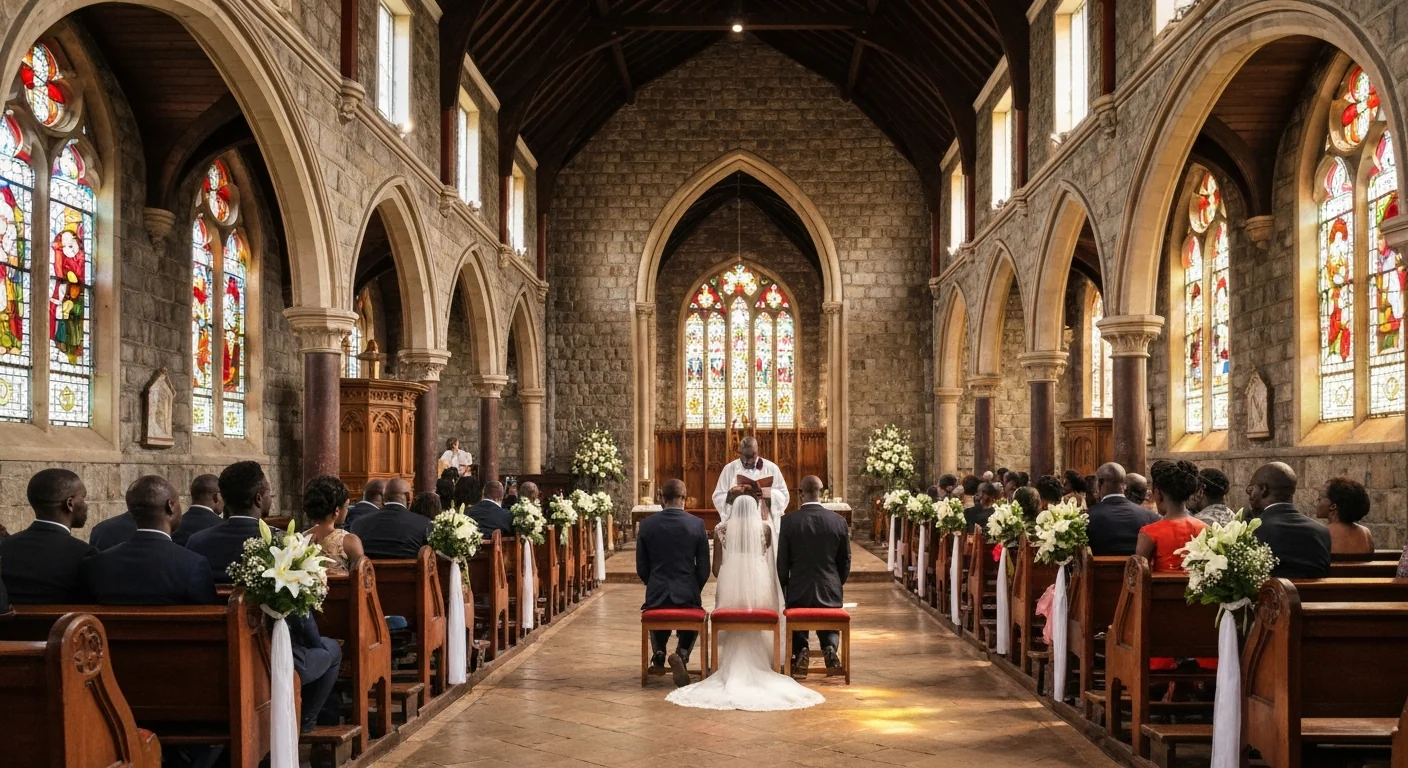
Getting Married in Kenya as a Foreigner: Updated 2026 Guide
Complete 2026 guide to marrying in Kenya as a foreigner. Special License process, Certificate of No Impediment, eCitizen requirements, fees, and timelines.

Getting Married in Kenya as a Foreigner: Updated 2026 Guide
You’ve fallen in love across borders. Now you’re trying to figure out how to make it legal in Kenya — and the process looks complicated from the outside. It really isn’t, once you know the steps.
Whether you’re a foreign national marrying a Kenyan partner, two foreigners getting married in Kenya, or a Kenyan couple where one of you has been living abroad, this guide covers everything you need to know about marrying legally in Kenya in 2026.
The requirements have been updated — notably, from January 2026, all marriage certificates and special licences are issued exclusively through the eCitizen portal. No physical documents are issued at offices anymore. This guide reflects that change and walks you through the current process from start to finish.
For the base legal framework, see our general guide on marriage registration in Kenya and the full marriage license requirements in Kenya.
Important: Requirements and fees can change. Always verify current information on the official Attorney General eCitizen portal or the Attorney General’s website before starting your application.
What Are Your Options for Getting Married in Kenya as a Foreigner?
When one or both partners are foreign nationals, Kenyan law gives you two routes:
Registration by Notice is available if the foreign partner is a registered refugee residing in Kenya. You follow the standard 21-day notice period, similar to two Kenyan nationals. The refugee uses their Alien Card instead of a Kenyan ID.
Registration by Special License is required for virtually every other international couple. This is the more common route, and it actually moves faster than the notice route because there’s no mandatory 21-day waiting period.
Most foreign nationals will use the Special License route. That’s what this guide focuses on.
What Is a Special License?
A Special License is a legal document issued by the Registrar of Marriages that:
- Allows a marriage to proceed without the standard 21-day notice period
- Enables foreign nationals (where one or both parties are not Kenyan citizens) to marry in Kenya
- Permits the ceremony to take place at a venue other than the Registrar’s office or a registered place of worship
You apply for the Special License through eCitizen, attend an interview at Sheria House, and receive the licence before your ceremony takes place.
The 2026 Update: Fully Digital via eCitizen
From 13 January 2026, Kenya’s Attorney General directed that all marriage certificates and special licences be issued only via the eCitizen portal. The Registrar of Marriages no longer issues physical documents at offices. The digital certificates generated through eCitizen are legally valid and fully recognised.
This change makes the process more efficient — but it also means you must complete your application online and have reliable internet access to manage the process.
Residency Requirement: 7 Days Minimum
Both partners must have been resident in Kenya for at least 7 days before the application date. For the foreign partner, this means being physically present in Kenya with valid travel documents. Plan your arrival accordingly — don’t land two days before you intend to apply.
Step-by-Step: The Special License Process
Step 1: Create Your eCitizen Accounts
The Kenyan partner uses their standard eCitizen account linked to their National ID.
The foreign partner needs to create a Visitors eCitizen account at ecitizen.go.ke. This requires:
- A valid email address
- Basic personal information
- A working phone number (a Kenyan number is recommended for OTPs)
Only Kenyan citizens and foreigners who are residents holding valid Alien IDs qualify for a standard eCitizen account. Everyone else uses the Visitors account.
Step 2: Gather Your Documents
Being thorough at this stage saves significant time. Incomplete applications are rejected and add weeks to your timeline.
For the Kenyan Partner:
- Copy of National ID or valid Passport
- Copy of Birth Certificate — names must match your ID exactly (same names, same order)
- One recent coloured passport-sized photo
- Proof of marital status:
- Sworn affidavit stating you are single (if never married)
- Joint affidavit if you have been living together under customary marriage
- Death Certificate (if widowed)
- Divorce Decree Absolute (if divorced)
- If the death certificate or divorce decree is over 2 years old, an updated sworn affidavit confirming current marital status
For the Foreign Partner:
- Copy of valid Passport
- Copy of Birth Certificate — names must match your passport exactly
- One recent coloured passport-sized photo
- Certificate of No Impediment (CNI) from your home country — this is essential
- Valid visa or work permit
- Proof of entry to Kenya (flight ticket or entry stamp)
- Death Certificate (if widowed)
- Divorce Decree Absolute (if divorced)
- Official translation of any documents not in English
For Church or Religious Weddings (additional documents):
- Copy of the Minister of Faith’s licence
- Serial number of the marriage book to be used (obtain this from your church or place of worship in advance)
Step 3: The Certificate of No Impediment (CNI)
The CNI is the most time-sensitive document in this entire process. It is an official statement from the foreign partner’s home country confirming they are legally free to marry — they are not already married and there are no legal barriers to the marriage.
What it’s called by country:
- “Certificate of Freedom to Marry” (many Commonwealth countries)
- “Single Status Certificate” (United States, some European countries)
- “Affidavit of Eligibility to Marry” (United States)
- “Certificat de Célibat” (French-speaking countries)
- “Nulla Osta” (Italy)
How to get a CNI:
Contact your country’s embassy or consulate in Nairobi — many embassies in Nairobi can issue CNIs locally. Check processing times early. Some embassies require:
- A scheduled appointment (some book weeks ahead)
- Documents to be shipped from your home country
- A waiting period of several days to several weeks
Alternatively, some countries allow you to obtain the CNI from a government office in your home country before you travel to Kenya.
Start the CNI process 3–4 months before your wedding date. This is not an exaggeration — it is the single most common reason international weddings are delayed.
If your CNI relates to a divorce decree or death certificate that is over 2 years old, an updated CNI may be required.
Step 4: Submit Your Application on eCitizen
Both partners submit their applications through eCitizen under the Registration of Marriages service. Upload all required documents carefully. The system will flag incomplete submissions.
The Special License application fee is KES 10,150, paid through the eCitizen portal.
Step 5: Book and Attend Your Interview at Sheria House
After submitting your application, both partners must book an appointment through eCitizen to appear before the Registrar of Marriages at Sheria House, Nairobi.
Both partners must attend in person — together. Bring all original documents for verification. The Registrar will confirm:
- Both of you are who you say you are
- Neither of you is currently married
- All documents are legitimate and consistent
- You both consent freely to the marriage
Step 6: Pay Ceremony Fees and Schedule Your Wedding
After a successful interview, you pay the ceremony fee based on your wedding type and venue:
| Marriage Type | Venue | Fee |
|---|---|---|
| Christian / Hindu | Licensed place of worship | KES 7,200 |
| Christian / Hindu | Outside licensed venue (garden, hotel, etc.) | KES 14,200 |
| Civil | Registrar’s Office | KES 9,700 |
| Civil | Outside Registrar’s Office | KES 16,700 |
Note: Fees are subject to change. Confirm current rates on the eCitizen portal.
Step 7: Receive Your Special License
- Christian / Hindu marriages: Special License is issued within 3 days of approval
- Civil marriages: The wedding must be conducted within 14 days of approval
Your wedding can then proceed at the registered venue.
Step 8: Receive Your Marriage Certificate
After the ceremony, the Registrar issues your Certificate of Marriage — the official document proving your union under Kenyan law. Since January 2026, this is issued digitally through eCitizen.
If Your Foreign Partner Is a Registered Refugee
Registered refugees residing in Kenya can use the standard Registration by Notice route, following the same process as two Kenyan nationals, with a 21-day notice period.
Documents needed:
- Valid Alien Card for Refugees
- Birth Certificate
- Passport-sized photo
- Proof of single status (sworn affidavit or relevant documents)
Two Foreigners Marrying in Kenya
Both foreign nationals can marry each other in Kenya using the Special License route. Both parties create Visitors eCitizen accounts, and both must provide CNIs from their respective home countries. The process is otherwise identical to a Kenyan-foreigner marriage.
Note: The Attorney General’s implementation has generally excluded customary marriages between a Kenyan citizen and a foreigner from the online system — this is because most foreign jurisdictions do not recognize polygamous unions, and customary marriages in Kenya may be polygamous.
Complete Fees Summary
| Fee Type | Amount |
|---|---|
| Visitors eCitizen Account | Free |
| Special License application | KES 10,150 |
| Notice Fee (refugee route) | KES 600 |
| Ceremony — licensed religious venue | KES 7,200 |
| Ceremony — unlicensed venue | KES 14,200 |
| Civil ceremony — Registrar’s Office | KES 9,700 |
| Civil ceremony — outside Registrar’s Office | KES 16,700 |
| Certified Copy of Marriage Certificate | KES 1,100 |
| Certificate of No Impediment (Kenya-issued) | KES 2,200 |
| Registration of Foreign Marriage in Kenya | KES 1,000 |
Embassy fees for CNI vary by country and are additional costs not listed here.
Realistic Timeline: Plan Ahead
International marriages require significantly more lead time than standard Kenyan marriages. Here’s a realistic planning timeline:
| Timeframe | Action |
|---|---|
| 4–5 months before | Foreign partner begins CNI process in home country or at Nairobi embassy |
| 3–4 months before | Gather all other documents; verify name consistency across all documents |
| 8 weeks before | Foreign partner arrives in Kenya (if not already resident); begin 7-day residency clock |
| 6–7 weeks before | Both create/update eCitizen accounts and submit application |
| 5–6 weeks before | Interview at Sheria House |
| 4–5 weeks before | Special License issued; submit documents to church or venue if applicable |
| Wedding day | Get married |
Common Challenges and How to Handle Them
CNI Takes Longer Than Expected
This is the most common delay. Start early, contact your embassy immediately after deciding to marry in Kenya, and follow up regularly. Some embassies allow you to begin the CNI process before leaving your home country.
Name Discrepancies Across Documents
Kenyan authorities are strict about names matching across all documents. Different name formats on different documents — common in many cultures and naming conventions — can flag your application. If you have legitimate name variations, get a sworn affidavit explaining the discrepancy before you submit.
Documents Not in English
Any document not in English must be officially translated. Plan for this extra step and budget for the translation cost. Some embassies can provide translations, or you may need a certified translator.
Document Authentication (Apostille)
Some foreign documents may need to be apostilled or certified by your embassy before Kenyan authorities will accept them. Ask your embassy about this when you first contact them — don’t assume your documents are automatically valid in Kenya.
Immigration Implications After Marriage
Getting married in Kenya does not automatically grant the foreign partner the right to live or work in Kenya. If you plan to live in Kenya together, the foreign spouse must separately apply for the appropriate visa or permit. Likewise, if you’re relocating to the foreign partner’s country, research their spouse visa requirements early.
After the Wedding
Once you’re married, plan for these follow-up steps:
- Get certified copies of your marriage certificate — useful for banks, immigration offices, and other legal processes
- Register the marriage with the foreign partner’s home embassy if required by their country
- Check apostille requirements if the certificate needs to be recognized abroad
- Update documents — bank accounts, insurance policies, and official records
- Begin immigration paperwork early if one partner is relocating
Legal Recognition in the Foreign Partner’s Home Country
Your Kenyan marriage certificate is legally valid in Kenya. Recognition abroad varies by country. To use your Kenyan certificate in another country you may need:
- An apostille from the Kenyan government
- An official translation into the language of the destination country
- Registration of the foreign marriage at a government office in the partner’s home country
Contact your embassy in Nairobi to understand their specific requirements. Many embassies can also help with notarisation and translation.
Related Legal Guides
Planning the full legal picture of your wedding? These articles cover everything:
- How to Register Your Marriage in Kenya on eCitizen
- Your Marriage Certificate in Kenya: Everything You Need to Know
- Marriage License Requirements in Kenya
- Civil Marriage in Kenya: Process and Requirements
- Church Wedding Requirements in Kenya
- Muslim Nikah Registration in Kenya (Kadhi Courts)
- Customary Marriage Registration in Kenya
Managing Your International Wedding Planning
International weddings often come with guests across multiple countries and time zones. Harusi Hub’s wedding website gives you a custom URL you can share anywhere — WhatsApp, email, or social media — so guests in Nairobi, London, or New York all have the same access to your event details, RSVP page, and registry.
Use the wedding planning checklist to track your legal steps alongside everything else — the Legal & Registration category will keep you on top of every document, deadline, and appointment. And if you’re planning multiple events (engagement party, traditional ceremony, church wedding), the manage your events guide shows you how to set up each occasion separately with its own RSVP settings.
For couples planning from abroad, see also our article on wedding planning for couples living overseas.
Your cross-border love story deserves a beautiful wedding
Free wedding website with guest management, RSVPs, and multi-event support — perfect for international couples and guests across the globe.
Start Planning FreeThis guide was updated in February 2026 to reflect the January 2026 transition to fully digital marriage registration via eCitizen. For the most current requirements and fees, visit the official Attorney General eCitizen portal or contact the Registrar of Marriages and your embassy directly.