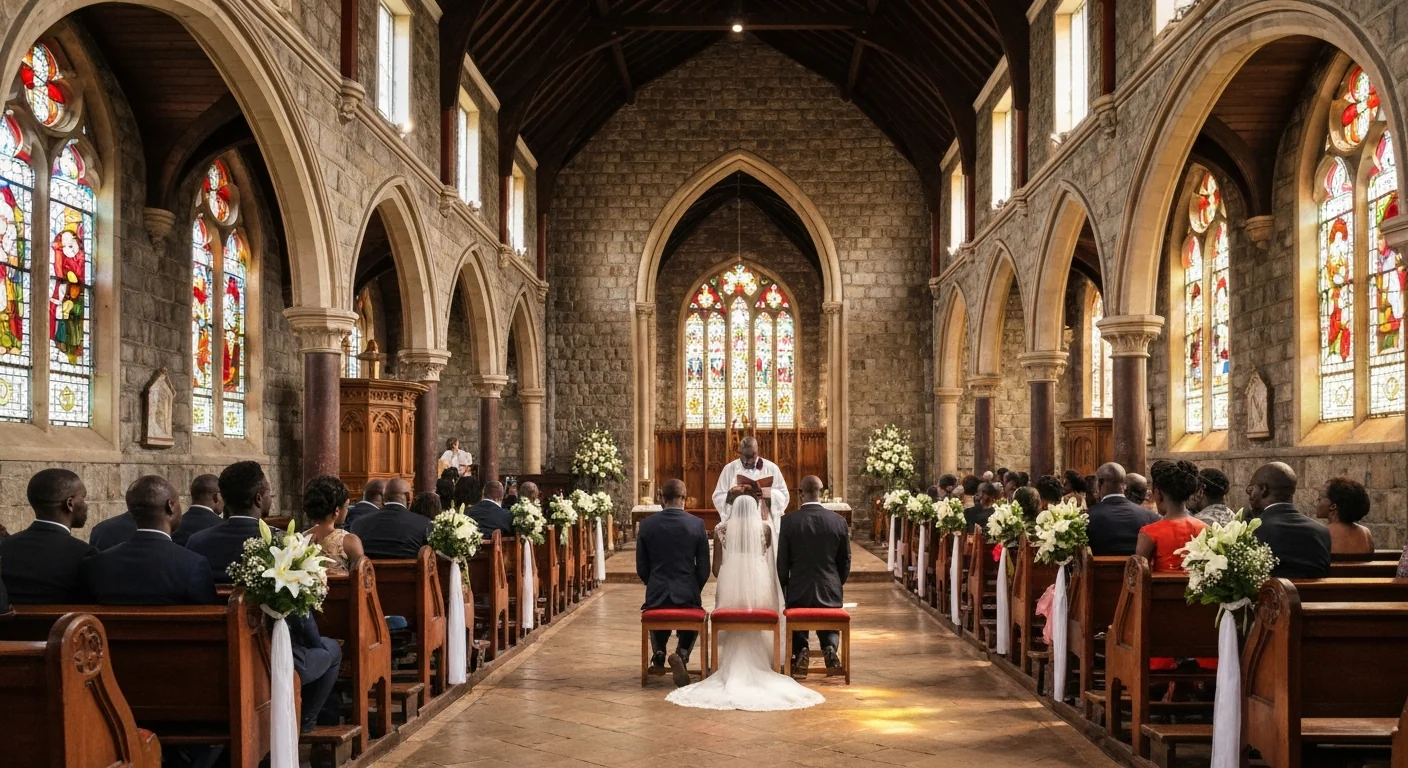
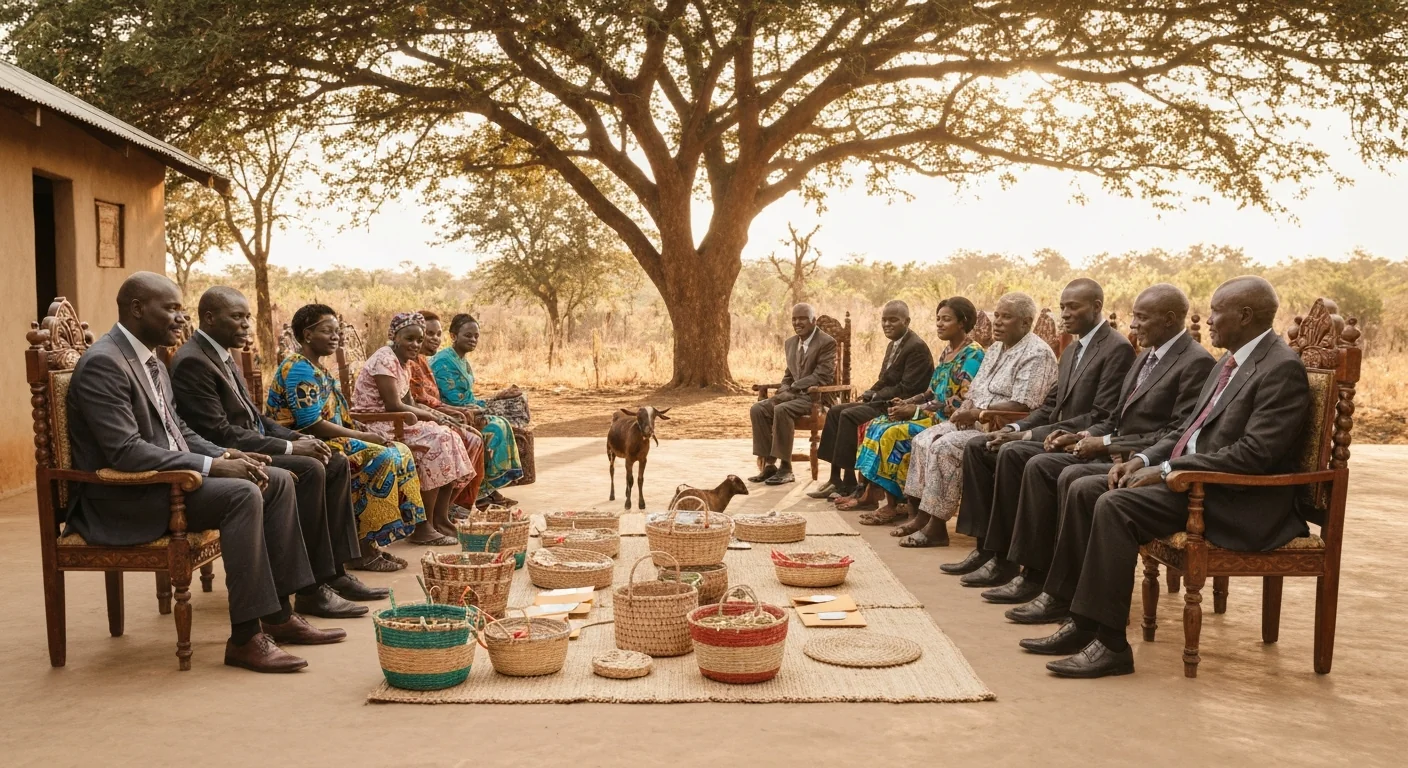
Customary Marriage Registration in Kenya (Traditional Wedding Legal Status)
Is your ruracio legally binding in Kenya? Learn how to register a customary marriage, required documents, eCitizen process, and fees. Complete 2025 guide.
Customary Marriage Registration in Kenya (Traditional Wedding Legal Status)
You paid ruracio. The families feasted. The elders blessed the union. But when you showed up at the bank to add your spouse to your account, they asked for a marriage certificate — and you realized the traditional ceremony and legal recognition are two entirely different things.
This is one of the most common legal blind spots for Kenyan couples. The ruracio, the ngurario, the ayie, the kwanjula — these ceremonies carry enormous cultural weight and are treated as real marriages by families and communities across Kenya. But customary marriage registration in Kenya is a separate step: under the Marriage Act, 2014, a marriage only has full legal standing once it is registered with the Registrar of Marriages.
This guide explains what that means for you, whether your traditional ceremony is legally valid, and exactly how to register your customary marriage before the deadline.
What Is a Customary Marriage Under Kenyan Law?
The Marriage Act, 2014 recognizes five types of marriage in Kenya: civil, Christian, Hindu, Islamic, and customary. A customary marriage is defined as one celebrated in accordance with the customs of the community of one or both parties to the intended marriage.
This means your ruracio (Kikuyu), ayie/nyombo (Luo), koito (Kalenjin), lobola (Luhya and others), or any other community dowry and ceremony can form the basis of a legally recognized marriage — but only if you follow through with formal registration.
The registration of a customary marriage applies only to Kenyan citizens who have undertaken the necessary rituals under their respective African customary law.
Is Ruracio Legally Binding in Kenya?
This is the question every couple — and every family — wants answered clearly.
Ruracio and dowry ceremonies are legally significant, but not sufficient on their own.
The Marriage Act specifically states that dowry payment must be fulfilled in communities where it is an act that witnesses and cements the agreement to become husband and wife. A Kenyan court case, M.W. v. J.K. [2017], recognized a Kikuyu customary marriage based on ruracio payment — confirming that courts can and do treat ruracio as evidence of a valid customary marriage.
Importantly, a token of the dowry is sufficient — you don’t need to complete the entire dowry amount before you can register. What matters is that the essential rites that confer husband-and-wife status have taken place.
However — and this is critical — without formal registration, that customary marriage exists in a legal grey zone. In practice, this means:
- Inheritance claims may be contested
- Property disputes are harder to resolve
- Spouse visas and immigration matters become complicated
- Hospital and institutional next-of-kin recognition can be denied
- Children’s legal status may face challenges
A registered customary marriage carries a Certificate of Customary Marriage, the same legal weight as any civil or church marriage certificate.
For more detail on what full legal registration looks like, see our guide on marriage registration in Kenya and how to get your marriage certificate in Kenya.
Which Ceremonies Qualify for Registration?
You don’t need to have completed every single ceremony in your community’s tradition. The key is that the rites that confer husband-and-wife status must have taken place. The specific ceremonies differ by community:
| Community | Key Marriage Ceremony / Dowry Term |
|---|---|
| Kikuyu | Ngurario, Ruracio (goats, sheep, cash) |
| Luo | Ayie (agreement), Nyombo (bride price) |
| Kalenjin | Koito engagement, dowry cattle |
| Luhya | Lobola/bride wealth negotiation |
| Kamba | Mwali ceremony, dowry cattle |
| Meru | Nthogu ceremony |
| Kisii | Egesarate ceremony |
| Mijikenda | Traditional family negotiations |
If you’re not sure whether your specific ceremonies are sufficient to trigger registration eligibility, consult a family law advocate or visit the nearest Registrar of Marriages office for guidance.
The Registration Deadline: Don’t Miss It
The Marriage Act sets a strict timeline for customary marriage registration:
- File a notice within 3 months of the ceremonies that conferred husband-and-wife status
- Apply for the certificate within 6 months of those ceremonies
Missing these deadlines doesn’t mean you can never register — but it complicates the process. The longer you wait, the harder it becomes to gather evidence, get a Chief’s letter, and satisfy the Registrar that the marriage genuinely took place when you claim it did.
If you’re reading this after the 6-month window: it is still possible to register an existing customary marriage. Contact the Registrar’s office or a family law advocate to understand your specific options.
Step-by-Step: How to Register a Customary Marriage in Kenya
Step 1: Complete the Required Customary Rites
Before anything else, you must have completed the ceremonies that make you husband and wife under your community’s customs. You don’t need every ceremony — just the essential ones that confer marital status.
Step 2: File a Notice (Form CM1) — Within 3 Months
Log in to eCitizen and navigate to the Civil Registration / Marriage Services section. File a notice of your customary marriage using Form CM1 as prescribed by the Marriage (Customary Marriage) Rules, 2017.
The notice fee is approximately KES 1,400 (plus eCitizen convenience charges). The notice is then displayed publicly for 14 days — this is the standard period during which anyone with an objection can come forward.
Your notice must include:
- The specific customary law applied in your marriage
- A written declaration that all necessary customary requirements were fulfilled
- Confirmation that both parties are adults who have attained the age of majority
Step 3: Obtain Your Acknowledgement Certificate (Form CM2)
After the notice period, you receive Form CM2 — the Acknowledgement Certificate confirming your notice was received.
Step 4: Apply for the Marriage Certificate — Within 6 Months
Using Form CM2, submit your full application for the Certificate of Customary Marriage. This is done on eCitizen.
Step 5: Gather Your Documents
Both parties must submit:
- National ID cards or passports (both parties)
- Birth certificates (names must match your ID exactly)
- Coloured passport-sized photos (recent)
- A letter from the Chief confirming the customary marriage took place — this is a critical document unique to customary marriage registration
- Sworn affidavit of single status (confirming neither party was previously married, or evidence of prior marriage ending)
- Divorce Decree Absolute (if either party was previously divorced)
- Death Certificate (if either party was previously widowed)
The Chief’s letter is your proof that the ceremony happened and was witnessed by the local administration. Get this letter as soon as possible after the ceremony — some Chiefs take time to process requests.
Step 6: Book Your Appointment and Appear Before the Registrar
After submitting your online application, book an appointment through eCitizen to appear in person before the Registrar of Marriages. Both partners must attend together, bringing all original documents for verification. The Registrar will conduct an interview to confirm:
- The customary marriage took place as described
- Both parties entered the marriage voluntarily
- Neither party is already in a civil or Christian marriage (this disqualifies customary registration)
- All documents are legitimate
Step 7: Pay the Registration Fee
Upon approval, pay the registration fee of KES 3,900 through the eCitizen platform. Processing takes approximately 14 days from the date of payment.
Step 8: Receive Your Certificate of Customary Marriage
Your Certificate of Customary Marriage is issued — the official legal document that proves your marriage under Kenyan law.
Fees Summary
| Service | Fee |
|---|---|
| Notice filing (Form CM1) | ~KES 1,400 |
| Registration fee | KES 3,900 |
| Certified copy of certificate | KES 1,100 |
Fees are subject to change. Confirm current rates on the eCitizen portal before applying.
One Critical Rule: No Civil or Church Marriage First
Here’s a rule that catches many couples off guard: at the time of customary marriage registration, neither party may have already entered into a civil or Christian marriage.
If you already had a civil ceremony or church wedding, you cannot separately register the customary marriage — legally, you’re already married. The customary registration process is for couples whose only formal marriage is the traditional ceremony.
If you’re planning both a traditional ceremony and a church or civil wedding, and you want the customary marriage separately registered, do the customary registration before the church or civil ceremony.
Planning Your Traditional and White Wedding Weekend
Many Kenyan couples plan a multi-day celebration — the ruracio or traditional ceremony on one day, and the white wedding or church wedding on another. Managing guest lists, RSVPs, venues, and budgets for two separate events can get complicated fast.
Harusi Hub’s multi-event feature was built exactly for this. You can set up your traditional ceremony and your white wedding as separate events — each with its own date, venue, and RSVP settings — and manage everything from one dashboard. Read our guide on managing your wedding events to get set up.
For the legal side of the church or civil ceremony, see:
- Church Wedding Requirements in Kenya
- Civil Marriage in Kenya: Process and Requirements
- Marriage License Requirements in Kenya
Keeping Your Planning on Track
Between the ruracio shopping, the Chief’s letter, the eCitizen filings, and everything else, it’s easy to lose track of what still needs to be done. The Harusi Hub wedding planning checklist includes a Legal & Registration category that helps you stay on top of every step — from the customary rites through to receiving your marriage certificate.
You can also track your wedding budget across your traditional ceremony and white wedding costs in one place.
Consequences of Not Registering
The gap between cultural practice and legal recognition leaves many Kenyan couples in a vulnerable position, especially women. Without registration:
- Property claims after separation or death are difficult to prove
- Inheritance — you may not be recognized as a legal heir
- Children’s rights — the legitimacy and guardianship of children can be challenged
- Pension and insurance claims — most institutions require a marriage certificate as proof of spousal status
- Immigration — applying for a spouse visa abroad requires a registered marriage certificate
Registration is not bureaucratic box-ticking. It is the protection your marriage deserves.
Cross-References for Legal Marriage Planning
- Muslim Nikah Registration in Kenya
- Getting Married in Kenya as a Foreigner
- How to Register Your Marriage on eCitizen
- Your Marriage Certificate: What It Is and How to Get It
- Kikuyu Ruracio Traditions: What to Know
Manage your ruracio and white wedding in one place
Harusi Hub supports multi-event weddings — track your traditional ceremony, white wedding, guests, and budget all for free.
Start Planning Free