How to Plan a Wedding in Lagos (Complete Guide)
Everything you need to plan a Lagos wedding — venue prices, budget ranges in Naira, the three ceremonies, vendor tips, and the logistics that actually matter.
How to Plan a Wedding in Lagos (Complete Guide)
Lagos weddings are not ordinary events. They are full-scale productions — multi-day affairs where the music is loud, the outfits are extraordinary, the guest list can reach five hundred people before anyone has said a word about catering, and every family member from three states away has an opinion about the programme. A Lagos wedding done well is genuinely unforgettable. A Lagos wedding done badly is a very public, very expensive disaster.
If you are planning a wedding in Lagos, you already know this. You have probably been to enough owambes to understand what the bar is. This guide is for the couple who wants to do it right — a practical, honest breakdown of budgets, venues, ceremonies, vendors, and the Lagos-specific logistics that no one tells you about until something goes wrong.
For context on the broader traditions that shape Lagos weddings, see our guides on Nigerian wedding traditions and the African wedding traditions guide.
Lagos Wedding Budget: What Things Actually Cost
Let us deal with money first, because everything else flows from the budget. Weddings in Lagos are expensive by any regional standard, and costs have risen sharply in recent years as the naira has depreciated. A 2025 industry report put the average Nigerian wedding at ₦13 million — and in Lagos, that figure skews considerably higher.
Here is a realistic breakdown by scale:
Small Wedding (150–250 guests): ₦2M–₦5M
This is genuinely modest by Lagos standards and requires real trade-offs. You are looking at a mid-range event hall, a good but not premium catering team, a competent photographer, and controlled aso-ebi costs. It is achievable, but it requires discipline on the guest list — which Lagos families make famously difficult.
Typical allocation:
- Venue hire: ₦300,000–₦800,000
- Catering (₦2,000–₦4,000 per plate): ₦400,000–₦900,000
- Photography and videography: ₦300,000–₦600,000
- Decoration and florals: ₦200,000–₦500,000
- Music and entertainment: ₦150,000–₦400,000
- Bride and groom attire: ₦200,000–₦500,000
- Aso-ebi fabric coordination: ₦150,000–₦350,000
- Printing, invitations, cake, transport, miscellaneous: ₦300,000–₦800,000
Mid-Range Wedding (300–500 guests): ₦5M–₦15M
This is where most Lagos weddings with professional vendor teams land. You have real options at this level — a named event centre, an experienced decorator, a respected caterer, a professional photography and videography team, and a live band. The aso-ebi budget alone can consume ₦1M–₦2M at this scale. A professional wedding planner (₦300,000–₦800,000) makes strong financial sense at this level; the vendor coordination savings and avoided mistakes typically justify the fee.
Large Wedding (500+ guests): ₦15M–₦50M+
High-profile Lagos weddings — the ones that appear on Instagram wedding pages and get covered by vendors — run in this range. Premium venues like Civic Centre or Eko Hotels, celebrity entertainment, multiple photographers and cinematographers, elaborate decor, aso-ebi coordinated across hundreds of guests, multiple ceremony days, hotel room blocks for out-of-town family. There is genuinely no upper ceiling here.
What Drives Costs in Lagos Specifically
Guest count: Family expectations around guest count are the single biggest cost driver. An extended Nigerian family network plus church members plus colleagues creates lists that grow relentlessly. Every additional 50 guests adds catering costs, seating, programme printing, and aso-ebi fabric.
Premium on everything: Lagos pricing reflects the city’s premium economy. The same caterer serving 300 guests in Ibadan costs more doing the same event in Lekki or Victoria Island.
Aso-ebi: The coordinated fabric for family and close friends is a significant Lagos cost. The couple typically pays for the fabric upfront and recoups partial cost from guests — but coordination, alterations, and fabric quality inflate the line item.
Generator hire: Power cuts are a reality. A generator for a full-day event is not optional — it is a budget line (see Logistics section).
Multiple ceremonies: If you are running a traditional engagement and a church or mosque wedding as separate events with separate setups and guest meals, you are effectively planning two events. Tracking expenses across all three ceremonies in a single budget tracker — with separate categories for each event — prevents the kind of budget blindspot where the traditional ceremony quietly consumes the reception fund.
Top Wedding Venues in Lagos
Lagos has an impressive stock of event venues across its major districts. Here are the venues that consistently come up for weddings, with honest notes on capacity, pricing, and what to expect.
Victoria Island (VI)
Eko Hotels & Suites
Location: Plot 1415, Adetokunbo Ademola Street, Victoria Island | Capacity: Up to 6,000 | Pricing: From ₦9M+
The largest multi-purpose event space in Lagos. The banquet centre spans over 5,100 square metres — one of the biggest in West Africa. At this scale, no other Lagos venue competes for raw capacity. Five-star hotel facilities, multiple halls that can be configured separately, and an on-site hotel for accommodation make it genuinely complete. The scale means it works for very large weddings where crowd management is its own challenge. Budget well above ₦9M for the main hall, plus catering and additional services on top.
Best for: Very large weddings (500–2,000+ guests). Families who want unmistakable prestige. Events where the scale is the statement.
Landmark Event Centre
Location: Water Corporation Drive, off Ozumba Mbadiwe Road, Victoria Island | Capacity: Up to 2,000+ | Pricing: Premium / POA
Landmark combines an expansive 2,300-square-metre main hall with direct Atlantic waterfront access — making it one of the most visually striking venues in Lagos for outdoor ceremony moments and photography. Advanced in-house lighting and sound infrastructure reduces the vendor hire required. The beachfront setting is genuinely different from an indoor ballroom, and the VI location means guests coming from Lekki and Ikoyi are not crossing the bridge.
Best for: Couples who want waterfront aesthetics. Large receptions where audio-visual production quality matters.
The Civic Centre
Location: Ozumba Mbadiwe Road, Victoria Island | Capacity: Up to 1,000 (Grand Banquet Hall) | Pricing: Grand Banquet Hall ₦5.95M (regular) / ₦6.5M (peak); Panoramic View Hall ₦1.8M–₦2M; full venue ₦8.5M–₦9.5M
Civic Centre is one of the most consistently recommended premium wedding venues in Lagos, with waterfront views over Victoria Island and an elegant architectural finish. The Grand Banquet Hall seats 1,000 in banquet style. The Panoramic View Hall is a strong option for smaller gatherings or for holding the traditional ceremony separately. Published pricing is a notable advantage — most Lagos premium venues quote only on request.
Best for: High-profile weddings where venue prestige and waterfront aesthetics are priorities. Couples who want published pricing transparency.
Lagos Oriental Hotel
Location: 3 Lekki Road, Victoria Island | Capacity: Grand Ballroom seats 1,000 (banquet); mid-sized halls for 250–450 | Pricing: From ₦80,000 (smaller halls) to ₦7.2M+ (Grand Ballroom); mid-hall approx. ₦1.6M/day
Fifteen event halls under one roof give the Oriental Hotel rare flexibility — you can run the traditional ceremony in a mid-sized hall in the afternoon and move to the Grand Ballroom for the reception. Five-star hotel infrastructure, in-house catering, and accommodation for overnight guests. The VI location keeps everything central.
Best for: Couples wanting multi-hall flexibility within one hotel property. Mid-to-large weddings with a hotel feel.
Lekki
The Monarch Lekki
Location: Lekki | Capacity: Throne Room up to 1,000; rooftop and smaller halls for 150–400 | Pricing: Throne Room ₦4.3M/day; full venue up to ₦17M
The Monarch is one of Lekki’s most impressive dedicated event venues with Victorian-inspired architecture and a dramatic Throne Room that seats 1,000. The rooftop space is exceptional for cocktail receptions and pre-dinner photography. A range of hall sizes means you can run the introduction in one room and the main reception in another, all within the same compound. Proximity to Lekki Phase 1 and surrounding residential areas makes it convenient for the Lekki crowd.
Best for: Lekki-based couples. Weddings with multiple rooms needed across the day. Couples who want dramatic, architectural venue aesthetics.
Ikoyi
The Dorchester Events Centre
Location: Ikoyi | Capacity: 1,500 (banquet); 4,000 (theatre) | Pricing: Premium / POA
One of the highest-capacity dedicated event venues in Lagos, the Dorchester in Ikoyi handles genuinely large guest counts in a purpose-built setting. The 1,500-person banquet capacity puts it in a small group of Lagos venues capable of seating that many guests in a proper dinner setting. Ikoyi is one of the city’s most accessible, lower-traffic corridors on weekends.
Best for: Very large weddings in a centrally accessible location. Families with guest lists that strain most venues.
Odeya Event Centre
Location: Ikoyi | Capacity: 900 (banquet); 1,500 (theatre) | Pricing: Mid-High / POA
A well-regarded Ikoyi venue with strong capacity and a reputation for professionalism in event management. Banquet-style seating for 900 is a practical sweet spot — large enough for a major wedding without the overwhelming scale of a 2,000-seat hall.
Best for: Large-but-not-enormous weddings. Ikoyi and Lagos Island guests.
Ikeja
The Ikeja GRA and surrounding area offer mid-range event halls that serve mainland Lagos well. Pricing is more accessible than VI and Lekki, and the location suits guest bases in Surulere, Agege, and the broader mainland. The Sheraton Lagos Hotel in Ikeja is the strongest hotel option in this corridor.
Quick Comparison
| Venue | Area | Capacity (Banquet) | Approx. Starting Price |
|---|---|---|---|
| Eko Hotels & Suites | Victoria Island | Up to 6,000 | ₦9M+ |
| Landmark Event Centre | Victoria Island | 2,000+ | Premium / POA |
| The Civic Centre | Victoria Island | 1,000 | ₦5.95M (Grand Hall) |
| Lagos Oriental Hotel | Victoria Island | 1,000 | ₦1.6M–₦7.2M |
| The Monarch Lekki | Lekki | 1,000 | ₦4.3M (Throne Room) |
| The Dorchester | Ikoyi | 1,500 | Premium / POA |
| Odeya Event Centre | Ikoyi | 900 | Mid-High / POA |
The Three Ceremonies: How Lagos Weddings Are Structured
A Lagos wedding is rarely a single event. Most couples navigate three distinct ceremonies, each with its own logistics, attire, vendor requirements, and cost.
1. The Traditional Engagement (Introduction Ceremony)
For Yoruba families — who make up the largest ethnic group in Lagos — this is the igbeyawo. For Igbo families it is the igba nkwu, and Hausa families observe their own traditional customs. The general structure is broadly similar: the groom’s family formally visits the bride’s family, bearing gifts specified on an eru iyawo (engagement list) negotiated in advance.
Typical sequence:
- The groom’s family dances in, led by parents and elders (the entrance alone is an event)
- Two female MCs — the Alaga Iduro (groom’s family rep) and Alaga Ijoko (bride’s family rep) — manage proceedings
- Exchange of proposal and acceptance letters between families
- The idobale: the groom prostrates three times before the bride’s family
- Presentation of engagement gifts; the bride selects a Bible or Quran from among them
- Ring exchange, cake cutting, family photographs, and celebration
This ceremony typically happens on a Friday evening or Saturday morning. It can last six hours or more. Budget separately for the hall hire, catering, decoration, and the engagement gifts list — which on its own can run ₦300,000–₦1M+ depending on the list the bride’s family presents.
2. The Church or Mosque Wedding
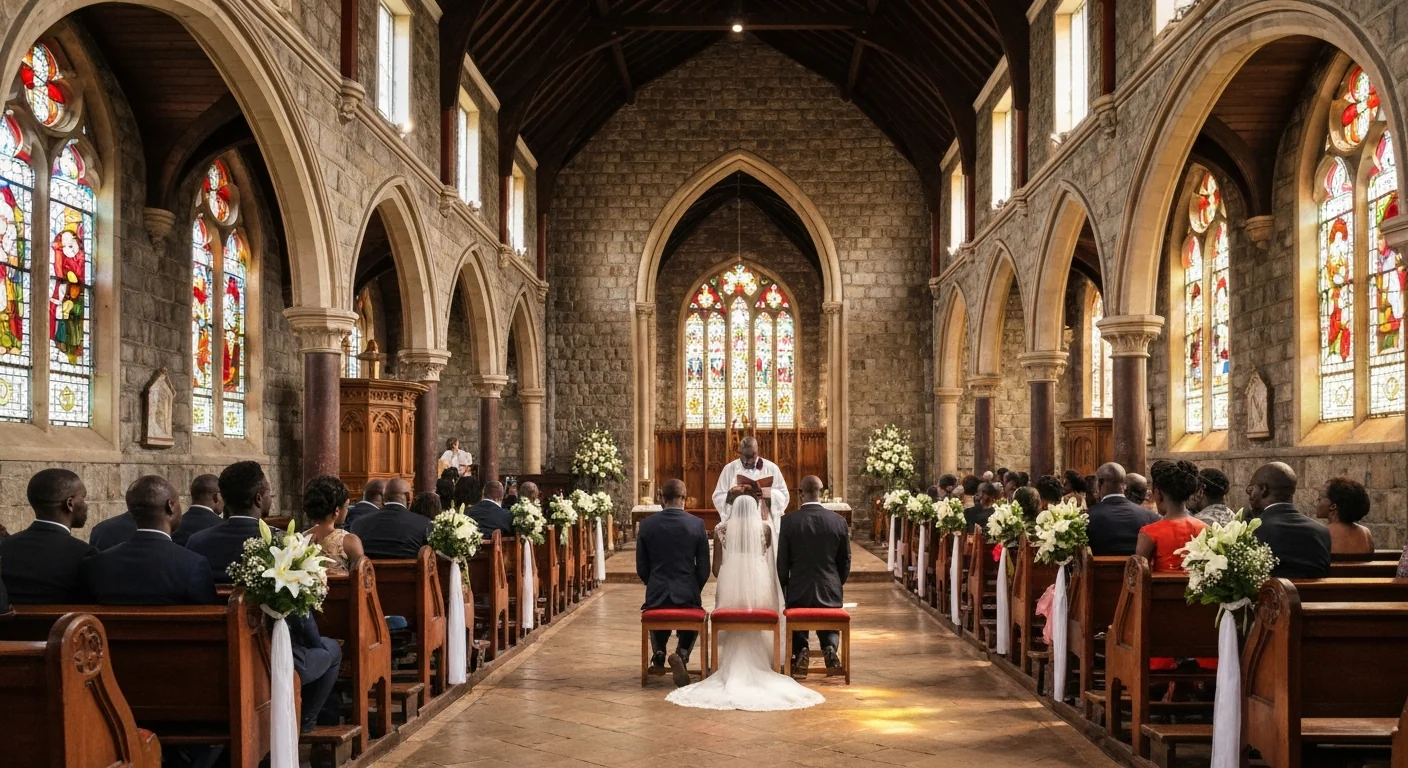
The statutory or religious ceremony is usually held the following morning (Saturday) if the traditional ceremony was Friday, or the same day as the traditional if both are combined. Church weddings in Lagos require pre-marital counselling sessions at the church — most denominations require at least four to six sessions over several months. Book your church date well in advance; popular Lagos churches have waiting lists.
For Muslim couples, the Nikah is typically a simpler, intimate ceremony conducted at the mosque or family home, often followed by the larger reception.
3. The Reception (The Owambe)
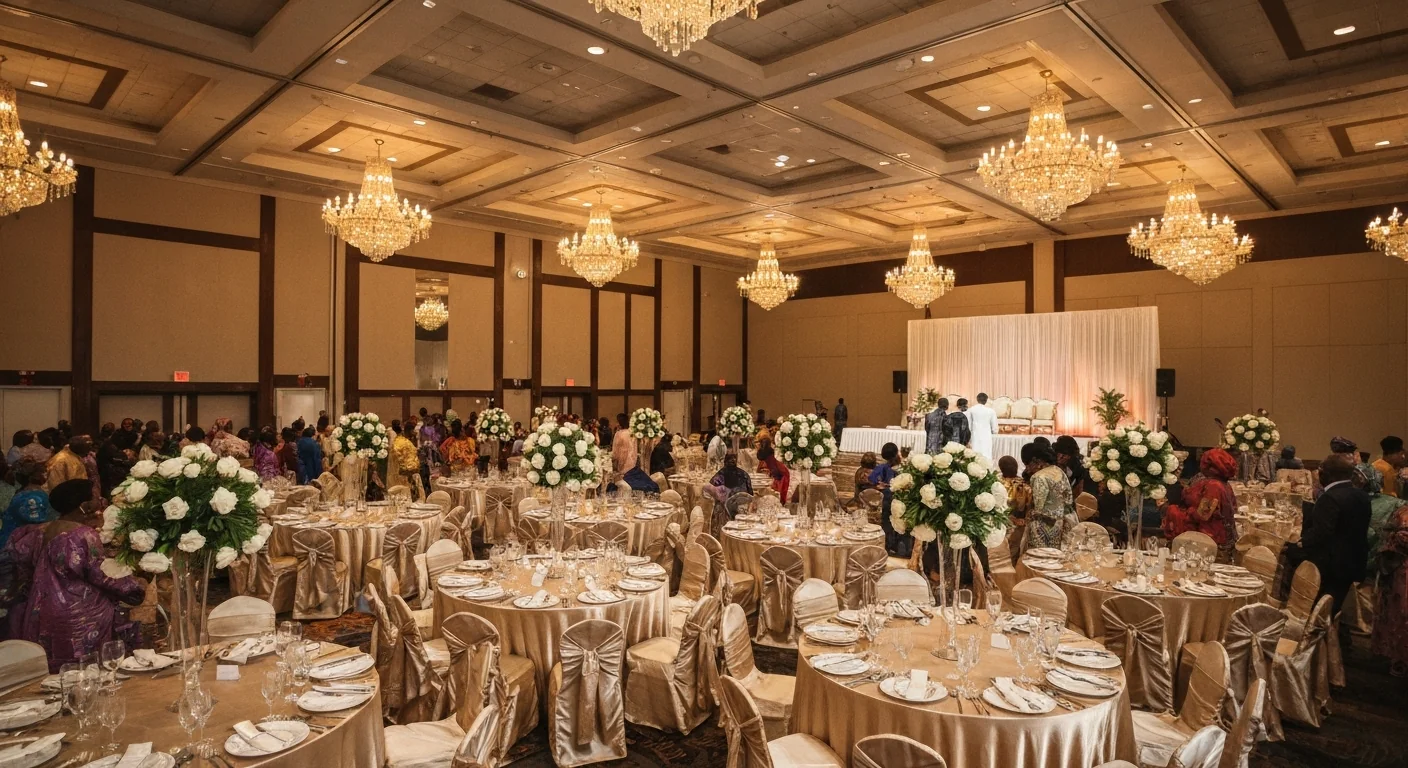
The reception is the event most people mean when they say “the wedding.” This is the owambe — the full-scale celebration with the main venue, the caterer, the live band, the DJ, the decorated tables, the aso-ebi coordination, the money spraying, the family dances. It typically runs from early afternoon through late evening and often into the night.
A practical Lagos wedding weekend often looks like:
- Friday evening: Traditional engagement (venue 1, family setting)
- Saturday morning: Church or mosque ceremony
- Saturday afternoon–night: Main reception (venue 2, main event hall)
Each of the three phases has its own budget, its own vendor requirements, and its own logistical demands. Couples who plan all three as a single event often underestimate the complexity and cost.
Finding Vendors in Lagos
Lagos has one of the deepest vendor markets in West Africa. The challenge is not finding vendors — it is finding the right ones and verifying quality before you commit your deposit. A vendor marketplace where you can filter by category, location, and budget range helps narrow the field before you start making calls.
Photographers and Videographers
Lagos produces some of Nigeria’s best wedding photographers. Names like George Okoro Weddings and Jide Odukoya Photography are among the most recognised, with a cinematic, editorial approach that suits high-production Lagos weddings. Established Lagos photographers typically start from ₦400,000 and go well above ₦1M for full coverage with cinematography.
When vetting photographers, insist on seeing full galleries from previous weddings — not just the twelve best shots from five events. Ask specifically about low-light and indoor coverage, since many Lagos receptions involve mixed lighting in large halls.
Caterers
Catering is the biggest single cost for most Lagos weddings and the area where shortcuts are most visible to guests. The standard for a Lagos reception is high: jollof rice, fried rice, egusi or efo riro, pounded yam or fufu, peppered turkey, assorted meat, drinks, and small chops circulating during the cocktail hour.
Budget ₦2,000–₦3,500 per plate for a solid mid-range caterer. Premium caterers run ₦4,000–₦6,000 per plate. Do not book without a tasting session. Astoria Caterers and Opeoluwa Foods are among the names with established reputations in the Lagos market.
Decorators and Event Designers
The expectation at a mid-to-high-budget Lagos wedding is a fully transformed venue — dramatic floral installations, custom lighting, and themed table settings. Nwandos Signature and Newton & David are among the most recognised event design companies at the high end. Pricing ranges from ₦300,000 for a modest setup to ₦3M+ for elaborate transformations. Get a detailed itemised quote and confirm what is included versus additional.
Aso-Ebi Coordinators
Aso-ebi — the coordinated fabric worn by family and close friends — is a Lagos wedding institution. The couple selects a fabric (Ankara, aso-oke, or lace) sold to guests at a markup, partially offsetting the couple’s cost. A coordinator manages sourcing, cutting, distribution, and payment collection. Factor in fabric cost (₦5,000–₦30,000 per set), coordination fees, and the reality that some guests will not pay on time.
Live Bands
A live fuji or juju band is considered essential by many Lagos families. Shuga Band and similar acts are well-regarded for Lagos reception entertainment. Live band hire typically runs ₦300,000–₦800,000+ depending on the act’s profile. Budget separately for DJ coverage before and after the live set.
Lagos-Specific Logistics: The Details That Make or Break the Day
Lagos is an extraordinary city and an extraordinarily demanding one to plan an event in. These are the logistics issues that experienced Lagos planners address first.
Traffic
Lagos traffic is not a minor inconvenience — it is a genuine event-day risk. A Third Mainland Bridge backup or Lekki–Epe Expressway gridlock can delay vendors, guests, and even the wedding party by hours. Practical mitigation:
- Build two hours of buffer into your timeline. If dinner service should begin at 5pm, plan as though it will begin at 7pm and communicate accordingly.
- Choose Friday or Saturday morning for lighter traffic. Early Saturday morning is the most favourable window. Friday evenings are the worst.
- Minimise cross-city travel between events. If your church is in Ikoyi and your reception is in Lekki, your guests face a real journey. Choosing venues within the same district dramatically reduces traffic risk.
- Send route guidance with invitations. Do not assume guests know alternative routes. Include specific driving directions and alternative route notes, especially for guests coming from the mainland.
Generator Hire (Power Backup)
NEPA — or PHCN, or whatever the latest branding is — will not guarantee power for your wedding. This is not a Lagos pessimism; it is a logistics fact. Every serious Lagos wedding event runs on generator backup. The generator is a non-negotiable budget line.
- Venue generators: Confirm that your venue has its own generator and what capacity it runs. Many venues include generator fuel in the hire fee — confirm this in writing.
- External hire: If the venue does not cover generator supply, hire through a company like Premium Power Solutions, which maintains a fleet ranging from 7KVA to 650KVA. For a 300-guest event, you want a generator sized appropriately for audio-visual equipment, air conditioning, lighting, and catering equipment simultaneously.
- Fuel cost: Generator fuel for a full-day event (6–10 hours) at a 200KVA generator runs ₦50,000–₦150,000 depending on current fuel prices. Budget for it explicitly.
Security
Lagos weddings attract large numbers. A dedicated security company providing 4–8 uniformed officers for crowd management, parking coordination, and gate control is standard practice for events above 300 guests. Many venues include basic security in their hire fee — confirm the headcount and whether they manage gate access.
For high-profile weddings, a separate professional security firm is advisable. The cost is ₦80,000–₦300,000 depending on headcount and event duration.
Parking
Venue parking is a frequent friction point. Confirm the parking capacity of your shortlisted venues — not the stated capacity, but what you observe on a site visit. For a 400-guest wedding where many guests drive, you need parking for 100–200+ vehicles realistically, plus overflow coordination.
If parking is tight, contract a nearby lot or open space in advance, and run a shuttle service. Include parking information in your invitations and on your programme.
Rain Contingency
Lagos has two rainy seasons: March–July and September–November. If your wedding falls in these months and involves any outdoor component, you need a committed rain plan — not a general assurance that “we have tents.” Ask your venue specifically: where do 400 guests go if rain arrives during the outdoor ceremony? Can they show you the covered backup space?
For fully indoor venues, rain is less of a concern, but vendor arrival and guest arrival in heavy rain create their own delays. Factor extra time into your programme during rainy season months.
Legal Requirements: Registering Your Marriage in Lagos
The church or traditional ceremony does not, by itself, create a legal marriage under Nigerian law. For a legally recognised marriage, you must register at a government marriage registry.
The Federal Marriage Registry (Ikoyi)
The Federal Marriage Registry on Alagbon Close, Ikoyi, is the primary statutory marriage registry authorised by the Ministry of Interior in Lagos State. It conducts marriages under the Marriage Act CAP M6, Laws of the Federation of Nigeria (2004).
Types of statutory marriage:
- Ordinary Marriage — between two Nigerian nationals
- Special Marriage — where one or both parties are non-Nigerian nationals
Documents Required
Both parties must provide:
- Birth certificate or sworn declaration of age with passport photograph
- Letter of indigenship / letter of identification from state of origin (Nigerian nationals)
- HIV test result (from a government or approved laboratory)
- Genotype test result
Male applicant additionally:
- Sworn affidavit of bachelorhood from a Federal High Court (if never previously married)
- If divorced: Decree Nisi and Decree Absolute from the divorce proceedings
Female applicant additionally:
- Sworn affidavit of spinsterhood from a Federal High Court (if never previously married)
Process and Timeline
You must give formal notice of your intention to marry at the registry — typically 21 days before the ceremony date. The marriage is solemnised in the presence of at least two witnesses. A marriage certificate is issued on the day.
Most Lagos couples register their marriage separately from the main wedding celebration — either before or shortly after — to avoid the registry administration process overlapping with wedding-day logistics.
Local government marriage registries also operate across Lagos State districts for couples who prefer a registry closer to their local government area. Contact the Lagos State Local Government Service Commission for the registry in your LGA.
12-Month Planning Timeline for Lagos Weddings
Lagos wedding planning requires more lead time than most couples expect. The best vendors book out 9–12 months in advance. A planning checklist that generates tasks based on your wedding date — and organises them into phases — keeps the timeline from slipping when you are juggling three ceremonies and dozens of vendors.
12 months out: Set your budget, agree on a guest list ceiling (the hardest conversation), choose a date with backup options, and begin venue visits.
10–11 months out: Book your venue — the longest lead time of any vendor. Secure your photographer and videographer. Start pre-marital counselling at your church. Give notice of intention to marry at the registry.
9 months out: Book your caterer after a tasting session. Book your decorator. Book your live band or DJ. Begin aso-ebi fabric coordination. Hire a wedding planner if you have not already.
6–8 months out: Finalise all vendor contracts with written agreements and deposit receipts. Begin guest list finalisation and invitation design. Book accommodation for out-of-town family. Confirm generator hire. Book your traditional engagement venue if it is separate from the main reception.
4–5 months out: Send formal invitations. Distribute aso-ebi fabric. Finalise the wedding day timeline with your planner. Book your security company.
2–3 months out: Confirm headcounts with caterer. Send the programme to all vendors. Do a venue walkthrough with your planner and key suppliers. Finalise transport for the wedding party.
1 month out: Confirm all vendor arrival times in writing. Prepare the outstanding payment schedule. Confirm generator fuel delivery. Prepare the final guest seating chart.
1–2 weeks out: Final headcount confirmation. Deliver all materials to the venue. Brief family on the day-of schedule and timing expectations.
Plan Your Lagos Wedding Without the Chaos
A Lagos wedding has a lot of moving parts. The couples who do it well are the ones who track every detail in one place — guest lists, vendor contacts, ceremony timelines, budget line items, and deposit payments. Harusi Hub brings all of this into a single dashboard: budget tracking across your ceremonies, a wedding website your guests can access for details and RSVP, and a planning checklist that keeps every task on schedule.
Plan your Lagos wedding
Manage your guest list, budget, and vendor contacts from one dashboard.
Start Planning