What to Give at a Kenyan Wedding in 2026: The Complete Guest Guide
A clear guide to wedding gift amounts by relationship, M-Pesa etiquette, registry use, and physical gift ideas — all with real KES prices for Kenyan guests.
What to Give at a Kenyan Wedding in 2026: The Complete Guest Guide
It’s Wednesday evening. The wedding is Saturday. You’re standing in Westgate Mall trying to decide between a blender and a bedding set, and you honestly have no idea which one they already have. Or maybe you’re staring at your M-Pesa app, thumb hovering over the send button, wondering if KSh 3,000 is insulting or if KSh 10,000 is completely unrealistic for someone you see at the office twice a month. Nobody gave you a rulebook for this.
Kenyan weddings are joyful, communal, and — let’s be honest — occasionally stressful for guests who want to get the gift right. There are unwritten rules about amounts, timing, and presentation that people seem to just know, until they don’t.
This guide is written for you: the guest who wants to give something thoughtful, appropriate, and maybe even impressive. If you’re a couple planning your wedding and wondering what your guests typically give, you’ll find useful context here too — but the real audience is the person holding an envelope and second-guessing themselves.
How Much to Give — The Relationship Tier Guide
Let’s start with the question everyone actually has: how much? The honest answer is that there’s no fixed number. But there are widely understood ranges, and sticking within them means you’ll never be remembered as the person who under-delivered or awkwardly over-gifted.
| Relationship | Suggested Range (KES) | Notes |
|---|---|---|
| Work colleague / acquaintance | 1,000 – 3,000 | Cash envelope or M-Pesa |
| Church group / community member | 2,000 – 5,000 (pooled) | Harambee model; pool with others |
| Friend | 3,000 – 8,000 | Cash, registry item, or physical gift |
| Close friend / sibling | 8,000 – 20,000+ | Registry, cash, or experience |
| Family (aunts/uncles) | 5,000 – 15,000+ | Often cash; may contribute jointly |
These ranges reflect Nairobi urban norms and will vary by community, economic context, and your own personal relationship with the couple. What matters is thoughtfulness and proportion, not hitting a specific number. A heartfelt KSh 2,000 from a college friend who’s between jobs means more than an obligatory KSh 5,000 handed over without a word.
Also worth noting: if you’re attending multiple wedding events for the same couple (engagement party, ruracio, main wedding), you don’t need to give at every single one. One meaningful contribution at the main event is completely acceptable.
Cash and M-Pesa — The How-To
Cash became the dominant wedding gift in Kenya for very good reason: the duplicate sufuria problem. Every couple who didn’t have a registry has a story about it. Three identical pots. Two wall clocks. A kitchen timer nobody asked for. Cash solves this completely — the couple gets exactly what they need, and you don’t haul a heavy box to a venue.
Sending via M-Pesa
Most weddings now share a dedicated Paybill number or a personal M-Pesa number for gifts. Here’s how to do it properly:
- Check the invitation or wedding website — the number is usually listed there
- Use the correct reference — this is important. Write your full name (not just initials) so the couple or their coordinator can match the contribution to you
- Include a message where possible — something short like “Congratulations [Bride & Groom] - [Your Name]”
- Keep your M-Pesa confirmation — in case there’s any confusion at the event
When to Send
- Before the wedding: Many guests send 1–2 days in advance, which actually helps the couple confirm attendance and manage logistics
- At the reception: The MC typically announces the Paybill number during the program. This is completely normal and expected
- After the wedding: Fine for close family and friends, but don’t wait more than a week
International Guests
If you’re in the diaspora or sending from outside Kenya, Wise and WorldRemit both support transfers directly to Kenyan M-Pesa numbers. Rates are usually better than traditional bank transfers, and the money arrives within minutes. Check the current exchange rate before sending so you can confirm the recipient gets the KES amount you intended.
Want to understand how M-Pesa registries work on wedding websites? Read our guide on setting up an M-Pesa wedding registry.
Group Gifting — The Modern Harambee
Harambee — the spirit of pulling together — is woven into Kenyan culture, and it’s never more present than at a wedding. If you’re in a friend group, work department, or community association, pooling contributions makes a lot of sense. You can collectively give something meaningful that none of you could have managed alone.
How to Organize a Group Gift
The most common setup is a WhatsApp group (or an existing one repurposed):
- One person volunteers as coordinator — they collect contributions and make the final transfer or purchase
- Set a clear deadline — at least 3 days before the wedding so the coordinator isn’t chasing people on the morning of
- Agree on the amount upfront — “KSh 2,000 each” is cleaner than “contribute whatever you feel.” Open-ended amounts lead to awkward follow-ups
- Keep receipts — a quick screenshot shared in the group keeps everything transparent
Tracking Contributions
For larger groups (office departments, alumni associations, church committees), it helps to have a simple tracking sheet — a WhatsApp pinned message or a shared Google Sheet works perfectly. List everyone’s name, the amount pledged, and whether it’s been received. The coordinator can update it in real time so nobody is wondering if their transfer went through.
For a deeper dive into organizing a wedding harambee from scratch, see our guides on how harambees work in Kenya and funding a wedding via harambee and M-Pesa.
Using the Couple’s Registry
A registry is a gift list that the couple has curated themselves. Instead of guessing what they need, you pick something you know they actually want. It’s the most efficient, most appreciated approach to gift-giving — and it’s increasingly common among Kenyan couples planning their weddings.
How to Find the Registry
- Check the wedding invitation or save-the-date — couples often include a link to their wedding website
- Look at their wedding website — most modern Kenyan wedding websites have a dedicated Registry page
- Ask a bridesmaid or groomsman — they’ll know
Why Registries Work So Well
Registries eliminate the duplicate problem entirely. When a guest marks an item as purchased, it disappears from the available list. Nobody ends up with two identical sets of wine glasses. The couple gets things they specifically chose. Guests feel confident they gave something useful.
They also accommodate different budgets elegantly. A registry typically includes items at many price points — from a KSh 1,500 set of mugs to a KSh 25,000 stand mixer — so every guest can find something that fits their relationship with the couple and their own budget.
How to Purchase from a Registry
Online stores (Jumia, Kilimall, Carrefour Kenya): If the item links directly to a store, you can order it to be delivered to the couple’s address or collect from the nearest branch.
In-store: For physical shops like Hotpoint or a local kitchenware store, visit in person, mention you’re shopping from a registry, and the store staff will often help confirm what’s been claimed.
M-Pesa contributions to registry funds: Many digital registries (including those built on Harusi Hub) let guests contribute cash toward specific items or honeymoon funds via M-Pesa. You send the contribution directly and enter a reference code to mark the item. Couples can set up their gift registry with products from Kenyan retailers alongside M-Pesa cash funds — so guests can choose between a physical gift and a contribution toward something bigger like the honeymoon.
Harusi Hub’s registry feature was built specifically for the Kenyan context — M-Pesa integration, Kenyan store links, and shareable via WhatsApp. If you’re a guest looking at a Harusi Hub registry, the page itself will walk you through exactly how to contribute. Learn more about how the registry works.
Physical Gift Ideas by Budget
Despite the rise of cash gifting, physical gifts still hold real warmth and meaning — especially when they’re thoughtful and well-chosen. Arriving with something beautifully wrapped that the couple genuinely needs is its own kind of joy. Here are ideas organized by budget, with real KES price ranges from Kenyan stores.
Budget Tier (Under KSh 3,000)
These work well for colleagues, acquaintances, and anyone who wants to give something tangible without a large spend.
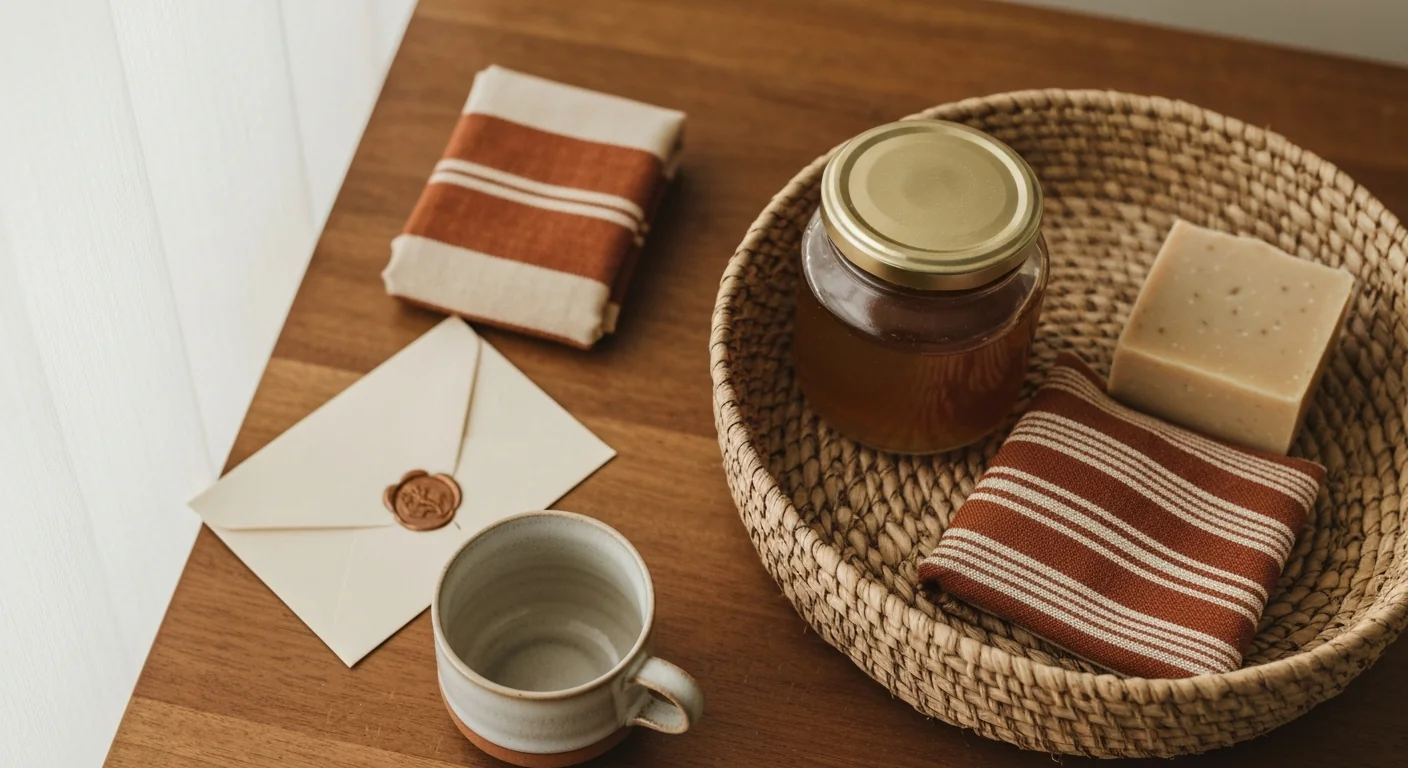
- Gift basket (towels, candles, toiletries) — KSh 800–2,500. Carrefour and Naivas both stock affordable basket sets
- Personalized mugs or cushion set — KSh 1,000–2,000. Plenty of Nairobi printers (try Kenyaplex or similar) will add the couple’s names for a small fee
- Kanga or kitenge fabric pair — KSh 800–1,500. A beautiful, culturally meaningful gift. Choose complementary colors or a pattern with significance
- Artisanal Kenyan coffee or tea gift set — KSh 1,500–2,500. Kenya AA coffee or a selection of Kenyan teas from brands like Kericho Gold or Dormans make for a lovely, reusable gift
Mid-Range (KSh 3,000–10,000)
The sweet spot for close friends, family, and anyone who wants to give something genuinely useful.
- Blender or toaster oven — KSh 3,500–6,000. Hotpoint, Carrefour, and Jumia all have reliable options. Confirm they don’t already have one if you’re not using a registry
- Dinnerware or cutlery set — KSh 4,000–8,000. A matching set of plates, bowls, or cutlery from Carrefour or Game stores is practical and appreciated
- Duvet or bedding set — KSh 4,500–7,000. A good quality duvet in a neutral color from Naivas Home or Carrefour is genuinely useful for a new home
- Maasai fleece blanket — KSh 2,500–4,500. Beautiful, distinctly Kenyan, and incredibly practical for cool Nairobi nights
- Personalized photo frame or engraved homeware — KSh 3,000–6,000. A frame engraved with the wedding date, or a custom cutting board, adds a personal touch that lasts for years
Premium (KSh 10,000+)
For very close family, best friends, or when you’re contributing jointly as a group.
- Air fryer or multi-cooker — KSh 8,000–18,000. Air fryers have become genuinely popular in Nairobi households. Brands like Breville or Kenwood from Hotpoint are reliable choices
- Premium coffee machine — KSh 12,000–35,000+. For couples who take their coffee seriously, a quality espresso or drip machine from Hotpoint or Game is a gift that gets used every single day
- Luxury cookware set — KSh 10,000–25,000. A good set of non-stick pans is something most households never splurge on themselves. Tefal and Prestige sets are widely available
- Honeymoon experience contribution — any amount, via registry. If the couple has a honeymoon fund on their registry, contributing directly to their travel experience is one of the most generous and memorable things a guest can do
Community-Specific Gifting Notes
Kenya is not a monolith, and gifting norms vary meaningfully across communities. These are general observations — every family is different, and when in doubt, ask someone close to the couple.
Kikuyu: Kitchen essentials have historically been central to wedding gifts, reflecting the cultural emphasis on establishing a well-run home. Items like cookware, storage sets, or appliances are warmly received. The ruracio ceremony often involves significant family-level contributions.
Luo: Cash contributions are very common, both at the Ayie ceremony and at the main wedding. Community involvement is deeply valued, and group contributions via harambee are a natural part of the celebration. Physical gifts are also welcome but cash tends to be preferred for its flexibility.
Luhya: Community pooling is central to Luhya wedding culture. Expect organized contributions from church groups, village associations, and extended family. Physical household gifts are also warmly received — the community approach means no single person bears a heavy burden.
Coastal/Swahili: Kanga fabrics with meaningful Swahili inscriptions carry special significance. A well-chosen kanga — especially one with a proverb or message relevant to the couple — is a deeply personal and culturally resonant gift. Quality fabric from Mombasa Old Town merchants is always appreciated.
Maasai/Pastoralist communities: In rural and traditional ceremonies, livestock symbolizes wealth and blessing. Goats and cows are legitimate and meaningful gifts for those within the community. For urban Maasai weddings or guests from outside the community, cash or household items are equally appropriate.
Diaspora guests: M-Pesa international transfer (via Wise or WorldRemit) is the most practical option. If the couple has a registry, purchasing from an online store with Kenya delivery is another excellent approach. Don’t let distance be an excuse for nothing — even a small contribution from abroad means a lot.
Rural and Upcountry Weddings
A wedding in Kakamega, Kisii, Murang’a, or a rural village operates differently from a Nairobi hotel reception. If you’ve been invited to an upcountry ceremony, a few things are worth knowing.
Registries and Paybill numbers are less common at rural weddings, where physical goods still carry significant social weight. Household items — sufurias, plates, bedding, cooking oil, sugar, flour — are genuinely useful and culturally appropriate gifts. Don’t be embarrassed to arrive with something practical.
Community contribution models are stronger in rural areas. You’ll likely be contributing alongside neighbors, church members, and extended family who have organized a collective gift. Ask the family coordinator before buying anything independently so you don’t duplicate.
When in doubt about what’s needed, ask. The couple’s family will tell you directly — and they’ll appreciate that you asked.
What NOT to Give at a Kenyan Wedding
Just as important as knowing what to give is knowing what to avoid.
- Duplicate items without checking the registry — if you’re buying a physical item and the couple has a registry, check it first. The duplicate problem is real and it creates awkward storage situations for the couple
- Perishable food (unless it’s culturally appropriate and expected) — fresh produce or unpackaged food is impractical for a couple who will be traveling, exhausted, and unable to use it quickly
- Cash bouquets — the trend of pinning cash notes to decorative arrangements has spread in recent years, but it comes with real downsides: hygiene concerns, the risk of notes falling and being lost, and the general impracticality of handling large amounts of loose cash. Financial advisors also caution against the casual display of cash amounts. A sealed envelope or M-Pesa transfer is simpler and more secure
- Gift cards for stores that don’t operate in Kenya — Amazon gift cards, for example, are nearly useless for a Nairobi couple. Always check that the store has Kenyan operations before buying a gift card
- Nothing at all — even if you’re tight on funds, a small contribution matters. KSh 500 in a card with a heartfelt message is better than showing up empty-handed. Kenyan communal culture places real value on participation, however modest
Gift Etiquette — Timing, Presentation, and More
When to Give
At the venue: The reception typically has a designated gifts table or a coordinator collecting cash envelopes. Hand your envelope to the coordinator, not directly to the couple — they’re busy and will appreciate not having to manage it in the moment.
Before the wedding: Sending via M-Pesa 1–2 days before is perfectly acceptable and increasingly preferred. It simplifies the couple’s day.
After the wedding: For close family and friends, sending a gift in the week after is fine. For a physical item you ordered online, delivery within 2 weeks is acceptable with a note explaining it’s on the way.
How to Present a Cash Envelope
Use a proper envelope — not a folded note tucked into a card. Write your name clearly on the outside. If you’re giving on behalf of a group, list all contributing names or write “From the [Name] family” or “[Company] team.” Seal the envelope.
Second Weddings and Vow Renewals
The expectation for gifts is generally lower for second weddings and vow renewals. Close family may still give, but acquaintances are not expected to bring the same level of gift as for a first wedding. Follow the couple’s lead — if they have a registry or have mentioned a preference, honor it. If not, a thoughtful card and a modest contribution are completely appropriate.
When You Cannot Attend
If you’ve been invited but can’t make it, you’re not obligated to give a gift — but it’s a thoughtful gesture. An M-Pesa transfer with a warm congratulatory message, or a small physical item sent in advance, shows you care even from a distance.
Thank-You Notes
Couples in Kenya are not always expected to send formal thank-you notes (though it’s a lovely touch). If you give through a registry, some platforms automatically notify the couple of your contribution. If you want acknowledgment of a physical gift, make sure your name is on the packaging.
For more on wedding etiquette in Kenya, see our complete wedding etiquette guide. And if you’re a couple trying to track all the contributions and gifts you receive, our contribution tracking guide will help you stay organized.
Giving a gift at a Kenyan wedding isn’t just a transaction. It’s participation in a community celebration — your way of saying you see this couple, you support them, and you’re genuinely happy for them. Get the amount roughly right, present it with care, and you’ll be remembered as exactly the guest you wanted to be.
Planning your own wedding?
Set up a gift registry so your guests know exactly what you need — no more duplicate sufurias.
Create Your Free Wedding Registry