Luo Wedding Traditions: From Ayie to Meko — A Complete Guide
Everything you need to know about Luo marriage customs — ayie (mother's consent), nyombo (cattle dowry), meko (bride procession), ohangla music, and the legendary Luo wedding feast.
Luo Wedding Traditions: From Ayie to Meko — A Complete Guide
Everything you need to know about Luo marriage customs — from the mother’s consent ceremony to the dramatic bride procession, and how to plan a Luo wedding that honors tradition while embracing modern celebration.
Among the Luo people of Western Kenya, marriage is not simply the union of two individuals. It is the coming together of two families, two clans, and two lineages. It is the most significant cultural event in a person’s life, governed by customs that have been practiced for generations along the shores of Lake Victoria.
The Luo, a Nilotic people who settled around the Winam Gulf and across Nyanza, have one of the most elaborate and structured marriage traditions in Kenya. Every stage — from the first inquiry to the final procession — carries deep cultural meaning, and each must be completed before the next can begin. Skip a step, and elders will remind you that a house built without a foundation will not stand.
This guide walks you through every stage of the Luo marriage process, from courtship to the wedding feast, so you can understand, plan, and celebrate these traditions with the respect they deserve.
The Stages of a Luo Marriage
A Luo marriage unfolds in clearly defined stages. Each stage involves specific rituals, specific people, and specific obligations. Understanding this sequence is essential whether you are planning your own Luo wedding or attending one as a guest.
1. Courtship and the Role of the Jagam
In traditional Luo culture, marriage did not begin with the couple. It began with the community.
A jagam — a matchmaker or intermediary, usually an uncle or respected elder male relative — would identify a suitable wife for a young man. The jagam considered the girl’s family background, her character, her clan (to avoid marrying within the same clan, which is strictly prohibited), and her reputation within the community. The jagam’s role was not romantic. It was strategic, ensuring the union would strengthen both families.
Today, most Luo couples meet on their own — at university, at work, at church, or through mutual friends. But the jagam still plays a role. Once a man decides he wants to marry, he informs his family, and a jagam is appointed to make the formal approach to the woman’s family. Even in 2026, showing up at a Luo homestead without a jagam to speak on your behalf is considered presumptuous.
The jagam makes the first contact, gauges the family’s receptiveness, and begins laying the groundwork for the formal visits that follow.
2. Ng’eyo Dala — “Knowing the Home”
The first formal step is ng’eyo dala, which translates to “knowing the home.” This is an informal visit where the groom, accompanied by a few relatives, travels to the bride’s family home. The purpose is straightforward: to see where the bride comes from, to meet her parents, and to signal the groom’s serious intentions.
The visiting party brings a small gift — traditionally something modest like sugar, tea, or bread. This is not the dowry. It is a gesture of goodwill, a way of saying, “We come in peace, and we are interested.”
During ng’eyo dala, the families observe each other. The bride’s family assesses the groom’s character and background. The groom’s family confirms what the jagam has reported. If both sides are satisfied, the conversation moves forward. If there are concerns — about clan compatibility, family reputation, or the groom’s readiness — they are raised here, quietly and respectfully.
Ng’eyo dala is low-key by design. There is no ceremony, no formal negotiation, and no commitment. It is a door being opened, not a deal being sealed.
3. Ayie — The Mother’s Consent
Ayie is the heart of the Luo marriage process. The word itself means “I agree” in Dholuo, and it refers specifically to the moment the bride’s mother accepts the union and gives her consent.
This is a ceremony, and it is taken very seriously.
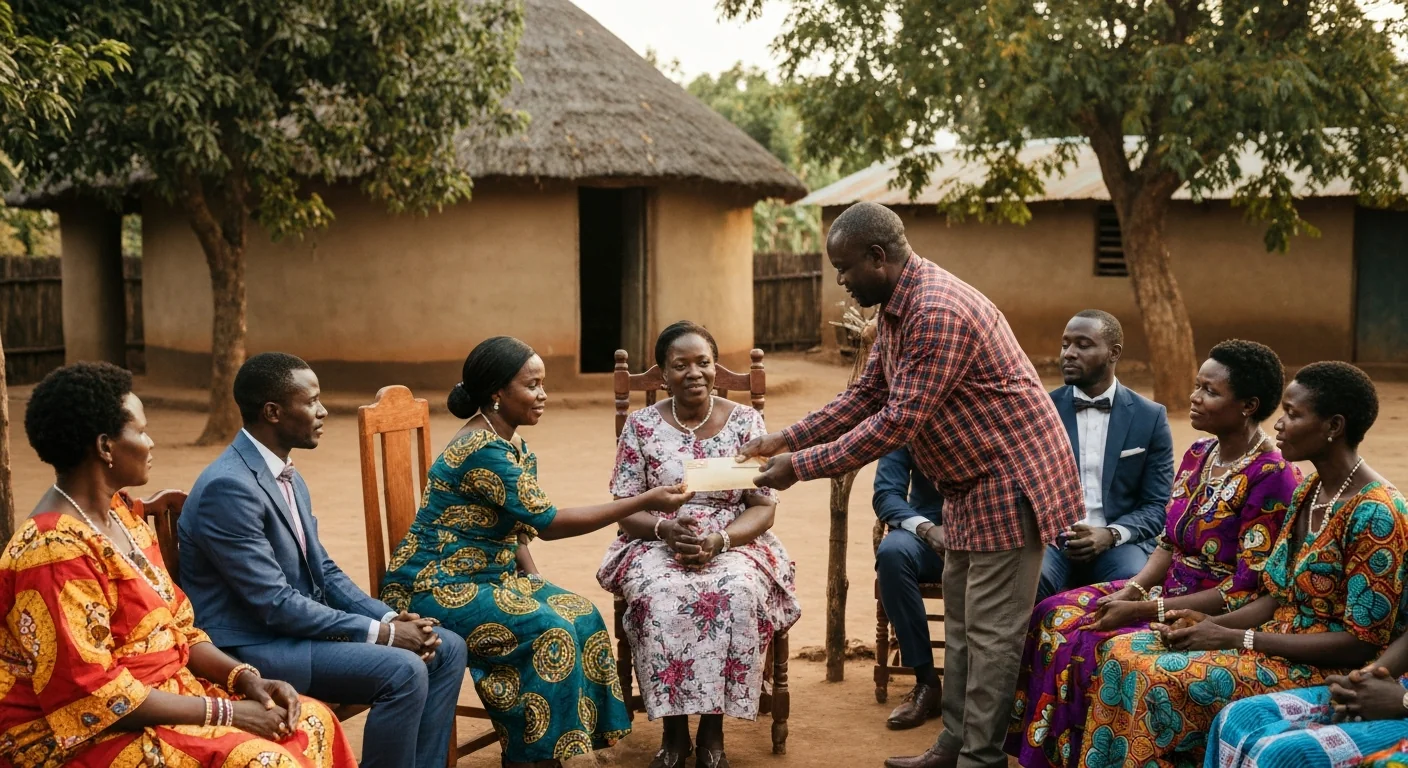
The groom’s family arrives at the bride’s home with a delegation. They bring money in envelopes — specific amounts designated for specific people. The bride’s mother receives her envelope, and named relatives (aunts, grandmothers, specific elders) each receive theirs. The amounts are discussed and agreed upon in advance through the jagam.
But the most memorable part of ayie is the food.
The bride prepares a full meal and serves the groom in front of both families. This is not merely hospitality. It is a public demonstration of her cooking ability, her readiness for marriage, and her acceptance of the groom. The groom is served a full fried chicken along with a knife — a mark of honor reserved for respected guests and sons-in-law. The meal also includes kuon (ugali) and traditional vegetables.
A sheep is slaughtered during the ayie ceremony, signifying the seriousness of the occasion and the bond being formed between the two families.
Once ayie is complete, the couple is considered married in the eyes of the community. This is not a metaphor. Under the Marriage Act 2014, customary marriages in Kenya — including those solemnized through ayie — are legally recognized. Many Luo couples consider ayie their true wedding day, with any church or civil ceremony that follows being a formality.
The significance of the mother’s role in ayie cannot be overstated. In Luo culture, the mother-daughter bond is sacred, and ayie is the mother’s ceremony. She is the one who agrees. She is the one who releases her daughter. Without her consent, the marriage does not proceed.
4. Nyombo (Keny) — The Cattle Dowry
If ayie is the emotional center of the Luo marriage, nyombo (also called keny) is the structural one. This is the formal payment of bride price from the groom’s family to the bride’s father.
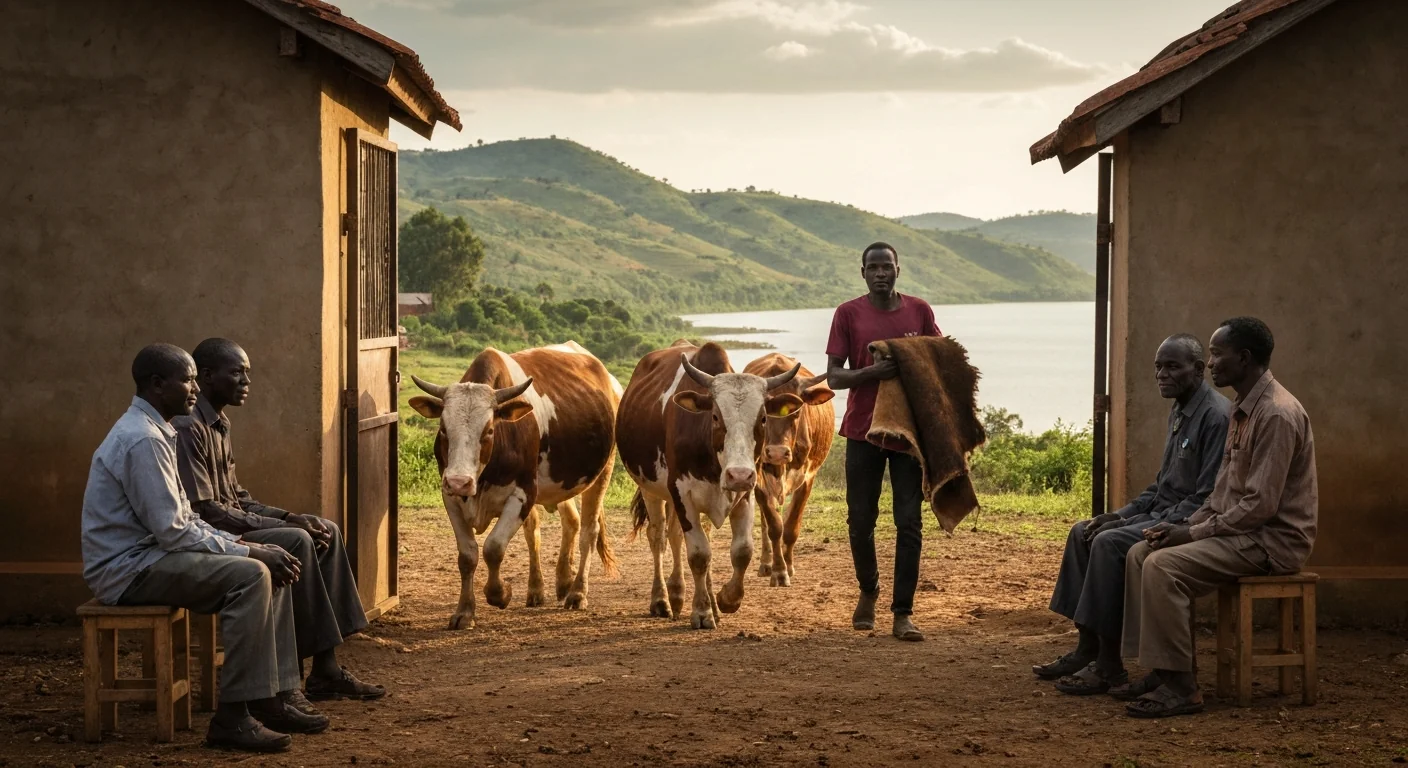
The traditional nyombo consists of cattle and goats — historically around 16 cows and 30 goats, though the exact numbers vary by family, region, and the bride’s social standing. Cash payments are also included, with the total amount negotiated between the two families through their appointed representatives.
The negotiation itself is a cultural event. It takes place in the evening, with the groom, his spokesman, and elders sitting with the bride’s father, uncles, and brothers. There is back and forth, there is humor, there is posturing — and eventually, there is agreement. The bride’s family will push for more; the groom’s family will argue for less. Both sides know this is expected, and both sides enjoy the process.
What makes Luo nyombo distinct is the physical delivery of cattle. The cows must be walked — literally walked — into the bride’s family homestead. When the cattle cross the gate of the compound, the marriage is considered complete in the eyes of the father. The rope used to lead the cattle is carried back by the groom’s family as a symbol of the bond.
This tradition carries real consequences. If the groom has not paid nyombo, the wife cannot be buried on his land when she dies. This is not a minor social inconvenience — burial and ancestral land are deeply intertwined in Luo culture. A woman buried away from her husband’s home is a source of lasting shame for the family.
There is also a strict order to nyombo within families: a younger daughter’s dowry cannot be negotiated before her elder sister’s. This ensures that families honor the order of their children and that no daughter is overlooked.
In modern practice, many families accept cash equivalents instead of physical cattle, especially for urban families who may not have land to keep livestock. The amounts vary widely — from modest sums to figures in the hundreds of thousands of shillings — depending on the bride’s education, family expectations, and the economic reality of the groom. What remains constant is the principle: nyombo is not a purchase. It is a gesture of gratitude to the family that raised the bride, and a commitment to her welfare.
5. Meko — The Bride Procession
Meko is the most dramatic stage of a Luo wedding, and the one that captures the imagination of anyone who witnesses it.
Meko is the “capture” or “kidnapping” of the bride. After nyombo has been paid and all formalities are complete, the groom’s relatives and friends arrive at the bride’s home to take her to her new home. But they do not simply collect her. They must earn her.
The bride’s family resists. Brothers, cousins, and young men from the bride’s clan physically block the groom’s party. There is pushing, wrestling, and shouting. The tradition of amen (wrestling) is central to meko — the groom’s men must demonstrate courage and determination to claim the bride. The resistance is staged but vigorous, and it serves a purpose: it tests the groom’s people and shows the bride’s family that she is valued and worth fighting for.
The bride herself may cry or protest — this is expected and culturally appropriate. Her reluctance is not a sign of unhappiness but a demonstration of her attachment to her family and the gravity of leaving her father’s home.
However, the bride has genuine power in this moment. If she truly does not want to go, she can embrace a euphorbia tree (a thorny, milky-sapped plant found in most Luo homesteads) or climb a termite mound. Either action is an unmistakable signal that she refuses the marriage, and the groom’s party must withdraw. This is not symbolic — it is an actual veto, and it is respected.
Once the bride is “captured,” she is escorted to the groom’s home in a procession that can involve singing, dancing, and a convoy of vehicles. In modern Luo weddings, the meko procession has evolved into one of the most celebrated moments — complete with decorated cars, ohangla music blasting from speakers, and ululating women lining the road.
6. Riso — Identifying the Bride
The final ritual test is riso. When the groom arrives at the bride’s home for meko, the bride is hidden among her sisters and female relatives, all of them veiled or dressed similarly. The groom must identify his bride from among the group.
This test is partly playful and partly meaningful. It demonstrates that the groom truly knows and recognizes his wife — that this is a union of genuine familiarity, not convenience. If he picks the wrong woman (which does happen, to great amusement), he may face teasing or be asked to pay a small fine before trying again.
Riso adds an element of theater and joy to what is otherwise a deeply emotional day. It reminds everyone present that love, at its best, involves knowing someone so well that you can find them even when they are hidden.
The Luo Wedding Feast
No Luo wedding is complete without a feast, and the Luo are known across Kenya for the scale and generosity of their celebrations. Food is not merely served at a Luo wedding — it is presented as a statement of abundance, hospitality, and family pride.
Traditional Foods
The centerpiece of any Luo feast is kuon (ugali), the thick maize meal that is a staple across Western Kenya. At weddings, kuon is prepared in enormous quantities and served alongside:
- Rech (fish) — Tilapia from Lake Victoria is the most prestigious, often fried whole and served golden and crispy. Omena (silver cyprinid), the small dried fish harvested from the lake, is also served in stews. Fish at a Luo wedding is non-negotiable. A Luo wedding without fish is like a Kikuyu wedding without nyama choma — unthinkable.
- Gweno (chicken) — Fried chicken holds a place of honor. The groom receives a full chicken during ayie, and chicken is served generously throughout the celebration.
- Aliya (smoked beef) — Dried and smoked meat, traditionally prepared over slow fires, is a delicacy brought out for significant occasions.
- Traditional vegetables — Osuga (African nightshade), akeyo (Crotalaria), and muto (Corchorus) are staples of Luo cooking and are always present at the wedding table. These vegetables are not garnishes. They are the foundation of the meal.
The dero (granary) is a traditional symbol of wealth in Luo homesteads. A family with a full dero is a family that can host, feed, and provide. At weddings, the abundance of food is a reflection of the family’s dero — their capacity to sustain and celebrate.
Music and Dancing
A Luo wedding without music is a contradiction. Music is woven into every stage of the celebration, from the procession to the late-night dancing.
Ohangla is the traditional music of the Luo people and the soundtrack of every major celebration. It is a percussion-driven style built around more than eight drums played with sticks, accompanied by a cylindrical shoulder-slung drum and often a flute. Ohangla was historically performed at weddings, funerals, and harvest celebrations. Today, it has evolved into a popular entertainment genre while retaining its ceremonial roots.
The nyatiti is the most sacred instrument in Luo culture. It is an eight-stringed lyre, traditionally played by a solo musician who sings while plucking the strings and tapping a rhythmic pattern with a toe ring attached to a bell. For generations, no celebration was considered complete without a nyatiti player. The instrument carries deep spiritual significance and is associated with storytelling, praise, and ancestral connection.
The orutu, a one-stringed fiddle, is another traditional instrument that features in Luo celebrations, often accompanying the nyatiti or played solo during more intimate moments of the ceremony.
Benga music, which evolved from the nyatiti tradition in the 1960s and 70s, blends the rhythmic patterns of traditional Luo music with electric guitar. It became one of Kenya’s most popular music genres and remains a wedding staple. The driving guitar riffs and call-and-response vocals of benga can fill a dance floor faster than almost any other genre.
Modern Luo weddings feature prominent ohangla artists performing live. Musicians like Tony Nyadundo, Prince Indah, Lady Maureen, and Emma Jalamo are among the most sought-after performers for wedding celebrations. Booking a top ohangla artist for your wedding reception is a significant expense but considered essential for a proper Luo celebration.
Modern Luo Weddings — Tradition Meets Extravagance
The Luo are famously generous celebrators, and modern Luo weddings have become legendary for their scale. While the traditional rituals remain intact, the celebrations surrounding them have grown increasingly elaborate.
It is not uncommon to see helicopter arrivals, luxury SUV motorcades, designer outfits, and champagne towers at high-profile Luo weddings. Social media has amplified this trend, with wedding videos from Nyanza regularly going viral for their sheer spectacle.
This is not mere showing off. In Luo culture, generosity and public celebration are deeply valued. A wedding that is modest by choice is respected, but one that is modest because the family cannot afford better is a source of concern. The community rallies around its own — contributions from extended family, friends, and clan members (known as chanda) help fund weddings, ensuring that celebrations are communal achievements, not individual burdens.
The blending of traditional and modern is one of the most distinctive features of contemporary Luo weddings. You might witness a meko procession in the morning, with all its wrestling and drama, followed by a church ceremony in the afternoon, and then an evening reception with a live ohangla band, a DJ, professional videography, and a multi-tiered cake. The couple might wear traditional attire for the customary ceremony and switch to a Western suit and white gown for the church service.
This duality is not a contradiction. It is a celebration of identity — honoring where you come from while embracing where you are.
Luo Wedding Attire
Traditional Luo attire for weddings reflects the community’s aesthetic values: bold, colorful, and dignified.
For the bride, the traditional look includes a long flowing dress or wrapped fabric in rich colors — often incorporating patterns significant to the family or clan. Beadwork and jewelry are important, with necklaces, bracelets, and earrings worn in layers. The bride’s hair may be styled elaborately or covered with a headpiece.
For the groom, traditional attire might include a kanzu (long white or cream tunic) or smart casual clothing for the customary ceremonies. During the church or civil ceremony, most grooms opt for a Western suit.
Guests at Luo weddings are expected to dress well. Arriving underdressed is noticed and quietly commented upon. Women wear their finest dresses, often with matching headwraps, while men wear suits or smart trousers with well-pressed shirts.
Luo Wedding Proverbs
The Luo people have a rich tradition of proverbs that speak to love, marriage, and family. These sayings are often quoted during wedding speeches, negotiations, and toasts:
-
“Jachan nyombo gi wang’e” — “The poor man marries with his eyes.” This proverb reminds us that even without material wealth, love and admiration are powerful. It is often quoted during nyombo negotiations, both humorously and with genuine warmth.
-
“Nyako dher chak” — “A girl is an assurance of milk.” Daughters are valued as a blessing to the family. Their marriage brings cattle (and therefore milk) to their parents, but more importantly, they build bridges between families.
-
“Hera chalo agwata” — “Love is like a gourd that must be guarded.” A gourd carries water — the most essential resource. Love, like water, sustains life but must be protected and handled with care. This proverb is a favorite in wedding speeches, a reminder to the couple that love requires ongoing effort and vigilance.
Planning a Luo Wedding: Practical Tips
If you are planning a Luo wedding — whether you are Luo yourself or marrying into the community — here are practical considerations to keep in mind:
Start with the elders. Before you book venues or hire photographers, sit down with the senior members of both families. They will guide you on which traditions to observe, in what order, and what is expected. Every Luo sub-community (Jo-Kisumo, Jo-Karachuonyo, Jo-Gem, Jo-Seme, and so on) has slight variations in custom, and the elders know these details.
Budget for multiple events. A Luo wedding is not a single day. It is a series of ceremonies — ng’eyo dala, ayie, nyombo, meko — each of which requires planning, catering, and often travel to the family’s rural home in Nyanza. Budget for transport, accommodation, food, and gifts at each stage.
Respect the order. The stages of a Luo marriage must happen in sequence. You cannot skip ayie and go straight to nyombo. You cannot plan meko before the cattle have crossed the gate. Rushing the process will frustrate the elders and undermine the cultural significance of each step.
Prepare for generosity. Luo weddings feed everyone. Plan for more food than you think you need. Running out of food at a Luo wedding is a social disaster that will be talked about for years. Work with caterers who understand the scale and the specific dishes expected.
Book your ohangla artist early. Top performers like Prince Indah and Tony Nyadundo have packed schedules, especially during the December and April wedding seasons. If live ohangla music is important to your celebration — and it should be — start booking months in advance.
Communicate across generations. Modern couples often want to incorporate both traditional and contemporary elements. This is perfectly acceptable, but it requires clear communication with both families. Be transparent about your plans, listen to concerns, and find compromises that honor tradition without creating stress.
Frequently Asked Questions
How long does the entire Luo marriage process take?
The full process — from ng’eyo dala through meko — can take anywhere from a few months to over a year. The timeline depends on how quickly the families can coordinate, how long nyombo negotiations take, and the logistical challenges of organizing multiple ceremonies. Some families complete everything within three to four months; others spread it over a year or more.
Is ayie legally binding?
Yes. Under Kenya’s Marriage Act 2014, customary marriages are legally recognized. Once ayie is complete and the bride’s mother has given consent, the couple is considered married under customary law. Many couples choose to also register their marriage civilly or have a church wedding, but ayie alone is sufficient for legal recognition.
What happens if the bride’s mother has passed away?
If the bride’s mother is deceased, a senior female relative — typically the bride’s paternal grandmother, eldest aunt, or the mother’s closest sister — steps into the role. The ayie ceremony still takes place, and the envelope that would have gone to the mother is given to this designated relative. The principle of maternal consent is upheld through representation.
Can the bride refuse the marriage during meko?
Absolutely. If the bride embraces a euphorbia tree or climbs a termite mound during meko, it is an unmistakable signal that she does not consent. The groom’s party must withdraw, and the marriage does not proceed. While meko involves theatrical resistance from the bride and her family, the bride’s genuine refusal is always respected.
How much does a Luo wedding cost?
Costs vary enormously. The nyombo (dowry) alone can range from modest amounts to several hundred thousand shillings depending on the families involved. When you add the costs of ayie gifts, multiple ceremonies, catering for large groups, transport to and from Nyanza, and entertainment, a full Luo wedding can cost anywhere from KES 200,000 to well over KES 2 million. Community contributions (chanda) from extended family and friends help offset these costs.
Do you need to pay the full nyombo before the wedding?
Traditionally, a substantial portion of the nyombo should be paid before meko can take place. However, many modern families accept partial payment with an agreement to complete the balance over time. What matters is that both families agree to the arrangement and that the groom demonstrates genuine commitment to fulfilling his obligation. Leaving nyombo unpaid indefinitely carries real consequences, particularly regarding burial rights.
Planning your Luo wedding?
Coordinate ayie, nyombo, and meko across multiple events — manage guests, track contributions, and keep both families informed in one place.
Start Planning for FreeFor a broader look at wedding customs across Kenya’s diverse communities, read our Complete Guide to Kenyan Wedding Traditions.