How to Plan an African Destination Wedding (2026 Guide)
A complete country-by-country guide to planning an African destination wedding in 2026. Compare costs, legal requirements, and seasons for Kenya, Zanzibar, South Africa, Morocco, Mauritius, Rwanda, Uganda, and Ghana.

How to Plan an African Destination Wedding: The Complete 2026 Guide
You’ve pictured it a hundred times: a sunset ceremony on a white-sand beach while the Indian Ocean turns gold, or vows exchanged on a hillside as a herd of elephants drifts through the valley below. Getting married in Africa isn’t just a wedding — it’s the kind of celebration people talk about for decades. But right now, staring at a dozen browser tabs, a growing spreadsheet of unanswered questions, and a guest list split across three continents, that dream feels very far away. You want to get married in Africa but have no idea where to start — or which country fits your budget, your timeline, and your guest list. Planning a wedding across borders is overwhelming: different legal systems, unfamiliar vendors, guests flying in from everywhere. This guide exists to cut through the noise.
Why African Couples Are Choosing Destination Weddings Within Africa
Something has shifted. African destination weddings used to mean flying to Italy or the Maldives. Increasingly, couples — especially those in the diaspora — are looking closer to home, and the numbers are catching up with the feeling.
The options are genuinely world-class. In a single continent you have Zanzibar’s turquoise lagoons, Kenya’s Masai Mara, South Africa’s Cape Winelands, Morocco’s ancient medinas, and Rwanda’s misty volcano ranges. No single destination on earth offers that diversity within a six-hour flight radius.
Cost is a real driver. A mid-size wedding in Tuscany can easily run $80,000–$120,000 once you account for international flights for your African guests. A comparable celebration in Kenya or Tanzania comes in at a fraction of that. For diaspora couples, the exchange rate often works strongly in their favour.
The “coming home” angle is powerful. For British-Kenyan, American-Ghanaian, or Canadian-Rwandan couples, celebrating in Africa isn’t just a venue choice — it’s a statement. It’s bringing your overseas community into the culture that shaped you. Guests who have never been to Africa often describe it as a life-changing trip. That context elevates every element of the wedding.
Cultural ceremony integration is seamless. A ruracio (Kikuyu bride price ceremony), a kwanjula (Ugandan introduction ceremony), or a lobola negotiation doesn’t feel out of place when you’re actually on the continent. The setting gives those traditions the gravity they deserve.
The Honest Budget Comparison
Budget figures vary enormously depending on your choices, but having a realistic starting point matters. The table below is based on 50–80 guests, mid-range venues, local catering, and basic décor. Luxury resorts, imported florals, and international entertainment will push costs significantly higher. All figures are approximate and exchange-rate sensitive — verify current rates before planning.
| Destination | Budget Range (USD equiv.) | Local Currency Note |
|---|---|---|
| Kenya | $13,000 – $33,000 | KES; check USD/KES rate |
| Zanzibar (Tanzania) | $3,000 – $15,000+ | TZS; beach resort packages vary widely |
| South Africa | ~$14,000 – $20,000 | R250,000–R360,000; USD/GBP buyers get strong value |
| Morocco | ~$22,000 – $98,000 | €20,000–€90,000; Marrakech luxury is pricey |
| Mauritius | ~$9,000 – $27,000 | €8,000–€25,000; all-inclusive simplifies costs |
| Rwanda | $8,000 – $20,000 | RWF; emerging market, competitive |
| Uganda | $6,000 – $18,000 | UGX; nature venues very affordable |
| Ghana | $10,000 – $28,000 | GHS; Accra luxury is growing fast |
Budget tiers to anchor your planning:
- Elopement ($3,000–$10,000): Ceremony-only, 20 guests or fewer, simple venue. Zanzibar and Uganda offer the most at this level.
- Intimate ($10,000–$30,000): 30–60 guests, decent venue, full catering. Kenya, Rwanda, and South Africa are competitive here.
- Mid-size ($30,000–$60,000): 60–120 guests, premium venue, professional vendors, some imported elements.
- Luxury ($60,000+): Exclusive-use lodges, international florists, multi-day events, helicopter transfers.
Important note: Exchange rate volatility is real. If you’re budgeting in USD or GBP against local currencies, build in a 10–15% buffer and consider paying vendors in local currency where legally and practically possible to lock in your rate. A budget tracker that supports multiple currencies is essential for destination couples — it lets you record payments in local currency while keeping your overall picture in one place.
Legal Requirements by Country
This is where most couples underestimate the complexity. Marriage law is not harmonised across Africa — each country has its own process, required documents, and timelines.
Disclaimer: Legal requirements verified as of early 2026. Requirements change. Always confirm current rules directly with the relevant registry office, embassy, or a qualified local attorney before submitting documents.
| Country | Required Documents | Lead Time | Residency Requirement | Key Notes |
|---|---|---|---|---|
| Kenya | Passports, birth certificates, Certificate of No Impediment (CNI) from home country, proof of address | 3–4 weeks for Special License | 7 consecutive days in Kenya | Special License route for foreign nationals; no 21-day notice period |
| Tanzania / Zanzibar | Passports, CNI, birth certificates, divorce/death cert if applicable | 4–6 weeks | 5+ days in Tanzania | Zanzibar is a separate legal jurisdiction from mainland Tanzania; apply to Zanzibar registrar specifically |
| South Africa | Passports, birth certificates, CNI (apostilled), proof of single status | 3–4 weeks | No fixed requirement, but presence for ceremony required | DHA (Home Affairs) process; marriages are fully internationally recognised |
| Morocco | Passports, birth certificates, proof of single status, translated documents | 6–8 weeks | Morocco-based residency recommended; use a local agent | Civil marriages require at least one Muslim party; non-Muslim couples typically do symbolic ceremony in Morocco and register at home |
| Mauritius | Passports, birth certificates, CNI, translated and apostilled documents | 3 weeks | 24 hours minimum before ceremony | Considered the simplest legal process in the region; Civil Status Office very efficient |
| Rwanda | Passports, birth certificates, CNI, proof of single status | 3–4 weeks | Brief presence required for application | Civil ceremony at sector office; efficient process |
| Uganda | Passports, birth certificates, CNI | 3 weeks | Brief presence required | Civil, church, and customary marriages all recognised |
The symbolic ceremony strategy: Many diaspora couples choose to marry legally in their country of residence (UK, USA, Canada, Australia) and then hold their celebration ceremony in Africa. This sidesteps the document logistics entirely, removes the Morocco Muslim-party restriction, and lets you focus 100% on the celebration experience. It’s increasingly common and completely valid.
For Kenya-specific legal detail, see our guide to international marriage in Kenya.
Best Time of Year for an African Destination Wedding
Africa’s seasons are not uniform — the continent is enormous. Here’s a practical overview by region:
| Month | Kenya | Zanzibar | South Africa | Morocco | Rwanda |
|---|---|---|---|---|---|
| Jan | Dry, hot | Dry season | Peak summer | Warm, dry | Short dry |
| Feb | Dry ✓ | Dry ✓ | Hot summer | Pleasant ✓ | Dry ✓ |
| Mar | Long rains begin | Transition | Late summer | Warming | Dry ✓ |
| Apr | Long rains ✗ | Long rains ✗ | Good | Spring ✓ | Long rains ✗ |
| May | Long rains ✗ | Long rains ✗ | Mild, cooler | Spring ✓ | Long rains ✗ |
| Jun | Cool dry ✓ | Dry season | Cool winter | Hot | Short dry ✓ |
| Jul | Cool dry ✓ | Dry ✓ | Cold | Peak heat | Dry ✓ |
| Aug | Dry, wildebeest ✓ | Dry ✓ | Cold but clear | Very hot | Dry ✓ |
| Sep | Dry ✓ | Transition | Spring begins | Pleasant | Dry ✓ |
| Oct | Short rains begin | Short rains ✗ | Spring ✓ | Autumn ✓ | Short rains ✗ |
| Nov | Short rains ✗ | Short rains ✗ | Hot spring | Mild ✓ | Short rains ✗ |
| Dec | Dry ✓ | Dry ✓ | Peak summer | Mild ✓ | Short dry |
Key takeaways:
- Kenya’s sweet spots: January–February and June–October (the long dry season). The Great Migration peaks July–August — spectacular for safari weddings.
- Zanzibar’s sweet spots: June–October and December–February. Avoid April–May.
- South Africa: December–February is summer and peak season. June–August is winter but clear and photogenic in Cape Town.
- Morocco: April–May and September–October are ideal. July–August in Marrakech is extremely hot.
- Rwanda: June–September is the main dry season. February–March is a short dry window.
Shoulder season savings are real: booking Kenya in June (start of dry season, before peak safari) or Zanzibar in December can reduce venue costs by 20–30% compared to July–August peak.
Country Deep-Dives
Kenya
Kenya is the most established destination wedding market in East Africa, and for good reason. The combination of world-class infrastructure, English-language ease, and breathtaking variety is hard to beat.
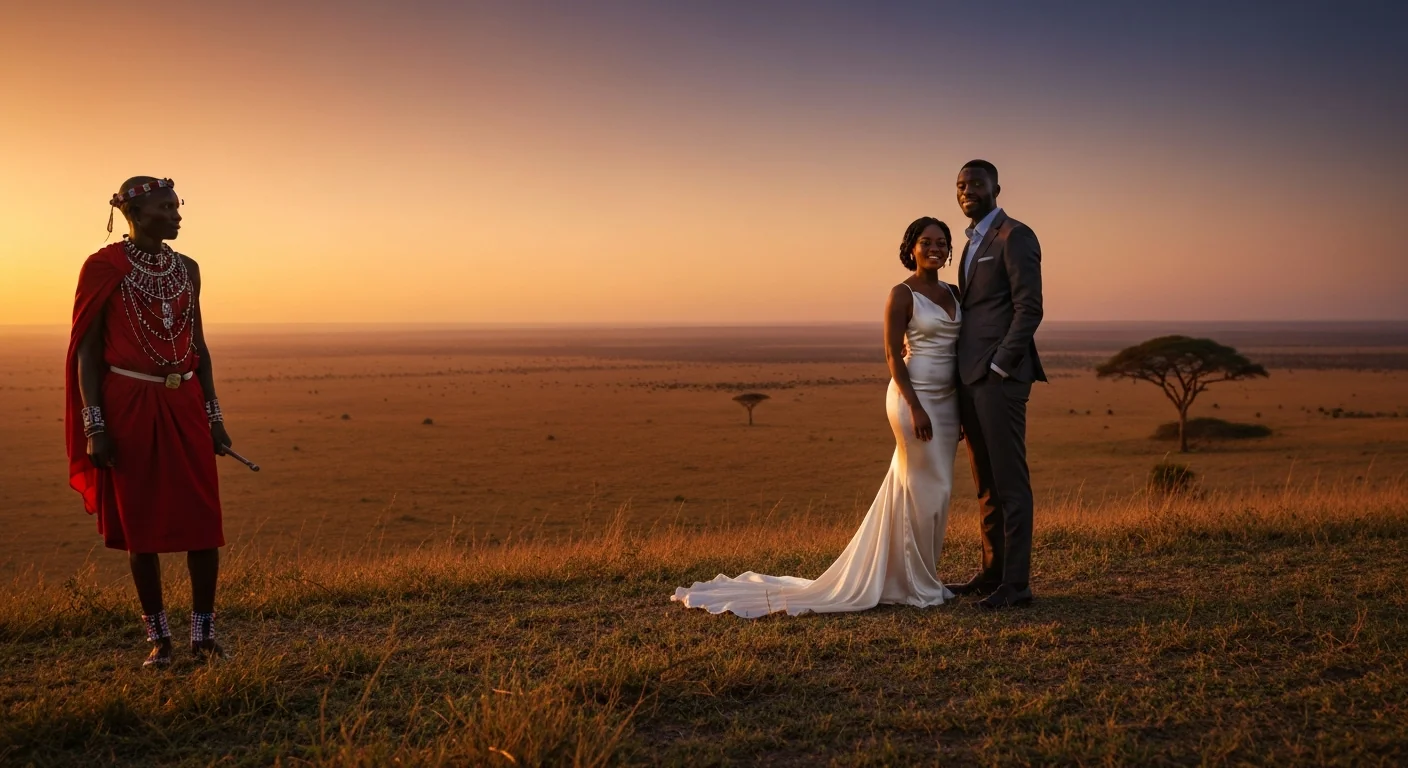
Safari: The Masai Mara offers exclusive-use camps where your ceremony can happen with the savannah as your backdrop — and quite possibly zebras in the distance. Cottar’s 1920s Camp, Angama Mara, and several private conservancies cater specifically to wedding groups.
Beach: Diani Beach on the South Coast is Kenya’s most developed beach wedding hub, with properties ranging from boutique to large resort. Watamu, further north, offers a more secluded, intimate feel. Read our full Diani beach wedding venues guide.
Nairobi estates: For couples wanting proximity to the city (easier logistics for large guest lists), Nairobi’s upscale garden estates and country clubs offer a lush, green setting — surprisingly beautiful during the rains.
Explore more: Kenya destination wedding guide | Safari wedding planning | Beach wedding planning in Kenya
Zanzibar
Zanzibar sits 35km off the Tanzanian coast and operates as a semi-autonomous region — including its own marriage registry. That separation from mainland Tanzania is critical for legal planning (see the legal table above).
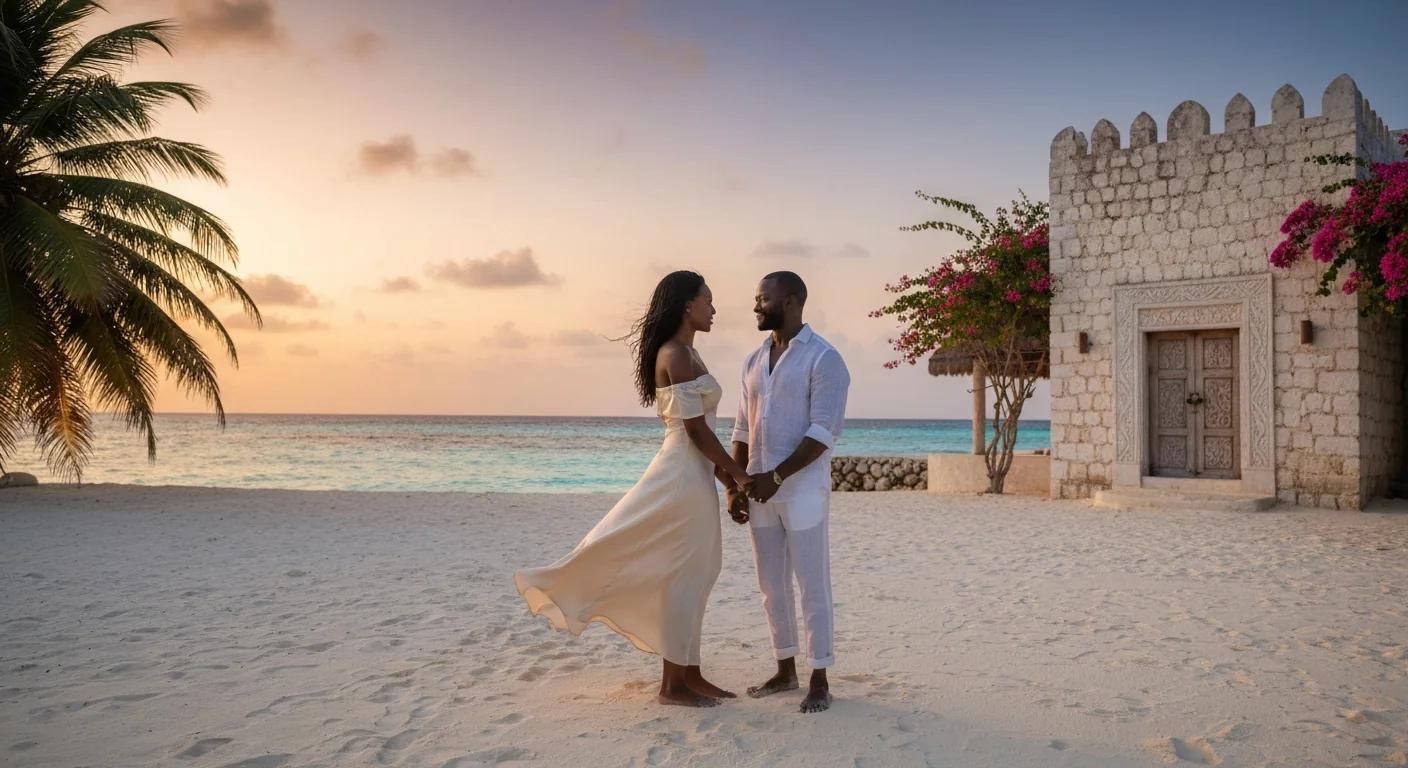
What Zanzibar delivers: Powdery white sand, warm turquoise water, and Stone Town’s UNESCO World Heritage architecture. Multi-day wedding events are standard here — couples often do a Stone Town cultural evening, a beach ceremony, and a sunset dhow cruise across three days.
Resort packages: Many of Zanzibar’s large beach resorts (Melia, Baraza, Diamonds Dream of Africa) offer wedding packages that bundle venue, accommodation blocks, catering, and a coordination team. This simplifies vendor management significantly.
Budget note: Zanzibar is where you’ll find the widest spread of price points — from a simple beach ceremony at a mid-range guesthouse to a luxury resort buyout at $40,000+.
See our full guide: Beach wedding venues in Zanzibar | Planning your Tanzania wedding
South Africa
South Africa punches above its weight for destination weddings, partly because of one factor: the exchange rate. For US, UK, and European couples, the rand offers extraordinary value. A venue that would feel premium in Europe feels luxurious in the Cape Winelands — at roughly a third of the price.
Cape Winelands: Franschhoek and Stellenbosch are the epicentres. Award-winning wine estates with mountain backdrops, world-class catering (South Africa’s food scene is seriously underrated), and a sophisticated vendor ecosystem.
Kruger bush camps: Private game lodges adjacent to Kruger offer the safari experience with more developed infrastructure than East Africa — better roads, larger accommodation blocks, air-conditioned venues. Trade-off: it’s less raw than the Mara.
Practical note: South Africa has excellent direct flights from Europe and the US, and Cape Town’s infrastructure is world-class. Logistics are generally easier here than elsewhere on this list.
Morocco
Morocco is a different kind of African destination wedding — ancient, atmospheric, and inherently theatrical. A Marrakech riad wedding, with lantern-lit courtyard, traditional musicians, and a multi-day celebration format, is unlike anything else.
The multi-day format: Moroccan weddings traditionally span two to three days. This cultural norm works in destination couples’ favour — it justifies the long-haul travel for guests and creates a full experience rather than a single event.
Atlas Mountains: For couples who want dramatic landscapes rather than medina vibes, Atlas Mountain lodges offer a striking setting especially in spring when the valleys are green.
Critical legal note: Civil marriage in Morocco requires at least one party to be Muslim. Non-Muslim couples who want to celebrate in Morocco typically marry legally in their home country first and hold a symbolic ceremony in Morocco. Plan accordingly.
Cost note: Marrakech luxury costs are real. International wedding planners, riad buyouts, and imported elements push budgets toward the €60,000–€90,000 range quickly. Budget options exist but require a very well-connected local planner.
Mauritius
If simplicity is a priority, Mauritius deserves serious consideration. The legal process is among the most straightforward in this guide (24-hour residency minimum, efficient Civil Status Office), and most large resort hotels have a dedicated wedding coordinator who handles the entire process.
The trade-off: Mauritius is primarily a resort island. It’s stunning, but it’s less “authentically African” in feel than Kenya or Rwanda. If cultural immersion is important to your vision, this may not be your best fit. If a gorgeous Indian Ocean island setting with five-star service is what you want, it delivers perfectly.
Budget note: All-inclusive packages (accommodation + catering + ceremony) at major properties simplify planning considerably and can represent good value when you factor in what’s included.
Rwanda
Rwanda is the most exciting emerging destination on this list. A decade of investment in eco-tourism and infrastructure has created a small but exceptional vendor ecosystem, and the country’s green, hilly landscape is genuinely unlike anywhere else in Africa.
Gorilla trekking backdrop: Some couples build their wedding weekend around a gorilla trek — arguably the most memorable pre- or post-wedding activity available anywhere. Volcanoes Safaris and similar operators offer lodge buyouts adjacent to the national park.
Eco-lodges: Rwanda’s commitment to conservation means most high-end properties have an eco-focus that resonates with couples who care about sustainability.
Emerging infrastructure: Kigali is a remarkably clean, organised capital with a growing number of sophisticated event venues. It lacks the established wedding vendor ecosystem of Kenya or South Africa, which means you’ll need a planner who knows the market well.
Read more: Planning your Rwanda wedding
Uganda
Uganda is genuinely underrated as a destination wedding location. The country offers extraordinary nature — Bwindi Impenetrable Forest, the Nile at Jinja, and the Rwenzori Mountains — at price points well below its neighbours.
Cultural depth: Uganda’s Buganda Kingdom traditions, particularly the kwanjula introduction ceremony, offer couples with Ugandan heritage a rich cultural framework to build a multi-day celebration around. Diaspora couples often find that the destination setting gives these ceremonies a resonance that a function hall in London simply can’t replicate.
Practical note: Kampala’s event infrastructure has improved significantly. The vendor ecosystem is smaller than Kenya’s but growing, and a good local planner can navigate it effectively.
Read more: Planning your Uganda wedding
Ghana
Ghana is the destination wedding choice for West African diaspora couples, buoyed by the legacy of the Year of Return campaign (2019) that reconnected African-Americans and the wider diaspora with their roots. Accra has seen significant investment in event infrastructure since then.
The Accra scene: Luxury hotels, beach resorts along the Gulf of Guinea, and a growing roster of event designers fluent in both contemporary and traditional Ghanaian aesthetics. Kente cloth, durbar pageantry, and the knocking ceremony can all be woven into a destination celebration.
Cultural richness: Ghana’s diversity — Akan, Ga, Ewe, Northern traditions — means there’s real depth to draw from for couples with Ghanaian heritage. And for diaspora couples without direct Ghanaian roots, the country’s warmth toward the diaspora community makes it uniquely welcoming.
Getting Your Guests There
Getting 50–80 people to Africa from multiple continents requires early, proactive communication. Start the guest logistics conversation at the 12-month mark, not the 6-month mark.
Visas: East Africa is increasingly convenient for visitors. The East African Tourist Visa covers Kenya, Uganda, and Rwanda on a single $100 visa — a significant simplification for guests covering multiple countries. Tanzania requires a separate visa. South Africa is visa-free for EU, US, and UK passport holders. Morocco is visa-free for most Western passports. Check requirements for all your guests’ nationalities — it’s not one-size-fits-all.
Yellow fever vaccination: Required for entry to Uganda, Rwanda, and Kenya (if arriving from a yellow fever zone). Guests need to carry their yellow card (vaccination certificate). Give this information clearly and early — it requires advance planning.
Flights: Most East African destinations are easiest via Nairobi (JKIA) or Addis Ababa (Ethiopian Airlines hub). For West Africa, Accra and Lagos have strong connections. South Africa is well-connected from Europe and the US direct. Morocco has direct flights from most European cities.
Group accommodation blocks: Book accommodation for your guests at least 12 months ahead, particularly for safari lodges (which have limited capacity) and Zanzibar beach resorts during peak season. Many properties require a non-refundable block booking deposit — factor this into your cash flow planning.
Guest budget briefing: Your guests will need guidance. Be transparent: a round-trip flight from London to Nairobi, four nights’ accommodation, and ground transfers might run £1,200–£2,000 per person. Build a clear guest information page on your wedding website with flight route suggestions, accommodation options at different price points, visa information, and vaccination requirements. Tools like Harusi Hub make it easy to share this as a dedicated page your guests can reference.
Working with Local Vendors from a Distance
This is the section most destination wedding guides skip over, and it’s where things go wrong.
A local wedding planner is non-negotiable. Not a “day-of coordinator” — a full planning partner who has existing relationships with the venues and vendors in your chosen destination. They know which caterers are reliable, which photographers consistently over-promise, and which venue contracts have tricky cancellation clauses. Their local knowledge is worth every shilling, rand, or franc you pay them.
Contracts and deposits: Always get a written contract, regardless of how friendly the vendor relationship feels. Key items to cover: payment schedule (avoid paying more than 30% upfront to any vendor you haven’t used before), cancellation and refund policy (get it in writing, not just verbally), and the consequences of vendor-side failure. Your planner should review all vendor contracts.
Dispute resolution: Understand that pursuing legal remedies across international borders is complicated and expensive. This is another reason why a reputable local planner who vouches for vendors is your best protection — their professional reputation is on the line too.
Time zone coordination: A 3-hour difference between the UK and East Africa is manageable. A 9-hour difference for US-based couples means most calls need to happen in the evening (US time). Establish a communication rhythm early: WhatsApp is universal, Zoom for longer planning sessions, and email for anything that needs a paper trail.
Site visits: If your budget allows, a site visit at 9–12 months is genuinely valuable. You’ll understand the space, meet vendors in person, and make decisions you can’t make from a screen. If one visit isn’t possible, ask venues for video walkthroughs and check Instagram/TikTok for candid footage from recent events.
Harusi Hub for vendor discovery: Harusi Hub provides a vendor directory with verified listings across Kenya and East Africa, making it easier to shortlist photographers, caterers, florists, and planners who have a track record with destination couples.
Planning from Abroad — The Diaspora Couple’s Considerations
If you’re planning an African destination wedding from the UK, US, Canada, or Australia, there are specific considerations that go beyond the standard planning checklist.
Legal document authentication: Any documents you’re submitting to an African registry office will likely need to be apostilled (for Hague Convention countries) or notarised through your home country’s foreign affairs ministry. This process takes time — budget 4–6 weeks for document authentication alone. Start early.
The two-ceremony model: As mentioned in the legal section, many diaspora couples marry legally at their local registry office and then hold their celebration ceremony in Africa. This model removes the legal complexity entirely and is increasingly the norm for destination celebrations. Your African ceremony can still be deeply meaningful — cultural, symbolic, and witnessed by all — without the legal paperwork burden.
Coordinating guests from multiple continents: Your guest list might span Lagos, London, Nairobi, and Atlanta. A central wedding website with a shared information hub — covering logistics, accommodation, RSVP, dress code, and cultural context — is essential. Harusi Hub’s wedding website tool lets you build this in under an hour and share a single link across all your channels.
Cultural ceremony integration: Destination settings create a natural opportunity to incorporate traditional ceremonies that might feel out of place in a hotel function room. A ruracio in the Mara, a kwanjula at a Ugandan eco-lodge, or a knocking ceremony in Accra — these ceremonies land differently when the environment matches the culture. Work with your planner to integrate these elements thoughtfully, briefing international guests on their meaning beforehand.
Your 18-Month Planning Timeline
Use Harusi Hub’s planning checklist to generate a task list tailored to your wedding date — it adapts to your timeline whether you have 18 months or 6.
18–24 Months Out
- Choose your destination and set a realistic budget range
- Research the legal requirements for your chosen country
- Begin the document authentication process if required
- Sign up for exchange rate alerts if budgeting across currencies
- Create your wedding website and share save-the-dates
12–18 Months Out
- Book your venue (exclusive-use lodges book out 12–18 months ahead)
- Secure your core local vendors: planner, caterer, photographer, officiant
- Book guest accommodation blocks
- Confirm legal requirements with a local attorney or the relevant registry
- Send formal save-the-dates with travel information
6–12 Months Out
- Complete document authentication (apostilles, CNIs, etc.)
- Book flights (for you and communicate to guests)
- Finalise guest list and send invitations — manage RSVPs digitally so you can track responses across time zones
- Book satellite vendors: florals, entertainment, hair and makeup, transport
- Plan site visit if budget allows
3–6 Months Out
- Submit legal marriage applications (if marrying in Africa legally)
- Finalise décor and floral brief with vendors
- Confirm accommodation rooming lists for your guest block
- Arrange travel insurance for you and encourage guests to do the same
- Confirm yellow fever vaccination for all guests travelling to applicable countries
1–3 Months Out
- Final vendor confirmations and payment schedules
- Create and distribute guest itinerary (transfers, welcome dinner, ceremony day, post-wedding activities)
- Prepare vendor tip budget in local currency
- Rehearsal plans and ceremony script finalised
- Final dress fittings and any outfit shipments arranged
Final Weeks
- Confirm all vendor arrival times and contact numbers
- Ensure all payments are on schedule
- Pack documents: marriage licence, vendor contracts, passports, vaccination cards
- Assign a trusted person (best man, maid of honour, or coordinator) as on-the-ground logistics point for guests
- Breathe. You’ve planned an African wedding.
Ready to plan your African destination wedding?
Create your free wedding website, manage your guest list across continents, and keep every detail in one place.
Start Planning Your Destination Wedding